



What was John Quincy Adams’ IQ?
Four different IQs circulate for him (165, 169, 172 and 175), all derived from the same four scores in Catharine Cox’s 1926 study. None is a test result.
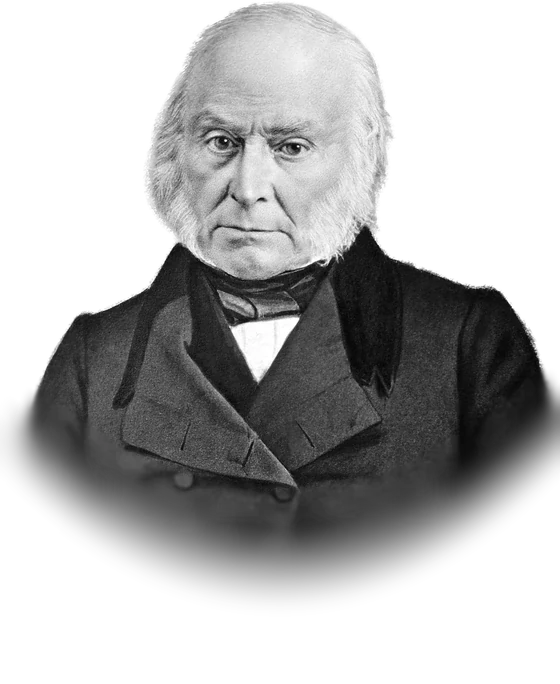
No IQ test result exists for John Quincy Adams, who died in 1848, so any John Quincy Adams IQ score is an estimate. The 175 that gives him the highest estimated IQ of any president is a corrected 1926 rating by Catharine Cox; his record (Harvard at twenty, diplomatic posts in four countries, the Treaty of Ghent, the Amistad argument at 73) supports an estimated IQ of about 150–170.
John Quincy Adams’ estimated IQ
- One of eight presidents in Catharine Cox’s 1926 study of 301 historical figures: three psychologists rated his first 17 years at 165 and his years 17 to 26 at 165, on records she scored at a reliability of .82, the figure she gives for the most reliable case studies she could compile. Simonton’s 2006 Table 1 adds her corrected scores, 170 and 175.
- Simonton’s two other scales rank him below Jefferson: Intellectual Brilliance +1.2 (fourth of 42; Jefferson +3.1) and Openness 98 of 100 (second; Jefferson 99.1).
- At fourteen he went to St. Petersburg as translator and personal secretary to Francis Dana; he entered Harvard’s junior class in 1786, graduated in 1787, read law with Theophilus Parsons in Newburyport and passed the bar in 1790.
- Minister to the Netherlands (1794–1797), Prussia (1797–1801), Russia (1809–1814) and Great Britain (1815–1817); head of the American commission that signed the Treaty of Ghent on December 24, 1814; Secretary of State from 1817 to 1825, during which the Adams–Onís Treaty of 1819 brought Florida to the United States.
- A diary begun at twelve and kept until shortly before his death (51 volumes, more than 14,000 pages), the two-volume Lectures on Rhetoric and Oratory (1810) and, at 73, two days of Supreme Court argument in the Amistad case (February 24 and March 1, 1841).
Every figure here is a retrospective rating from documents, not a test: Cox’s scores use the old ratio definition of IQ, cover only his first 26 years and, by her own account, partly reflect the extraordinary early training he received, and Simonton warns that her corrected scores may be overestimates. The range is a judgment about the whole record, not a measurement.
- Born
- July 11, 1767, Braintree (now Quincy), Massachusetts
- Died
- February 23, 1848, in the Speaker’s Room of the U.S. Capitol, aged 80
- Education
- Harvard College (junior class 1786, graduated 1787); read law with Theophilus Parsons; Massachusetts bar, 1790
- Diplomatic posts
- Minister to the Netherlands (1794–1797), Prussia (1797–1801), Russia (1809–1814) and Great Britain (1815–1817); headed the American commission at Ghent
- Offices
- U.S. Senator, 1803–1808; Secretary of State, 1817–1825; sixth U.S. president, 1825–1829; U.S. Representative, 1831–1848
- Intellectual record
- Diary begun at twelve (51 volumes); Boylston Professor of Rhetoric and Oratory at Harvard; 1821 Report upon Weights and Measures
- Languages
- Fluent in French and Dutch by 1794; studied Latin, Greek and German; one site credits him with eight languages
- In Cox’s 1926 study?
- Yes: IQ 165 (birth to 17) and 165 (17 to 26); Simonton’s Table 1 adds corrected scores of 170 and 175
What an IQ of 150–170 actually means
Set the claim aside for a moment. If someone genuinely scored in this range, here is what that would represent.
Average is 100 by construction, and about two-thirds of people fall between 85 and 115. Take the test to place your own score on this scale.
| Score range | Classification | Share of people | What it indicates |
|---|---|---|---|
| 85 – 114 | Average | ~68% | The range most people fall into. |
| 115 – 129 | Above average | ~13.6% | Roughly one person in seven. |
| 130 – 144 | Gifted | ~2% | The threshold most high-IQ societies use. |
| Above 144 | Highly gifted | ~0.1% | Figures above this range are extrapolated from the curve rather than measured. |
Percentages are approximate and describe a normal distribution. The same number means different things on tests with different standard deviations.
Thirty questions gives you a measured position on this exact scale — your score, your percentile and the ability breakdown behind it.
Find out in 30 minutes →Who John Quincy Adams was
John Quincy Adams was born on July 11, 1767, in Braintree (now Quincy), Massachusetts, the eldest son of John and Abigail Adams. At ten, in 1778, he went to Europe with his father and attended the Passy Academy outside Paris; Cox records Greek at breakfast and Euclid at supper under his father’s direction. In 1781, at fourteen, he went to St. Petersburg as translator and personal secretary to Francis Dana, the U.S. emissary to Russia, and began German there; a year later he made the five-month journey from St. Petersburg to The Hague alone. He returned to America in 1785, entered Harvard’s junior class as an advanced student in 1786, graduated in 1787 and gave a Commencement oration on the importance and necessity of public faith to the well-being of a government.
He read law with Theophilus Parsons in Newburyport, passed the Massachusetts bar in the summer of 1790 and practiced in Boston until 1794, when President George Washington, aware of his fluency in French and Dutch, appointed him minister to the Netherlands. He served there until 1797, in Prussia from 1797 to 1801 under an appointment from his father, and in the U.S. Senate from Massachusetts from 1803 to 1808. While in the Senate he also held Harvard’s Boylston chair of Rhetoric and Oratory, which he left in 1809; his lectures appeared in two volumes in 1810. President Madison made him the first U.S. minister to Russia in 1809; he served there until 1814.
In 1814 Madison named him to head a five-member delegation to end the War of 1812; the Treaty of Ghent was signed on December 24, 1814, and the Senate ratified it unanimously on February 17, 1815. After two years as minister to Great Britain, Adams became Secretary of State under James Monroe, taking office on September 22, 1817, and serving until March 3, 1825. The Office of the Historian credits him with the Adams–Onís Treaty of 1819, by which Spain ceded Florida, and with insisting that the Monroe Doctrine be a unilateral statement. He was president from 1825 to 1829, and from 1831 until his death he served in the U.S. House of Representatives from Massachusetts.
His diary, begun in 1779 when he was twelve, fills 51 volumes and more than 14,000 pages at the Massachusetts Historical Society. His Report upon Weights and Measures, requested by the Senate in 1817 and submitted on February 22, 1821, was what he called “a fearful and oppressive task”; his own father wrote that he could not say he had read it. In 1841, at 73, he argued United States v. The Amistad before the Supreme Court over two days, about four and a half hours on February 24 and about four more on March 1, and the Court ruled for the Africans on March 9. He collapsed at his desk in the House chamber on February 21, 1848, was moved to the Speaker’s Room of the Capitol and died there on February 23, aged 80.
 By Elora Mercer, Celebrity Research WriterFigures checked by Leon Falkner, Data & Research Analyst
Reviewed by Aarav Vardhan, Editor-in-Chief · Last reviewed August 2026
.jpg)
John Quincy Adams: the documented record
The estimate above rests on this record. Every entry here is a matter of public fact, which is more than can be said for the number itself.
- 1767Born on July 11 in Braintree (now Quincy), Massachusetts.
- 1779Begins his diary at twelve; it runs until shortly before his death (51 volumes).
- 1781At fourteen, goes to St. Petersburg as translator and personal secretary to Francis Dana.
- 1787Graduates from Harvard after entering the junior class in 1786; reads law with Theophilus Parsons and passes the bar in 1790.
- 1794Appointed minister to the Netherlands on May 30; Prussia (1797), Russia (1809) and Great Britain (1815) follow.
- 1814Heads the American commission that signs the Treaty of Ghent on December 24.
- 1817Takes office as Secretary of State on September 22; the Adams–Onís Treaty follows in 1819.
- 1825Begins his term as the sixth president (1825–1829); returns to Congress as a Representative in 1831.
- 1841Argues the Amistad case before the Supreme Court on February 24 and March 1; the Court rules on March 9.
- 1848Collapses on the House floor on February 21 and dies on February 23 in the Speaker’s Room of the Capitol.
Where the 175 figure came from
Following a claim back to its first appearance is the part almost nobody does — and it is what most people are actually asking.
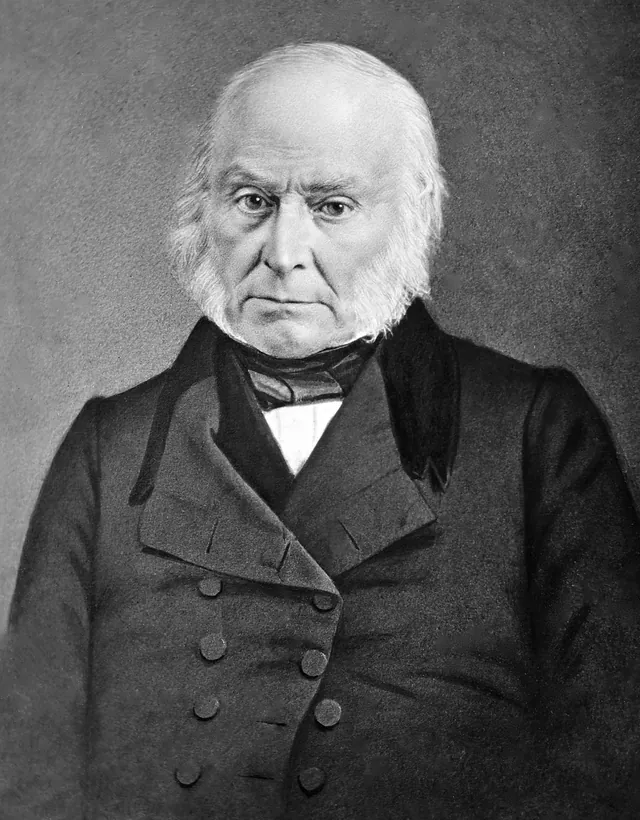
The John Quincy Adams IQ that tops the popular presidential lists has a traceable origin, which most celebrity IQ figures lack. In Genetic Studies of Genius, Volume II: The Early Mental Traits of Three Hundred Geniuses (Stanford University Press, 1926), Catharine Cox had three psychologists (Lewis Terman, Maud Merrill and herself) estimate the IQ of 301 dead historical figures from records of their lives, once for birth to age 17 and once for ages 17 to 26. Adams’s entry (pages 649–651) reads 165 for the first period and 165 for the second (her Table 34 gives each a probable error of ±4). Cox used him as her own example of grade 3 evidence, “documentary evidence combined with diagnostic descriptive material,” with a data reliability of .82, the figure she gives for the most reliable case studies she could compile.
Dean Keith Simonton tabulated Cox’s scores for the eight presidents she rated in Table 1 of “Presidential IQ, Openness, Intellectual Brilliance, and Leadership” (Political Psychology 27(4), 2006). Adams’s row reads 165, 170, 165 and 175, an uncorrected and a corrected score for each period, and the corrected 175 is the highest of any president in the table. Popular lists took it from there, and none of the ten presidential IQ pages we read names Cox, which is why 175 so often looks like Simonton’s own estimate. The 169 on Wikipedia’s presidential IQ hoax page is not a hoax figure (the 2001 e-mail covered only Franklin D. Roosevelt to George W. Bush); it matches the average of the four scores. See also the site’s articles on US presidents ranked by IQ and on where celebrity IQ numbers come from.
What sits behind the John Quincy Adams IQ level is precocity on paper, and his paper trail is unusually good: a diary from age twelve, schooling at the Passy Academy near Paris alongside Benjamin Franklin’s grandsons, a translator’s post at fourteen. Cox found that estimated IQ rises with the reliability of the data, and his data score at the top of her range for case studies, a strength of the record but not proof of the number. She compared the age at which achievements appear with the age at which average people manage them, converted the result to the old ratio IQ (see why that formula was replaced), and wrote that the extraordinary training for leadership he received helped his rapid progress. Simonton warns that her corrected scores may be overestimates, which is why this page puts 175 just above its range. On a bell curve with a standard deviation of 15, 150 is about 1 in 2,300 and 170 about 1 in 650,000, while an IQ of 160 is already about 1 in 31,600; a label such as genius-level IQ is easy to attach at that height and hard to check.
John Quincy Adams’s estimated IQ here, 150–170, sits level with the range this site gives Thomas Jefferson (150–170) and above Abraham Lincoln (140–160) and George Washington (125–145), although Cox’s own scores put him above all three (165–175, against 145–160, 125–150 and 125–140). Simonton’s other scales explain the caution: Intellectual Brilliance, built from judges’ ratings of biographies, gives Jefferson +3.1, the highest in the table, and Adams +1.2, fourth, while Adams’s Openness rating of 98 out of 100 is second only to Jefferson’s 99.1. The table’s top scores also come from Cox’s eight, because Simonton’s figures for the other 34 are imputations that, by his own account, regress toward the mean, among them John F. Kennedy’s 159.8 and Jimmy Carter’s 156.8 (this site’s estimates are 119–135 and 130–148). In his data, estimated IQ shares only about a tenth of its variance with historians’ ratings of presidents; see leader IQ and the sweet spot near 120.
How we read a number →The original rating; data reliability .82 in both periods (Table 34, p. 140: 165 ±4 each); grade 3 example (p. 74); .82 as the case-study ceiling (p. 8); his early training (p. 216); IQ rising with reliability (p. 217); the raters; the correction (pp. 82–83).
The four IQ scores are Cox’s own (eight presidents); the other 34 presidents’ figures are imputed and regress toward the mean. The row also gives Intellectual Brilliance +1.2 and Openness 98.0 (Jefferson +3.1 and 99.1). Says corrected scores may be overestimates; old ratio definition of IQ.
Birth; Passy and Leiden; translator to Francis Dana at fourteen; Harvard in two years; the bar in the summer of 1790; French and Dutch in 1794; Prussia, the Senate, Russia; Ghent (December 24, 1814; ratified February 17, 1815); State from 1817.
Harvard 1787, bar 1790; posts and dates; Secretary of State from September 22, 1817 to March 3, 1825; Senate, presidency and House years; the Adams–Onís Treaty (1819, ratified 1821); the unilateral Monroe Doctrine.
Diary from 1779 (age twelve) to shortly before his death: 51 volumes, 14,000+ pages. Amistad: four and a half hours on February 24, 1841, about four more on March 1, opinion on March 9. Weights and measures: report submitted February 22, 1821.
Collapse on February 21, 1848; the Speaker’s Room (now the Lindy Claiborne Boggs Congressional Women’s Reading Room); death two days later; funeral on February 26.
Title page: “late Boylston Professor of Rhetoric and Oratory,” two volumes. The Dictionary of Unitarian & Universalist Biography dates his chair 1805–09 and Wikipedia’s list 1806–1809; only the shared end year is used.
Orientation and figures: Simonton’s estimate given as 165 (biography), 165 to 175 (historiometry) and 169 (hoax article); Binet–Simon 1905; Wikidata Q11816 is the sixth president; POTUS.com lists eight languages, some not fluent.
Both print 175. Reader’s Digest credits Simonton, says the estimates “aren’t perfect” and never names Cox; its 13 figures match column II-C. IQ Caddy labels 175 “not administered IQ tests.”
Intelligence and IQ, Grunge and VOA: 175, crediting Simonton. usconstitution.net: 175 unsourced, “a University of California study in 2006,” and 168.75. CheckIQ: 172. Riot IQ: 165 to 175, no president tested. Only the IQ Comparison Site names Cox (175 from her Table 12A, and its own Flynn-adjusted 153).
None found. He died in 1848, 57 years before the Binet–Simon scale of 1905. Checked: the sources above and the presidential IQ pages.
The sources behind our estimate
The figures that circulate for John Quincy Adams, what we were able to confirm, and where the two diverge.
Reader’s Digest, IQ Caddy, Intelligence and IQ, Grunge and VOA News give John Quincy Adams’s estimated IQ as 175. Wikipedia’s article on him says 165, its article on the 2001 presidential IQ hoax says 169, usconstitution.net prints both 175 and 168.75 on different pages, and CheckIQ says 172.
No published IQ test result exists for John Quincy Adams. Every number traces to the four scores Catharine Cox’s raters gave him, which Dean Keith Simonton reprinted in Table 1 of his 2006 paper: 165 and 170 for birth to 17, 165 and 175 for 17 to 26, the second of each pair being Cox’s corrected score. IQ Caddy labels its 175 as Table 1, column II-C, and says the numbers are estimates, not administered tests; Reader’s Digest, VOA News, Grunge and Intelligence and IQ credit Simonton and never mention Cox. Wikipedia’s 165 matches the uncorrected score and its 169 the average of the four; CheckIQ’s 172 averages a 170 credited to Simonton with Reader’s Digest’s 175, two numbers from one table.
The circulating numbers span only 165 to 175 because they are one set of four scores read different ways: the uncorrected 165, the corrected 170 and 175, and two averages, 169 and 172. Sites that agree are repeating one table, not confirming each other. The 175 is the highest of the four and sits five points above this range; read as scores with the standard deviation of 16 that Simonton’s table note assumes, the same distances from 100 on a 15-point scale give about 170 for the 175, and the IQ Comparison Site’s own Flynn-effect adjustment gives 153.
Want a number that does hold up? Every figure on this page is somebody’s claim. Take the 30-question test and get a percentile you can check rather than a figure you have to trust.
John Quincy Adams — frequently asked
What is John Quincy Adams’s IQ?
No measured IQ exists for John Quincy Adams, who died in 1848, and every figure attached to his name is an estimate. The 175 that circulates is Catharine Cox’s corrected 1926 rating of his first 26 years; IQ Metrics’ estimated range, from his documented record, is 150–170.
Is John Quincy Adams’s IQ really 175?
Only as an estimate. The 175 is the corrected score Catharine Cox gave his years 17 to 26 in 1926, listed as column II-C in Dean Keith Simonton’s 2006 table; her uncorrected scores were 165 for both periods, and the corrected first-period score is 170. Wikipedia’s 165 and 169 come from the same four numbers.
Did John Quincy Adams have the highest IQ of any president?
On the numbers in circulation, yes: his 175 tops Simonton’s 2006 table. But his is one of only eight presidential ratings Catharine Cox made, the other 34 presidents’ figures are imputations, and Simonton’s Intellectual Brilliance scale puts Thomas Jefferson well ahead (+3.1 to +1.2). No president was ever tested.
Did John Quincy Adams have a high IQ?
The record points to a very high one: translator to a U.S. envoy at fourteen, Harvard graduate at twenty, minister to four countries, the Treaty of Ghent, Secretary of State, and two days of Supreme Court argument at 73. IQ Metrics estimates 150–170, but no IQ test result exists to confirm it.
Did John Quincy Adams take an IQ test?
No. He died in 1848, 57 years before the first Binet–Simon intelligence scale appeared in 1905, and no published IQ test result exists for him. Every figure attached to his name is a retrospective estimate from the record of his youth, and nearly all trace to Catharine Cox’s 1926 study.
How does John Quincy Adams’s estimated IQ compare with Thomas Jefferson’s and Abraham Lincoln’s?
IQ Metrics puts John Quincy Adams at 150–170, level with Thomas Jefferson (150–170) and above Abraham Lincoln (140–160). Catharine Cox’s own scores rank him higher than both (165–175, against 145–160 and 125–150), but Dean Keith Simonton’s Intellectual Brilliance scale puts Jefferson well ahead of Adams.
How many languages did John Quincy Adams speak?
Sources disagree on the count. The Miller Center notes his fluency in French and Dutch by 1794, and Catharine Cox records Latin, Greek and German in his youth. One presidential reference site credits him with eight languages, some short of fluency, and Reader’s Digest says seven.
Is John Quincy Adams a genius?
On the record he comes close to the popular idea of one: a diary begun at twelve, four diplomatic posts, a report on weights and measures and a Harvard chair in rhetoric. But genius is a label, not a score, and both Catharine Cox’s 175 and this site’s 150–170 are estimates from documents, not test results.
How does my IQ compare with John Quincy Adams?
You can find out in about fifteen minutes. The IQ Metrics assessment is 30 questions, scored on the same 100-mean scale used throughout this page, so your result and the estimate above are at least expressed in the same units — one measured, one inferred. Once you have a number, the leaderboard shows where it would sit, and how we score and norm it explains the benchmarking.
Where does this estimate come from?
From the documented record rather than a test — the method is named above and set out in full under how we read a number. Compare it against the other politics profiles, starting with Thomas Jefferson.
- Take the 30-question IQ test — get a measured score and percentile of your own
- Average IQ by country — how the scale behaves across populations
- How IQ Metrics scores its assessment — the method behind our own number
- More on how IQ testing works — reliability, error and what a score can and cannot say
- More politics profiles — same field, same method
More politics
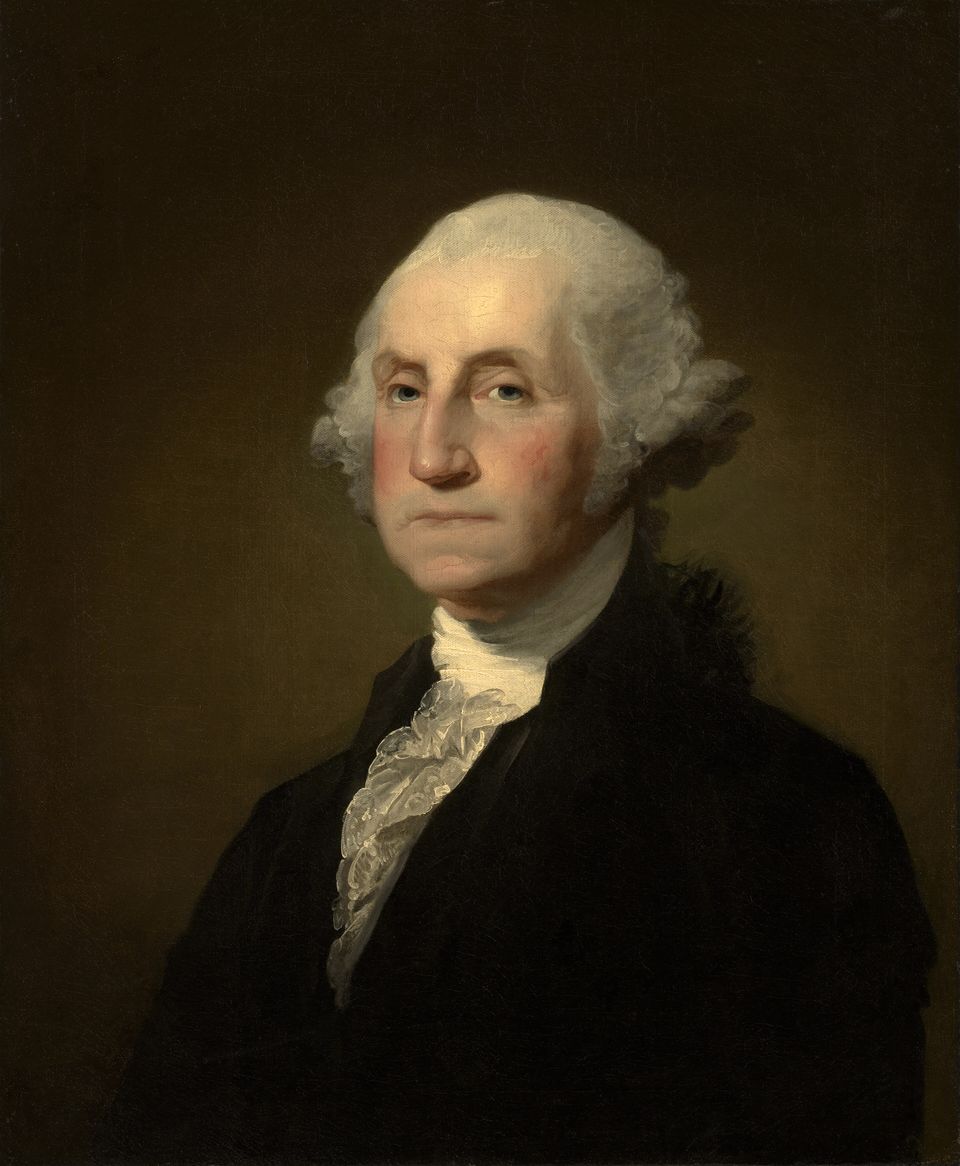
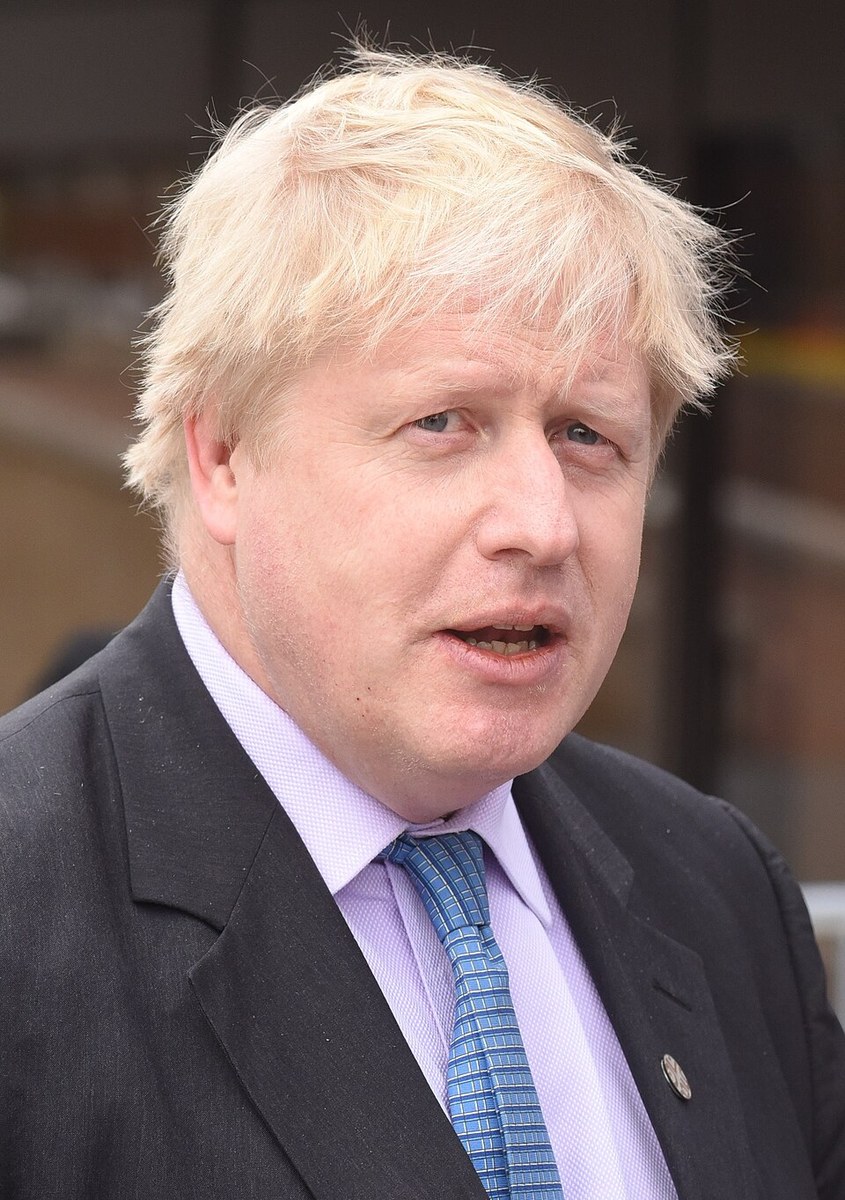
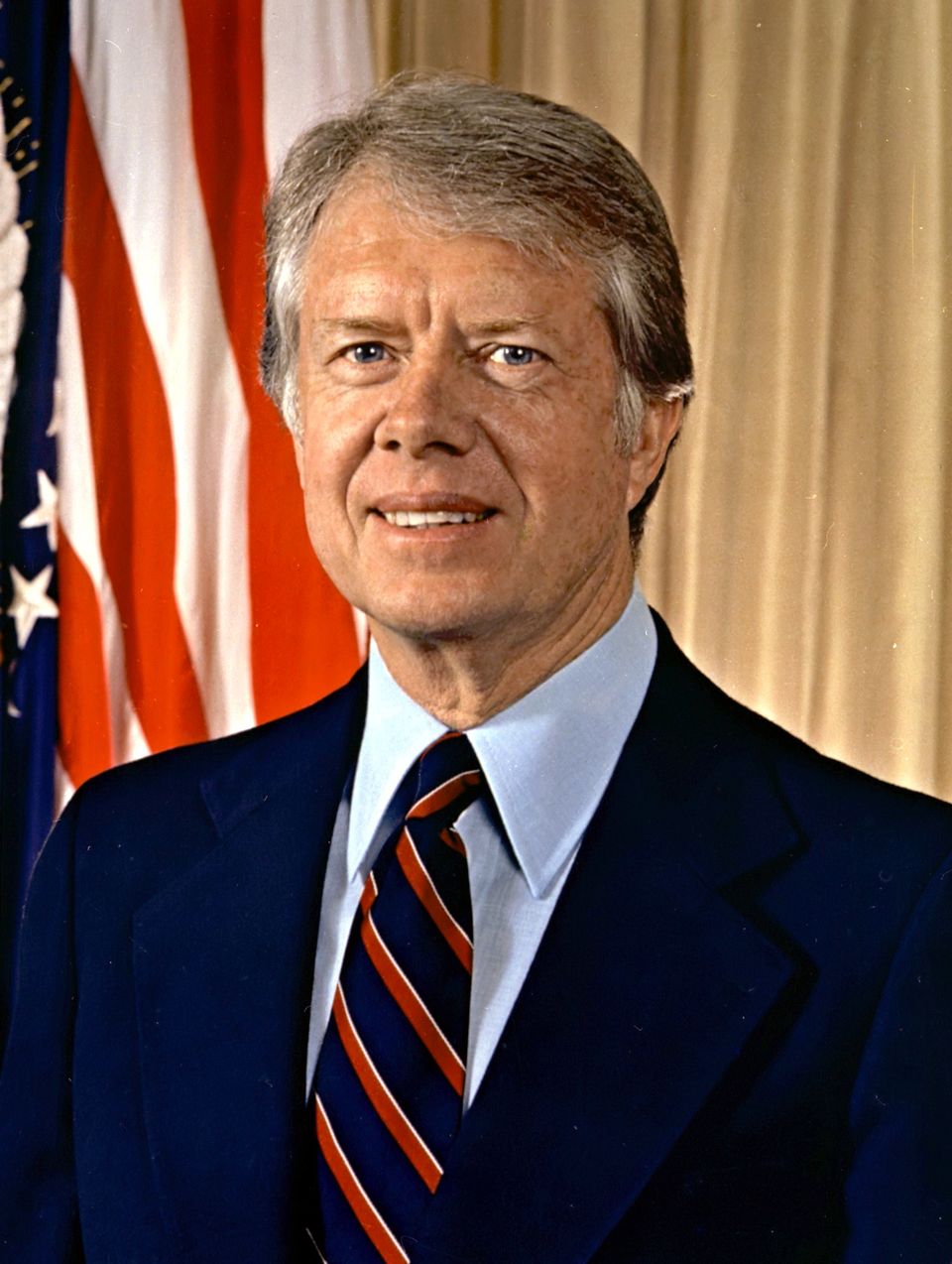
Portrait by Gilbert Stuart (the Williamstown portrait, his copy of the Athenaeum portrait, in the Clark Art Institute), public domain. · Photograph by Velislav Nikolov (EU2018BG), via Wikimedia Commons (Informal Meeting of the Foreign Affairs Council, February 2018), CC BY 2.0. Background removed for the portrait above. · Official U.S. government portrait (Department of Defense / Department of the Navy, 1977), via Wikimedia Commons, public domain. Background removed for the portrait above.


.jpg)
An estimate is an inference.
Yours can be measured.
Thirty questions, scored against general-population benchmarks. Your score, your percentile, your ability breakdown and a printable IIF certificate.
Find your IQ score now! →