



What was Benjamin Franklin’s IQ?
Formal schooling ended at ten. Everything after that, he built himself.
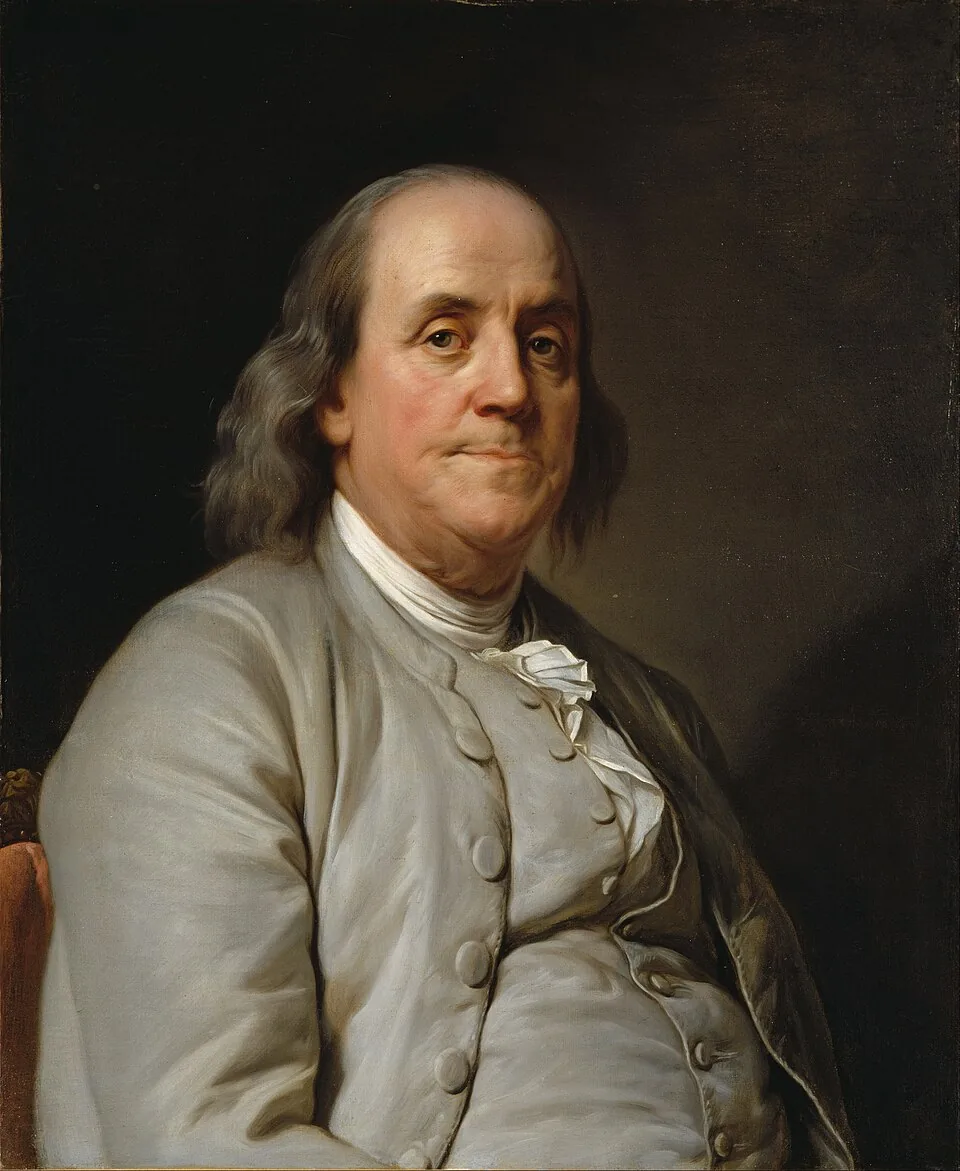
Franklin’s formal education stopped at ten, when his father could no longer afford it. Everything that followed — the science, the diplomacy, the honorary doctorates — was built afterward, by a printer’s apprentice reading on his own time.
Benjamin Franklin’s estimated IQ
- Left school for good at ten and apprenticed to his brother’s print shop at twelve, teaching himself grammar, logic and rhetoric by imitating essays in The Spectator.
- Identified the electrical nature of lightning, invented the lightning rod, bifocals and the Franklin stove, and founded the Library Company of Philadelphia, the American Philosophical Society and what became the University of Pennsylvania.
- Negotiated the 1778 alliance with France that supplied the money, arms and navy the Revolution needed to win, and is the only person to have signed the Declaration of Independence, the Treaty of Alliance with France, the Treaty of Paris and the US Constitution.
Franklin died more than a century before intelligence testing existed, so any figure is inference from output, not measurement. His record is also unusually broad rather than deep in any one field, which historiometric methods do not weigh consistently — a narrower genius with the same eminence can score differently by the same method.
- Born
- 17 January 1706, Boston, Massachusetts
- Died
- 17 April 1790, Philadelphia
- Field
- Science, publishing, diplomacy, statecraft
- Education
- Left formal schooling at 10; self-taught
- Known for
- Lightning rod; Declaration of Independence; French alliance
- Nationality
- American
What an IQ of 155–175 actually means
Set the claim aside for a moment. If someone genuinely scored in this range, here is what that would represent.
Average is 100 by construction, and about two-thirds of people fall between 85 and 115. Take the test to place your own score on this scale.
| Score range | Classification | Share of people | What it indicates |
|---|---|---|---|
| 85 – 114 | Average | ~68% | The range most people fall into. |
| 115 – 129 | Above average | ~13.6% | Roughly one person in seven. |
| 130 – 144 | Gifted | ~2% | The threshold most high-IQ societies use. |
| Above 144 | Highly gifted | ~0.1% | Figures above this range are extrapolated from the curve rather than measured. |
Percentages are approximate and describe a normal distribution. The same number means different things on tests with different standard deviations.
Thirty questions gives you a measured position on this exact scale — your score, your percentile and the ability breakdown behind it.
Find out in 30 minutes →Who Benjamin Franklin was
Benjamin Franklin was born in Boston in 1706, the fifteenth of seventeen children of a candle- and soap-maker. His father pulled him from the Boston Latin School at ten for lack of money, and apprenticed him to his older brother James, a printer, at twelve — a contract Franklin broke by running away to Philadelphia at seventeen.
He made his fortune as a printer and publisher, most famously of Poor Richard’s Almanack (1732–1758), then retired from business at 42 to devote himself to science and public affairs. His electrical experiments made him the most famous scientist of his age on either side of the Atlantic, and earned him honorary degrees from Harvard, Yale, William & Mary, the University of St Andrews and Oxford — degrees awarded to a man with about two years of formal schooling.
As a diplomat he spent most of the Revolutionary War in Paris, where his reputation as a scientist helped secure the French alliance that supplied the Continental Army. He returned to sign the Constitution in 1787, three years before his death.
 By Elora Mercer, Celebrity Research WriterFigures checked by Leon Falkner, Data & Research Analyst
Reviewed by Aarav Vardhan, Editor-in-Chief · Last reviewed August 2026

Benjamin Franklin: the documented record
The estimate above rests on this record. Every entry here is a matter of public fact, which is more than can be said for the number itself.
- 1716Leaves the Boston Latin School after about two years.
- 1718Apprenticed to his brother James’s print shop.
- 1723Runs away to Philadelphia at seventeen.
- 1727Founds the Junto, a mutual-improvement discussion club.
- 1731Founds the Library Company of Philadelphia, the first successful lending library in the colonies.
- 1743Founds the American Philosophical Society.
- 1752Conducts his kite experiment demonstrating the electrical nature of lightning.
- 1776Serves on the drafting committee for the Declaration of Independence.
- 1778Negotiates the Treaty of Alliance with France.
- 1787Signs the United States Constitution at eighty-one, its oldest signatory.
Where the 160 figure came from
Following a claim back to its first appearance is the part almost nobody does — and it is what most people are actually asking.
Franklin’s case is unusual among the Founders on this site: the number attached to him is high, but so is the documented record it is supposedly reading. The gap here is less about an inflated figure and more about how completely the “self-made” part of the story gets dropped once the number is quoted on its own.
He left the Boston Latin School at ten — roughly two years of formal education in total — and was apprenticed to his brother James’s print shop at twelve. Everything documented afterward, from the electrical experiments to the diplomacy, was built on reading he did for himself, on his own time, around paid work.
That makes him a useful contrast with Thomas Jefferson, a fellow drafter of the Declaration whose record runs through the College of William & Mary and a legal apprenticeship. Jefferson’s estimate rests partly on formal training Franklin never had access to — which, if anything, makes Franklin’s output harder to explain by credentials alone.
How we read a number →Franklin’s own account of leaving school, the print-shop apprenticeship and his self-directed reading, in his own words.
The standard scholarly edition of Franklin’s correspondence and writings, and the documentary base for the achievement record here.
Two of the institutions Franklin founded; both still operate today.
Source URLs and first-appearance date pending audit.
No original test, study or named source could be located behind the figure.
Franklin died 130 years before the first widely administered intelligence test.
The sources behind our estimate
The figures that circulate for Benjamin Franklin, what we were able to confirm, and where the two diverge.
160 is a commonly repeated figure for Franklin on “smartest Founding Fathers” and general historical-genius list pages.
Franklin died in 1790, decades before intelligence testing existed — no number for him is a measurement. What is unusual is how little formal credentialing sits behind a record this large: no university admission, no completed apprenticeship in any of the fields he became known for, just self-directed reading and a willingness to run experiments and found institutions as he went.
A tighter spread than most figures on this site, which mostly reflects how consistently impressive the documented record is — not any greater precision in how the number was produced.
Want a number that does hold up? Every figure on this page is somebody’s claim. Take the 30-question test and get a percentile you can check rather than a figure you have to trust.
Benjamin Franklin — frequently asked
What was Benjamin Franklin’s IQ?
He was never tested — intelligence testing did not exist in his lifetime. Figures attached to him, including the commonly repeated 160, are retrospective estimates with no cited source.
How much formal education did Franklin have?
About two years. He left the Boston Latin School at ten and was apprenticed to a printer at twelve. Everything he achieved afterward in science, writing and diplomacy was self-taught.
Did Franklin really sign all four founding documents?
Yes — he is the only person to have signed the Declaration of Independence, the Treaty of Alliance with France, the Treaty of Paris and the US Constitution.
Did Franklin actually fly a kite in a thunderstorm?
Contemporary accounts, including one Franklin gave to Joseph Priestley, describe the experiment; some historians have questioned specific details of the popular retelling, though Franklin’s broader finding — that lightning is electrical — is well documented through his other work.
Why did universities give Franklin honorary degrees if he never attended one?
His scientific reputation, chiefly the electrical experiments, was substantial enough on its own that Harvard, Yale, William & Mary, St Andrews and Oxford all awarded him honorary degrees.
How does Franklin compare to Thomas Jefferson on this site?
Both get high estimates from similarly broad, well-documented records, but Jefferson’s runs through formal legal training Franklin never had. See that page for how the presidential IQ genre in particular has a documented history of fabrication.
How does my IQ compare with Benjamin Franklin?
You can find out in about fifteen minutes. The IQ Metrics assessment is 30 questions, scored on the same 100-mean scale used throughout this page, so your result and the estimate above are at least expressed in the same units — one measured, one inferred. Once you have a number, the leaderboard shows where it would sit, and how we score and norm it explains the benchmarking.
Where does this estimate come from?
From the documented record rather than a test — the method is named above and set out in full under how we read a number. Compare it against the other historical profiles, starting with Isaac Newton.
- Take the 30-question IQ test — get a measured score and percentile of your own
- Average IQ by country — how the scale behaves across populations
- How IQ Metrics scores its assessment — the method behind our own number
- More on how IQ testing works — reliability, error and what a score can and cannot say
- More historical profiles — same field, same method
More historical
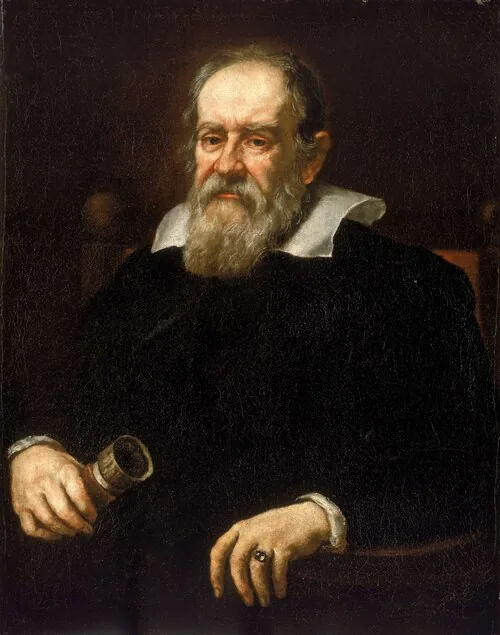
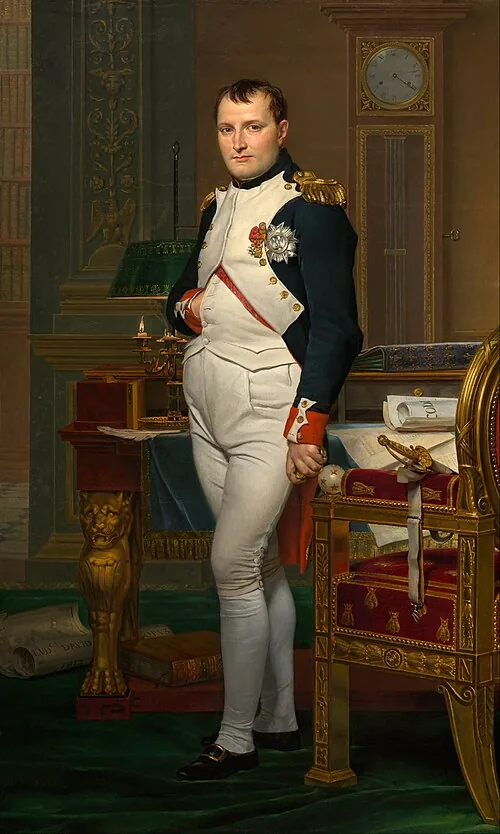
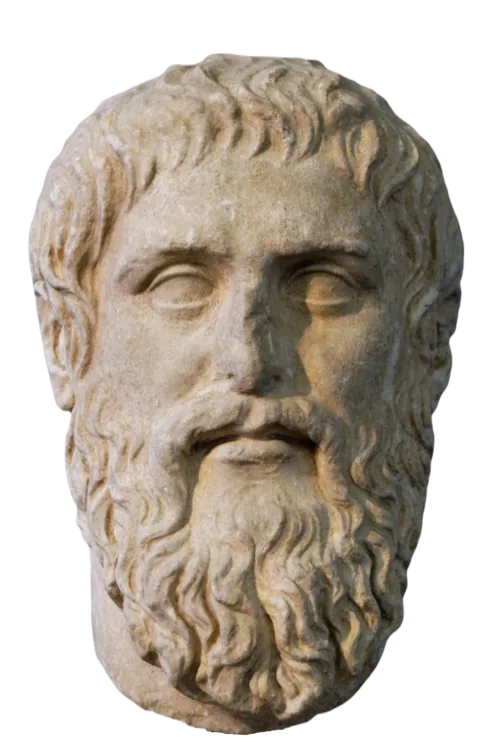
Portrait by Justus Sustermans (1636), via Wikimedia Commons, public domain. · Portrait by Jacques-Louis David (1812), via Wikimedia Commons, public domain. · Photograph by Marie-Lan Nguyen, public domain. Background removed for the portrait above.


An estimate is an inference.
Yours can be measured.
Thirty questions, scored against general-population benchmarks. Your score, your percentile, your ability breakdown and a printable IIF certificate.
Find your IQ score now! →