IQ Scale By Age

IQ Scale by Age: How IQ Changes Over a Lifetime

Understanding how IQ scores relate to different age groups can help you interpret test results more meaningfully. IQ, or intelligence quotient, is a standardized measure of cognitive abilities such as reasoning, memory, and problem-solving. While IQ is generally stable in adulthood, age-related trends and life experiences can influence performance on different types of tasks.

The IQ: A definition and explanation

A thorough familiarity with the IQ scale is required prior to exploring the subject of IQ score changes over time. A person’s intelligence quotient (IQ) is a measure of their cognitive abilities, which include their memory, reasoning, problem-solving, and language skills. The ideal result on the IQ test is 100, while the standard deviation is 15. The average score is somewhere between 85 and 115, although a score below 70 indicates intellectual disability and a score above 130 indicates talent.

IQ Scale by ageIn order to gauge a person’s intelligence, an IQ test will usually comprise a battery of questions or activities. Standardisation and understanding the typical behaviour of a certain age group are two goals of administering the exams to large samples of the population. To determine an individual’s IQ, test scores are compared to predetermined standards.

Things that influence IQs

Numerous factors can influence an individual’s IQ. Genetic factors have a significant impact on cognitive ability, according to the notion that intelligence is partially inherited. At the same time, environmental influences may influence IQ scores. A person’s intelligence quotient (IQ) is affected by a variety of elements that impact their brain development. These determinants include things like a person’s social status, cultural background, dietary habits, and access to education.

During the first few years of life, a child’s cognitive growth and intellect are greatly influenced by environmental circumstances, parental participation, and the quality of their schooling. People who are getting on in years deserve more care and attention. Hormonal shifts during puberty, one’s social network, educational chances, major life events, and intelligence tests are only a few of the variables.

Does age have any bearing on intelligence?

There is a complex relationship between age and IQ. The idea that IQ changes very little from one generation to the next is popular. However, recent studies have shown that IQ levels can vary significantly between age groups, casting doubt on this long-held view.

A child’s IQ typically increases slowly during infancy in tandem with the development of their cognitive abilities and body of information. However, research shows that IQ scores stop increasing altogether after puberty and even fall significantly. This decrease could be due to hormonal shifts or other factors, such as the influence of peers or an increasing focus on interpersonal connections.

It seems that average IQs do level out with age, however there may be some variation from individual to person. As people age, their scores on cognitive tests, such the intelligence quotient (IQ), typically decline. As we become older, our brains become less malleable, which speeds up the onset of neurodegenerative diseases and other age-related impairments in cognitive processing speed.

Research comparing cognitive test results from individuals of different ages
A lot of studies have looked at how IQ scores fluctuate throughout time. In the 1980s, Flynn conducted research that would later be known as the “Flynn effect.” The “effect” here is the general trend towards ever-increasing IQ, whereby newer generations routinely outperform older ones. Reasons given for this increase in IQ scores include environmental factors, such as the growing complexity of our contemporary society, improved nutrition, and more educational opportunities.

Several studies have looked into the correlation between chronological age and IQ. For instance, research has demonstrated that IQs tend to be lower among children from lower-income families when contrasted with those from higher-income families. Processing speed and working memory are two indicators of intellect that may decline with age, according to research.

The origins of IQ tests and the Flynn effect

The Flynn effect is of interest to scientists because it provides an explanation for the large age gap in intelligence tests. Following political scientist James Flynn’s initial observation, this concept has been the subject of numerous investigations.

As the Flynn effect shows, an increasing proportion of people from all walks of life and economic backgrounds have experienced an increase in their IQ during the past century. Growth in cognitive capacity, including the capacity to think critically and solve problems, is due more to external factors than to intrinsic traits. The increasing complexity of modern life, along with improvements in nutrition, educational opportunities, and technology, is largely responsible for the general rising trend in IQ assessments.

The Flynn effect can affect any demographic or culture, as has been pointed out in many studies. This study casts doubt on the long-held belief that IQ is entirely heritable and provides strong evidence that upbringing and experience shape mental abilities.

The benefits and drawbacks of intelligence testing for various age groups

Despite their widespread use, IQ tests have limitations that become more apparent when comparing results from different age groups. As a measure of cognitive ability, intelligence quotient (IQ) exams look at things like processing speed, working memory capacity, and language understanding. However, it’s conceivable that these tests don’t account for all potential cognitive capacities or give erroneous IQ scores for different age groups.

Impatience with test forms, limited attention span, and immaturity in linguistic abilities are some of the reasons why children’s IQ scores may be misleading. Even more concerning is the idea that intelligence tests, which focus on aspects of intelligence that can decline with age, fail to account for the unique characteristics and abilities of the elderly.

This is an important consideration when comparing IQ testing for individuals of various ages. Like any thorough evaluation tool, IQ testing should account for factors like cultural influences, life experiences, and educational level.

Achieving a higher IQ regardless of age

Intelligence is a trait that can be honed at any age, so it’s vital to keep that in mind even though IQs could vary from generation to generation. There is a wide variety of approaches that can raise an individual’s intelligence and cognitive capacity:

Young children’s cognitive development is greatly enhanced when they are provided with a stimulating and caring environment during their formative years. Improving one’s cognitive capacities and establishing the groundwork for future intellectual growth can be achieved through reading, solving puzzles, and playing educational games.

Academics and other kinds of intellectual stimulation should be front and centre throughout adolescence. Engaging in cognitively taxing activities, thinking critically, and solving problems are all ways to promote cognitive development and keep or raise IQ levels.

A lifelong commitment to learning will pay dividends in the form of a healthy, bright brain as you age. It is suggested that regular exercise, staying educated, and participating in mentally difficult activities might help preserve or even increase cognitive function and IQ.

As we get older, it is more important than ever to engage in activities that promote brain health and cognitive vitality. Exercise, social contact, and cognitive training can preserve or even enhance cognitive capacities, especially the IQ-evaluable aspects of intelligence.

Keeping one’s mind sharp requires a steadfast commitment to lifelong learning.
Keeping one’s mind active requires a dedication to lifelong learning, since intelligence tests show that IQs decline with age. Brain health and potential IQ enhancement can be achieved by consistent practice of mentally taxing activities and an insatiable appetite for knowledge.

The advantages of continuing one’s education throughout life go far beyond how well one does on IQ testing. In addition to enhancing brain health, memory, and cognitive flexibility, it protects against cognitive decline and neurodegenerative diseases. Individual development, enhanced health, and a broader range of knowledge and skills are further advantages of continuing one’s education throughout life.

Adopting a growth mindset, which promotes an endless quest for knowledge, improves one’s adaptability to a continuously changing world and fosters one’s innate curiosity. When individuals proactively pursue new information, mentally challenge themselves, and embrace intellectual curiosity, they can achieve rich, intellectually robust lives.

The idea that cognitive capacities change with age is the last thing to think about

As a conclusion, the IQ scale reveals that IQ levels fluctuate with age, suggesting that the mind is inherently unstable. The plethora of variables influencing cognitive capacities and the large range of IQs make it feasible for there to be differences in IQ between age groups.

Knowing that intelligence quotients (IQs) may alter over time might assist shed light on how our brains function and the decisions we can make to improve our cognitive ability. The incredible changes that take place in our cognitive capacity from infancy into old age are caused by a variety of factors, including genetics, the environment, and personal experience.

By acknowledging that IQ differs across demographics, we can perhaps gain a deeper appreciation for the contributions made by individuals of all ages. Another piece of proof that IQ is not static is that one can strive to increase their intelligence at any age. As long as they make it a lifelong habit to learn new things and have an intellectually curious mindset, everyone has the chance to find their intellectual footing and thrive.

If you’d like to better understand your own cognitive strengths and how your score fits into broader demographics, you can take an online IQ test on our homepage.


IQ Scale By Age

IQ Scale By Age

the IQ scale reveals that IQ levels fluctuate with age,

What Is Genius IQ Level

What Is Genius IQ Level

It is highly recommended that you seek out the assistance

Ranges of IQ Level

Ranges of IQ Level

Discover the different ranges of IQ level with comprehensive IQ

What Is Genius IQ Level

What Is Genius IQ Level

Imagine being able to enter a genius’s mind and understand their superintelligence secrets. Amazing people with genius IQ are the subject of this article.

Just how bright are the really brilliant?

Genius intelligence is usually 140 or higher. IQ is a test-based cognitive capacity assessment. Despite these shortcomings, intelligence tests (IQs) can assist assess and compare mental talents.

Genius IQ Level Geniuses are smarter than others. Their intelligence, ingenuity, and understanding of complicated concepts are remarkable. Some people can see connections and patterns that others miss, which permits geniuses to produce art and make discoveries that change society.

Distinguished thinkers from various time periods

Many intelligent people have left lasting effects on history. Famous scientists like Newton and Einstein and artists like Mozart and Leonardo da Vinci have revolutionized our vision of the universe and human potential.

For instance, Albert Einstein’s theory of relativity revolutionized science. His research on space, time, and gravity changed our understanding of the universe. A talented painter, Leonardo da Vinci was also a scientist, engineer, and developer. He advanced anatomy, engineering, and architecture with his relentless curiosity and creativity.

These examples show that many occupations have astounding intelligence. Geniuses have helped humanity realize its full potential in art, music, literature, and science throughout history.

Individuations of a genius

There are several characteristics of genius that distinguish them from others. These include a great recall, ingenuity, laser-like focus, and a thirst for information.

Brilliant people can absorb and retain lots of information. Their exceptional memory lets them understand even the most difficult ideas. Geniuses can quickly digest and remember information, allowing them to find creative connections between seemingly unrelated concepts and make significant discoveries.

Geniuses are known for their recall and focus. Due to their capacity to ignore distractions and focus on work, no one can match their productivity. Due to their laser-like focus, they can examine difficult issues from all angles and weigh various perspectives.

A genius’s creativity lets them see challenges differently and find innovative solutions. They are smart because they can think of new concepts and make unusual connections. Their creativity lets them push the limits and come up with new ideas.

The last characteristic shared by geniuses is an unquenchable hunger for knowledge and a commitment to learning throughout life. They search for new ideas and seek answers to basic concerns about the cosmos because they have an unquenchable need for information. They possess exceptional cognitive abilities that are driven by their relentless hunger for knowledge.

Nature vs. nurture and exceptionally bright people: the age-old conflict
For a long time, scholars and thinkers have argued about whether geniuses’ IQs are more a product of their environment than their genes. Proponents of the theory that geniuses are born with remarkable abilities disagree with those who believe that extraordinary intelligence is a result of a person’s environment and family history.

To achieve genius level talent, it is essential to have both genetic and environmental components, as is universally acknowledged. Although a person’s genes do play a role, their environment also plays an important role in developing their potential for exceptional cognitive abilities.

The role of heredity in very high IQ

There is a lot of evidence that shows how important genes are in IQ testing. Investigating the similarities and differences between fraternal and identical twins has shed light on the hereditary basis of intelligence. Similar intellectual quotients (IQs) are more common among identical twins, who share all of their DNA, as opposed to fraternal twins, who share half of their DNA.

The ability to think clearly can be affected by genetic variations, such as SNPs (single nucleotide polymorphisms). A complex and poorly understood association between specific genes and intelligence is still a mystery, yet there are genes that have been linked to IQ.

Take note that IQs in the exceedingly high range cannot be accounted for by genetics alone. Cognitive abilities are inherited, but it is the environment that plays a pivotal role in shaping and realizing them.

The impact of upbringing and parental guidance on the emergence of exceptionally bright individuals
A person’s educational chances, socioeconomic stability, and early life experiences are all environmental elements that significantly impact their intelligence, perhaps leading to a genius level of performance. In a stimulating and supportive setting, people can reach their maximum cognitive capacity.

The events of early infancy have a disproportionately large impact on the maturation of cognitive abilities. A stimulating environment that encourages exploration, curiosity, and learning can help develop cognitive abilities. Exposure to many fields, such as science, literature, art, and music, can mold the neural networks and cognitive processes that support genius-level brilliance.

Education is also crucial for attaining an IQ level comparable to that of a genius. Through an excellent education that promotes critical thinking, creativity, and problem-solving, an individual’s cognitive potential can be completely developed. Students can tremendously benefit from having access to resources that support their intellectual development and growth, such as books, computers, and educational programs.

Studies and research are the catalysts for a genius’s IQ

A lot of resources have been invested by scientists in the quest to understand the thought processes of geniuses and the neural circuits that underlie their extraordinary intelligence. The processes underlying exceptional reasoning have been better understood thanks to recent advances in cognitive psychology and neuroscience.

An area of study focuses on the concept of “cognitive flexibility.” To be cognitively flexible is to be able to switch gears and look at problems from different perspectives. A common trait among very talented people is a high degree of cognitive flexibility, which allows them to approach problems from different angles and integrate new information seamlessly.

Another fascinating subject is the role of working memory in general intelligence. The ability to store and recall information, known as working memory, is crucial for creative problem-solving and complex thought. Geniuses are characterized by their exceptional working memory abilities, which allow them to deftly handle the complexity of multiple ideas and concepts simultaneously.

Neuroimaging studies have also illuminated the anatomical and functional differences in the brains of very bright individuals. Different patterns of activation and connectivity in brain regions associated with creativity, attention, and cognitive control have been found in these experiments.

While much research remains in this field, our current understanding of the processes underlying genius-level intellect provides valuable direction for future advancements.

Strategies for developing a level of intelligence similar to a genius

Although heredity is a factor, it is far from being the sole one that determines overall IQ. Through the application of specific strategies, one can develop and refine their cognitive capacities.

Engaging in purposeful practice is a viable strategy. Deliberate practice entails structured and targeted training with the objective of improving certain abilities. Individuals can gradually hone their cognitive abilities by taking stock of their current skill sets and working to strengthen those areas where they fall short.

Another strategy is to cultivate a growth mindset. A person with a growth mindset believes they can improve their intelligence and competence via deliberate practice. Those who embrace difficulties, bounce back from setbacks, and actively seek out ways to learn and improve are more prone to possessing a growth mindset.

Reading, solving puzzles, and acquiring new knowledge are all mental stimulants that can enhance cognitive abilities. Memory, thinking, and creativity are just a few of the cognitive qualities that might benefit from frequent mental exercises.

A variety of resources and techniques designed to enhance cognitive abilities and intelligence
Personal skills and a variety of tools and resources can be used to improve one’s cognitive talents and IQ.

More and more individuals are using brain-training applications and games these days. These apps can improve your memory, focus, and problem-solving skills, among other cognitive qualities. Professionals are still arguing over the efficacy of these apps, but nobody can deny that they provide a fun and fresh way to challenge one’s brain.

Books and online courses that focus on increasing one’s intelligence and cognitive development are other valuable resources. Here you can find additional information regarding the study of intelligence and methods to improve your cognitive abilities.

Conclusion

It is highly recommended that you seek out the assistance of a psychologist or educational specialist who can boost your IQ to the level of a genius.

Overall, we ought to embrace and honor the diversity of intelligences.
A remarkable characteristic that has had a profound impact on society is intelligence comparable to that of a genius. While the exact variables that contribute to a genius IQ remain a mystery, what is known is that a person’s upbringing and genes play significant roles in developing their cognitive abilities.

If we can all take the time to study what it takes to be intellectually brilliant and apply that information to our own cognitive abilities, we can all reach our maximum intellectual potential. We must accept and value the diversity of intelligence since everyone has something unique to offer and can help make the world a better place.

This being the case, let us draw inspiration from the works of the extraordinary minds that have attained genius-level brilliance. The journey to genius IQ is an intriguing and thrilling one, whether our aim is to utilize our own dormant ability or simply to marvel at the intellect of individuals about us.

IQ Scale By Age

IQ Scale By Age

the IQ scale reveals that IQ levels fluctuate with age,

What Is Genius IQ Level

What Is Genius IQ Level

It is highly recommended that you seek out the assistance

Ranges of IQ Level

Ranges of IQ Level

Discover the different ranges of IQ level with comprehensive IQ

Ranges of IQ Level

The IQ Bell Curve Explained: Ranges, Percentiles, and What They Mean URL Slug

Introduction

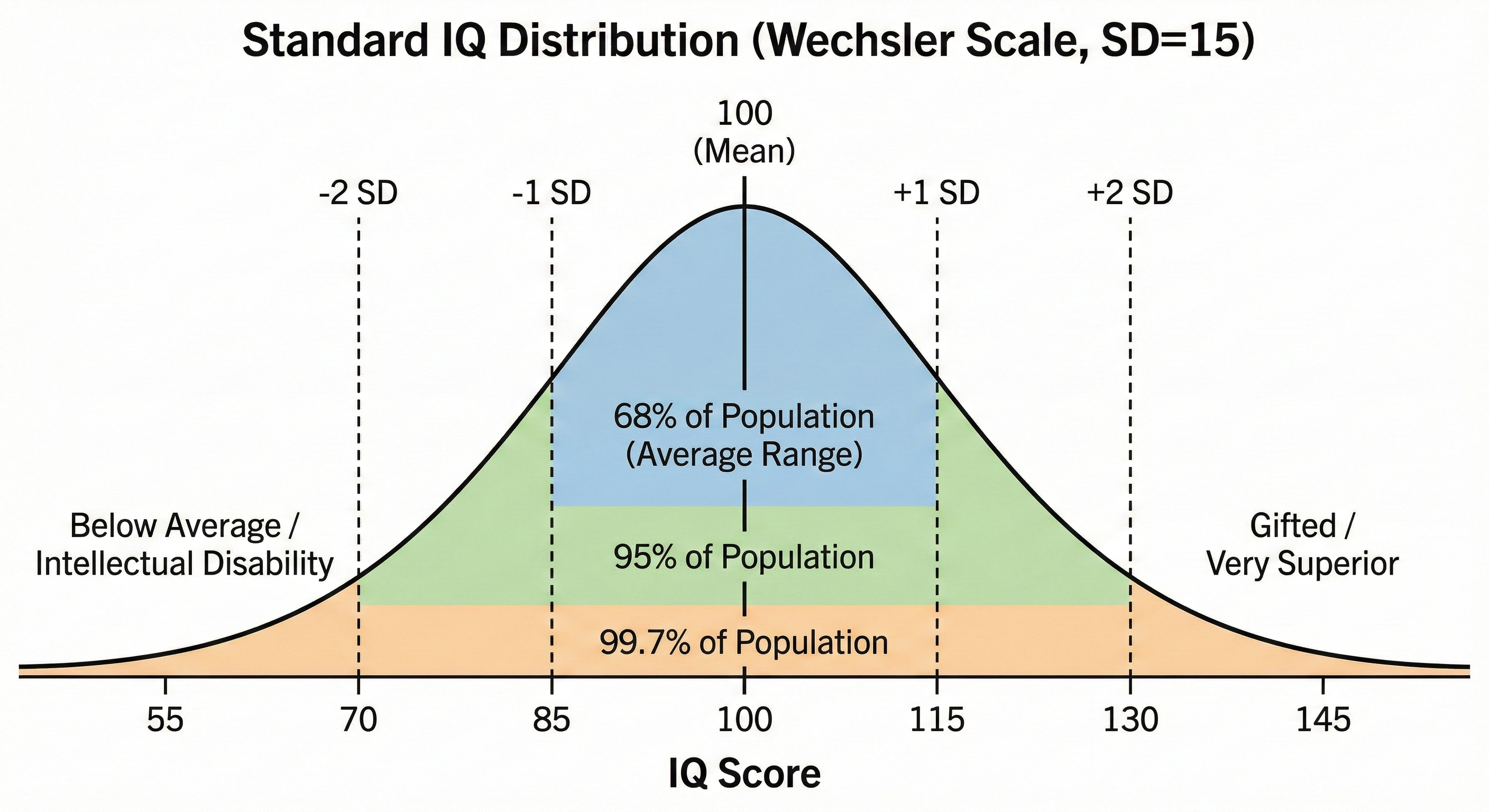
When people talk about Intelligence Quotient (IQ), they often throw around numbers like 100, 130, or 160. But without context, these numbers are just arbitrary figures. To truly understand an IQ score, you have to understand the IQ Bell Curve.

The Bell Curve (or Normal Distribution) is the statistical foundation of almost all modern IQ tests. It explains why most people are “average,” why “geniuses” are rare, and how we compare cognitive ability across the population.

In this guide, we’ll visualize the curve and break down the specific score ranges used by psychometricians today.

Where does the IQ score come from?

One way to evaluate a person’s cognitive capacity is by calculating their intelligence quotient (IQ). It includes things like working memory, processing speed, verbal comprehension, and perceptual reasoning.

Common methods for assessing IQ often involve administering standardized tests that measure different cognitive abilities. The goal of these tests is to provide a numerical score that represents a student’s level of intelligence relative to their peers. The most widely used and comprehensive IQ test is the Wechsler Adult Intelligence Scale (WAIS).

Understanding Standard Deviation

To understand the “ranges,” you need to understand Standard Deviation (SD). In most modern tests, such as the Wechsler Adult Intelligence Scale (WAIS), the standard deviation is 15 points.

Think of the SD as a “step” away from the average.

  • 68% of people fall within one step of the average (between 85 and 115).

  • 95% of people fall within two steps (between 70 and 130).

  • 99.7% of people fall within three steps (between 55 and 145).

If you score 130, you aren’t just “smart”—you are statistically two full deviations above the norm, placing you in the top 2% of the population.

IQ Score Ranges Breakdown

While different tests (like Stanford-Binet vs. Wechsler) use slightly different classifications, here is the generally accepted breakdown of IQ ranges.

85 – 115: The Average Range

  • Population Share: ~68%

  • Description: This is where the vast majority of humanity sits. People in this range can perform most jobs, complete high school and college, and function effectively in society.

    • 85–99: Low Average

    • 100–115: High Average

115 – 130: Above Average (Bright)

  • Population Share: ~14%

  • Description: Individuals in this range often grasp complex concepts faster than their peers. They tend to perform well in universities and professional fields such as engineering, law, and medicine.

130 – 144: Moderately Gifted

  • Population Share: ~2%

  • Description: This is the cutoff for high-IQ societies like Mensa. People in this range often exhibit early reading abilities and strong pattern recognition. They represent 1 in 50 people.

145 – 159: Highly Gifted

  • Population Share: ~0.1%

  • Description: This is a rare level of cognitive ability (roughly 1 in 1,000 people). Individuals here often have radically different learning needs and may accelerate through standard education systems rapidly.

160+: Profoundly Gifted

  • Population Share: <0.003%

  • Description: This is the “tail” of the curve. These scores are difficult to measure accurately because the sample size of people at this level is so small. This range is often associated with child prodigies and revolutionary thinkers, though high IQ does not guarantee high achievement.

Below 70: Intellectual Disability

  • Population Share: ~2.2%

  • Description: Scores below 70 may indicate cognitive challenges. This range often requires support systems for daily living or specialized education plans.

Does High IQ Equal Success?


It is important to remember that the Bell Curve measures cognitive processing speed and pattern recognition—not worth, creativity, or potential for happiness.

While a high score correlates with academic success and income, it does not measure:

  • Emotional Intelligence (EQ)

  • Grit and determination

  • Creativity and divergent thinking

A person with an IQ of 105 who works incredibly hard will often outperform a person with an IQ of 135 who lacks discipline.

Key Takeaways

  • The average IQ is 100.

  • Most people (68%) score between 85 and 115.

  • A score of 130+ puts you in the top 2% of the population.

  • IQ is a comparative metric, not an absolute measure of human value.


Ready to test your own cognitive skills? Take your IQ Test here 

IQ Scale By Age

IQ Scale By Age

the IQ scale reveals that IQ levels fluctuate with age,

What Is Genius IQ Level

What Is Genius IQ Level

It is highly recommended that you seek out the assistance

Ranges of IQ Level

Ranges of IQ Level

Discover the different ranges of IQ level with comprehensive IQ

IQ Scale for Adults

IQ Scale for Adults

In intelligence, we eagerly await the day when human mind secrets are exposed. This article will discuss the Adult IQ Scale, a powerful tool for assessing intelligence and revealing latent skills.

How to determine adult IQ?

Standardized adult IQ tests include the Adult IQ Scale. A person’s cognitive abilities are measured by their Intelligence Quotient (IQ). The Adult IQ Scale measures verbal understanding, visual reasoning, working memory, and processing speed. These factors are assessed by the Adult IQ Scale to determine intelligence.

IQ Scale for Adults

Acquiring knowledge about intellect and how to quantify it

Intelligence is a broad term that covers many different types of mental capacity. Cognitive ability includes the following: the ability to comprehend and reason, to solve problems, to learn from past mistakes and successes, and to adjust to novel circumstances. Intelligence affects more than just our academic performance; it also plays a role in our social lives, the decisions we make in our careers, and our general happiness.

Intelligence testing is difficult because it attempts to quantify a wide variety of cognitive capacities. For this reason, many people turn to the Adult IQ Scale, which is a valid and consistent indicator of cognitive ability. People can see how they stack up against the average person’s cognitive ability and where they can improve.

A look back at the Adult IQ Test’s origins

The Adult IQ Scale was based on early 20th-century intelligence tests by French psychologist Alfred Binet. Binet’s work laid the framework for modern IQ testing. These ratings have been refined throughout time based on new psychology research.

The current Adult IQ Scale is based on David Wechsler’s 1950s Wechsler Intelligence Scale for Adults (WAIS). Instead of using a composite score, the WAIS assessed intellect using multiple elements. This strategy has been used in many modern intelligence tests, including the Adult IQ Scale.

The Method Behind the Adult IQ Meter

The Adult IQ Scale measures intellect in several ways. These tasks assess processing speed, working memory, perceptual reasoning, and verbal comprehension. Activities are offered in a controlled atmosphere to ensure fair and consistent evaluation.

The exam includes questions and activities to test problem-solving, connection-making, and critical thinking. Verbal comprehension tests may include word definitions, brief text questions, and analogy completion. Perceptual reasoning may involve mental manipulation, visual puzzles, or pattern recognition.

A person’s total IQ is calculated by summing their component scores. This figure can be compared to a statistically valid sample of the population to determine how smart someone is. The Adult IQ Scale provides a total IQ score and component scores to provide a complete picture of cognitive abilities.

Understanding your IQ test results

An IQ score that reflects your cognitive talents will be given to you once you have finished the Adult IQ Scale. It is common practice to express this score numerically, with 100 representing the population average. Intelligence levels below average, and above average, are indicated by scores below 100.

It should be mentioned that the Adult IQ Scale is only meant to test cognitive talents; it does not consider other crucial components of intelligence, such emotional intelligence, social skills, or creativity. Because intelligence is multidimensional and intricate, the Adult IQ Scale can only capture some of it.

Additionally, you should not place too much stock on your IQ score and should instead consider it in the context of the whole picture. A person’s intelligence can be honed and enhanced as they get older. Your IQ is not an absolute indicator of your future potential; rather, it represents a snapshot of your present cognitive capacity.

Things that might change your IQ

Although there are a number of factors that can affect your IQ result, the Adult IQ Scale does offer a valid assessment of intellect. Some of these criteria are:

Hereditary variables account for a large amount of individual variability in IQ, according to research, which indicates that intelligence has a strong genetic component. But it’s also true that environmental variables play a significant influence; genes aren’t the only determinant of intelligence.

Socioeconomic position, level of education, and access to intellectual stimulation are all examples of environmental variables that can have a major effect on IQ. Impaired cognitive development can be the result of a lack of exposure to challenging and intellectually rich environments during childhood, whereas positive environments can foster intellectual growth.

Formal education and other learning activities can impact IQ levels and contribute to cognitive growth. Intelligence can be enhanced through the availability of high-quality education, interesting and interactive learning opportunities, and efficient pedagogical practices.

Physical and mental health: Cognitive ability can be impacted by one’s physical and emotional health. The ability to think clearly and, by extension, one’s IQ, can be impacted by a variety of medical and psychological disorders.

Taking them into account can help you make sense of your IQ and your cognitive talents. Although it’s helpful, the Adult IQ Scale isn’t the only thing to think about; other criteria should also be addressed.

The Adult IQ Scale: Facts vs. Fiction

There are a lot of misconceptions and fallacies around the Adult IQ Scale. Some of the most widespread misconceptions about intelligence tests are as follows:

Fallacy: Intelligence level cannot be altered.
Truth: Intelligence is malleable and may be honed over the course of a lifetime. Although intelligence quotient (IQ) tests reveal how smart a person is right now, they are not indicative of their future potential. A person’s cognitive ability and IQ can be raised with hard work, practice, and good cognitive training.

Falsehood: intellect quotient tests do not gauge general intellect.
Truth: Intelligence quotient (IQ) tests certainly measure some aspects of academic intelligence, but they also measure many other cognitive capacities. A full measure of intelligence, the Adult IQ Scale evaluates processing speed, working memory, verbal understanding, and perceptual reasoning.

Fake News: IQ testing are prejudiced and unjust

As a matter of fact, the Adult IQ Scale and other IQ tests have undergone rigorous validation procedures to guarantee they accurately measure intelligence without bias. Creators of assessments put a lot of effort into making sure they are culturally neutral and fair so that people from all walks of life can be fairly evaluated.

Myth: Intelligence quotient is a measure of a person’s value or capacity.
It would be a mistake to base a person’s value or potential on their IQ score alone; it is only one indicator of intelligence. Intelligence is more than just a score; it’s a multidimensional and intricate concept. There are many aspects of a person’s personality and skill set that an IQ test cannot measure.

Boosting Intelligence via Mental Exercise

While heredity and environmental variables do have a role in shaping an individual’s IQ, it is not a fixed trait and can be enhanced with mental exercises. Memory, focus, problem-solving, and reasoning are just a few of the cognitive qualities that can be improved by cognitive training.

By improving your cognitive abilities and fortifying your brain’s neural connections, cognitive training exercises can raise your IQ. Brain games, puzzles, memory exercises, and problem-solving assignments are just a few examples of the many shapes that these workouts can take.

Cognitive training, when practiced on a daily basis, can raise IQ levels and improve other cognitive abilities, according to the research. Your complete intellectual potential and general cognitive talents can be realized through mentally stimulating activities that test your brain and engage various cognitive functions.

The Adult IQ Scale and other cognitive tests

Although the Adult IQ Scale is a reliable instrument for gauging intellectual capacity, it is essential to acknowledge that intelligence is more than just a number value. A person’s cognitive talents can be better understood with the help of different intelligence tests. Among these steps are:

A high level of emotional intelligence allows one to not only identify but also control their own and other people’s emotional states. It is essential for healthy relationships, self-awareness, and general happiness. Several tests exist for measuring emotional intelligence, which can shed light on a person’s social competence and mental health.

The ability to come up with novel concepts, use one’s imagination, and come up with original answers to challenges is creativity, which is a key component of intelligence. While standard intelligence tests do not normally include questions about a person’s creative thinking ability, there are other tests that can.

Howard Gardner proposed the idea of multiple intelligences, which holds that people possess a wide range of cognitive abilities that can be characterized by distinct kinds of intelligence. Intelligence in the areas of language, mathematics, space, music, body and movement, interpersonal relationships, and self-awareness are all part of this category. A more complete picture of a person’s cognitive capacities can be painted by identifying and studying these distinct forms of intelligence.

By taking these supplementary IQ tests into account, you can obtain a more complete picture of your cognitive capacities and unleash your entire intellectual potential.

Ultimately, it’s about embracing your individual intelligence

A vast spectrum of cognitive capacities are encompassed by the fascinating and difficult idea of intelligence. Taking the Adult IQ Scale is a great way to find out how smart you are and where your brain is strong and weak. You may realize your full potential and celebrate your own brilliance by familiarizing yourself with the Adult IQ Scale and learning how to evaluate your results in context.

Having said that, keep in mind that intelligence is malleable and may be honed as one grows older. Your value and potential are not determined by your score on the Adult IQ Scale, although it does give a picture of your present cognitive abilities. There are many aspects of a person’s personality and skill set that an IQ test cannot measure.

Embrace your unique intelligence and set out on a journey of self-discovery and self-improvement. Discover the meaning of the Adult IQ Scale, reach your maximum cognitive capacity, and demonstrate your intelligence in every facet of your life.

IQ Scale By Age

IQ Scale By Age

the IQ scale reveals that IQ levels fluctuate with age,

What Is Genius IQ Level

What Is Genius IQ Level

It is highly recommended that you seek out the assistance

Ranges of IQ Level

Ranges of IQ Level

Discover the different ranges of IQ level with comprehensive IQ