



What was Walt Disney’s IQ?
At Yale in 1938 a professor spoke of genius. His own school record stops after one year of high school.
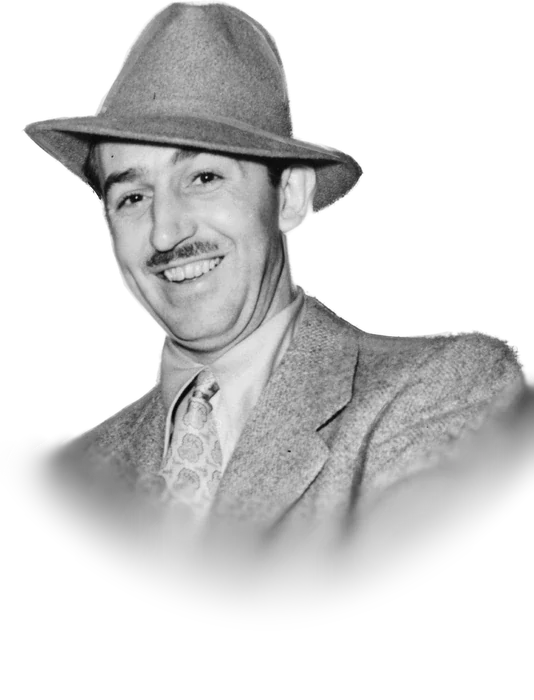
No IQ test result has been published for Walt Disney, and the only figure we found, 165 on Answers.com, cites no test, date or source. What is documented is a record: 59 Academy Award nominations, honorary Yale and Harvard degrees in 1938 and the Presidential Medal of Freedom in 1964. His estimated IQ here, 125–145, is inferred from that record, not from a score.
Walt Disney’s estimated IQ
- Formal schooling ended early: he graduated from Benton Grammar School in 1917, attended one year of high school and left formal education in 1918 to drive a Red Cross ambulance in France (The Walt Disney Family Museum). Jim Korkis’s MousePlanet article calls him “a mediocre student.”
- Flowers and Trees (1932) was the first commercially released film made in full-color three-strip Technicolor and won the first Academy Award for Short Subject (Cartoon); the Academy’s 1939 special award for Snow White and the Seven Dwarfs (1937) cited “a significant screen innovation.”
- By Wikipedia’s tally of Oscar records he holds the records for Academy Awards won (22) and nominations (59) by an individual; Guinness World Records counts 26 awards, including special and technical categories.
- Yale and Harvard each gave him an honorary Master of Arts in 1938; at Yale, Newsweek reported that July, Professor William Lyon Phelps said he had “the originality characteristic of genius.”
- He built institutions that outlasted him: the Disney Brothers Cartoon Studio (1923), Disneyland (1955) and CalArts (formed 1961, opened 1970), and he received the Presidential Medal of Freedom in 1964.
No test result exists, so this estimate of Walt Disney’s IQ level is inferred from a record of creative and business achievement, which is a poor proxy for a test score, and much of that record was collaborative: the animation credits on Steamboat Willie name Ub Iwerks, Wilfred Jackson and Johnny Cannon, with Disney performing the voices. Treat 125–145 as looser than any range built from a real test.
- Born
- December 5, 1901, Chicago, Illinois
- Died
- December 15, 1966, Burbank, California
- Education
- Benton Grammar School (graduated 1917); one year at McKinley High School, Chicago; night courses at the Chicago Academy of Fine Arts; Saturday courses at the Kansas City Art Institute
- Honorary degrees
- Master of Arts from Yale and Harvard (1938); University of Southern California (1938)
- Known for
- Mickey Mouse; Steamboat Willie (1928); Snow White and the Seven Dwarfs (1937); Disneyland (1955); CalArts (1961)
- Academy Awards
- 22 wins and 59 nominations, the records for an individual (Guinness World Records counts 26 awards including special and technical categories)
- Medal of Freedom
- Presidential Medal of Freedom, 1964
- IQ test on record
- None found; the only figure online is an unsourced 165 on Answers.com
What an IQ of 125–145 actually means
Set the claim aside for a moment. If someone genuinely scored in this range, here is what that would represent.
Average is 100 by construction, and about two-thirds of people fall between 85 and 115. Take the test to place your own score on this scale.
| Score range | Classification | Share of people | What it indicates |
|---|---|---|---|
| 85 – 114 | Average | ~68% | The range most people fall into. |
| 115 – 129 | Above average | ~13.6% | Roughly one person in seven. |
| 130 – 144 | Gifted | ~2% | The threshold most high-IQ societies use. |
| Above 144 | Highly gifted | ~0.1% | Figures above this range are extrapolated from the curve rather than measured. |
Percentages are approximate and describe a normal distribution. The same number means different things on tests with different standard deviations.
Thirty questions gives you a measured position on this exact scale — your score, your percentile and the ability breakdown behind it.
Find out in 30 minutes →Who Walt Disney was
Walter Elias Disney was born on December 5, 1901, in Chicago. His family moved to a farm near Marceline, Missouri, in 1906 and to Kansas City in 1911, where he attended Benton Grammar School, took Saturday courses at the Kansas City Art Institute and delivered newspapers with his brother Roy. In 1917 the family returned to Chicago; Disney enrolled at McKinley High School, drew for the school newspaper and took night courses at the Chicago Academy of Fine Arts. In September 1918 he joined the Red Cross as an ambulance driver after the Army turned him away as too young; he reached France in November, after the armistice, and came home to Kansas City in October 1919.
Back in Kansas City he worked at the Pesmen-Rubin Commercial Art Studio, where he befriended Ub Iwerks, and then at the Kansas City Film Ad Company, making his first cartoons on nights and weekends with a camera borrowed from his boss. PBS’s American Experience film says he checked out Eadweard Muybridge’s Human Figures in Motion from the public library and borrowed a volume laying out the basics of animation. Laugh-O-Gram Studio, his Kansas City animation company, went bankrupt in 1923, and on October 16, 1923 Disney and his brother Roy founded the Disney Brothers Cartoon Studio. In 1928 he lost the rights to Oswald the Lucky Rabbit, which Universal owned; Mickey Mouse followed, in Steamboat Willie, which premiered at the Colony Theatre in New York on November 18, 1928. It is often called the first fully synchronized sound cartoon, though earlier sound cartoons existed; it was made with a click track to keep the music on the beat.
Flowers and Trees (1932) was the first commercially released film made in full-color three-strip Technicolor, and it won the first Academy Award for Short Subject (Cartoon) at the 5th Academy Awards on November 18, 1932, where the Academy also gave Disney a special award for creating Mickey Mouse. Snow White and the Seven Dwarfs premiered at the Carthay Circle Theatre in Los Angeles on December 21, 1937, and it was the first cel-animated feature film; on February 23, 1939, Shirley Temple presented him with one statuette and seven miniature ones for it. In 1942 the Academy gave him the Irving G. Thalberg Memorial Award and a shared special award for the sound work on Fantasia. He also set up drawing classes at his studio, bringing in professors from the Chouinard Art Institute to teach them, according to PBS. By Wikipedia’s tally he holds the records for Academy Awards won (22) and nominations (59) by an individual; Guinness World Records counts 26 awards, including special and technical categories.
Disneyland was dedicated at a televised press event on July 17, 1955, and opened to the public the next day. In 1961 Disney and his brother Roy formed the California Institute of the Arts by merging the Chouinard Art Institute and the Los Angeles Conservatory of Music; CalArts, which says he conceived a new school to nurture future creative talent, opened in 1970. He received the Presidential Medal of Freedom in 1964 and died in Burbank, California, on December 15, 1966. In 2006 The Walt Disney Company bought Pixar, and Steve Jobs became Disney’s largest individual shareholder and joined its board. Walt Disney’s estimated IQ here, 125–145, starts at an IQ around 125; nothing measured stands behind it.
 By Elora Mercer, Celebrity Research WriterFigures checked by Leon Falkner, Data & Research Analyst
Reviewed by Aarav Vardhan, Editor-in-Chief · Last reviewed August 2026

Walt Disney: the documented record
The estimate above rests on this record. Every entry here is a matter of public fact, which is more than can be said for the number itself.
- 1901Born December 5 in Chicago.
- 1917Graduates from Benton Grammar School in Kansas City on June 8, his only graduation, and enrolls at McKinley High School in Chicago that fall.
- 1918Turned away by the Army as too young, joins the Red Cross as an ambulance driver in September; reaches France in November, after the armistice, and returns to Kansas City in October 1919.
- 1923Laugh-O-Gram Studio goes bankrupt; on October 16 Walt and his brother Roy found the Disney Brothers Cartoon Studio.
- 1928Loses the rights to Oswald the Lucky Rabbit, which Universal owned; Steamboat Willie, starring Mickey Mouse, premieres at the Colony Theatre in New York on November 18.
- 1932On November 18, Flowers and Trees wins the first Academy Award for Short Subject (Cartoon), and the Academy gives him a special award for creating Mickey Mouse.
- 1937–39Snow White and the Seven Dwarfs premieres December 21, 1937; Yale and Harvard give him honorary Master of Arts degrees in 1938; on February 23, 1939 the Academy honors Snow White with one statuette and seven miniature ones.
- 1955Disneyland is dedicated on July 17 and opens to the public the next day.
- 1961–64Forms the California Institute of the Arts with his brother Roy (1961); receives the Presidential Medal of Freedom (1964).
- 1966Dies December 15 in Burbank, California.
Where the 165 figure came from
Following a claim back to its first appearance is the part almost nobody does — and it is what most people are actually asking.
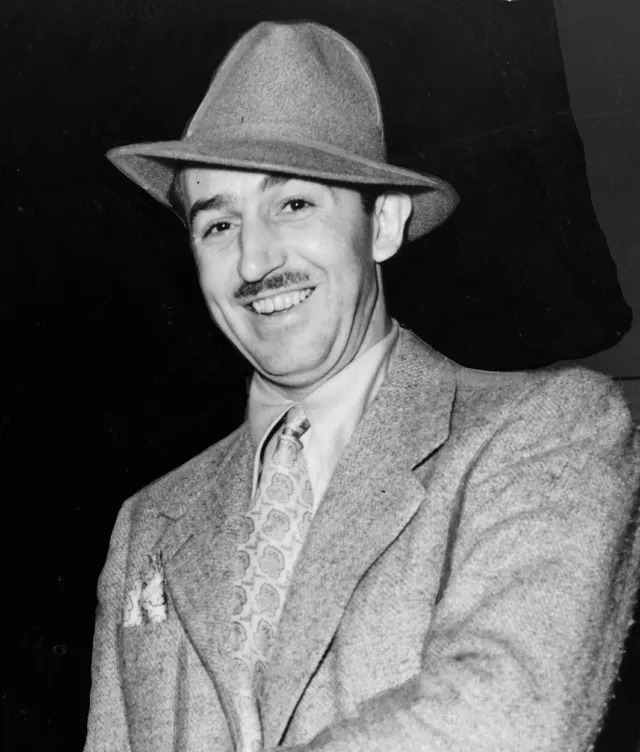
The Walt Disney IQ figure that circulates has one home we could find: an anonymous reply on Answers.com to the question “What was Walt Disney’s IQ?”, which reads “165, like Charles Darwin and Bill Gates!” The page gives no test, no date for the number and no source; it dates the reply to about 15 years ago and shows a March 5, 2025 update. We could not trace where 165 began. A bare number set beside two other famous names is how unsourced figures usually travel, and where celebrity IQ numbers come from traces the pattern.
What was Walt Disney’s IQ, if 165 cannot be read as a score? On the usual scale (mean 100, standard deviation 15), 165 is more than four standard deviations above the mean, a level a normal curve puts at fewer than one person in 100,000 and one that few tests have items to measure; the IQ ceiling effect explains why a printed number that high is rarely a reading. Sourced records almost always support a lower range than the figure that circulates, and Disney’s does too. His school record is one year of high school and, in Jim Korkis’s words, “a mediocre student”; nothing in it supports a number this high.
Was Walt Disney a genius? A Yale professor did use the word. Yale’s honorary-degree list shows Walter Elias Disney, Master of Arts, 1938, and Newsweek reported on July 4, 1938 that at the Yale ceremony Professor William Lyon Phelps said of him, “He has the originality characteristic of genius”; the next day Harvard’s president, James Bryant Conant, praised “the magician who has created a modern dwelling for the muses.” Those are tributes to a body of work, not measurements, and the narrator of PBS’s American Experience film sums up the same reputation: “hailed a genius before he was 40.” For how the label maps onto scores, see what counts as a genius IQ level. Intelligence testing was also young when he left school: the Stanford revision of the Binet–Simon scale dates to 1916 and he left formal education in 1918, and we found no school-era result (see the history of intelligence testing).
Was Walt Disney smart in the way a school record would show? Not obviously: Wikipedia and Jim Korkis’s MousePlanet article both describe poor or mediocre grades, with an early-morning newspaper route leaving him tired in class, and Newsweek’s report on his 1938 degrees says he admitted to being “very uneducated.” The work record reads differently, but it belongs to a studio: Newsweek put his staff at 750 workers that July, and the animation credits on Steamboat Willie name Ub Iwerks, Wilfred Jackson and Johnny Cannon, with Disney performing the voices. Compare Thomas Edison, whose profile here also rests on a record with no test: three months of formal schooling and 1,093 US patents, a countable anchor for a 140–160 range that Disney’s record lacks, which is why Disney’s range here sits lower.
How we read a number →Confirms birth in Chicago on December 5, 1901; McKinley High School, the school paper and night classes at the Academy of Fine Arts; the 1918 Red Cross service; the Steamboat Willie (November 18, 1928) and Snow White (December 21) premieres; and a list of honors that includes degrees from Harvard, Yale, USC and UCLA and the Presidential Medal of Freedom. Contains no IQ score.
Confirm that Disney attended just one year of high school and left formal education in 1918, and that Yale, Harvard and USC gave him degrees in 1938. The loan page gives Yale’s wording: “creator of a new language of art” and “the originality characteristic of genius.” “Award-Winning Walt” repeats the Academy’s Snow White citation, “significant screen innovation.” The Oscar posts count 32 awards (including special and technical) and 59 nominations.
Confirm the November 18, 1932 special award for creating Mickey Mouse and the first Short Subject (Cartoon) win for Flowers and Trees; the February 23, 1939 special award for Snow White (one statuette and seven miniatures from Shirley Temple); and the February 26, 1942 Thalberg Memorial Award and Fantasia special award. The win and nomination totals rest on the secondary sources below.
Lists “Disney, Walter Elias | Master of Arts | 1938” with no citation text.
A contemporary report of the June 1938 degrees: an honorary Master of Science from the University of Southern California two weeks earlier; at Yale, Professor William Lyon Phelps saying “He has the originality characteristic of genius”; at Harvard the next day, President James Bryant Conant praising “the magician who has created a modern dwelling for the muses.” It says Disney went to school in Kansas City for six years and to a Chicago high school for one, says he admits he is “very uneducated,” and puts his staff at 750 workers. Quoted as scanned; the OCR text may contain errors.
States that Walt Disney conceived a new school for nurturing future creative talent, that he and Roy formed CalArts in 1961 by merging the Chouinard Art Institute and the Los Angeles Conservatory of Music, and that it opened in 1970.
Narration says his only formal training was a few months at an art school in Chicago and a course at the Kansas City Art Institute, that he checked out Muybridge’s Human Figures in Motion from the public library and borrowed a volume on the basics of animation, that he brought Chouinard Art Institute professors to teach drawing classes at the studio, and that he was “hailed a genius before he was 40, with honorary degrees from Harvard and Yale.”
Source for the Benton Grammar School graduation on June 8, 1917 as his only graduation from any school, the single year at McKinley High School, the honorary Marceline high school diploma (1960) and the June 1938 Yale and Harvard degrees, and for the description “a mediocre student.” A single-author secondary source, cited as reported.
Orientation and second-source checks for dates and awards. The records list gives 22 Academy Awards won and 59 nominations by an individual. Steamboat Willie is described as “erroneously and widely” called the first fully synchronized-sound cartoon. Disneyland was dedicated on July 17, 1955, a day before its public opening. The 2006 Pixar purchase made Jobs Disney’s largest individual shareholder and a board member. The Stanford revision of the Binet–Simon scale dates to 1916. Wikidata confirms the identity (born December 5, 1901, Chicago; died December 15, 1966, Burbank).
The nominations page gives 59 nominations and 26 wins “including special and technical categories”; the older lifetime page gives 26 awards from 64 nominations. Totals differ by counting rule, and the Walt Disney Family Museum’s 32 differs again.
The only page found that states a number: an anonymous reply, dated by the page to about 15 years ago, reading “165, like Charles Darwin and Bill Gates!” It gives no test, date for the number or source.
None appears in D23’s biography, The Walt Disney Family Museum’s pages, PBS’s film, Korkis’s article, Newsweek’s 1938 report or Wikipedia. Six celebrity-IQ pages give him no number: Brain Manager’s 2025 list of 23 high-IQ celebrities, The Shot’s 2025 list, HistorySnob’s list of 20 historical geniuses, the Christian Post’s 2012 “IQ Scores of Famous People,” a 2023 Substack database of IQ estimates, and celebrityiq.info (no Walt Disney profile found).
The sources behind our estimate
The figures that circulate for Walt Disney, what we were able to confirm, and where the two diverge.
No Walt Disney IQ score has been published, but one figure turns up online: 165, in an anonymous reply on Answers.com to the question “What was Walt Disney’s IQ?” The reply reads “165, like Charles Darwin and Bill Gates!” The large celebrity-IQ lists we checked carry no number for him.
The 165 has no test, date or source behind it. The Answers.com reply is anonymous, and the page dates it to about 15 years ago. D23’s “About Walt Disney” biography, The Walt Disney Family Museum’s pages, PBS’s American Experience film and Wikipedia contain no IQ score for him. Brain Manager’s 2025 list of 23 high-IQ celebrities, The Shot’s 2025 list, HistorySnob’s list of 20 historical geniuses and a 2023 Substack database of IQ estimates do not include him, and we found no Walt Disney profile on celebrityiq.info.
Our range ends 20 points below the only figure found. On the usual scale (mean 100, standard deviation 15), 165 is more than four standard deviations above the mean, which a normal curve puts at fewer than one person in 100,000; a single unsourced reply is not evidence for a number that far out.
Want a number that does hold up? Every figure on this page is somebody’s claim. Take the 30-question test and get a percentile you can check rather than a figure you have to trust.
Walt Disney — frequently asked
What is Walt Disney’s IQ?
No IQ test result has been published for Walt Disney, and the only figure we found, 165 on Answers.com, cites no test or source. Our estimated IQ for him, 125–145, is inferred from his documented record: one year of high school, 59 Academy Award nominations and the Presidential Medal of Freedom in 1964. It is an estimate, not a score.
Did Walt Disney ever take an IQ test?
We found no record of one. The Walt Disney Family Museum’s pages, D23’s biography, PBS’s American Experience film and Wikipedia mention no test or score. Standardized intelligence testing was young when he left school: the first Stanford revision of the Binet–Simon scale appeared in 1916, and he left formal education in 1918.
Was Walt Disney a genius?
At Yale in 1938, Professor William Lyon Phelps said he had “the originality characteristic of genius,” Newsweek reported that July, and Harvard’s president called him a magician. A tribute at a degree ceremony praises a body of work; it is not an IQ measurement, and no IQ test result exists to check the label against.
Was Walt Disney smart?
His school record was mediocre, by Jim Korkis’s account, and his grades suffered from an early-morning newspaper route. His work record is not: Flowers and Trees (1932) was the first commercially released film in full-color three-strip Technicolor, and he holds the Oscar records with 59 nominations. Neither is a test score, which is why our figure stays an estimate.
Where does the Walt Disney IQ of 165 come from?
The only page we found that states a number is an Answers.com question page, where an anonymous reply reads “165, like Charles Darwin and Bill Gates!” It gives no test, date or source, and the large celebrity-IQ lists we checked do not list him. On the usual scale, 165 is more than four standard deviations above the mean.
Did Walt Disney graduate from high school?
No. He graduated from Benton Grammar School in 1917, attended one year of McKinley High School in Chicago and left formal education in 1918 to drive a Red Cross ambulance in France. Yale and Harvard gave him honorary degrees in 1938; Jim Korkis reports that the Marceline school board gave him an honorary high school diploma in 1960.
How does Walt Disney’s estimated IQ compare with Thomas Edison’s?
Our estimate for Walt Disney, 125–145, sits below Thomas Edison’s 140–160. Both had little formal schooling and neither has a test result, but Edison’s 1,093 US patents give his range a countable anchor, while Disney’s creative, team-made record does not. Steve Jobs, whose Pixar Disney bought in 2006, is placed at 150–160 here.
How does my IQ compare with Walt Disney?
You can find out in about fifteen minutes. The IQ Metrics assessment is 30 questions, scored on the same 100-mean scale used throughout this page, so your result and the estimate above are at least expressed in the same units — one measured, one inferred. Once you have a number, the leaderboard shows where it would sit, and how we score and norm it explains the benchmarking.
Where does this estimate come from?
From the documented record rather than a test — the method is named above and set out in full under how we read a number. Compare it against the other business & tech profiles, starting with Steve Jobs.
- Take the 30-question IQ test — get a measured score and percentile of your own
- Average IQ by country — how the scale behaves across populations
- How IQ Metrics scores its assessment — the method behind our own number
- More on how IQ testing works — reliability, error and what a score can and cannot say
- More business & tech profiles — same field, same method
More business & tech

Photograph by Xuthoria, CC BY-SA 4.0. Background removed for the portrait above. · Photograph by Tyren Redd, CC BY 4.0. Background removed for the portrait above. · Photograph by Nick Webb (May 2010), CC BY 2.0. Cropped and with background removed for the portrait above.
.jpg)
.png)

An estimate is an inference.
Yours can be measured.
Thirty questions, scored against general-population benchmarks. Your score, your percentile, your ability breakdown and a printable IIF certificate.
Find your IQ score now! →