



What was Thomas Edison’s IQ?
Three months of school, and a number Cox’s study never gave him.

Edison had three months of formal schooling and 1,093 US patents — both real, both checkable. The IQ figures that circulate for him are neither, and several falsely credit the one academic study that would have covered his era, if he had not still been alive when it was published.
Thomas Edison’s estimated IQ
- 1,093 successful US patent applications, confirmed by the Rutgers University Thomas A. Edison Papers Project — still a record for a single individual.
- Founded the Menlo Park laboratory in 1876, widely regarded as the first dedicated industrial research-and-development facility.
- Developed the phonograph (1877) and a commercially practical incandescent lamp (1879), and built the corporate lineage — Edison Electric, then Edison General Electric — that merged into General Electric in 1892.
No historiometric study, Cox’s included, has ever produced a rigorous estimate specifically for Edison. This range is inferred from the achievement record alone, in the absence of any academic-tier figure to anchor to — treat it as looser than ranges built from a real study.
- Born
- 11 February 1847, Milan, Ohio
- Died
- 18 October 1931, West Orange, New Jersey
- Field
- Invention, electrical engineering
- Education
- Three months of formal schooling (1854); homeschooled thereafter
- Known for
- The phonograph; the practical incandescent lamp; 1,093 US patents; founding what became General Electric
What an IQ of 140–160 actually means
Set the claim aside for a moment. If someone genuinely scored in this range, here is what that would represent.
Average is 100 by construction, and about two-thirds of people fall between 85 and 115. Take the test to place your own score on this scale.
| Score range | Classification | Share of people | What it indicates |
|---|---|---|---|
| 85 – 114 | Average | ~68% | The range most people fall into. |
| 115 – 129 | Above average | ~13.6% | Roughly one person in seven. |
| 130 – 144 | Gifted | ~2% | The threshold most high-IQ societies use. |
| Above 144 | Highly gifted | ~0.1% | Figures above this range are extrapolated from the curve rather than measured. |
Percentages are approximate and describe a normal distribution. The same number means different things on tests with different standard deviations.
Thirty questions gives you a measured position on this exact scale — your score, your percentile and the ability breakdown behind it.
Find out in 30 minutes →Who Thomas Edison was
Thomas Edison was born in 1847 in Milan, Ohio, and received three months of formal schooling before his mother, a trained teacher, withdrew him and taught him at home.
He filed his first US patent application in 1868 and established the Menlo Park, New Jersey laboratory in 1876, where he developed the phonograph the following year and a commercially practical incandescent lamp in 1879, earning the nickname “The Wizard of Menlo Park.”
His electric-light companies merged into Edison General Electric in 1890, which combined with Thomson-Houston Electric in 1892 to form General Electric. He died in 1931 in West Orange, New Jersey, holding 1,093 US patents.
 By Elora Mercer, Celebrity Research WriterFigures checked by Leon Falkner, Data & Research Analyst
Reviewed by Aarav Vardhan, Editor-in-Chief · Last reviewed August 2026
Thomas Edison: the documented record
The estimate above rests on this record. Every entry here is a matter of public fact, which is more than can be said for the number itself.
- 1847Born in Milan, Ohio.
- 1854Withdrawn from school after three months, following the “addled” incident; homeschooled by his mother afterward.
- 1868Files his first US patent application, aged 21.
- 1876Establishes the Menlo Park, New Jersey laboratory.
- 1877Unveils the phonograph.
- 1879Successfully tests a practical incandescent lamp, burning for 13.5 hours.
- 1890His electric-light companies merge into Edison General Electric.
- 1892Edison General Electric merges with Thomson-Houston to form General Electric.
- 1931Dies in West Orange, New Jersey, holding 1,093 US patents.
Where the 145 figure came from
Following a claim back to its first appearance is the part almost nobody does — and it is what most people are actually asking.
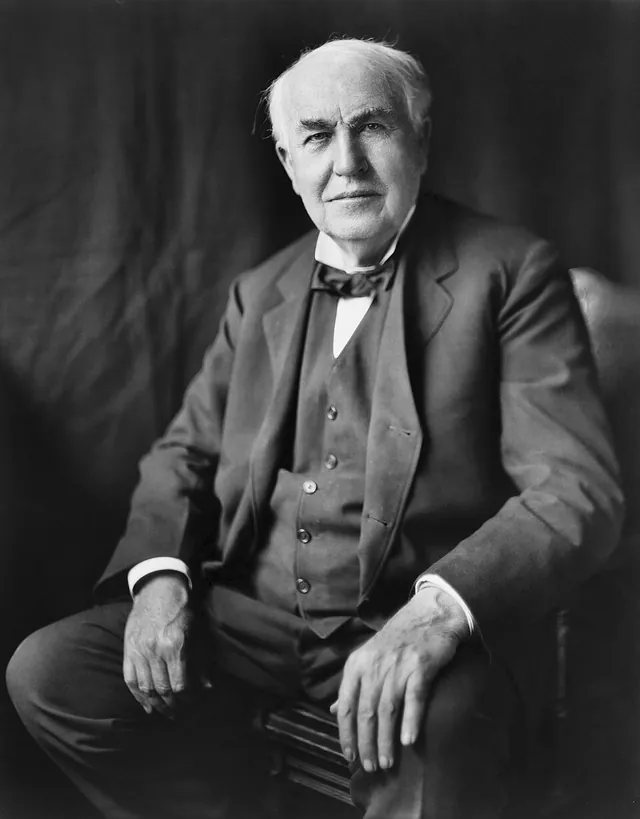
Edison belongs next to Nikola Tesla for a specific, checkable reason: both are commonly assumed to appear in Catharine Cox’s landmark 1926 historiometric study, and neither does. Cox’s subjects had to be dead, with settled biographical records; Edison lived until 1931, five years past its publication.
What is real is the “addled” story, in its plainer, less romantic form. A Port Huron teacher did call the seven-year-old Edison “addled” in 1854, and his mother withdrew him from school after three months, teaching him at home afterward. The popular version — a hidden letter, discovered decades later, that reduced him to tears — is a later embellishment with no supporting evidence.
The patent record is the strongest anchor available, and it needs no inflation: 1,093 granted US patents, confirmed by the modern scholarly archive at Rutgers, sitting on top of three months of formal education. That gap is the real story; a fabricated attribution to Cox adds nothing to it.
How we read a number →The modern scholarly archive confirming 1,093 successful US patent applications, the first filed 13 October 1868.
Checked directly against the full text: Edison does not appear, despite his birth year fitting the study’s nominal range. He was still living in 1926, which is the most likely reason, by direct analogy with Tesla and Curie’s documented exclusion for the same cause.
Support the plainer, documented version of the story — a teacher’s remark and a three-month withdrawal from school — and identify the popular “hidden letter” version as unsupported embellishment.
Source URLs and first-appearance date pending audit.
Several sites falsely attribute their figure to Cox (1926), who never covered Edison.
The sources behind our estimate
The figures that circulate for Thomas Edison, what we were able to confirm, and where the two diverge.
Figures from 130 to 195 circulate for Edison, with 145 the most commonly repeated. Several aggregator sites attribute their number to Catharine Cox’s 1926 study of historical geniuses.
Edison does not appear anywhere in Cox’s 1926 study. His birth year, 1847, falls inside her nominal 1450–1850 window, but a full-text search of the book turns up zero mentions of him — the same exclusion already documented on this site for Nikola Tesla and for Marie Curie, both of whom were also still living when Cox published. Several sites that quote a figure for Edison cite Cox as the source; that attribution is false.
A 65-point spread, on a figure aggregator sites misattribute to a real study that never covered him, is this site’s recurring signature: not disagreement about a measurement, but a number invented and then re-invented.
Want a number that does hold up? Every figure on this page is somebody’s claim. Take the 30-question test and get a percentile you can check rather than a figure you have to trust.
Thomas Edison — frequently asked
What was Thomas Edison’s IQ?
No test result exists — intelligence testing did not exist in usable form during his working life. Figures from 130–195 circulate online, most commonly 145, none traceable to a real source.
Is Edison in Catharine Cox’s 1926 genius study?
No — checked directly against the study’s full text. His 1847 birth year fits the study’s range, but he was still alive in 1926; Cox’s subjects needed settled biographical records, the same reason Tesla and Curie are excluded.
Did a teacher really call Edison “addled”?
Yes — a Port Huron teacher said it in 1854, and his mother withdrew him from school (his only three months of formal education) soon after. The popular “hidden letter” version of the story is a later, unsupported embellishment.
How many patents did Edison hold?
1,093 US patents, confirmed by the Rutgers Edison Papers Project — still a record for one individual.
Was Edison entirely self-taught?
Essentially. After three months of formal schooling, his mother homeschooled him; he never attended university.
Why do some sites credit Cox’s study for Edison’s IQ figure?
It appears to be a false attribution — Cox’s study never covered him, most likely because he was still alive when it was published in 1926.
How does my IQ compare with Thomas Edison?
You can find out in about fifteen minutes. The IQ Metrics assessment is 30 questions, scored on the same 100-mean scale used throughout this page, so your result and the estimate above are at least expressed in the same units — one measured, one inferred. Once you have a number, the leaderboard shows where it would sit, and how we score and norm it explains the benchmarking.
Where does this estimate come from?
From the documented record rather than a test — the method is named above and set out in full under how we read a number. Compare it against the other historical profiles, starting with Isaac Newton.
- Take the 30-question IQ test — get a measured score and percentile of your own
- Average IQ by country — how the scale behaves across populations
- How IQ Metrics scores its assessment — the method behind our own number
- More on how IQ testing works — reliability, error and what a score can and cannot say
- More historical profiles — same field, same method
More historical
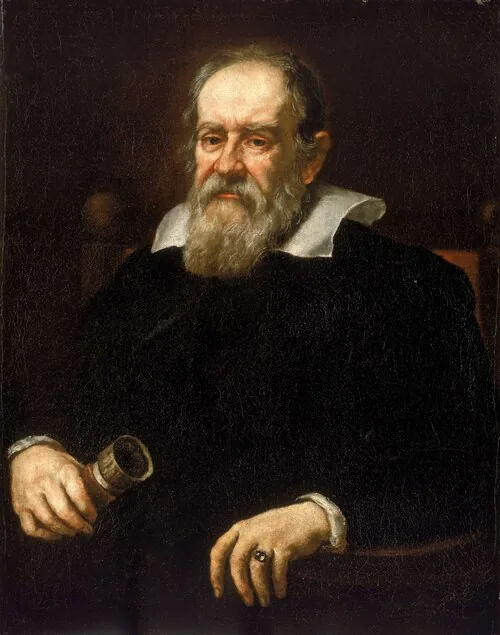
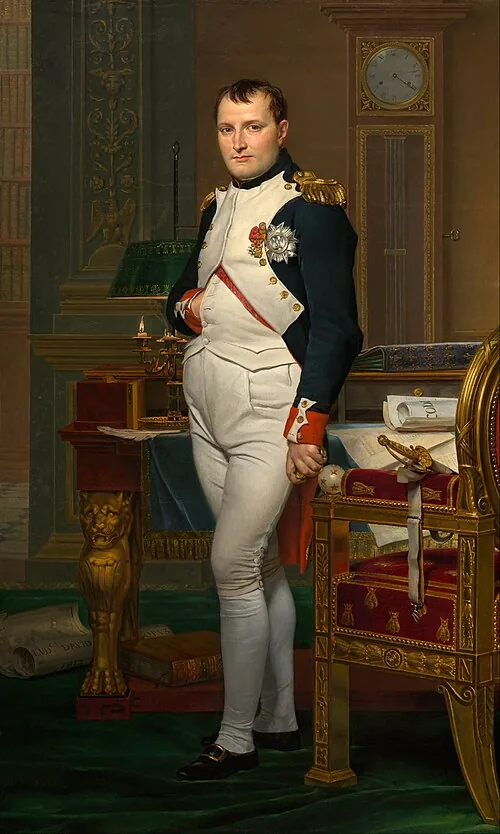
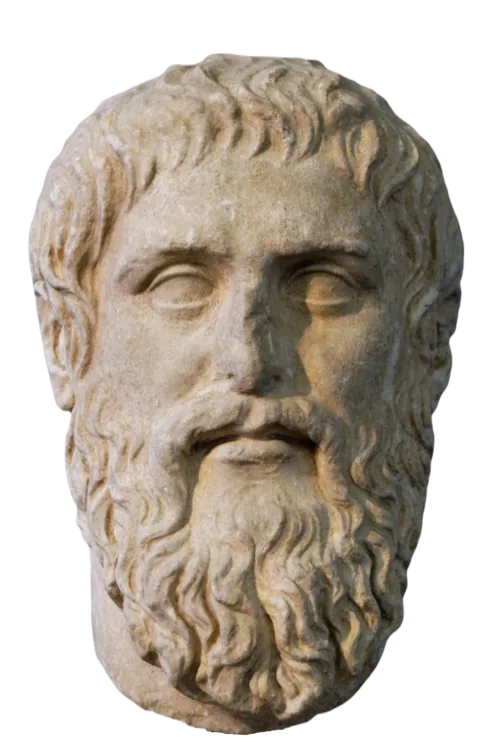
Portrait by Justus Sustermans (1636), via Wikimedia Commons, public domain. · Portrait by Jacques-Louis David (1812), via Wikimedia Commons, public domain. · Photograph by Marie-Lan Nguyen, public domain. Background removed for the portrait above.


An estimate is an inference.
Yours can be measured.
Thirty questions, scored against general-population benchmarks. Your score, your percentile, your ability breakdown and a printable IIF certificate.
Find your IQ score now! →