IQ Metrics
IIF Certified Assessment Start IQ Test
IIF Certified Assessment

Cracking the IQ Code: Strategic Steps for Acing Your IQ Tests

Cracking the IQ Code: Strategic Steps for Acing Your IQ Tests

IQ tests have been transformed from just measures of intelligence to being gateways for opportunity in a world where the ability to think is increasingly accepted as an essential skill which can help achieve academic and career success. Depending on the stakes involved, such as admission to universities or career advancement, IQ tests are used.

Why IQ Tests Matter

IQ tests have tradionally been used by organizations like the U.S. Army and various educational institutions. They not only offer a score but a snapshot of an individual’s problem-solving abilities, logical reasoning, and potential for complex thought processes. Understanding your performance in these areas can be crucial for career growth and personal development.

Understanding Test Dynamics

Before diving into preparation, it is important to understand what IQ tests measure. They typically assess our various cognitive abilities which includes verbal comprehension, perceptual reasoning, working memory, and processing speed. Each of these areas contributes to what we commonly refer to as “Intelligence”. It is important to have a strategy if you want to score high in your next IQ test.

cracking the IQ codes

Preparing for an IQ Test: A Strategic Approach

1.Familiarize with the Format: Each IQ test has its unique structure. It is essential to take the time to understand the format of the test you are taking. Websites like IQ Metrics provide practice tests that can help you get accustomed to the question types and the time limit.

2. Cognitive Exercises: Engaging in activities that challenge your brain is crucial. This could include puzzles, strategy games like chess, or even learning a new skill. These activities will keep your brain active and improve your problem-solving ability.

3. Healthy Lifestyle: There is a strong connection between physical health and cognitive function. It is important to ensure that you get enough sleep, eat a balanced diet rich in nutrients that support brain health, and engage in regular physical exercise.

4. Stress Management Techniques: Stress significantly impacts cognitive performance, especially in a high-pressure situation like taking an IQ test with a time limit. Techniques such as meditation, deep breathing exercises, and yoga can help manage stress levels, allowing for clear thinking and better focus during IQ tests.

5. Practice Under Timed Conditions: Authentic IQ tests are always timed, adding an element of pressure. Practicing under similar conditions to improve your time management skills and get accustomed to thinking under pressure.

6. Enhance Your Knowledge Base: A broader knowledge base can unexpectedly aid in IQ tests. Regular reading, staying updated on current events, and engaging more in intellectual discussions can sharpen your thinking and offer new perspectives.

7. Feedback and Improvement: After each practice session, always make sure to review your answers. Understanding where you went wrong and why is very crucial for improvement. Platforms like IQ Metrics often provide detailed feedback, which can be invaluable in this process.

The Broader Implications of IQ Tests

IQ tests are more than academic exercises; they play a significant role in various real-life scenarios. For example, certain high-stakes industries use these tests to assess the potential and fit of candidates. They can influence admission decisions in educational institutions and help you to understand your cognitive strengths and weaknesses can guide your learning and development strategies.

Key Takeaways

Preparation for an IQ test involves a journey of self improvement that’s more than just the exam itself. It’s a process of harnessing your cognitive skills and applying them to real life situations. Consider using tools like IQ Metrics, where you’ll be able to monitor your intelligence as well as learn insights about brain development and strategy education in order to obtain a full assessment of your intellectual capabilities!
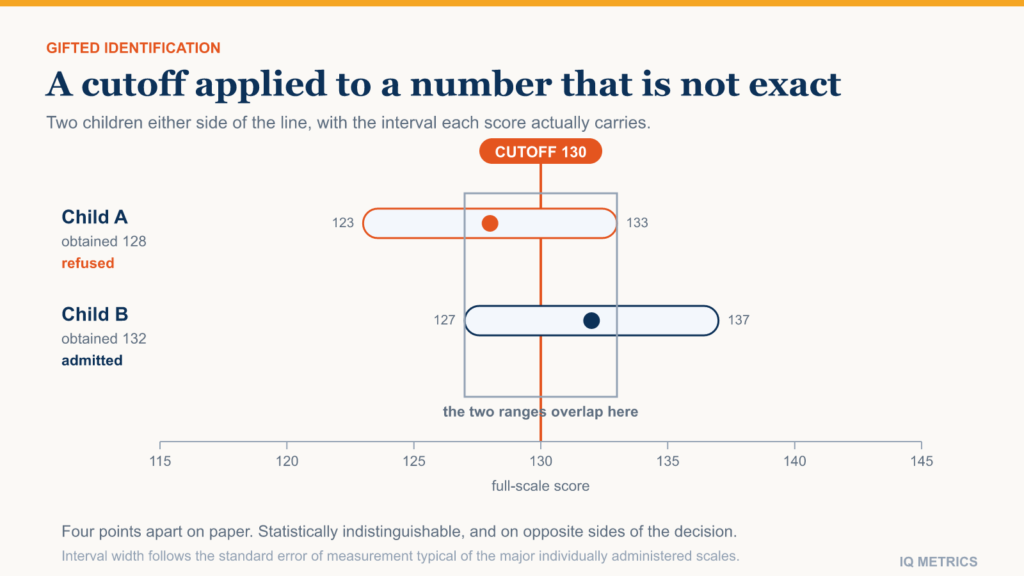
Gifted Cutoff Scores

Gifted Cutoff Scores

Most gifted programmes draw their line at an IQ of

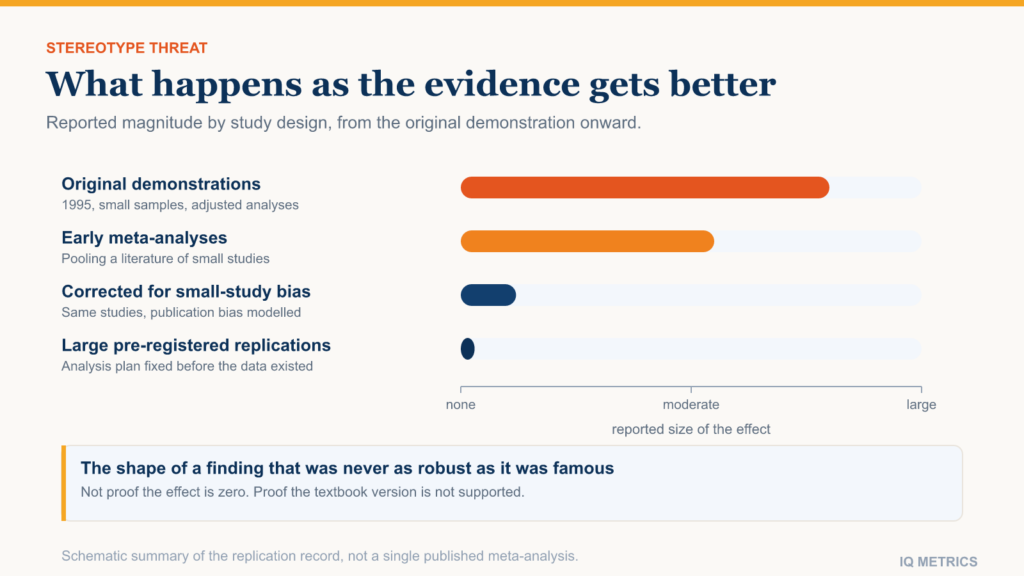
Stereotype Threat and Test Scores

Stereotype Threat and Test Scores

Few findings in psychology have been cited as widely, or

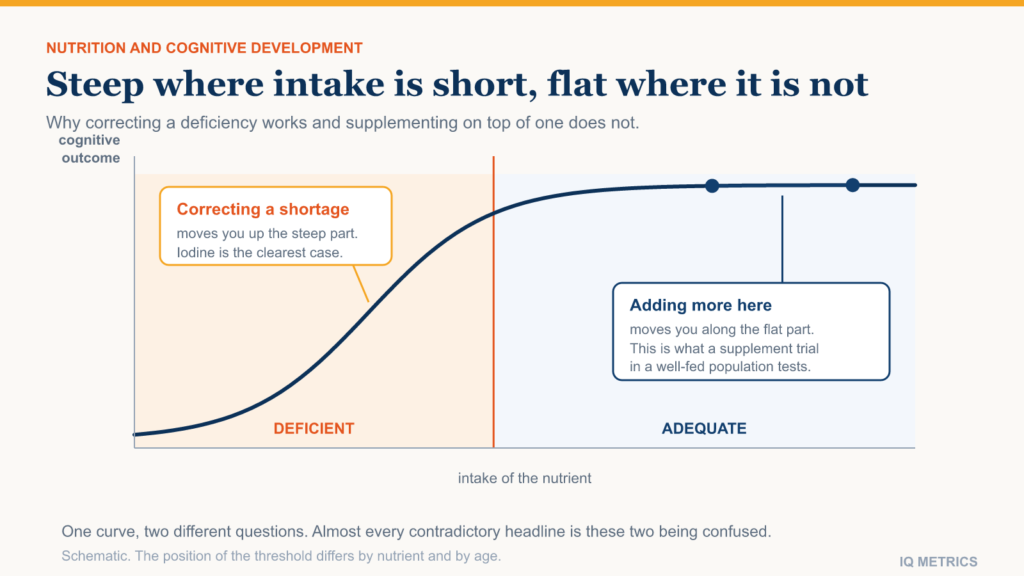
Nutrition and IQ

Nutrition and IQ

The evidence on diet and intelligence looks contradictory until you

Exploring the Fascinating World of IQ Tests

Exploring the Fascinating World of IQ Tests

Welcome, readers! Today, we’re delving into the intriguing realm of IQ tests. Join us as we embark on a journey to understand what IQ tests are, how they work, and why they continue to captivate both researchers and  individuals seeking to gauge their intellectual powers.

IQ Metrics

What is an IQ Test?

IQ tests are tools designed to measure and assess a person’s intellectual abilities. The term “IQ” stands for “intelligence quotient,” which represents a numerical representation of one’s cognitive capabilities. These tests evaluate various aspects such as logical reasoning, problem-solving, verbal comprehension, and spatial awareness.

The History of IQ Testing:

The origins of IQ testing can be traced back to the early 20th century when Alfred Binet developed the first intelligence test in France. Binet’s work laid the foundation for the modern concept of IQ testing. Over time, IQ tests evolved, and standardized scales such as the Stanford-Binet and Wechsler scales were introduced to ensure accuracy and reliability.

Types of IQ Tests:

IQ tests come in various forms, each with its unique approach to measuring intelligence. Some tests, like the Raven’s Progressive Matrices, assess non-verbal reasoning abilities, while others, such as the Wechsler Adult Intelligence Scale (WAIS), cover multiple domains of intelligence. Additionally, culture-fair tests have been developed to minimize cultural bias and provide a fair assessment for individuals from diverse backgrounds.

Types of IQ Test

Criticisms and Controversies:

Despite their widespread use, IQ tests have faced criticism and controversy. Some argue that these tests may be culturally biased, favouring certain groups over others. Others question the limited scope of IQ tests, as they predominantly measure cognitive abilities while neglecting other valuable forms of intelligence, such as emotional intelligence. It’s important to approach IQ test results with a balanced perspective, considering them as one piece of the puzzle rather than a definitive measure of intelligence.

Practical Applications of IQ Tests:

IQ tests have practical applications in various fields. In educational settings, these tests can help identify students who may require specialized educational programs or additional support. IQ scores are also utilized in career assessments to guide individuals towards suitable professions that align with their cognitive abilities. Furthermore, IQ tests play a role in identifying learning disabilities and providing appropriate interventions.

The Importance of IQ Tests in Society:

IQ tests hold significance in society, particularly in fields like research, talent identification, and organizational decision-making. They can help researchers study the relationship between intelligence and various factors, such as academic achievement or job performance. Additionally, IQ tests aid in recognizing individuals with exceptional intellectual capabilities and providing them with opportunities for further development and advancement.

Improving IQ Scores:

While IQ scores are generally believed to reflect innate abilities, certain strategies may help individuals enhance their cognitive skills. Engaging in activities that stimulate the mind, such as puzzles, reading, and learning new skills, can contribute to cognitive development. Additionally, maintaining a healthy lifestyle that includes proper nutrition, regular exercise, and sufficient sleep can positively impact cognitive function.

Conclusion:

As we conclude our exploration of IQ tests, it is essential to remember that intelligence is a multifaceted concept that encompasses a wide range of abilities. IQ tests provide valuable insights into certain cognitive capacities, but they should not be seen as the sole determinant of intelligence or individual worth. Embracing emotional intelligence, creativity, social skills, and a lifelong thirst for knowledge are equally important for personal growth and success.

So, let’s celebrate the complexities of intelligence, appreciate our unique strengths, and continue our journey of self-discovery and lifelong learning. Remember, we are so much more than a number on an IQ test. All the Best for your exam

Gifted Cutoff Scores

Gifted Cutoff Scores

Most gifted programmes draw their line at an IQ of

Stereotype Threat and Test Scores

Stereotype Threat and Test Scores

Few findings in psychology have been cited as widely, or

Nutrition and IQ

Nutrition and IQ

The evidence on diet and intelligence looks contradictory until you