IQ Metrics
IIF Certified Assessment Start IQ Test
IIF Certified Assessment

How to Use Your IQ Test for Better Self-Improvement

How to Use Your IQ Test for Better Self-Improvement

When Yumi, a creative marketing specialist, received her IQ test results from IQ Metrics, it was a moment of self-realization. The results showed her exceptional verbal comprehension skills, a testament to her articulate communication and creative campaign ideas. However, her average numerical reasoning score was a gentle nudge towards areas that need improvement. Seeing this as an opportunity, Yumi embarked on a journey of self-improvization, determined to balance her cognitive abilities and decided to undertake the following steps.

IQ test for better self improvement

Understanding the Results:

Yumi’s score, while impressive in certain areas, was a revelation. She excelled in understanding and articulating complex concepts, a skill evident in her professional journey. However, the average numerical reasoning score turned out to be a wake-up call. She realized that balancing her cognitive skills was crucial for her professional and personal growth.

2. Setting Personal Goals:

Yumi then set out to enhance her numerical skills. She started with everyday number-based puzzles, advancing to more complex mathematical challenges as she progressed. Her morning routine now included a mix of numerical exercises and reading, catering to both her strengths as well as areas for improvement.

3. Applying Skills Professionally:

In her creative marketing job, Yumi’s verbal skills were invaluable in crafting compelling narratives and client pitches. She started leveraging on her her improved numerical skills by collaborating more with the data analytics team, bringing a new dimension to her marketing strategies.

4. Expanding Beyond Comfort Zones:

To push her boundaries further, Yumi joined a debate club, sharpening her argumentation and public speaking skills. Simultaneously, she enrolled in an online course in basic programming, intertwining her linguistic talent with a strong numerical logic.

5. Holistic Personal Development:

Recognizing that intelligence is multifaceted, Yumi embraced activities beyond the cognitive exercises. She took up yoga to enhance her emotional intelligence further and joined a local art class, fueling her creativity and providing a much-needed outlet for relaxation.

6. Navigating Challenges:

Balancing her ambitious self-improvement plan with a demanding career was not very easy but Yumi learned the importance of time management, self-care, and setting realistic expectations during this journey.

7. Reflecting on Growth:

Several months into her journey, Yumi noticed a significant improvement in her ability to analyze and understand data. She felt more intellectually balanced and equipped to handle diverse challenges in her job. Her confidence soared, and she found herself to be more engaged and fulfilled in both her professional and personal life.

8. Reflecting on Growth and Retesting:

After months of dedicated efforts, Yumi decided to retake the IQ test. The results were gratifying. Not only did her numerical reasoning scores improve, but she also witnessed significant enhancements in other cognitive areas. This retest wasn’t just about numbers; it was a confirmation of her growth, resilience, and the effectiveness of her self-improvement strategies throughout this process.

Finally:

Yumi’s story is a testament to the power of using IQ test results as a guide for effective self-improvement. It is about recognizing and enhancing your inherent abilities while working diligently on areas that need improvement. Yumi’s journey shows that with determination, a well-rounded approach, and the right mindset, anyone can use their IQ test results as a springboard for comprehensive personal growth and all-round development.

Remember, an IQ test score is a starting point, not a limitation. Embrace it as a tool for understanding and nurturing your unique talents and potential.

Get your IQ Certification today!
IQ vs EQ

IQ vs EQ

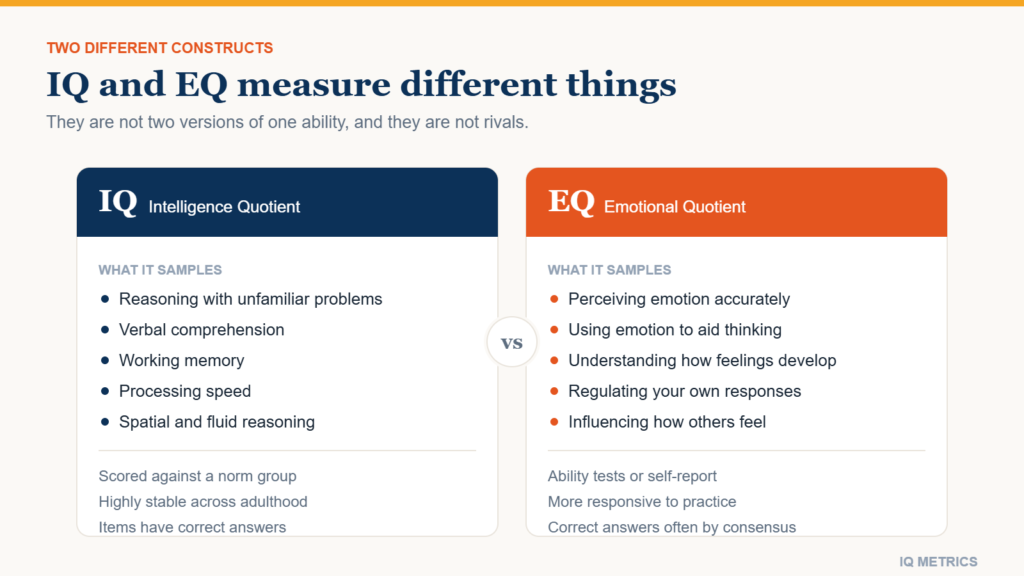
IQ measures reasoning; EQ measures how well you read and

Mensa IQ Score Requirements

Mensa IQ Score Requirements

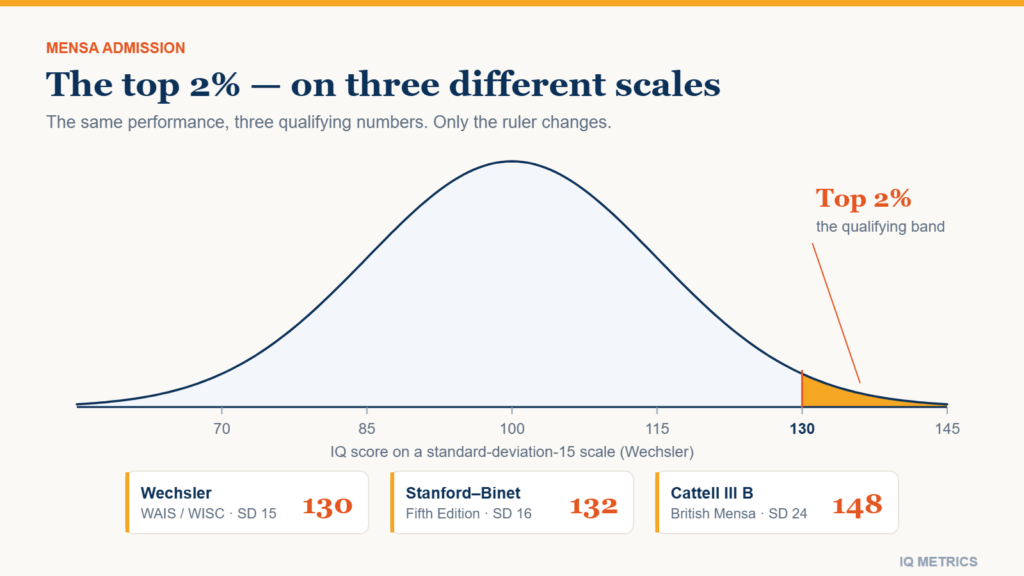
Mensa admits the top 2% of scorers, but "the top

Professional IQ Tests

Professional IQ Tests

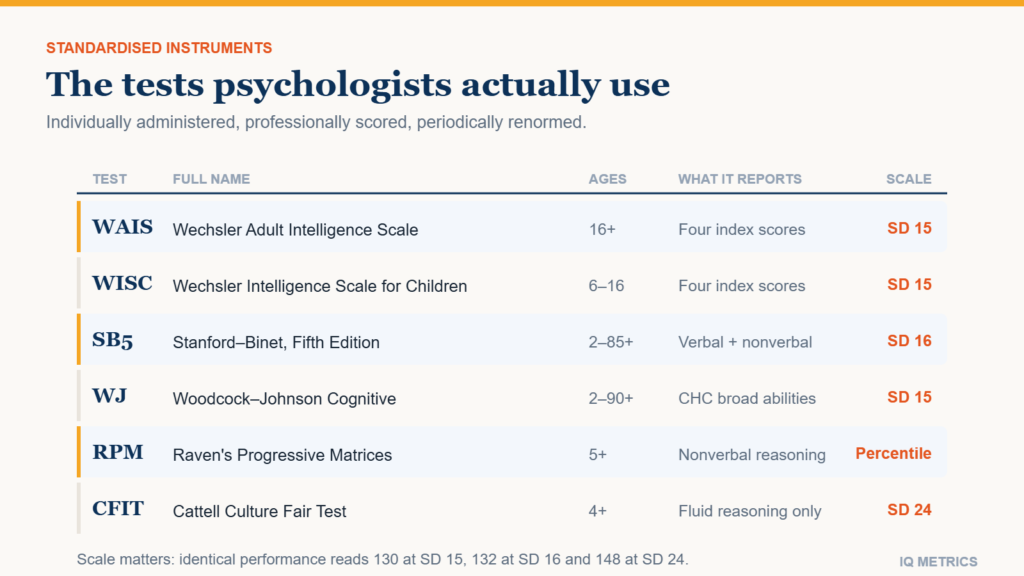
When a psychologist measures intelligence, they reach for one of

Brainpower Unleashed: Unconventional Ways to Increase Your IQ

Brainpower Unleashed: Unconventional Ways to Increase Your IQ

“How can I increase my IQ?” is a question which is asked very often and several professionals recommend conventional methods like puzzles, mental exercises, and a nutritious diet, but what if I tell you that we have some out of the box methods that can help us increase our IQ. Embarking on a journey of cognitive enhancement by increasing your IQ, this discourse presents a series of unconventional techniques which can be used to increase IQ and boost intellectual capacity. These methods help us really understand all the amazing things our minds can do that most of us haven’t even discovered yet. Let’s begin exploring them:

The Power of Lucid Dreaming:

Lucid dreaming opens the door to a realm where you are not bound by the constraints of reality. In this fantasy world, you can fly, meet celebrities, and explore uncharted territories—all within the landscape of your own mind. Yet, the magic of lucid dreaming extends far beyond mere dreamscapes.

Imagine finding yourself in a complex situation at work that demands creative problem-solving. Your mind, sharpened by lucid dreaming, starts to recognize the dream-like nature of the problem. Just like in your dreams, you take control, manipulate variables, and arrive at a novel solution. In this instance, lucid dreaming has equipped you with a unique approach to real-world problem-solving.

The Mindful Art of Doodling:

Let’s journey into the world of doodling (The act of subconsciously writing or drawing things while engaged in meetings, phone calls or classes), often dismissed as mere scribbles on paper. However, beneath the seemingly aimless lines lies a practice that engages your brain in a profound way. Now imagine you are sitting in a lecture, your pen dancing on the margins of your notebook, seemingly detached from the classroom. Little do you know that your mind is in a state of deep focus and still soaking in the information around you.

Doodling becomes a powerful tool as you translate this focus into your daily life. In a high-pressure meeting, your hand instinctively starts to doodle. While your conscious mind is engaged in the discussion, your doodles act as a parallel stream of thought. In the end, your seemingly idle scribbles reveal a creative solution to the problem at hand.

The Science of Brainwave Entrainment:

The concept of brainwave entrainment is using sounds or lights to help your brain get into a certain mood, like feeling relaxed or focused, like listening to music while working or studying. This tangible technique synchronizes your brainwaves with specific frequencies, altering your state of consciousness. Imagine you’re preparing for a crucial exam, and you need to absorb a massive amount of information.

By engaging in brainwave entrainment, you enhance your ability to concentrate deeply. As your brainwaves align with the frequency that promotes focused learning, you dive into your study materials with unparalleled clarity. Your retention improves, and you grasp complex concepts effortlessly. This real-life example demonstrates the practicality of an unconventional method in the face of academic and professional challenges.

Unlocking Quantum Mind Power:

Quantum mind power is like using special science techniques to make our thinking extremely creative. It takes ideas from a science called quantum physics, which deals with tiny things that we cannot see and uses them to help us think in really unique ways. This might sound a bit tricky, but it’s actually very beneficial. Trying to think like this can instantly start boosting our brainpower and IQ.

For instance, imagine you are trying to choose a new project at work, and it’s hard to decide. Using quantum mind power, you think in a new way, like imagining all the different paths each project could take, not just ‘good’ or ‘bad’. This helps you visualise what will happen when you go down each path and also helps you develop a brilliant idea that nobody else thought of, making your choice stand out.

Embark on Memory Palaces:

Memory palaces are like creating a map of secret rooms in your mind, where each room holds unforgettable information. Think of it as building your detective’s den, similar to the famous fictional detective Sherlock Holmes, who uses his “mind palace” to remember clues and solve cases. Imagine you’re prepping for an important talk. You arrange all your key points in different ‘rooms’ of your memory palace.

As you begin your presentation, you mentally walk through these rooms, easily recalling each point. This boosts your confidence, and you deliver a smooth, impressive talk. Your audience, including colleagues and bosses, is amazed. Memory palaces aren’t just memory tricks; they are a smart strategy to enhance how your brain works and even increases your IQ.

In this journey of cognitive enhancement, we have witnessed how unconventional methods can help boost IQ scores and also act as portals to uncharted territories within your brain. They offer you cognitive enhancement and the chance to experience life through a new lens.

At IQ Metrics, we believe that intelligence knows no bounds. Our certified IQ tests are designed to help individuals from all walks of life explore their cognitive potential. Your journey to IQ enhancement begins here. Discover your cognitive prowess and unlock the power of unconventional methods to boost your IQ.

Embrace a brighter, more intelligent future!

IQ vs EQ

IQ vs EQ

IQ measures reasoning; EQ measures how well you read and

Mensa IQ Score Requirements

Mensa IQ Score Requirements

Mensa admits the top 2% of scorers, but "the top

Professional IQ Tests

Professional IQ Tests

When a psychologist measures intelligence, they reach for one of

Exploring the Fascinating World of IQ Tests

Exploring the Fascinating World of IQ Tests

Welcome, readers! Today, we’re delving into the intriguing realm of IQ tests. Join us as we embark on a journey to understand what IQ tests are, how they work, and why they continue to captivate both researchers and  individuals seeking to gauge their intellectual powers.

What is an IQ Test?

IQ tests are tools designed to measure and assess a person’s intellectual abilities. The term “IQ” stands for “intelligence quotient,” which represents a numerical representation of one’s cognitive capabilities. These tests evaluate various aspects such as logical reasoning, problem-solving, verbal comprehension, and spatial awareness.

The History of IQ Testing:

The origins of IQ testing can be traced back to the early 20th century when Alfred Binet developed the first intelligence test in France. Binet’s work laid the foundation for the modern concept of IQ testing. Over time, IQ tests evolved, and standardized scales such as the Stanford-Binet and Wechsler scales were introduced to ensure accuracy and reliability.

Types of IQ Tests:

IQ tests come in various forms, each with its unique approach to measuring intelligence. Some tests, like the Raven’s Progressive Matrices, assess non-verbal reasoning abilities, while others, such as the Wechsler Adult Intelligence Scale (WAIS), cover multiple domains of intelligence. Additionally, culture-fair tests have been developed to minimize cultural bias and provide a fair assessment for individuals from diverse backgrounds.

Types of IQ Test

Criticisms and Controversies:

Despite their widespread use, IQ tests have faced criticism and controversy. Some argue that these tests may be culturally biased, favouring certain groups over others. Others question the limited scope of IQ tests, as they predominantly measure cognitive abilities while neglecting other valuable forms of intelligence, such as emotional intelligence. It’s important to approach IQ test results with a balanced perspective, considering them as one piece of the puzzle rather than a definitive measure of intelligence.

Practical Applications of IQ Tests:

IQ tests have practical applications in various fields. In educational settings, these tests can help identify students who may require specialized educational programs or additional support. IQ scores are also utilized in career assessments to guide individuals towards suitable professions that align with their cognitive abilities. Furthermore, IQ tests play a role in identifying learning disabilities and providing appropriate interventions.

The Importance of IQ Tests in Society:

IQ tests hold significance in society, particularly in fields like research, talent identification, and organizational decision-making. They can help researchers study the relationship between intelligence and various factors, such as academic achievement or job performance. Additionally, IQ tests aid in recognizing individuals with exceptional intellectual capabilities and providing them with opportunities for further development and advancement.

Improving IQ Scores:

While IQ scores are generally believed to reflect innate abilities, certain strategies may help individuals enhance their cognitive skills. Engaging in activities that stimulate the mind, such as puzzles, reading, and learning new skills, can contribute to cognitive development. Additionally, maintaining a healthy lifestyle that includes proper nutrition, regular exercise, and sufficient sleep can positively impact cognitive function.

Conclusion:

As we conclude our exploration of IQ tests, it is essential to remember that intelligence is a multifaceted concept that encompasses a wide range of abilities. IQ tests provide valuable insights into certain cognitive capacities, but they should not be seen as the sole determinant of intelligence or individual worth. Embracing emotional intelligence, creativity, social skills, and a lifelong thirst for knowledge are equally important for personal growth and success.

So, let’s celebrate the complexities of intelligence, appreciate our unique strengths, and continue our journey of self-discovery and lifelong learning. Remember, we are so much more than a number on an IQ test. All the Best for your exam

IQ vs EQ

IQ vs EQ

IQ measures reasoning; EQ measures how well you read and

Mensa IQ Score Requirements

Mensa IQ Score Requirements

Mensa admits the top 2% of scorers, but "the top

Professional IQ Tests

Professional IQ Tests

When a psychologist measures intelligence, they reach for one of