IQ Metrics
IIF Certified Assessment Start IQ Test
IIF Certified Assessment

IQ Score Ranges Explained: What Your IQ Number Really Means

IQ Score Ranges Explained: What Your IQ Number Really Means

Have you doubted your intelligence? IQ tests are used to assess intelligence, but are they reliable? This essay will explain IQ scores and their importance.

The history of the IQ test

French psychologist Alfred Binet and his colleague Theodore Simon developed the first intelligence test in the early 20th century. Finding out which pupils needed more class aid was their goal. The Binet-Simon Scale inspired the IQ test, a more contemporary version.

The IQ test has been updated many times. One of the greatest advances was David Wechsler’s 1949 Wechsler Intelligence Scale for Children (WISC). This exam expanded IQ testing beyond verbal skills by measuring processing speed and working memory.

IQ Test Range
Today, there are several IQ tests with varying formats, questions, and scoring systems. These exams provide a typical IQ assessment.

Deciphering IQ Tests: What Are They Measuring?

A person’s IQ score compared to the population might measure their intelligence. Most persons have IQs in the average range, based on a bell curve distribution with a 100 average score.

But how are these scores calculated? IQ exams assess verbal understanding, visual reasoning, working memory, and processing speed. These tests aim to examine various aspects of intelligence to provide a complete picture.

An individual’s IQ is based on how well they did on the test’s assignments, not their intelligence. IQ levels can be affected by motivation, test performance, and culture. Because of this, IQ testing should be used cautiously and as part of a thorough cognitive assessment.

From below average to brilliant, that is the IQ scale.

With many IQ scores, each signifies a distinct level of intelligence. Let’s interpret the IQ scale’s many sections:

IQs below 70 indicate intellectual disability. These persons may have learning, problem-solving, and adaptive functioning issues. However, IQ is multifaceted, and some who struggle cognitively may succeed elsewhere.

IQ scores between 70 and 84 are below average. Abstract reasoning and complex problem-solving may be difficult for people in this range. People can live full lives and achieve in many areas with the correct guidance and tactics.

With IQs between 85 and 114, most people are average. This group has medium intelligence and is competent in most cognitive areas. How far someone goes in life depends on numerous factors, including their IQ. Intrinsic drive, persistence, and emotional intelligence also matter.

Above Average (115-129): An IQ score in the above average range would be 115 to 129. People falling under this range might have superior cognitive ability and really shine when it comes to tackling complicated problems and reasoning. They might be more capable of handling academic activities and have an innate talent for learning.

Individuals with an IQ of 130 or higher are deemed to be gifted. People that fall inside this range often demonstrate extraordinary intelligence and skills in areas like creativity, invention, and critical thinking. People who are gifted tend to see things in a different light and may do very well in professions that call for high levels of intelligence.

What do IQ values signify for people when interpreted?

Although intelligence quotient (IQ) tests reveal a person’s general level of intelligence, what are the implications of these findings for people? Never forget that intellect is more nuanced and complicated than a single numerical value can convey. Personality, drive, and emotional intelligence are additional variables that should be considered when interpreting IQ results.

If a person’s IQ is below average or falls into the intellectual impairment range, it can assist pinpoint areas that could benefit from further support and interventions. Educators, therapists, and parents can better meet the requirements of each student by understanding the unique cognitive issues they face.

Conversely, educational opportunities and enrichment programs tailored to the unique cognitive strengths of students with above-average or gifted IQs may be very beneficial to these students. The key to helping them live lives they love is identifying and developing their strengths.

Keep in mind that IQ is not a static trait but can rather fluctuate over time. A person’s intelligence can be shaped by their upbringing, the experiences they’ve had, and their level of schooling. Thus, rather than being considered as an absolute measure of potential, IQ scores should be viewed as a foundation for comprehending a person’s cognitive capabilities and limitations.

Reasons why IQ tests have their limits

Although the intelligence quotient (IQ) is a useful tool for studying brainpower, its shortcomings must be recognized. Quantitative measures of intelligence, like IQ, fail to account for intangibles like emotional intelligence, practical skills, and creativity. To be successful in many areas of life, these skills are essential.

Cultural prejudices, linguistic obstacles, and test-taking abilities are additional potential factors that impact IQ assessments. Individuals’ problem-solving styles and the way they approach issues might vary greatly depending on their cultural background. Consequently, while evaluating IQ values, it is essential to take cultural context and individual variances into account.

Plus, IQ has little bearing on whether or not a person will be successful or happy. Personal and professional success are heavily influenced by factors like drive, determination, emotional maturity, and the ability to interact with others. Focus on developing a whole skill set rather than placing too much value on IQ tests.

Disagreements about IQ testing procedures

There are currently a variety of tests available to measure intelligence, thanks to the evolution of IQ testing methodologies. The Woodcock-Johnson Tests of Cognitive Abilities, the Wechsler Adult Intelligence Scale (WAIS), and the Stanford-Binet Intelligence Scales are among the most used tests.

In order to measure various cognitive capacities, these exams usually include a battery of questions and activities. A person’s intelligence is calculated by comparing their test results to those of a normative sample. To ensure accuracy and dependability, it is crucial to remember that IQ tests should only be performed and evaluated by qualified specialists.

In spite of their popularity, IQ tests have not been without their detractors. There are many who think that exams are skewed because of cultural prejudices and don’t really represent the whole spectrum of human intelligence. Some think that intelligence is too multifaceted to be adequately measured by a single exam.

IQ tests should be seen with skepticism and as complementary to other methods of gauging cognitive capacity. Before judging someone’s potential, it’s important to consider their background, what drives them, and how emotionally intelligent they are.

Fact or fiction: Is there a way to raise your IQ?

Raising one’s IQ has always sparked discussion and investigation. Is it true that there are a lot of claims and methods out there that can increase IQ?

To be clear, intelligence is not a simple attribute; it depends on both hereditary and environmental elements. While it is true that training and practice can improve some cognitive abilities, the effect on IQ scores as a whole is still up for discussion.

Cognitive talents may be improved by brain-stimulating activities like reading, solving puzzles, and acquiring new skills. Having fun and developing one’s character should take precedence over focusing only on raising one’s IQ when engaging in these pursuits.


Keep in mind that IQ levels are not the only indicator of intelligence. If you want to be successful and happy in life, you need to have emotional intelligence, social skills, creativity, and practical ability. Consequently, it is critical to cultivate a diverse set of skills and talents and adopt a comprehensive approach to personal growth.

The practical effects of intelligence tests

Education, work, and social relationships are just a few ways IQ can be used in real life. These ramifications must be considered carefully and in context.

In education, IQ tests can identify students who need extra help or would benefit from specialized programs. They can assist teachers identify how each child learns best and alter their methods. IQ is one criteria, but it should not be the sole one utilized to determine schooling.

Workplace intelligence tests may examine candidates’ cognitive abilities. Motivation, interpersonal skills, and practical ability are among several factors affecting job performance. Thus, cognitive exams should not be the exclusive factor for hiring.

IQ ratings must be respected in social interactions. Everyone has unique intellect, and those with different IQs can strengthen any group with their ideas and skills. In a culture that values and promotes everyone’s strengths, intelligence variety can make it more tolerant.

In sum: welcoming a wide range of intelligences

Despite having more than one number, the IQ scale provides a standardised measure of intellect. IQ results should be interpreted alongside motivation, emotional intelligence, and practical skills. These other characteristics can reveal cognitive strengths and weaknesses.

Always remember that intelligence is multifaceted. Everyone has something to offer, including persons with different IQs. Accepting and valuing everyone’s ability, regardless of IQ, is part of accepting intellectual variety.

When you question your IQ, remember that intellect is not quantified. Develop your brainpower, self-improve holistically, and wonder at human ingenuity.
 

Gifted Cutoff Scores

Gifted Cutoff Scores

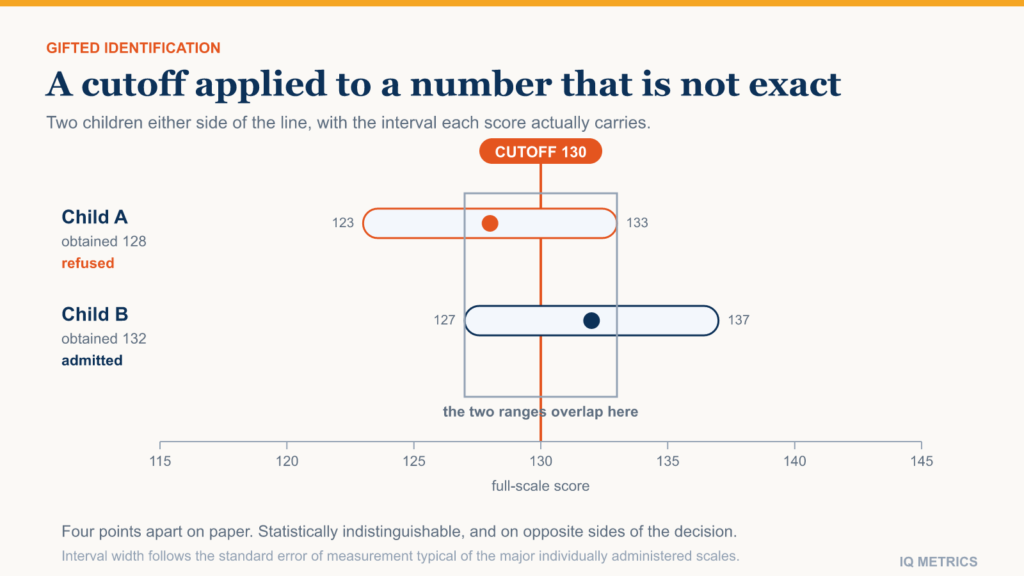
Most gifted programmes draw their line at an IQ of

Stereotype Threat and Test Scores

Stereotype Threat and Test Scores

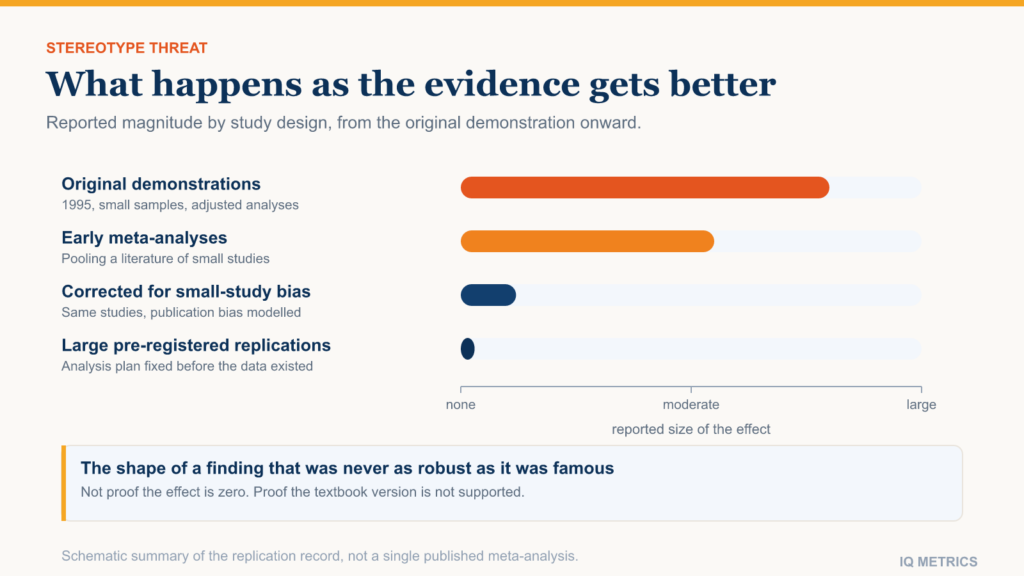
Few findings in psychology have been cited as widely, or

Nutrition and IQ

Nutrition and IQ

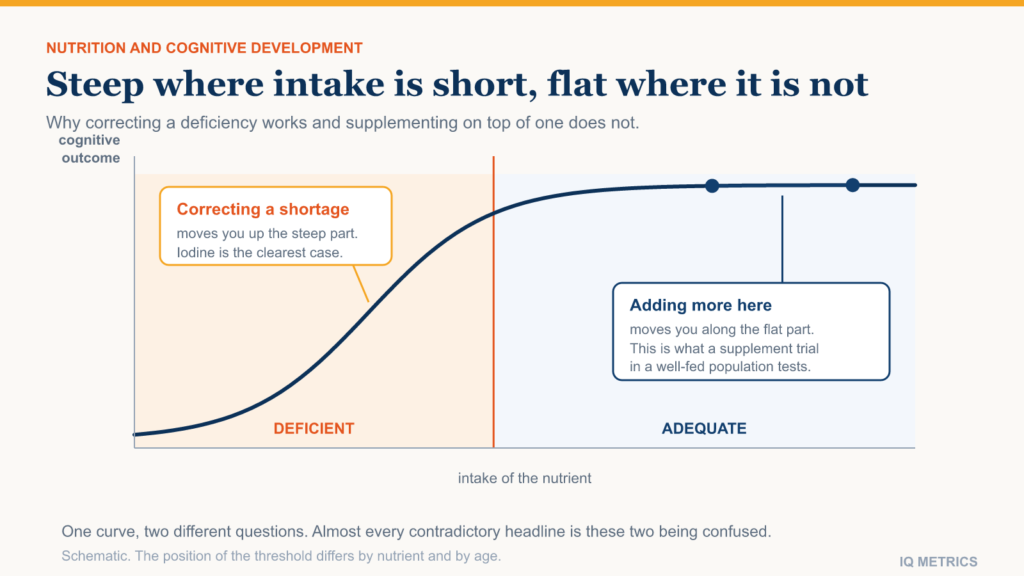
The evidence on diet and intelligence looks contradictory until you

IQ Level Chart

IQ Level Chart

Introduction

The journey to reaching your maximum potential begins with discovering your identity and developing an understanding of your capabilities. An IQ chart is one tool that could be helpful in this regard. It is helpful to know where you are on the intelligence scale if you are interested in learning how to reach your full potential in life.

A systematic way to measure intelligence is the IQ level chart, which uses a scale that goes from below average to above average. Assessments of cognitive capacity and academic accomplishment often employ this visual aid. The intricacy of the human mind is not adequately captured by IQ, which is only one measure of intelligence.

IQ Level Chart

The IQ level chart is the subject of this page, which will give readers an outline of the various IQ levels and what they mean.

Additionally, we will go over the process of calculating IQ scores and the limitations of use IQ as an indicator of intellect. This article will give you useful information to help you reach your full potential, whether you are interested in knowing your IQ or just want to know more about how intelligence is assessed.

How is intelligence quotient (IQ) derived?

A person’s cognitive ability can be quantified by their intelligence quotient (IQ). A person’s reasoning, problem-solving, and conceptual-understanding abilities are evaluated by this test. In the early 1900s, psychologists Alfred Binet and Theodore Simon proposed the idea of intelligence testing as a means of determining which students would benefit most from further educational resources. A lot has changed since then, both conceptually and in terms of the design and delivery of IQ tests.

Verbal comprehension, working memory, processing speed, and perceptual reasoning are some of the cognitive abilities that are usually evaluated in IQ tests. The goal of these exams is to gauge future intelligence rather than current knowledge. They provide a consistent method for ranking people’s intelligence and cognitive capacities.

A person’s IQ is determined by comparing their test results to those of a statistically valid population sample. With a score of 100 as the average, those with above-average or below-average intellect are classified accordingly. The IQ level chart gives a general idea of a person’s intelligence by placing them into one of several ranges according on their scores.

The various IQ levels shown on the graph

Based on their IQ results, individuals are grouped into different ranges on the IQ level chart. The cognitive strengths and limitations of individuals can be compared using these ranges, which give a general idea of their skills. One should not rely only on the IQ level chart to judge a person’s potential or intelligence; it is merely a tool.

People with IQs 70 and below are considered to have below-average intelligence since they have substantial cognitive hurdles and may need supplementary aids and adjustments in order to thrive in school and in life generally. Activities requiring them to think abstractly, solve problems, or understand complicated material may be beyond their abilities.

Individuals with an IQ between seventy-one and eighty-five may struggle with certain cognitive tasks, but they are typically capable of handling most aspects of life on their own. They might use some extra help and methods to improve their cognitive capacities since they have trouble with complicated problem-solving.

The majority of people fall within the average intelligence range (IQ 86-115) because it is the most prevalent. People who are averagely intelligent usually don’t have any major problems with their cognition and do well in school and other aspects of life. They have the ability to think critically, solve issues, and grasp and implement complicated ideas.

People with an IQ between 116 and 130 are considered to have above-average cognitive talents; they tend to do particularly well when faced with challenges that call for abstract thought, reasoning, or problem-solving. Their ability to think logically and analytically may be impressive.

People with an IQ of 131 or higher are considered to have above-average intelligence; they are very bright, creative, and curious. Their exceptional problem-solving, critical-thinking, and innovative abilities could make them stand out in certain professions.

Realizing how important your IQ is

One must keep in mind that IQ does not encompass the entire spectrum of human intellectual capacities; it is merely one component of intelligence. Although it can provide light on a person’s cognitive abilities and limitations, it is not the only factor that determines their capacity for personal development and achievement.

Instead of seeing IQ as a final designation, people can use it as a springboard for further investigation and comprehension. They can aid people in recognizing their strengths and places for improvement, which in turn helps them to concentrate on developing themselves.

The role of intelligence in achieving one’s goals

Even if intelligence isn’t everything, it does play a role in how far a person gets in life. There may be some benefits to academic success, problem-solving abilities, and critical thinking for people with higher IQs. A person’s IQ is just one component in their ability to develop and achieve their goals in life.

When it comes to reaching one’s full potential and accomplishing one’s objectives, other important characteristics are emotional intelligence, creativity, motivation, and persistence. By playing to their strengths and acquiring necessary abilities, people with ordinary or below-average IQs can nonetheless achieve success in many aspects of life.

When one is aware of their IQ level, they can see where they might benefit from further help or training. Techniques to improve cognitive capacities, like memory exercises, problem-solving drills, and critical thinking exercises, may help those with lower IQs, for instance. Conversely, those who are naturally gifted with higher IQs may choose to hone their abilities in areas such as leadership, emotional intelligence, and creativity.

Recognizing that cognitive ability are not the only determinant of personal growth and achievement is also crucial. A person’s capacity to realize their full potential and succeed depends on a number of factors, including a motivating self, a supporting environment, resources, and chances for growth and learning.

Techniques to raise your IQ

Despite the common belief that IQ is fairly constant, there are ways to improve one’s cognitive capacities and discover latent talents that could lead to greater success in life. Some approaches that have shown promise in enhancing mental capacity are as follows:

Improve your cognitive talents like memory, attention, and processing speed by regularly exercising your brain with puzzles, problem-solving tasks, and brain-training games. By engaging in these pursuits, one can increase neuroplasticity, or the brain’s capacity for change and adaptation.

Stay active and healthy: For the brain to work at its best, a balanced lifestyle that includes eating right, exercising regularly, and getting enough sleep is crucial. Cognitive performance and protection against age-related decline can be enhanced with regular physical activity.

Engaging in intellectual pursuits and gaining new skills throughout life can help stimulate the brain and enhance cognitive capacities. Acquiring new information and abilities can improve cognitive performance. This is true whether one is learning a new language, playing an instrument, or delving into a different area of study.

Negative effects on cognitive capacities can result from chronic stress, thus it’s important to practice mindfulness and manage stress. Meditation and other forms of mindfulness practice, such as deep breathing, can alleviate stress and boost mental performance.

Reading difficult books, having thought-provoking conversations, or taking part in academic or professional development programs are all examples of intellectually challenging activities that can push you to your cognitive limits and help you grow as a person.

Improving one’s cognitive ability is a process that requires dedication and perseverance. Slow but steady progress in cognitive function can be achieved with regular practice of these techniques.

Myths and facts regarding intellect and IQ

The concepts of intelligence and IQ are fraught with misconceptions and myths that must be dispelled. That intelligence is static and unchangeable is a prevalent misconception. Research has demonstrated that cognitive talents can be enhanced through numerous tactics, as previously mentioned in this page, while IQ remains generally constant throughout time.

IQ isn’t the only indicator of potential and intelligence. Intelligence depends on practical skills, emotional intelligence, creativity, and other talents. You shouldn’t use IQ alone to measure intelligence because it only measures a part of these talents.

Another argument against IQ tests is that they may favor certain social or cultural groups. When judging a person’s intelligence based on their IQ score, remember the test’s limitations and biases.

Additionally, IQ does not ensure success or happiness. Drive, perseverance, emotional intelligence, and social skills affect personal goals and fulfillment.

Charting IQ levels and job options

Intelligence helps determine job suitability, but not professional success. STEM fields need more complicated reasoning, abstract problem-solving, and critical thinking, hence persons with higher IQs may prefer them. However, persons with average or below-average IQs can succeed in some fields by playing to their strengths and learning critical skills.

A person’s IQ shouldn’t hinder employment. Consider one’s passions, ideals, and skills when choosing a career. Regardless of IQ, those who follow their passions and use their skills at work are more likely to succeed and be fulfilled.

Tools for conducting in-depth research and evaluations of oneself

Are you curious about your IQ or brain capacity and intelligence? You may find a lot of information online. Online IQ tests can estimate your IQ, but be careful.

Comprehensive cognitive examination tools can help you understand your cognitive strengths and weaknesses. These tests are administered by experts and can reveal cognitive ability.

Books, essays, and websites on intelligence and self-improvement complement exams. Explore these materials to discover your potential and how to unlock it.

Finally, embracing your capacity for development and achievement

Your intellectual abilities, areas for improvement, and future prospects can all be better understood with the use of an IQ level chart. Keep in mind that cognitive tests like IQ don’t capture the complexities of the human mind.

Personal development and success are influenced by intrinsic factors such as drive, imagination, emotional maturity, and perseverance. It doesn’t matter how smart you are as long as you make the most of your potential to improve your most important abilities.

Determine your level of cognitive ability, make an effort to improve yourself, and choose a career path that you’re passionate about. The first steps in realizing one’s potential are self-awareness and a commitment to personal development. Embrace your journey and reach your maximum potential for personal development and achievement.


Gifted Cutoff Scores

Gifted Cutoff Scores

Most gifted programmes draw their line at an IQ of

Stereotype Threat and Test Scores

Stereotype Threat and Test Scores

Few findings in psychology have been cited as widely, or

Nutrition and IQ

Nutrition and IQ

The evidence on diet and intelligence looks contradictory until you

IQ Classifications

IQ Classifications

We examine cognitive capabilities through the intriguing prism of IQ categorization. How intelligence is measured can help us understand the human mind, from the most brilliant to the most common thinkers.

This article discusses the various factors that affect intelligence, the several IQ classifications, and their significance. IQ testing definitions and the origins of “gifted,” “average,” and “intellectually disabled” are revealed.

IQ Classification

Intelligent classification is more than just a series of numbers; it opens up endless possibilities. We address cultural prejudice and standardized test flaws in the IQ testing dispute. We also explain how IQ classification influences education, employment, and public opinion.

This page will help you understand IQ classification, whether you want to know your own IQ or the wider ramifications of this system. Join us as we investigate human intelligence and discover our differences.

An Overview of IQ Testing’s Origins and Evolution

In the early 1900s, intelligence testing began. French psychologist Alfred Binet intended to locate kids who needed extra academic aid. Binet developed the first IQ test, the Binet-Simon scale, to match mental age to chronological age. This groundbreaking effort provided the framework for subsequent IQ testing.

Over time, intelligence quotient tests have added more dimensions of intelligence. The Stanford-Binet Intelligence Scale, the US standard for IQ testing, was a major advance. In addition to testing intelligence in children, this exam assessed cognitive abilities in adults.

As technology advanced, intelligence testing improved. Automated testing enabled more accurate, bias-free measurements. The many intelligence tests on the market use different scoring methodologies and criteria.

The development of IQ testing is fascinating. Remember that IQ tests are assessment tools, not intellect measures. Not foolproof. Knowing this, let’s examine the IQ groups and their contents.

A Comprehensive Overview of IQ Scales

A system for classifying people according to their IQ levels is provided by IQ classifications. A numerical value called the Intelligence Quotient (IQ) is usually used to represent these categories. Scores above or below the average of 100 indicate above-average or below-average intellect, respectively, on the intelligence quotient (IQ).

Typically, the groups are categorized as follows:

Intellectually disabled people have IQs below 70. Intellectual disabilities from moderate to severe occur within this group. These people may need daily assistance.

The majority of the population has IQs between 90 and 109. This category represents the average IQ of the population.

Above 130 on the intelligence test, they are gifted. This category includes those with exceptional brains and skills in music, language, and math. To meet their educational needs, brilliant students typically need specialized programs.

IQ scores above 140 are considered “genius,” the highest categorization. Highly intelligent people often make game-changing discoveries and ideas. Society respects these intelligent people because they are rare.

Understanding these categories helps explain the several intelligence levels and their pros and cons. Remember that intelligence tests examine cognitive abilities and may not capture the whole range of human ability.

Analyzing the IQ Debate IQ testing has critics. Some feel that intelligence tests, such as IQ testing, are biased toward certain cultures and may not accurately estimate the IQ of persons from varied socioeconomic backgrounds. Standardized testing may disadvantage some groups, perpetuating inequity.

Intelligence is also debatable. Some believe that IQ numbers simplify human thought too much. Conventional IQ assessments may not evaluate emotional intelligence, creativity, or practical abilities, which are all elements of a person’s intellect.

IQ testing also has limitations in assessing personal development. They measure a person’s skills in one moment but don’t consider intelligence’s changeability. Intelligent people can improve their cognitive abilities with correct training and environment.

Despite these criticisms, IQ tests are still used for evaluation and categorization. It has a big impact on many areas, including education and employment.

Variables That Might Have an Effect on IQ Results

A person’s intelligence and cognitive capacity are influenced by various things. Environment influences intelligence even when heredity is considered. Several things have the potential to impact IQ tests:

It is possible to raise IQ with a good education and stimulating intellectual environment. Cognitive growth can be enhanced through the use of dynamic classrooms and good instruction.

In particular during the formative years of childhood, a healthy diet is essential for brain development. Cognitive issues, including low IQs, can be caused by nutritional deficits.

Resouces and opportunities are defined by socioeconomic status. A parent’s income and level of education are factors in this. Higher socioeconomic status is related with better educational possibilities, which can enhance IQ.

Culture, environment, and personal history all have a role in molding one’s thought processes and memory. Because different cultures place varying values on different kinds of intelligence, this can have an effect on IQ results. Misjudgment of intellect may occur due to cultural prejudice in testing.

All things considered, IQ findings become more meaningful and highlight the importance of giving everyone an equal opportunity to grow intellectually.

How IQ Is Used in the Workplace and Classroom

Results from intelligence tests have a significant influence on career and educational paths. Schools frequently administer IQ tests to kids in order to determine which ones need further support or more difficult courses. Highly intelligent students may benefit more from being placed in gifted or accelerated education programs. On the flip side, individualized treatments can help students with lower IQs catch up cognitively.

For jobs requiring a high level of cognitive ability, IQ tests are occasionally administered to prospective employees. Though it shouldn’t be the only determinant, IQ is a promising indicator of potential. Competence in practical skills, appropriate work experience, and emotional intelligence are further prerequisites.

IQ categorization has the potential to shape societal perceptions of intelligence. People with high IQs are often romanticized as being both talented and driven, in contrast to individuals with lower IQs. It is critical to dispel these stereotypes and acknowledge the usefulness of diverse intelligences.

Classifying IQ and Academic Achievement

IQ is useful for understanding people’s intelligence levels, but it is not a reliable indicator of future achievement. Intelligence means more than just having a lot of brains. Intelligence is impacted by emotional intelligence, creativity, problem-solving abilities, and resilience.

A high IQ isn’t enough to guarantee success. As crucial are aspiration, resolve, fortune, and the backing of friends and family. Although they may not have been labeled “genius” by IQ tests, many exceptional individuals have accomplished amazing things.

There are admirable traits and abilities in people of all intelligence levels. There is room for improvement and unique talents in every person, regardless of IQ. We can create an environment where people with different intelligences can flourish if we work to make our society more welcoming and inclusive.

Common Misconceptions Regarding IQ Scoring Dispelled

Myths and misconceptions abound regarding IQ testing and its classification. Let’s disprove a few popular ones:

Falsehood: Intelligence quotient (IQ) is unchangeable and unchangeable. It is possible to raise one’s IQ and cognitive capacities with the help of appropriate therapies, courses of study, and cognitive training. The idea that the brain may alter and adapt over the course of a lifetime is called neuroplasticity.

Myth: A high IQ ensures success. While it may help in some fields, there are many other aspects that contribute to a person’s level of success. Other important factors in succeeding are having the right amount of drive, persistence, and social skills. A high IQ is only part of the picture.

Myth: A low IQ indicates a lack of potential. While IQ is a good indicator of general intelligence, it is not sufficient to determine an individual’s full potential. Beyond IQ scores, every individual have distinct talents and abilities. These strengths should be acknowledged and encouraged.

A more complex understanding of intelligence may be advanced and a society that welcomes and supports people with varying degrees of IQ can be built by debunking these misconceptions.

Raising Mental Capacity and Smarts

The intelligence quotient (IQ) is not a gold standard for measuring brainpower, but it does give a picture of how smart a person is right now. People can develop their cognitive capacities in a variety of ways; intelligence is not a static trait. To boost one’s IQ and mental capacity, consider the following:

Education: The best way to improve your cognitive talents is to continue learning throughout your life and to challenge your mind. Reading, studying an instrument, or solving puzzles are all great ways to exercise your brain.

Exercising Regularly: Exercising regularly improves brain health and cognitive performance. To get the most out of your workouts, try to incorporate both aerobic and strength training activities.

Adopting a healthy lifestyle, which includes eating a balanced food, getting enough sleep, and managing stress, can have a good effect on cognitive ability. The brain can only operate at its best when it gets the nourishment it needs from healthy food and enough sleep.

Various components of intelligence, including memory, focus, and the ability to solve problems, can be enhanced by cognitive training programs. A lot of the time, these programs will have you do brain-challenging exercises and tasks.

You can improve your cognitive talents and reach your maximum potential by applying these tactics to your life.

The Consequences of the Continual Dispute Over IQ Classification

IQ categorization’s many components fascinate scientists, teachers, and the public. IQ tests are useful for assessment, but their limits and biases must be considered. Intelligence is vast and varied, not a number.

As we study IQ classification, we must promote variety and assist people of all intelligences. We can create a society that values and develops individual strengths by understanding what drives IQ tests and dispelling prevalent myths.

Whether your IQ is “genius,” “gifted,” “average,” or “intellectually disabled,” it doesn’t decide your worth or ability. Take pleasure in your skills, improve them, and never stop studying human intelligence’s endless possibilities.


Gifted Cutoff Scores

Gifted Cutoff Scores

Most gifted programmes draw their line at an IQ of

Stereotype Threat and Test Scores

Stereotype Threat and Test Scores

Few findings in psychology have been cited as widely, or

Nutrition and IQ

Nutrition and IQ

The evidence on diet and intelligence looks contradictory until you

IQ Tests and Gender Differences: Fact or Fiction?

IQ Tests and Gender Differences: What Research Shows

Questions about whether males and females differ in intelligence have circulated for decades. In this article, we explore what scientific research says about IQ tests and gender differences, how IQ scores are interpreted across sexes, and why raw scores do not straightforwardly reflect cognitive superiority in either group. This provides context for understanding the complexities of human intelligence measurement.IQ Tests and Gender Differences: Fact or Fiction?

Will the first portion discuss IQ testing’s goal?

One way of assessing intellect is old. To interpret the results from a gender viewpoint, we must first understand what these exams measure. A person’s “intelligence quotient” (IQ) is a numerical measure of their cognitive ability compared to the general population. These exams test verbal, numerical, and spatial thinking, memory, and processing speed. Other cognitive abilities assessed include processing speed.

Remember that intelligence tests are not foolproof. They want to measure global intelligence using a predetermined set of cognitive talents. Although they provide a basic idea of how well someone is doing in these areas, they do not represent comprehensive intelligence, which includes a wide range of information and skills.

The misconception that men and women have differing IQs is examined in Section 2

Men have been thought to have a higher IQ than women for a long time. The idea that men perform better on IQ tests that evaluate cognitive abilities has helped spread this idea. The difference between fact and fiction is crucial, and scientific evidence contradicts this.

Large amounts of study have disproven the idea that men and women have different intelligences. Meta-analyses of large-scale research found no statistically significant difference in average IQ scores between men and women. These IQ tests disprove the idea that men are smarter than women.

Dispelling Preconceptions: Third Section Research on Gender and Intelligence Researchers have studied many cognitive talents to better understand the relationship between gender and intelligence quotient (IQ). These studies are trying to dispel gender stereotypes about intellect while revealing the complexity of the human mind.

A Science study found no gender difference in general IQ. The researchers showed that women excelled in linguistic activities despite men performing somewhat better on spatial reasoning tests. These findings suggest that recognizing and valuing individuals’ unique cognitive capacities, regardless of gender, is crucial.

Several factors affect IQ tests, as detailed in Section 4

In addition to gender differences, many factors can affect intelligence test results. These factors must be considered when analyzing test findings and determining why disparities exist.

Academic opportunities can affect IQ test scores. High-quality education can alter cognitive growth and IQ test scores. To eliminate or reduce the gender gap in academic achievement, girls and boys must have equal educational opportunities.

As noted in Section 5, gender and cultural prejudice affect intelligence tests.

Cultural prejudice can cause test score differences. This prejudice can affect intelligence tests. Cultural factors like language proficiency, test form familiarity, and social expectations can affect IQ. These preconceptions can perpetuate gender test score discrepancies and harm specific populations, particularly women.

Researchers have created culture-neutral cognitive tests to address this issue and reduce cultural biases. Because these exams focus on cognitive capacities less impacted by culture, they can better estimate an individual’s inherent intellect.

IQ test results are influenced by societal norms and beliefs, as discussed in Section 6 on how preconceptions and social pressures impact average intelligence scores.

The research found that gender and intellect stereotypes can lower children’s test performance. When aware of gender stereotypes that imply their group is less intelligent, people can score worse on intelligence tests. Concerns and insecurity can induce this. This can ensure a gender gap in test scores. This is because societal expectations and preconceptions often come true.

Section 7: Appreciating Individual Skills and Qualities

Remember that intellect is complex and cannot be tested by a single test. Intelligence tests are not the primary predictor of intelligence because they only provide a limited view of cognitive abilities.

Instead, we must recognize and embrace people’s various cognitive abilities. A person’s IQ depends on their talents and experiences. By recognizing and nurturing these traits, a society that values variety and ensures success for everyone can be created.

The educational and occupational effects are explored in Section 8

Continuing to have the belief that men and women are not equally capable of performing certain tasks has significant implications for both education and employment. The notion that men are more intelligent than women can restrict the educational and professional opportunities available to women. A possible cause of this is social attitudes.

A significant step toward resolving this issue is the elimination of bias in the selection of professionals and the promotion of gender equality in educational settings. Through the provision of opportunities for individuals to pursue their interests and improve their talents, society has the potential to become more accepting of people of varying intelligences and to appreciate them.

How to overcome preconceived notions and the importance of diversity

The notion that men are inherently more intelligent than women is debunked by intelligence testing. Numerous studies have demonstrated that men and women have comparable ways of thinking. The findings of these investigations indicate that IQ is influenced by genes, society, and expectations.

Because intelligence is multifaceted and cannot be accurately measured by a single test, it is essential to have a solid understanding of this concept. It is possible that we will be able to establish a society that is accepting of and places value on the full range of human intelligence if we reject prejudice and discrimination based on perceived cognitive capacity. The elimination of cognitive tests and preconceived notions about gender differences is essential to the process of constructing a world in which people of both sexes have equal opportunities.

If you’re curious about how IQ scores are measured or want to see how you perform, you can take an online IQ test on our homepage to explore your own reasoning and problem-solving skills.

Gifted Cutoff Scores

Gifted Cutoff Scores

Most gifted programmes draw their line at an IQ of

Stereotype Threat and Test Scores

Stereotype Threat and Test Scores

Few findings in psychology have been cited as widely, or

Nutrition and IQ

Nutrition and IQ

The evidence on diet and intelligence looks contradictory until you

The Importance of IQ Tests in Education and Employment

The Importance of IQ Tests in Education and Employment

Introduction

Academic achievement and professional success are of the utmost importance in today’s competitive employment market. Important to this strategy is the IQ test. A person’s educational and career opportunities may be impacted by intelligence tests, which evaluate cognitive abilities and have been around for some time. Potentially useful IQ tests are included in this article.

The Importance of IQ Tests in Education and Employment

A Look Back at How IQ Tests Have Evolved

An IQ test’s history begins in the early 1900s. As psychologists studied the human mind, IQ testing emerged. In 1905, Alfred Binet and Theodore Simon created the first contemporary IQ test, the Binet-Simon Scale. This evaluation sought to identify academically struggling students who needed extra help. The goal was to assess memory, attention, and problem-solving.

IQ tests have become more difficult and accurate over time. Stanford-Binet Intelligence Scales created the IQ in 1916 as a standardized measure of intellect, a major advancement. Future IQ tests, which required this scale, shook the business.

How to Interpret IQ Test Results and What They Indicate

Intelligence quotients are derived from standardized tests that measure various cognitive abilities. Commonly measured abilities on such tests include reasoning, problem-solving skills, comprehension of spoken language, and speed of information processing. A statistically valid sample of the population is used to compare each person’s results and arrive at their score.

In most cases, IQ tests use a bell curve distribution, with 100 being the mean result. Normal intelligence is defined as a score below 100, and above-average intelligence is defined as a score above 100. Around 68% of the population is located within one standard deviation above or below the average, according to the usual setting of the standard deviation at 15 points.

A person’s value and potential are not determined by their IQ score. They only show a person’s cognitive abilities as they were at a certain moment in time. Because intelligence is multidimensional and intricate, no one test can do it justice.

Why and How IQ Exams Are Used in the Classroom

Educational chances and trajectories are greatly influenced by IQ tests. Using these, teachers can better understand their students’ cognitive strengths and areas for improvement, which in turn allows them to personalize their lessons and interventions. Students that score high on intelligence tests are typically considered to be gifted and may benefit from a more rigorous course load or extra enrichment opportunities. They are also able to spot pupils who could use some extra help in the form of special education programs or individualized tutoring to get over their academic challenges.

IQ testing is required for admittance to specialized schools and programs in several educational systems. High-IQ pupils may have access to advanced curriculum, accelerated learning tracks, and other academic enrichment. These school paths can help you succeed and stand out.

However, IQ tests should not determine educational achievements alone. It would be foolish to ignore emotional intelligence, social skills, and creativity in well-rounded development. Instead than focusing on cognitive talents, education should develop all students’ potential.

The Role of IQ Exams in Entering Higher Education

College admissions processes can also be heavily influenced by IQ tests. In addition to grades, extracurriculars, and personal essays, IQ tests are one component of many colleges’ evaluation processes. As a high IQ is commonly linked to a stronger potential for academic achievement, it can bolster a college application.

Scholarships and other special programs are also available to pupils with exceptionally high IQs at some schools. Financial aid and one-of-a-kind educational experiences are two ways in which these chances might enrich the educational process. When looking at a student’s profile as a whole, it is essential to keep in mind that IQ values are only one component.

The Role of Intelligence Tests in the Job Market

IQ tests have the potential to greatly impact one’s professional and employment chances. To evaluate a candidate’s intelligence and capacity for solving problems, many companies administer IQ tests as part of the hiring process. Possessing a high IQ is a great way to stand out in the job market and show that you can handle challenging tasks.

The ability to think critically is highly valued in many fields, including the financial sector, IT, and academia. To find people with the brainpower to be great at these things, IQ testing can be used as a screening technique. But you know what? Other attributes, including practical skills, imagination, and emotional intelligence, are just as vital for advancing in your profession and enjoying it to the fullest.

Discussions and Rebuttals Context of IQ Evaluations

IQ testing have always been contentious and criticized. Critics of these exams say they are prejudiced toward certain cultures and don’t take test-takers’ varied life experiences into consideration. A person’s educational opportunities and cultural exposure, rather than their intrinsic brilliance, may be more accurately reflected by IQ testing, according to critics.

Other people think that IQ tests don’t cover all the bases when it comes to measuring human potential. Creativity, practical intelligence, emotional intelligence, and other crucial traits are largely ignored by these exams in favor of measuring cognitive abilities. A more complete picture of a person’s talents can be obtained, according to critics, if a well-rounded evaluation takes into account several aspects of intellect.

A Guide to Getting Ready for an IQ Exam

You can do better on an IQ test and feel more confident if you study for it. You can’t prepare for an IQ test the same way you would for a test covering a specific topic, but there are ways to do your best.

Getting to know the structure and kinds of questions typically seen on IQ tests should be one’s first priority. People can get more used to taking examinations and learn how to tackle various question kinds by taking practice exams.

Being mentally ready in general is also important. Improving one’s cognitive abilities and performance can be as simple as participating in activities that encourage thinking critically, solving problems, and using logic. Brain health and cognitive ability are positively impacted by regular exercise, a good diet, and enough sleep.

The Importance of Intelligence Testing in the Workplace of the Future

The usefulness and longevity of intelligence tests as a tool for hiring may be called into doubt by the ever-changing environment. The relevance of IQ tests in recruiting decisions may be diminishing, according to some, due to the growing importance of emotional intelligence, flexibility, and creativity. A wide variety of experiences, perspectives, and abilities are increasingly valued by employers as key components of a high-performing team.

Nevertheless, IQ testing will probably always have a place in the workforce for jobs that demand very particular types of intelligence. Engineering, data analysis, and scientific research are areas that place a premium on candidates with strong problem-solving, analytical, and logical reasoning abilities; these tests can help employers identify those candidates.

Conclusion

Final Thoughts on the Role of IQ Tests in Changing Academic and Professional Destinies
Educational and occupational opportunities are significantly influenced by IQ tests. They allow schools and businesses to objectively evaluate applicants by providing standardized assessments of IQ. Possessing a high IQ can open doors to renowned schools and well-paying jobs.

Keep in mind that intelligence is only one measure of a person’s potential. Professional success and happiness are heavily dependent on a combination of practical skills, emotional intelligence, and creativity. Individuals can better plan their educational and professional futures if they have a firm grasp of how IQ testing influence both the classroom and the job market. A better future can be ours if we take a more all-encompassing view of intelligence testing in order to help people reach their maximum potential.


Gifted Cutoff Scores

Gifted Cutoff Scores

Most gifted programmes draw their line at an IQ of

Stereotype Threat and Test Scores

Stereotype Threat and Test Scores

Few findings in psychology have been cited as widely, or

Nutrition and IQ

Nutrition and IQ

The evidence on diet and intelligence looks contradictory until you