
IIF Certified Assessment
Start IQ Test
IIF Certified Assessment
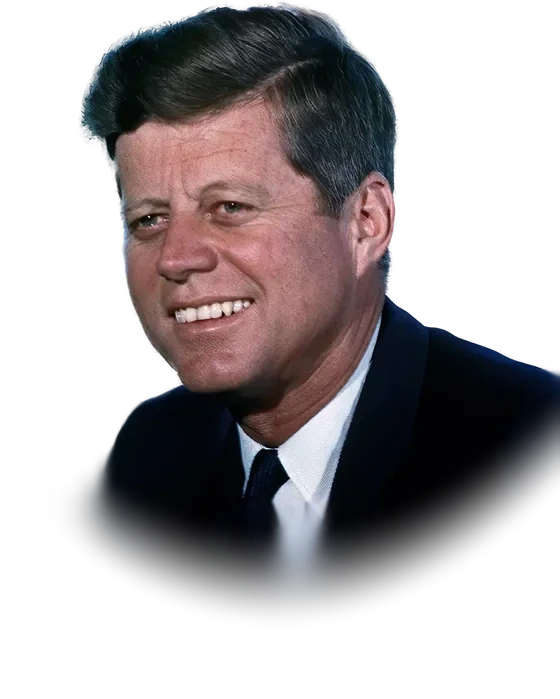
Kennedy is the rare entry where a real test result exists, is unremarkable, and was quietly replaced in public memory by a number somebody made up.
The 119 is a single mid-century school test taken by a teenager with a long record of illness and absence. It is a real data point and a narrow one, which is why the range above extends well past it.
Set the claim aside for a moment. If someone genuinely scored in this range, here is what that would represent.
Average is 100 by construction, and about two-thirds of people fall between 85 and 115. Take the test to place your own score on this scale.
| Score range | Classification | Share of people | What it indicates |
|---|---|---|---|
| 85 – 114 | Average | ~68% | The range most people fall into. |
| 115 – 129 | Above average | ~13.6% | Roughly one person in seven. |
| 130 – 144 | Gifted | ~2% | The threshold most high-IQ societies use. |
| Above 144 | Highly gifted | ~0.1% | Figures above this range are extrapolated from the curve rather than measured. |
Percentages are approximate and describe a normal distribution. The same number means different things on tests with different standard deviations.
Thirty questions gives you a measured position on this exact scale — your score, your percentile and the ability breakdown behind it.
Find out in 30 minutes →John F. Kennedy was born in Brookline, Massachusetts in 1917 and educated at Choate, briefly at Princeton and the London School of Economics, and then at Harvard, from which he graduated in 1940. His senior thesis was published as a book that year and sold well.
He commanded PT-109 in the Pacific and was decorated after its sinking in 1943. He entered the House of Representatives in 1947, the Senate in 1953, and the presidency in January 1961, the youngest person elected to the office.
He was assassinated in Dallas in November 1963. The volume of surviving documentation about him — medical, academic, military, political — is part of why the substitution of a fake IQ for a real one is so striking. The record was never hard to check.
The estimate above rests on this record. Every entry here is a matter of public fact, which is more than can be said for the number itself.
Following a claim back to its first appearance is the part almost nobody does — and it is what most people are actually asking.

This is the second invented presidential IQ to reach the mainstream press, and it is worth reading alongside Thomas Jefferson. In both cases the fabricated number was not merely wrong but more flattering than the record, and that is what carried it.
The Kennedy case has an unusually clean lesson, because the real number is available and nobody wants it. 119 is a good score. It is roughly the 90th percentile. It is also completely ordinary for a president, and it sits badly next to the mythology, so the hoax figure displaced it.
The honest conclusion is not that Kennedy was unintelligent — a 119 at fifteen from a mid-century school test predicts very little on its own, and the published thesis is a stronger signal than the test. It is that a documented score lost a straight fight with an invented one, in the national press, over a person about whom more is known than almost anybody.
How we read a number →The source of the 119. Reported in Kennedy biographies drawing on the school’s files; the score report itself has not been published in facsimile.
Fabricated. No such institute exists. Circulated by wire and reprinted internationally before being withdrawn. The origin of the 174.
His Harvard senior thesis, published commercially in the year he graduated. A checkable piece of work, and a better signal than the school test.
Sorensen’s account of his role in drafting Profiles in Courage, which is why the 1957 Pulitzer is listed here with a qualification rather than as evidence.
Awarded to Kennedy for Profiles in Courage. Recorded fact; contested authorship.
The figures that circulate for John F. Kennedy, what we were able to confirm, and where the two diverge.
174 is the figure most often attached to Kennedy online. It comes from a 2001 report ranking the IQs of American presidents.
The “Lovenstein Institute” did not exist. In July 2001 a fabricated study circulated claiming to rank presidential IQs — Kennedy at 174, and a sitting president near the bottom. It was reprinted by newspapers in several countries before it was traced to a satirical source with no institute, no researchers and no data. The documented figure, from Choate, is 119.
One of these came from a test. The other two came from a hoax and from people rounding the hoax.
Want a number that does hold up? Every figure on this page is somebody’s claim. Take the 30-question test and get a percentile you can check rather than a figure you have to trust.
A school test at Choate is reported in biographies as returning 119. That is the only documented figure. The 174 widely quoted online comes from a 2001 hoax.
No. The July 2001 “Lovenstein Institute” report was fabricated — the institute does not exist. It was reprinted by mainstream newspapers before being withdrawn.
Yes, roughly the 90th percentile. It is above average by a clear margin, and it is unremarkable next to the mythology, which is why it was displaced by a larger invented number.
The Pulitzer was awarded to him in 1957. Theodore Sorensen later acknowledged drafting substantial portions, so the prize is recorded here as fact with the authorship qualified.
The thesis. A single school test taken by a frequently ill teenager predicts less than a piece of sustained work that was published and reviewed.
Most of them, and the same 2001 hoax is usually the source. Thomas Jefferson, profiled here, has a separate fabricated figure with its own history.
You can find out in about fifteen minutes. The IQ Metrics assessment is 30 questions, scored on the same 100-mean scale used throughout this page, so your result and the estimate above are at least expressed in the same units — one measured, one inferred. Once you have a number, the leaderboard shows where it would sit, and how we score and norm it explains the benchmarking.
From the documented record rather than a test — the method is named above and set out in full under how we read a number. Compare it against the other politics profiles, starting with Thomas Jefferson.


Portrait © Matthew Yohe, CC BY-SA 3.0. The background-removed portrait above is a derivative work and is likewise offered under the same licence. · Portrait © Debbie Rowe / The Royal Society, CC BY-SA 3.0. The background-removed portrait above is a derivative work and is likewise offered under the same licence. · Portrait by Christopher Smith, U.S. Department of Health and Human Services — a work of the U.S. federal government, public domain. Background removed for the portrait above.
Thirty questions, scored against general-population benchmarks. Your score, your percentile, your ability breakdown and a printable IIF certificate.
Find your IQ score now! →The assessment costs nothing and you always get a real result. Upgrades add precision, analysis and a certificate — never access to the test itself.
Whatever you paid comes off the next tier for 30 days. Start small without losing the money.
Not what you expected? Full refund, no questions, no form to hunt for.
Prices adjust to your country automatically, so the certificate is reachable outside high-income markets.
Coming later: an annual membership (~$89/year) for unlimited retests, practice sets and progress tracking. Monthly billing is deliberately not offered — a once-a-year assessment does not justify a monthly charge, and it would churn.





.jpg)
