
IIF Certified Assessment
Start IQ Test
IIF Certified Assessment
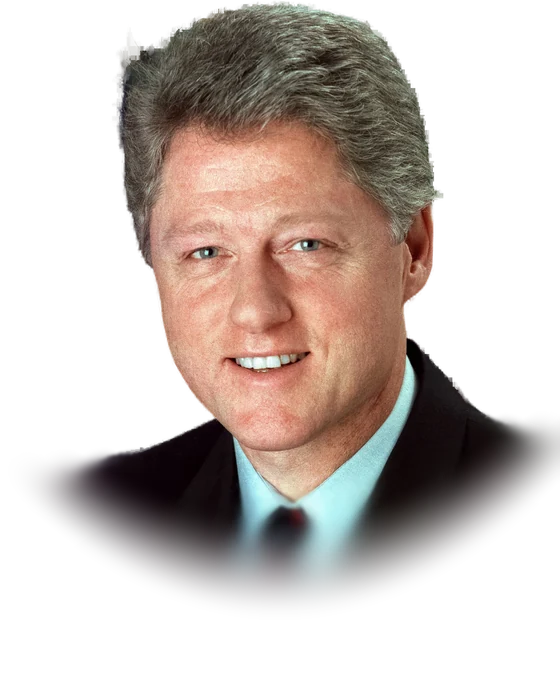
Clinton tops the same fabricated 2001 “presidential IQ” list that put George W. Bush at the bottom — 182 to 91, a relationship that turns out to be exact arithmetic, not a coincidence. The documented record behind the name is a Rhodes Scholarship, a Georgetown degree and a Yale law degree; none of it produced a number.
No IQ test result for Clinton has ever been published by any testing body, biographer, or primary document, and — unlike George W. Bush’s Washington Post-reported SAT score — no standardized test score for Clinton has ever been documented by a newspaper or official record either; a figure of 1032 circulates on test-prep sites with no traceable original source. This range reflects Simonton’s historiometric estimate and a genuinely strong, checkable academic record, not a measured score.
Set the claim aside for a moment. If someone genuinely scored in this range, here is what that would represent.
Average is 100 by construction, and about two-thirds of people fall between 85 and 115. Take the test to place your own score on this scale.
| Score range | Classification | Share of people | What it indicates |
|---|---|---|---|
| 85 – 114 | Average | ~68% | The range most people fall into. |
| 115 – 129 | Above average | ~13.6% | Roughly one person in seven. |
| 130 – 144 | Gifted | ~2% | The threshold most high-IQ societies use. |
| Above 144 | Highly gifted | ~0.1% | Figures above this range are extrapolated from the curve rather than measured. |
Percentages are approximate and describe a normal distribution. The same number means different things on tests with different standard deviations.
Thirty questions gives you a measured position on this exact scale — your score, your percentile and the ability breakdown behind it.
Find out in 30 minutes →William Jefferson Clinton was born in Hope, Arkansas, on 19 August 1946. He entered Georgetown University’s School of Foreign Service in 1964 and graduated with a Bachelor of Science in Foreign Service in 1968, winning a Rhodes Scholarship that same year to University College, Oxford, where he began reading for a B.Phil. before switching to a B.Litt. in politics. He left Oxford in 1970 without completing either degree and entered Yale Law School, earning his J.D. in 1973 — where he met fellow law student Hillary Rodham, whom he married in 1975.
He joined the University of Arkansas law faculty in 1974, was elected Arkansas Attorney General in 1976 and served 1977–1979, then became Governor of Arkansas in 1979 at thirty-two, then the youngest governor in the country. He lost re-election in 1980, won the office back in 1982, and served as governor again from 1983 until his election as the 42nd President of the United States in 1992, a post he held from 1993 to 2001.
 By Elora Mercer, Celebrity Research WriterFigures checked by Leon Falkner, Data & Research Analyst
The estimate above rests on this record. Every entry here is a matter of public fact, which is more than can be said for the number itself.
Following a claim back to its first appearance is the part almost nobody does — and it is what most people are actually asking.

Read this page next to John F. Kennedy’s and George W. Bush’s. All three men had a real record replaced by the same fabricated 2001 ranking, and together their three numbers span it end to end: Bush at the bottom (91), Kennedy in the middle (174), Clinton at the top (182). Only one of those three pages involves an actual test, and it isn’t this one — Kennedy’s 119 from Choate is real and dated; no test of any kind exists for Clinton.
The figure fails before any biography is even needed. 182 is exactly 91 doubled — Bush’s hoax number and Clinton’s are the two bookends of the same twelve-president list, and that clean 2:1 ratio is itself a sign of invention rather than measurement. The list’s own internal pattern gives away the rest: every Democrat on it scored in the 150s to 180s and every Republican scored in the 90s to 120s, a split too tidy for any real test to produce. On the standard deviation-15 scale most modern tests use, 182 also sits more than five standard deviations above the mean — a rarity on the order of one in tens of millions, well past what any real test’s norming sample could certify.
The strongest real evidence sits elsewhere. Dean Simonton’s 2006 peer-reviewed historiometric study — the same one used elsewhere on this site for Bush, and one that explicitly rejects the Lovenstein hoax by name — statistically estimated Clinton’s IQ at 136 to 159, built from his documented early achievement rather than a joke e-mail: a Rhodes Scholarship, a Georgetown degree, a Yale law degree. It is a genuinely strong record. It is still not the number that circulates.
How we read a number →Fabricated; originated as a joke on linkydinky.com. The same hoax already documented on this site’s John F. Kennedy and George W. Bush pages; assigned Clinton 182, the highest figure in its twelve-president ranking and exactly double Bush’s 91.
The Guardian ran the list as fact on 19 July 2001 and retracted it on 14 August, after the Associated Press publicized the error on 12 August; Garry Trudeau used the figures in a Doonesbury strip on 26 August and later apologized.
Peer-reviewed historiometric source of the 136–159 range; explicitly written to engage with and reject cruder estimates including the Lovenstein hoax. Already cited on this site’s George W. Bush page.
Confirms the Georgetown, Rhodes Scholarship/Oxford, and Yale Law School timeline, including that his Oxford coursework never resulted in a degree.
Lists 151, built by averaging the real Simonton estimate together with several other sites’ independent repetitions of the same Reader’s Digest figure — a documented case of a precise-looking number manufactured from redundant, non-independent sources.
The figures that circulate for Bill Clinton, what we were able to confirm, and where the two diverge.
182 is the figure attached to Clinton from a July 2001 report ranking presidential IQs — the highest of any president on the list.
The “Lovenstein Institute” of Scranton, Pennsylvania, never existed. The ranking began as an explicit joke on the website linkydinky.com in July 2001 and lost its own punchline in transmission: its cited source, the “Pennsylvania Court Observer,” was credited with a readership of five, and “Dr. Lovenstein” was described as living in a mobile home. John F. Kennedy got 174 from the same list; George W. Bush got 91, the lowest of the twelve presidents it ranked. Snopes had already identified it as a hoax on 18 July 2001 — a day before The Guardian repeated it as fact in its diary column — and the paper did not correct the record until 14 August, after the Associated Press publicized the error; Doonesbury used the figures uncritically in a strip on 26 August and its author later apologized. Clinton’s 182 is not an independent invention either: it is exactly Bush’s 91, doubled — the method behind the list’s two bookend figures.
The bottom and middle figures are real, from a peer-reviewed study of all 42 presidents. The top figure isn’t a third estimate — it’s Bush’s hoax number, multiplied by two.
Want a number that does hold up? Every figure on this page is somebody’s claim. Take the 30-question test and get a percentile you can check rather than a figure you have to trust.
No test score exists. The 182 that circulates online comes from a fabricated 2001 “Lovenstein Institute” report; his real documented record is a Rhodes Scholarship, a Georgetown degree, and a Yale law degree — not a score.
A fabricated July 2001 e-mail ranking US presidents by IQ, credited to a Scranton, Pennsylvania think tank that never existed. It began as a joke on the website linkydinky.com, was reported as fact by The Guardian and later by Doonesbury, and was retracted by both after Snopes and the Associated Press exposed it.
Because it is Bush’s hoax figure, 91, doubled. The two men anchor opposite ends of the same fabricated twelve-president list, and that clean 2:1 ratio between the top and bottom entries is itself a sign the numbers were invented rather than measured.
Yes. He won it in his senior year at Georgetown, in 1968, and studied at University College, Oxford, from 1968 to 1970 — though he left before completing a degree there.
Yale Law School, entering in 1970 and earning his J.D. in 1973. He met fellow law student Hillary Rodham there, and they married in 1975.
Yes — Dean Simonton’s 2006 peer-reviewed study in Political Psychology, using historiometric methods rather than a real test, put his range at 136 to 159.
You can find out in about fifteen minutes. The IQ Metrics assessment is 30 questions, scored on the same 100-mean scale used throughout this page, so your result and the estimate above are at least expressed in the same units — one measured, one inferred. Once you have a number, the leaderboard shows where it would sit, and how we score and norm it explains the benchmarking.
From the documented record rather than a test — the method is named above and set out in full under how we read a number. Compare it against the other politics profiles, starting with Thomas Jefferson.


Portrait © Matthew Yohe, CC BY-SA 3.0. The background-removed portrait above is a derivative work and is likewise offered under the same licence. · Portrait © Debbie Rowe / The Royal Society, CC BY-SA 3.0. The background-removed portrait above is a derivative work and is likewise offered under the same licence. · Portrait by Christopher Smith, U.S. Department of Health and Human Services — a work of the U.S. federal government, public domain. Background removed for the portrait above.
Thirty questions, scored against general-population benchmarks. Your score, your percentile, your ability breakdown and a printable IIF certificate.
Find your IQ score now! →




.jpg)
