



What was Dwight D. Eisenhower’s IQ?
Ike Eisenhower IQ: the 122 online is a hoax figure and 131.9 an average of estimates; 61st of 164 at West Point is on file.
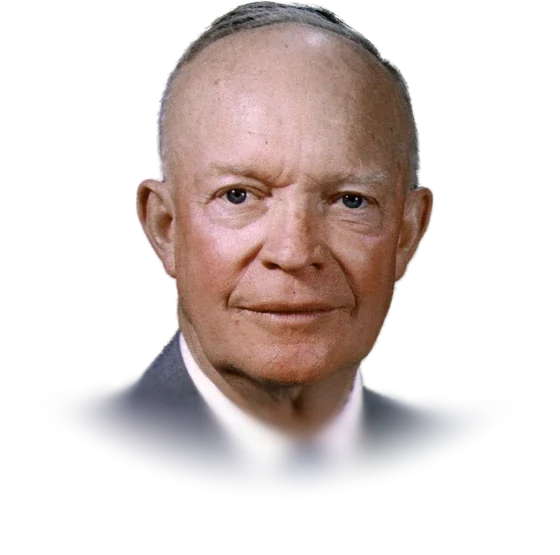
No IQ test result has ever been published for Dwight Eisenhower, so every Eisenhower IQ figure is an estimate. What is documented — 61st of 164 at West Point in 1915, then first of 245 officers at the Army’s Command and General Staff School in 1926 — supports an estimated IQ of about 125–140, bracketing the 131.9 averaged from a 2006 study and a few points above the hoax list’s 122.
Dwight D. Eisenhower’s estimated IQ
- Graduated from the U.S. Military Academy at West Point in June 1915, 61st in a class of 164 (National Archives; Miller Center), after placing second among eight candidates in the September 1910 competitive examination for the service academies (Eisenhower Presidential Library).
- Entered the Army’s Command and General Staff School at Fort Leavenworth on August 19, 1925 and graduated first in a class of 245 officers on June 18, 1926, the strongest single result in his record (Eisenhower Presidential Library; Miller Center).
- Served as executive officer to General Fox Conner in the Panama Canal Zone from January 1922 to September 1924; Conner encouraged him to read widely in history, military science and philosophy and helped secure his place at Leavenworth (Eisenhower Presidential Library).
- Graduated from the Army War College in Washington, D.C. on June 30, 1928, and wrote a guide to the First World War battlefields for the American Battle Monuments Commission under General John J. Pershing (Eisenhower Presidential Library chronology).
- Dean Keith Simonton’s 2006 study in Political Psychology prints four statistical estimates for him, 117.3 to 145.1, averaging 131.9 and ranking him 22nd of 42 presidents; the range here brackets that average without relying on it.
Both ranks are standings inside already-selected groups of cadets and officers, not population-normed scores, and the first-place finish at Leavenworth followed Conner’s mentoring, so the range is a judgment call rather than a calculation. Simonton’s 131.9 is a statistical inference from expert ratings that he himself called “more tentative and approximate” than his other measures.
- Born
- October 14, 1890, Denison, Texas
- Died
- March 28, 1969, Washington, D.C.
- Education
- Abilene High School (1909); U.S. Military Academy, West Point, 1911–1915, 61st of 164; Command and General Staff School, 1925–1926, first of 245; Army War College, 1927–1928
- Documented IQ test
- None on record; the nearest records are a 1910 service-academy examination (second of eight) and the class ranks above
- Military rank
- General of the Army (five stars), December 20, 1944; Supreme Commander, Allied Expeditionary Force, from December 1943
- University post
- President of Columbia University, inaugurated June 7, 1948
- Public office
- 34th President of the United States, January 20, 1953 to January 20, 1961
- Circulating IQ figures
- 122 (2001 hoax list) and 131.9 (average of four estimates in a 2006 study), against an estimated range here of 125–140
What an IQ of 125–140 actually means
Set the claim aside for a moment. If someone genuinely scored in this range, here is what that would represent.
Average is 100 by construction, and about two-thirds of people fall between 85 and 115. Take the test to place your own score on this scale.
| Score range | Classification | Share of people | What it indicates |
|---|---|---|---|
| 85 – 114 | Average | ~68% | The range most people fall into. |
| 115 – 129 | Above average | ~13.6% | Roughly one person in seven. |
| 130 – 144 | Gifted | ~2% | The threshold most high-IQ societies use. |
| Above 144 | Highly gifted | ~0.1% | Figures above this range are extrapolated from the curve rather than measured. |
Percentages are approximate and describe a normal distribution. The same number means different things on tests with different standard deviations.
Thirty questions gives you a measured position on this exact scale — your score, your percentile and the ability breakdown behind it.
Find out in 30 minutes →Who Dwight D. Eisenhower was
Dwight David “Ike” Eisenhower was born on October 14, 1890, in Denison, Texas, and grew up in Abilene, Kansas, where the family had returned in 1892. He graduated from Abilene High School in 1909 and worked at the Belle Springs Creamery until 1911. Too old for the Naval Academy, his first choice, he took the 1910 competitive examination for the service academies, placed second of eight, and received the West Point appointment when the top-ranked candidate did not meet the physical requirement. He entered the U.S. Military Academy on June 14, 1911 and graduated on June 12, 1915, 61st in a class of 164 that became known as “the class the stars fell on” because 59 of its graduates eventually became general officers.
He served with the Infantry from 1915 to 1918 and the Tank Corps from 1918 to 1922, then from January 1922 to September 1924 as executive officer to General Fox Conner in the Panama Canal Zone. He entered the Command and General Staff School at Fort Leavenworth, Kansas, on August 19, 1925 and graduated first in a class of 245 on June 18, 1926. From August 27, 1927 to June 30, 1928 he attended the Army War College in Washington, D.C.; in 1927 he wrote a guidebook to the First World War battlefields for the American Battle Monuments Commission under General John J. Pershing, published as A Guide to the American Battlefields in Europe. He later served as chief military aide to General Douglas MacArthur from 1933 and, from September 1935 to December 1939, as assistant military advisor to the Philippine government.
After the attack on Pearl Harbor he was called to the War Department in Washington, D.C., and was designated Chief of the War Plans Division in February 1942. In June 1942 he became Commanding General, European Theater, in London, and in November 1942 Commander-in-Chief, Allied Forces, North Africa. In December 1943 he was appointed Supreme Commander, Allied Expeditionary Force, the command that carried out the Normandy invasion of June 6, 1944, and on December 20, 1944 he was promoted to General of the Army, the five-star rank. He served as Chief of Staff of the United States Army from November 1945 until February 1948.
Eisenhower resigned from the Army on February 7, 1948 to become president of Columbia University, where he was inaugurated on June 7, 1948; his war memoir Crusade in Europe appeared that year. In December 1950 he was named the first Supreme Allied Commander Europe of NATO, retired from active service on May 31, 1952, and served as the 34th President of the United States from January 20, 1953 to January 20, 1961. His later books were Mandate for Change (1963), Waging Peace (1965) and At Ease (1967). He died on March 28, 1969, in Washington, D.C.
 By Elora Mercer, Celebrity Research WriterFigures checked by Leon Falkner, Data & Research Analyst
Reviewed by Aarav Vardhan, Editor-in-Chief · Last reviewed August 2026
(3).jpg)
Dwight D. Eisenhower: the documented record
The estimate above rests on this record. Every entry here is a matter of public fact, which is more than can be said for the number itself.
- 1890Born October 14 in Denison, Texas; raised from 1892 in Abilene, Kansas, and graduated from Abilene High School in 1909.
- 1910Takes the competitive examination for the service academies and places second among eight candidates; the West Point appointment follows.
- 1915Graduates from West Point on June 12, 61st in a class of 164 later called “the class the stars fell on,” and is commissioned a second lieutenant.
- 1926–28Graduates first in a class of 245 officers at the Command and General Staff School (June 18, 1926), then from the Army War College (June 30, 1928).
- 1944Supreme Commander, Allied Expeditionary Force, since December 1943; commands the Normandy invasion on June 6 and is promoted to General of the Army on December 20.
- 1948Resigns from the Army on February 7 and is inaugurated as president of Columbia University on June 7.
- 1953Takes office as the 34th President of the United States on January 20; his second term ends January 20, 1961.
- 1969Dies March 28 in Washington, D.C.
- 2001A chain e-mail crediting a non-existent “Lovenstein Institute” lists him at 122; The Guardian prints the list on July 19 and later retracts it.
- 2006Dean Keith Simonton’s paper in Political Psychology prints four statistical estimates for him, 117.3 to 145.1, averaging 131.9.
Where the 122 figure came from
Following a claim back to its first appearance is the part almost nobody does — and it is what most people are actually asking.
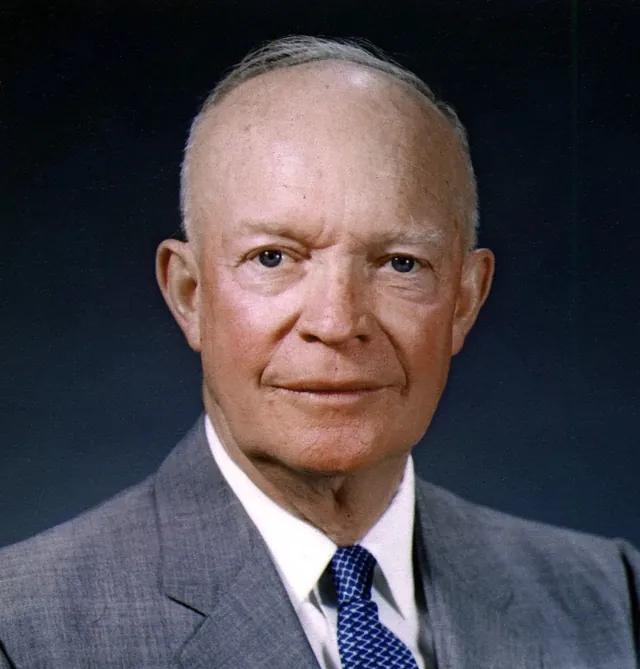
What was Eisenhower’s IQ? No test result has ever been published, and the number that does follow his name, 122, comes from a fabricated chain e-mail. In mid-2001 it credited a “Lovenstein Institute” of Scranton, Pennsylvania with IQ scores for the twelve presidents from Franklin D. Roosevelt to George W. Bush, listed Dwight D. Eisenhower at 122, and claimed a margin of error of plus or minus five percent. Copies are still online: a page from the Unit for the Study of Personality in Politics, with an entry dated August 6, 2001, a February 2003 message in a UCSD mailing-list archive, and a UCSD faculty page that says it has widely been reported as a hoax. No such institute exists, and celebrity IQ numbers like this one tend to outlive their debunking.
The second Dwight Eisenhower IQ figure, 131.9, is real arithmetic on a real study, but it is not a score either. In his 2006 paper in Political Psychology (27(4), 511–526), Dean Keith Simonton gives every president four IQ estimates; Table 1 prints 117.3, 131.1, 134.1 and 145.1 for Eisenhower, which average 131.9 and rank him 22nd of 42, the middle of the list (the median of the 42 averages is about 132). Catharine Cox’s 1926 study of 301 historical geniuses included only eight presidents, and Eisenhower is not one of them, so his four values were inferred from expert ratings of Intellectual Brilliance (his score is −0.7, where 0 is average) and Openness to Experience. The paper’s table note calls them standard IQ scores with a “hypothetical” mean of 100 and a standard deviation of 16, where most modern tests use 15, though a footnote adds that, because Cox used the old ratio definition of IQ, the scores have no pre-set standard deviation; Simonton wrote that such IQ scores “must therefore be considered more tentative and approximate” than his other measures. Ranking pages drop that caution: Editorialge’s April 2024 list prints “high IQ of 131.9” as if it were a result. US presidents ranked by IQ sets out the full ranking.
Was Eisenhower smart? The record that can be checked says yes, in a specific and uneven way. In September 1910 he placed second among eight candidates in a competitive examination for the service academies; in June 1915 he graduated from West Point 61st in a class of 164, and the Miller Center calls his grades there average; in June 1926 he graduated first among 245 officers at the Command and General Staff School, after Fox Conner had encouraged him to read widely in history, military science and philosophy. Jimmy Carter’s page rests on a nearly identical rank number, 59th of 820 at the Naval Academy, but 59 of 820 is the top 7 percent while 61 of 164 is the top 37 percent. A class rank measures achievement in one course of study, not general intelligence, and the climb from 61st to first spans two different schools and eleven years.
Eisenhower’s estimated IQ on this site is 125–140, a range anchored to the two ranks above and checked against Simonton’s average rather than built from it. It sits next to George Washington’s 125–145, another general who became president (Simonton’s averages are almost identical, 131.9 against 132.5); above the documented 119 of John F. Kennedy, whom the same hoax list placed at 174; and a notch below Carter’s 130–148. The direction of the error also runs backwards: sourced records usually support a lower range than the number that circulates, but here the hoax figure falls below the range, the same reversal seen on George W. Bush’s page, where the list gave 91. A career is not an IQ test: the five-star rank and the offices show what Eisenhower did, not what a test would have returned.
How we read a number →Dates every step used here: West Point entry (June 14, 1911) and graduation (June 12, 1915); the Command and General Staff School (entered August 19, 1925, “graduated first in a class of 245,” June 18, 1926); the Army War College (August 27, 1927 to June 30, 1928, with no class rank given); General of the Army (December 20, 1944); Columbia (June 7, 1948); the presidency; and his death (March 28, 1969).
States that in September 1910 he “scored second among the eight candidates” in the service-academy competitive examination, that Fox Conner encouraged him to read widely and helped secure his Leavenworth place, and that he graduated first in the 1926 class of 245 officers. Mentions no IQ or intelligence-test score.
Says he graduated 61st in the Class of 1915, “the class the stars fell on,” because 59 of the 164 graduates became general officers. Mentions no IQ or intelligence-test score.
Independently gives 61st out of 164 at West Point, describes his grades there as average, and says he graduated first in his class of 245 officers at the Command and General Staff College. No IQ test result mentioned.
The only peer-reviewed estimate. Table 1 (p. 516) prints Eisenhower’s four IQ values (117.3, 131.1, 134.1, 145.1; mean 131.9), inferred statistically because Cox (1926) rated only eight presidents. The table note gives a hypothetical mean of 100 and standard deviation of 16, a footnote says the scores have no pre-set standard deviation, and Simonton calls the values “more tentative and approximate” than his other two measures.
Fabricated; no such institute exists. All three copies print 122 for Dwight D. Eisenhower in a twelve-president list from Franklin D. Roosevelt to George W. Bush.
Describes the mid-2001 e-mail, says the “Lovenstein Institute” and its sociologists do not exist, and records that The Guardian quoted it in its Diary of July 19, 2001 and published a retraction two days after the Associated Press drew attention to the error. It does not print Eisenhower’s figure.
Credits Simonton’s 2006 study and prints Eisenhower’s average as his “high IQ of 131.9,” while calling him a below-average student at West Point; a rank of 61st of 164 is above the class midpoint of 82, so that description does not match the record.
Corroborate the dates and offices (born October 14, 1890, Denison, Texas; died March 28, 1969; 34th President January 20, 1953 to January 20, 1961), the 61st-of-164 rank, the 59 generals in the class of 1915 and the first-of-245 finish. Wikidata Q9916 is the 34th president, not a namesake or the Eisenhower time-management matrix.
Searched the Eisenhower Presidential Library’s biography and chronology, the Miller Center, the National Archives’ Prologue profile, both Wikipedia articles and Simonton’s full paper; none reports an IQ or Army intelligence-test score. The only test-like record is the 1910 service-academy entrance examination rank (second of eight), which is not an IQ test.
The sources behind our estimate
The figures that circulate for Dwight D. Eisenhower, what we were able to confirm, and where the two diverge.
122 is the figure attached to Eisenhower on a chain e-mail from mid-2001 that ranked the IQs of twelve presidents and credited them to a “Lovenstein Institute” of Scranton, Pennsylvania. 131.9, the other number that circulates, is the average of the four estimates in Dean Keith Simonton’s 2006 study, printed on ranking pages as his IQ.
No published IQ test result exists for Eisenhower: the Eisenhower Presidential Library’s biography and chronology, the Miller Center’s biography, the National Archives’ Prologue profile and both Wikipedia articles on him give ranks and career dates but no IQ or Army intelligence-test score. The 122 comes from a hoax. The mid-2001 e-mail credited a “Lovenstein Institute” that does not exist with scores for the twelve presidents from Franklin D. Roosevelt to George W. Bush. A page from the Unit for the Study of Personality in Politics dated August 6, 2001 prints “122 Dwight D. Eisenhower (R),” a University of California San Diego faculty page reproduces the list while noting that it has widely been reported as a hoax, and The Guardian ran it in its Diary column on July 19, 2001 before retracting it. The 131.9 is real arithmetic: the mean of the four estimates in Table 1 of Simonton’s paper (117.3, 131.1, 134.1 and 145.1), which Editorialge’s April 2024 ranking prints as his “high IQ of 131.9.”
Two circulating numbers, ten points apart, and neither came from a test. The hoax’s 122 sits three points under the bottom of the 125–140 range, the reverse of the usual inflation, while Simonton’s 131.9 falls inside it, near the middle of his own list of 42 presidents.
Want a number that does hold up? Every figure on this page is somebody’s claim. Take the 30-question test and get a percentile you can check rather than a figure you have to trust.
Dwight D. Eisenhower — frequently asked
What was Dwight D. Eisenhower’s IQ?
No IQ test result has ever been published for Dwight D. Eisenhower, so his IQ is an estimate, not a record. His documented standing, 61st of 164 at West Point in 1915 and first of 245 at the Command and General Staff School in 1926, supports about 125–140. The 122 and 131.9 that circulate come from a hoax and a statistical average.
Is Eisenhower’s IQ 122?
No test produced 122. It comes from a 2001 chain e-mail that credited a “Lovenstein Institute” of Scranton, Pennsylvania, which does not exist, with IQ scores for twelve presidents from Franklin D. Roosevelt to George W. Bush. The Guardian printed the list on July 19, 2001 and later retracted it. Treat 122 as a hoax figure, not a measurement.
Did Dwight Eisenhower ever take an IQ test?
No IQ or Army intelligence-test score for Eisenhower appears in the Eisenhower Presidential Library, the Miller Center, the National Archives or Wikipedia. What is documented is exam and class standing: second of eight candidates in a 1910 service-academy examination, 61st of 164 at West Point in 1915, and first of 245 at the Command and General Staff School in 1926.
Was Eisenhower smart?
The record shows strong, uneven academic results rather than a documented prodigy. He ranked 61st of 164 at West Point in 1915, and the Miller Center calls his grades average, yet he finished first among 245 officers at the Command and General Staff School in 1926. That supports an estimated IQ of about 125–140, not a measured score.
Where does Eisenhower’s IQ of 131.9 come from?
It is the average of four estimates in Dean Keith Simonton’s 2006 paper in Political Psychology: 117.3, 131.1, 134.1 and 145.1. They were inferred statistically from expert ratings, not measured, and Simonton called such IQ scores “more tentative and approximate” than his other two measures. The average ranks Eisenhower 22nd of 42 presidents, the middle of the list.
What was Eisenhower’s class rank at West Point?
Eisenhower graduated from West Point on June 12, 1915, ranked 61st in a class of 164, according to the National Archives and the Miller Center. The class became known as “the class the stars fell on” because 59 of its graduates eventually became general officers. His 61st place is above the class midpoint but well short of the top.
How does Eisenhower’s estimated IQ compare with George Washington’s?
This site estimates 125–140 for Eisenhower and 125–145 for George Washington, both inferred from documented careers rather than tests. Simonton’s 2006 study averages them almost identically, 131.9 for Eisenhower and 132.5 for Washington. Both led armies before becoming president, and neither has a published IQ test result.
How does my IQ compare with Dwight D. Eisenhower?
You can find out in about fifteen minutes. The IQ Metrics assessment is 30 questions, scored on the same 100-mean scale used throughout this page, so your result and the estimate above are at least expressed in the same units — one measured, one inferred. Once you have a number, the leaderboard shows where it would sit, and how we score and norm it explains the benchmarking.
Where does this estimate come from?
From the documented record rather than a test — the method is named above and set out in full under how we read a number. Compare it against the other politics profiles, starting with Thomas Jefferson.
- Take the 30-question IQ test — get a measured score and percentile of your own
- Average IQ by country — how the scale behaves across populations
- How IQ Metrics scores its assessment — the method behind our own number
- More on how IQ testing works — reliability, error and what a score can and cannot say
- More politics profiles — same field, same method
More politics
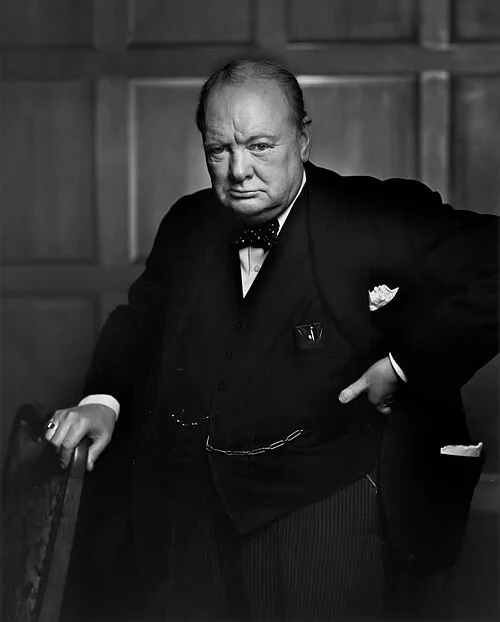
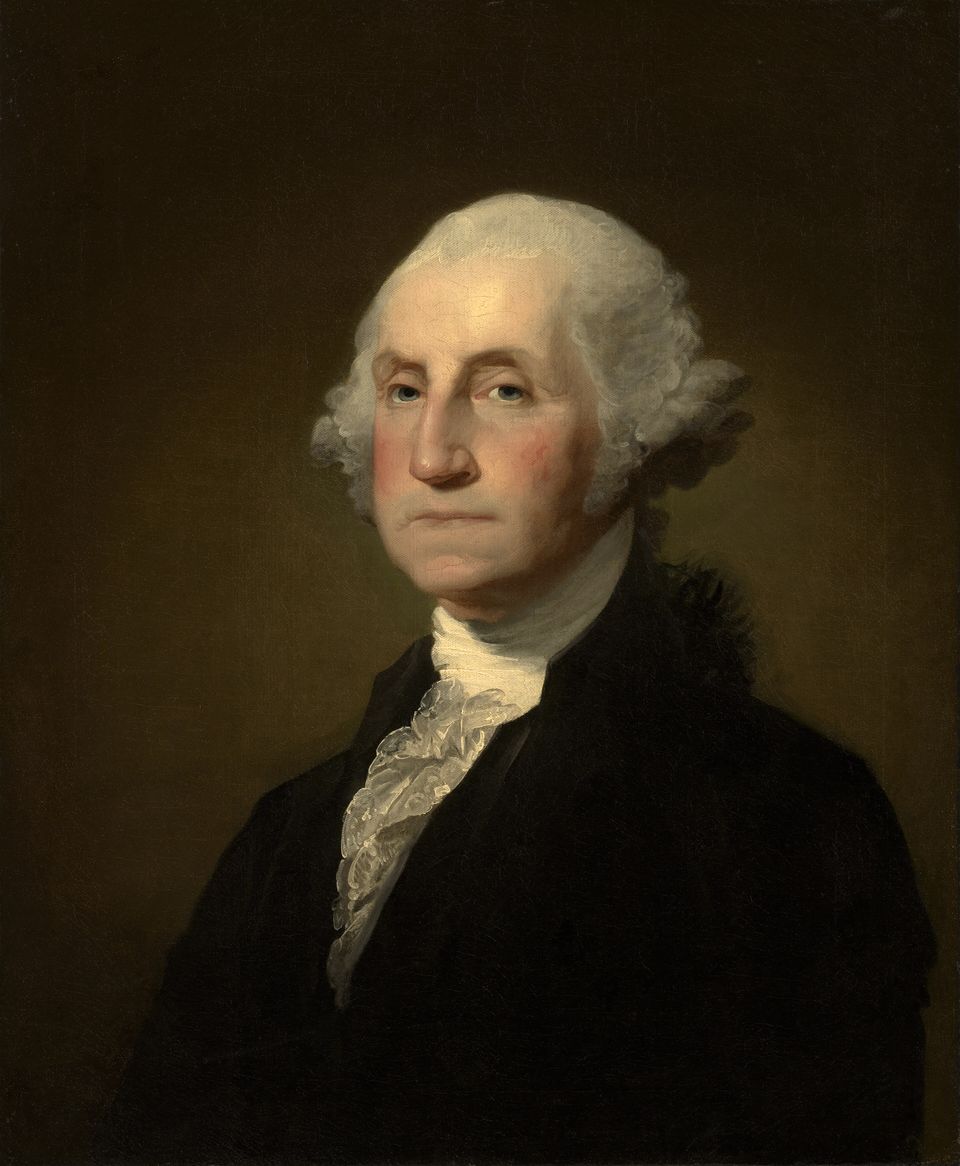
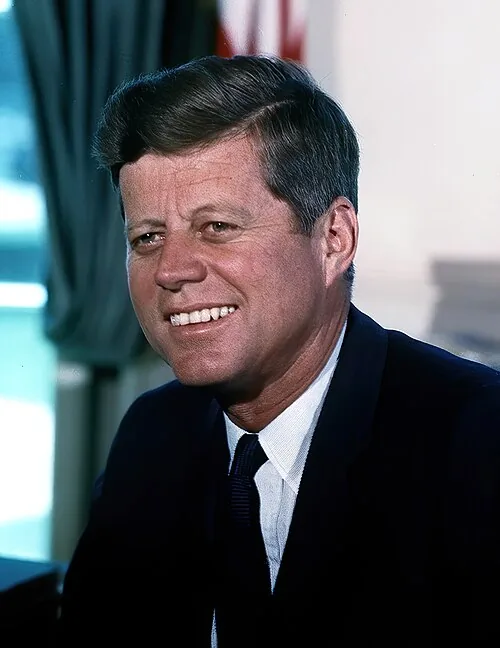
Photograph by Yousuf Karsh, Ottawa, 1941 — public domain in Canada and the United States; the Library and Archives Canada scan is CC BY 2.0. · Portrait by Gilbert Stuart (the Williamstown portrait, his copy of the Athenaeum portrait, in the Clark Art Institute), public domain. · Photograph by Cecil W. Stoughton, White House, public domain. Background removed for the portrait above.
.jpg)


An estimate is an inference.
Yours can be measured.
Thirty questions, scored against general-population benchmarks. Your score, your percentile, your ability breakdown and a printable IIF certificate.
Find your IQ score now! →