



What was Henry Kissinger’s IQ?
Summa cum laude, a Nobel Prize — and one anonymous internet comment.
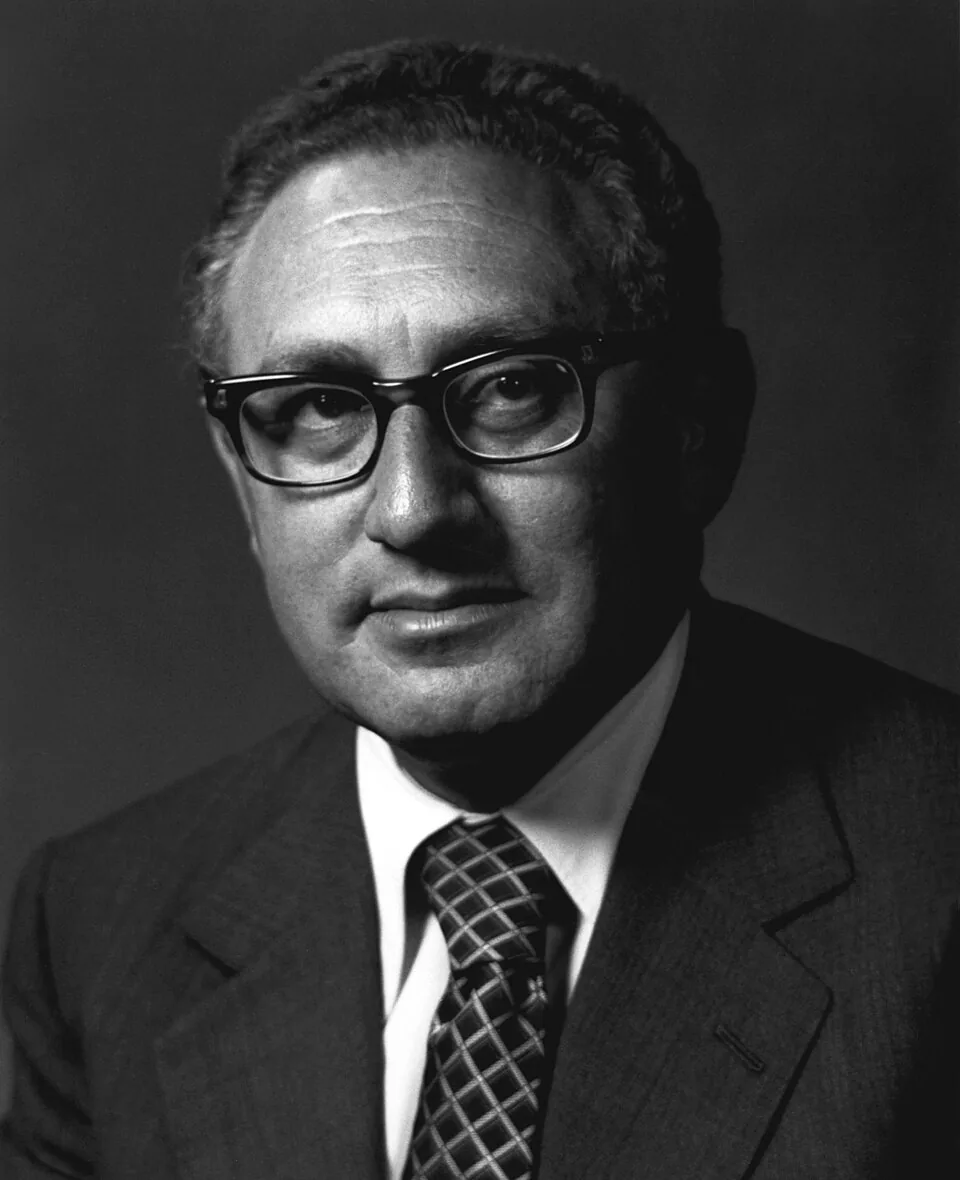
Henry Kissinger’s academic and diplomatic record is among the most exhaustively documented of any twentieth-century public figure — a page-counted Harvard thesis, a prize-winning doctoral dissertation, a Nobel Prize with named dissenters. The IQ figure attached to him, 180, traces to a single anonymous “I have heard” comment on a crowd-answer site.
Henry Kissinger’s estimated IQ
- Graduated Harvard A.B. summa cum laude in 1950, Phi Beta Kappa, after wartime Army service including counter-intelligence work in occupied Germany.
- Earned a Harvard Ph.D. in 1954; his dissertation on post-Napoleonic European diplomacy won the government department’s dissertation prize and was published as the book A World Restored (1957).
- Held the roles of National Security Advisor and Secretary of State simultaneously from September 1973 to November 1975 — the first person in US history to do so, and the first foreign-born Secretary of State.
- Awarded the 1973 Nobel Peace Prize, one of the most disputed in the prize’s history — two Norwegian Nobel Committee members resigned over the award.
No IQ test result for Kissinger has ever been published by any testing body, biographer, or primary document. This range reflects an unusually well-documented academic and professional record rather than a measured score, and is deliberately conservative given how much of his public reputation for brilliance rests on contested political judgments rather than checkable credentials.
- Born
- 27 May 1923, Fürth, Germany
- Died
- 29 November 2023, Kent, Connecticut
- Education
- Harvard A.B. 1950 (summa cum laude), Ph.D. 1954
- Nobel Peace Prize
- 1973, shared with Lê Đức Thọ
- Documented IQ test
- None on record — “180” traces to an anonymous online comment
What an IQ of 135–150 actually means
Set the claim aside for a moment. If someone genuinely scored in this range, here is what that would represent.
Average is 100 by construction, and about two-thirds of people fall between 85 and 115. Take the test to place your own score on this scale.
| Score range | Classification | Share of people | What it indicates |
|---|---|---|---|
| 85 – 114 | Average | ~68% | The range most people fall into. |
| 115 – 129 | Above average | ~13.6% | Roughly one person in seven. |
| 130 – 144 | Gifted | ~2% | The threshold most high-IQ societies use. |
| Above 144 | Highly gifted | ~0.1% | Figures above this range are extrapolated from the curve rather than measured. |
Percentages are approximate and describe a normal distribution. The same number means different things on tests with different standard deviations.
Thirty questions gives you a measured position on this exact scale — your score, your percentile and the ability breakdown behind it.
Find out in 30 minutes →Who Henry Kissinger was
Born Heinz Alfred Kissinger in Fürth, Germany, in 1923, his family fled Nazi persecution in 1938; he was naturalized a US citizen in 1943 during Army service, in which he worked as a German interpreter and later a Counter Intelligence Corps staff sergeant, earning a Bronze Star. He entered Harvard on the GI Bill in 1947, graduating summa cum laude in 1950 and earning his Ph.D. in 1954, then joined the Harvard faculty until 1969.
He served as National Security Advisor from 1969 and Secretary of State from 1973, holding both simultaneously until 1975 — the first person in US history to do so. He shared the 1973 Nobel Peace Prize with North Vietnamese negotiator Lê Đức Thọ for negotiating a Vietnam cease-fire, an award two Nobel Committee members resigned over and Thọ himself declined to accept. He authored around a dozen books over seven decades, from A World Restored (1957) to The Age of AI and Our Human Future (2021).
 By Elora Mercer, Celebrity Research WriterFigures checked by Leon Falkner, Data & Research Analyst
Reviewed by Aarav Vardhan, Editor-in-Chief · Last reviewed August 2026

Where the 180 figure came from
Following a claim back to its first appearance is the part almost nobody does — and it is what most people are actually asking.
Kissinger’s page follows the same rule as every profile on this site: audit the number, not the man, and stay off ground this site isn’t built to cover. His decades in government produced enormous, genuine controversy — none of it is what this page rates. What it rates is a specific, narrow question: is there a real basis for “180,” and there isn’t.
The pattern repeats at a smaller scale inside his own biography. The famous “Kissinger Rule” — that his 383-page undergraduate thesis was so long Harvard capped future thesis lengths because of it — is repeated as settled fact nearly everywhere it’s mentioned, but according to his authorized biographer Walter Isaacson it is most likely apocryphal. A great story outrunning its documentation is the same failure shape as the IQ number, one level removed.
How we read a number →Confirms dates of service as National Security Advisor and Secretary of State.
Confirms the shared award, the citation, and the committee resignations.
Source of the circulating 180 figure — an unattributed, self-described “I have heard” comment, not a test result.
Discusses the “Kissinger Rule” thesis-length legend and its likely apocryphal status, per biographer Walter Isaacson.
The sources behind our estimate
The figures that circulate for Henry Kissinger, what we were able to confirm, and where the two diverge.
“180” is the figure most often attached to Kissinger online.
The number appears to originate from a comment on Answers.com reading, in full: “I have heard it is around 180. But once you pass 160 the IQ measurement is not very accurate.” That is explicit hearsay, unattributed to any test, from an anonymous user. Several major celebrity-IQ ranking sites that list dozens of other names do not include Kissinger at all. What is real and dated instead: summa cum laude, Phi Beta Kappa, a prize-winning Harvard dissertation, and a Nobel Prize with a public citation.
The credentialed range and the popular number aren’t close — and the popular number is the only one of the three resting on nothing.
Want a number that does hold up? Every figure on this page is somebody’s claim. Take the 30-question test and get a percentile you can check rather than a figure you have to trust.
Henry Kissinger — frequently asked
What was Henry Kissinger’s IQ?
No verified score exists. The figure of 180 that circulates traces to a single anonymous, self-described “I have heard” comment on a crowd-answer site — not a test result. What is documented is his academic record: Harvard A.B. summa cum laude (1950) and a Harvard Ph.D. (1954).
Did Henry Kissinger go to Harvard?
Yes. After wartime Army service, he entered Harvard College in 1947 on the GI Bill, graduated summa cum laude in 1950, and earned his Ph.D. there in 1954.
What was Kissinger’s doctoral dissertation about?
How European statesmen Metternich and Castlereagh rebuilt international order after the Napoleonic Wars. It won Harvard’s government department dissertation prize and was published in 1957 as A World Restored.
Did Henry Kissinger win a Nobel Prize?
Yes, the 1973 Nobel Peace Prize, shared with North Vietnamese negotiator Lê Đức Thọ for negotiating a Vietnam cease-fire — one of the most disputed Peace Prizes on record; two Nobel Committee members resigned over it.
Did Henry Kissinger serve in the military?
Yes. Drafted into the US Army in 1943, he served as a German interpreter during the Battle of the Bulge and later in the Army’s Counter Intelligence Corps in occupied Germany, receiving a Bronze Star.
Is the “Kissinger Rule” — that his thesis was too long — true?
Probably not, according to his authorized biographer Walter Isaacson. The 383-page undergraduate thesis is real, but the widely repeated claim that it forced Harvard to formally cap future thesis lengths is likely apocryphal.
How does my IQ compare with Henry Kissinger?
You can find out in about fifteen minutes. The IQ Metrics assessment is 30 questions, scored on the same 100-mean scale used throughout this page, so your result and the estimate above are at least expressed in the same units — one measured, one inferred. Once you have a number, the leaderboard shows where it would sit, and how we score and norm it explains the benchmarking.
Where does this estimate come from?
From the documented record rather than a test — the method is named above and set out in full under how we read a number. Compare it against the other politics profiles, starting with Thomas Jefferson.
- Take the 30-question IQ test — get a measured score and percentile of your own
- Average IQ by country — how the scale behaves across populations
- How IQ Metrics scores its assessment — the method behind our own number
- More on how IQ testing works — reliability, error and what a score can and cannot say
- More politics profiles — same field, same method
More politics
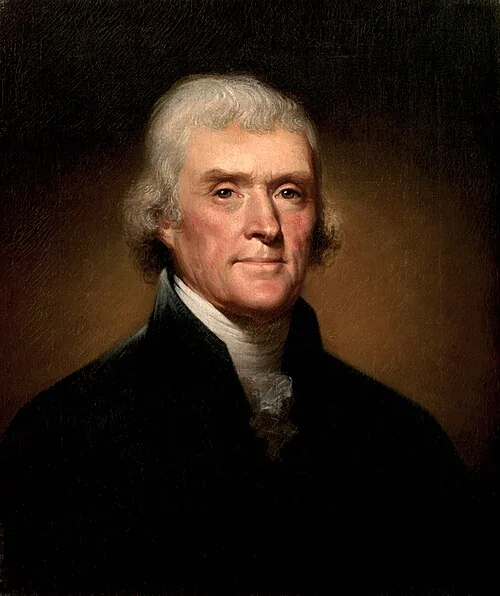
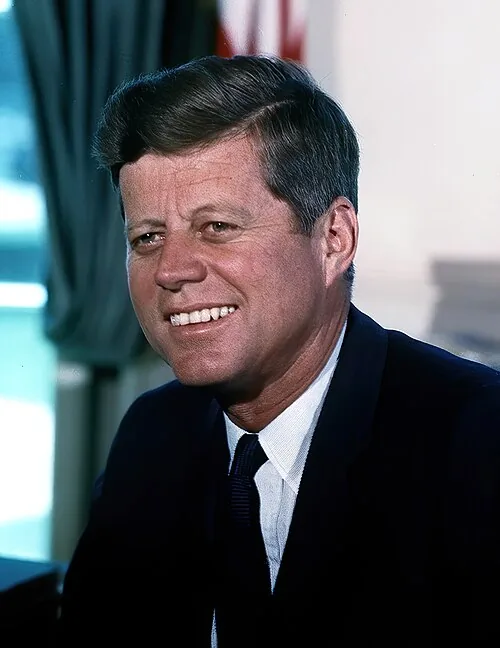
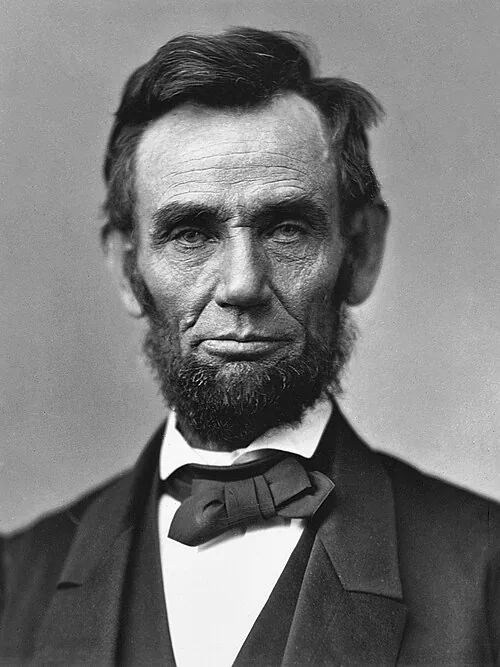
Portrait by Rembrandt Peale (1800), public domain. · Photograph by Cecil W. Stoughton, White House, public domain. Background removed for the portrait above. · Photograph by Alexander Gardner (8 November 1863), public domain. Background removed for the portrait above.


.jpg)
An estimate is an inference.
Yours can be measured.
Thirty questions, scored against general-population benchmarks. Your score, your percentile, your ability breakdown and a printable IIF certificate.
Find your IQ score now! →