



What was Bruce Lee’s IQ?
No test score exists for Bruce Lee. On record: three years at the University of Washington and a 2,500-book library.
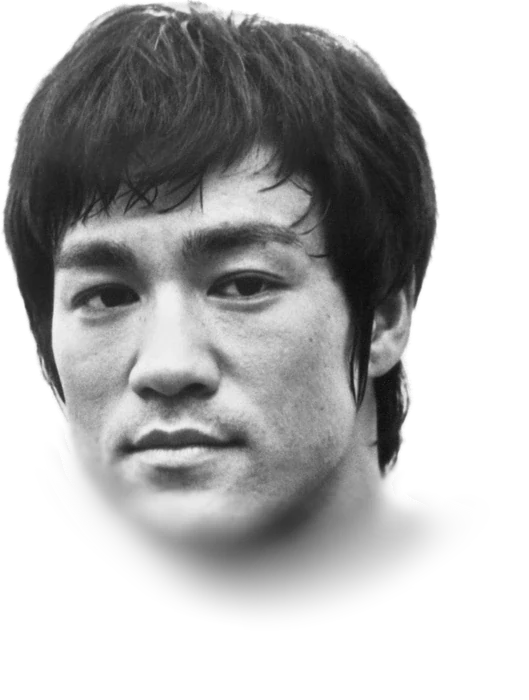
Bruce Lee’s IQ was never publicly tested, and the only number we could find attached to it, “at least 135” on one Portuguese-language page, is a guess that leans on a University of Washington philosophy degree no source supports. What is documented is real: three years at the UW, a library of more than 2,500 books and the founding of Jeet Kune Do.
Bruce Lee’s estimated IQ
- Attended the University of Washington from 1961 to 1964, studying drama and philosophy; the university’s own magazine calls him a former drama major, and no source we opened says he finished a degree.
- Amassed a library of more than 2,500 books, according to HistoryLink, and his University of Washington exam revision notes are among the items in the Hong Kong Heritage Museum’s 2021 exhibition on his life.
- Gave Jeet Kune Do its name in 1967, and the personal notes behind it were compiled and published as Tao of Jeet Kune Do (Ohara Publications, 1975), after his first book, Chinese Gung Fu: The Philosophical Art of Self-Defense.
- Wrote, directed and starred in The Way of the Dragon (1972), a film on which he had complete control of production.
- Counterweight: mediocre grades at La Salle College and a move to St. Francis Xavier’s College in 1956, which is why the range does not go higher.
This is an inference from achievements, not a measurement of Bruce Lee’s estimated IQ. An unfinished degree, mediocre early grades and a career built on physical skill, performance and self-directed study point in different directions, and none of them is a validated stand-in for an intelligence test. Read the range as an informed sketch, widest at the top.
- Born
- November 27, 1940, San Francisco, California
- Died
- July 20, 1973, Hong Kong
- Field
- Martial arts (founder of Jeet Kune Do), film
- Schools
- La Salle College, then St. Francis Xavier’s College, Hong Kong; high school diploma from Edison Technical School, Seattle
- University
- University of Washington, 1961–1964; no degree; a drama major according to the university’s magazine
- Documented test result
- None published
- Circulating figure
- At least 135, as a guess on one Portuguese-language page (2023)
- Library
- More than 2,500 books, per HistoryLink
What an IQ of 115–135 actually means
Set the claim aside for a moment. If someone genuinely scored in this range, here is what that would represent.
Average is 100 by construction, and about two-thirds of people fall between 85 and 115. Take the test to place your own score on this scale.
| Score range | Classification | Share of people | What it indicates |
|---|---|---|---|
| 85 – 114 | Average | ~68% | The range most people fall into. |
| 115 – 129 | Above average | ~13.6% | Roughly one person in seven. |
| 130 – 144 | Gifted | ~2% | The threshold most high-IQ societies use. |
| Above 144 | Highly gifted | ~0.1% | Figures above this range are extrapolated from the curve rather than measured. |
Percentages are approximate and describe a normal distribution. The same number means different things on tests with different standard deviations.
Thirty questions gives you a measured position on this exact scale — your score, your percentile and the ability breakdown behind it.
Find out in 30 minutes →Who Bruce Lee was
Bruce Lee was born on November 27, 1940, at Jackson Street Hospital in San Francisco’s Chinatown, and grew up in Hong Kong. He entered the Catholic La Salle College at twelve; in 1956 he moved to St. Francis Xavier’s College, a change Wikipedia ties to poor academic performance and HistoryLink to his attitude toward staff, his mediocre grades and his reputation as a fighter. In 1958 he won Hong Kong’s Crown Colony Cha-Cha Championship. In 1959 he went to the United States and settled in Seattle, where he took his high school diploma at Edison Technical School.
He enrolled at the University of Washington in March 1961 and attended until 1964. The university’s own magazine calls him a former drama major and says he studied drama and philosophy. Wikipedia, citing a 1999 article in the university’s alumni publication, says his official major was drama and not philosophy, and that he took two classes in psychology and two in philosophy that became lifelong interests. HistoryLink calls him a philosophy major, so the sources disagree on the major. None says he finished a degree: Sports Illustrated writes that he attended for three years without graduating, and Wikipedia says he left in early 1964 and moved to Oakland.
In Oakland he and James Yimm Lee founded the second Jun Fan martial arts studio. He played Kato alongside Van Williams in The Green Hornet, 26 episodes broadcast from September 1966 to March 1967, and in 1967 named his approach Jeet Kune Do. After returning to Hong Kong in 1971 he starred in The Big Boss (1971) and Fist of Fury (1972) and wrote, directed and starred in The Way of the Dragon (1972). Enter the Dragon premiered in Los Angeles on August 24, 1973. Time magazine named him one of the 100 most important people of the 20th century. He died in Hong Kong on July 20, 1973, at the age of 32.
The study trail is the documented part. HistoryLink says he amassed a library of more than 2,500 books. The Hong Kong Heritage Museum’s 2021 exhibition A Man Beyond the Ordinary: Bruce Lee, announced by the Hong Kong government, includes his exam revision notes from the University of Washington and the first edition of his first published book, Chinese Gung Fu: The Philosophical Art of Self-Defense. Tao of Jeet Kune Do, edited mainly by Gilbert L. Johnson from Lee’s personal notes, appeared in 1975, after his death. None of this converts to a score, but it shows sustained, self-directed study, which is why the estimate sits above the general average rather than at it.
 By Elora Mercer, Celebrity Research WriterFigures checked by Leon Falkner, Data & Research Analyst
Reviewed by Aarav Vardhan, Editor-in-Chief · Last reviewed August 2026

Bruce Lee: the documented record
The estimate above rests on this record. Every entry here is a matter of public fact, which is more than can be said for the number itself.
- 1940Born in San Francisco on November 27.
- 1956Moves from La Salle College to St. Francis Xavier’s College in Hong Kong.
- 1958Wins Hong Kong’s Crown Colony Cha-Cha Championship.
- 1959Goes to the United States and settles in Seattle.
- 1961–1964Attends the University of Washington (enrolls March 1961; leaves in early 1964 without a degree).
- 1966–1967Plays Kato in The Green Hornet, September 1966 to March 1967.
- 1967Gives Jeet Kune Do its name.
- 1971–1972Back in Hong Kong: The Big Boss, Fist of Fury, and The Way of the Dragon, which he writes, directs and stars in.
- 1973Dies in Hong Kong on July 20; Enter the Dragon premieres in Los Angeles on August 24.
- 1975Tao of Jeet Kune Do, compiled from his notes, is published by Ohara Publications.
Where the 135+ figure came from
Following a claim back to its first appearance is the part almost nobody does — and it is what most people are actually asking.
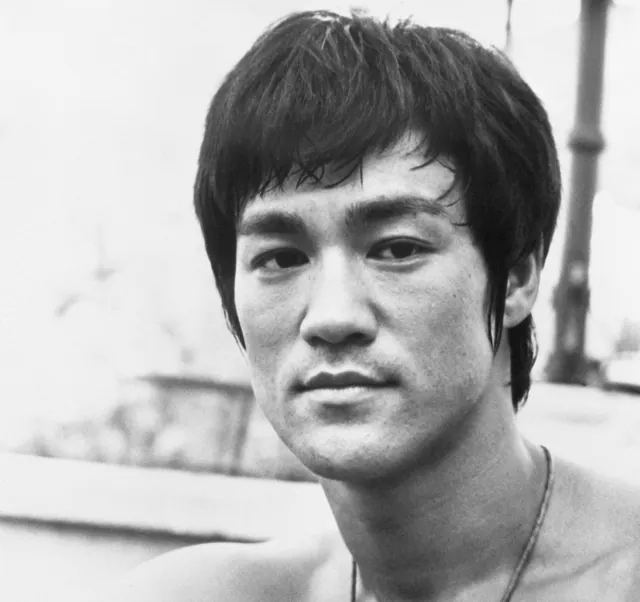
Bruce Lee’s IQ has no traceable origin, because no test result for him has ever been published. The one page we found that attaches a number to him, “Qual QI de Bruce Lee?” on auditorioibirapuera.com.br (last updated June 1, 2023), says in so many words that the figure is the author’s own guess, at least 135, and cites no test, date or examiner. The reasoning it gives is the revealing part: it says Lee graduated in philosophy from the University of Washington in 1963, with honors, alongside theoretical-physics students. No biography, newspaper or university source we opened says that. The number borrows its authority from a degree the record does not contain.
The other phrasings people type, “bruce lee iq level”, “what was bruce lee’s iq” and, in Hindi, “bruce lee ka iq kitna tha”, lead to biography, film and role-playing-game pages with no IQ figure. Compilations leave him out too: the copy of a Substack database of IQ estimations we opened, which says its entries mix mathematical estimates and arbitrary judgments, does not mention him, and neither does the Christian Post’s list of IQ scores of famous people. We found no page that states 200 or any other genius-range figure. Had one turned up, it would need to be read against what a genius-level IQ actually means and against how celebrity IQ numbers are usually made.
Bruce Lee fight IQ is a separate thing, and it is where much of the reputation comes from. “Fight IQ” is a combat-sports term for adjusting during a bout and exploiting openings. It is not a score on an intelligence test. Lee’s documented intellectual output sits in that territory: he gave Jeet Kune Do its name in 1967 (“the way of the intercepting fist”), and Tao of Jeet Kune Do, compiled from his personal notes and published in 1975 by Ohara Publications, includes material copied from books in his library. That is evidence of study and synthesis. It is not evidence of a number. Michael Jordan’s “basketball IQ” works the same way: the sport-specific term is real, and the figure attached to it is not.
The closest comparison in this section is Muhammad Ali, another fighter celebrated for inventing tactics. Ali, though, left a documented test result, even if the test was a military screening paper and not an IQ test. Lee left none, so his page can only weigh a mixed record. On one side: mediocre grades at La Salle College, a move to St. Francis Xavier’s College in 1956, and three years at the University of Washington without a degree. On the other: a library of more than 2,500 books, a named and written-down system of combat, a first book subtitled The Philosophical Art of Self-Defense and a film he wrote, directed and starred in. Sourced records usually support a lower range than the circulating figure; here the guess sits at the top of the range, and the reason to doubt it is the premise it rests on, not its size. A score near the middle of the estimated range is what an IQ of 125 describes.
How we read a number →Searched English, Portuguese and Hindi phrasings; checked the Christian Post list of IQ scores of famous people, a Substack database of IQ estimations, thumbscore.net and writeups.org. None states a measured figure.
The only page opened that states a number: the author guesses at least 135, cites no test, and says Lee graduated in philosophy at the University of Washington in 1963, which other sources contradict.
The university calls him a former drama major who attended from 1961 to 1964, and says he studied drama and philosophy.
Birth at Jackson Street Hospital, La Salle and St. Francis Xavier’s, the 1958 cha-cha title, Seattle in 1959, a library of more than 2,500 books, the Enter the Dragon premiere on August 24, 1973, and the date and place of death. Calls him a philosophy major.
Enrolled by March 1961, took drama and philosophy classes, and attended for three years without graduating.
Birth date, La Salle at twelve, the 1956 transfer, the 1958 cha-cha title, the Edison diploma, official major drama per a 1999 UW alumni article, early 1964 departure, The Green Hornet, the films, the Time listing.
Tao of Jeet Kune Do: 1975, Ohara Publications, compiled posthumously from personal notes, main editor Gilbert L. Johnson. Jeet Kune Do: named in 1967; “way of the intercepting fist.”
Identity check: Hong Kong–American martial artist and actor (1940–1973), born 1940-11-27, died 1973-07-20.
The exhibition A Man Beyond the Ordinary: Bruce Lee includes his exam revision notes taken at the University of Washington and the first edition of Chinese Gung Fu: The Philosophical Art of Self-Defense.
The sources behind our estimate
The figures that circulate for Bruce Lee, what we were able to confirm, and where the two diverge.
That Bruce Lee’s IQ was at least 135, stated as the author’s own guess on a Portuguese-language page, “Qual QI de Bruce Lee?”, at auditorioibirapuera.com.br (last updated June 1, 2023). We also searched for 200-range figures and found no page that states one.
No published IQ test result exists for Bruce Lee. The one number we found rests on a claim that he graduated in philosophy from the University of Washington in 1963, with honors. The university’s magazine describes him as a former drama major who attended from 1961 to 1964, and Sports Illustrated says he attended for three years without graduating. We also checked the Christian Post’s list of IQ scores of famous people, a Substack database of IQ estimations, thumbscore.net and writeups.org: none states a figure for him (writeups.org gives only a role-playing-game Intellect rating).
For once the circulating guess lands at the top of the estimated range rather than above it. That looks like agreement but is not: the guess comes from a degree the record does not contain, while the range comes from documented work. Two routes ending near each other is not confirmation.
Want a number that does hold up? Every figure on this page is somebody’s claim. Take the 30-question test and get a percentile you can check rather than a figure you have to trust.
Bruce Lee — frequently asked
What is Bruce Lee’s IQ?
Bruce Lee’s IQ was never published: no test result exists for him. The estimated range here is 115–135, inferred from documented achievement, including three years at the University of Washington, a library of more than 2,500 books and the founding of Jeet Kune Do. The only figure found online, at least 135, is a guess on one Portuguese-language page.
What was Bruce Lee’s IQ level, and did he ever take an IQ test?
No IQ test result for Bruce Lee has been published, and none appears in the biographies and institutional pages we opened. His documented school record is mixed: mediocre grades at La Salle College in Hong Kong, then three years at the University of Washington without a degree. Neither is a measure of an IQ level.
Bruce Lee ka IQ kitna tha? (What was Bruce Lee’s IQ?)
No published IQ test result exists for Bruce Lee, so the honest answer to “Bruce Lee ka IQ kitna tha” is that it was never measured in public. Online guesses such as “at least 135” have no test behind them. An estimate from his documented work puts it at roughly 115–135, an inference and not a score.
Where does the Bruce Lee IQ figure of 135 come from?
The only page we found that states one is a 2023 Portuguese-language article on auditorioibirapuera.com.br, whose author writes that he guesses Lee had at least 135. It cites no test, and it rests on a philosophy degree from the University of Washington that other sources do not support.
What is Bruce Lee’s fight IQ, and is it the same as IQ?
Fight IQ is a combat-sports term for adjusting during a bout and exploiting openings. It is not an IQ score, and no test measures it. Bruce Lee’s reputation for it rests on his documented work on Jeet Kune Do, not on a psychometric result, and the two ideas should not be conflated.
Did Bruce Lee earn a philosophy degree at the University of Washington?
No source we opened says he graduated. Sports Illustrated says he attended for three years without graduating, and the university’s own magazine calls him a former drama major who attended from 1961 to 1964. He did study philosophy there, and some biographies call him a philosophy major, but none reports a finished degree.
Was Bruce Lee a genius?
“Genius” is a reputation, not a measured category. Lee’s record includes naming Jeet Kune Do in 1967, notes compiled as Tao of Jeet Kune Do in 1975, a library of more than 2,500 books, and writing, directing and starring in The Way of the Dragon. That is strong evidence of originality and study, but not of a test score.
How does Bruce Lee’s estimated IQ compare with Muhammad Ali’s and Michael Jordan’s?
Bruce Lee’s estimated range here, 115–135, matches Michael Jordan’s 115–135 and sits above Muhammad Ali’s 80–100. Ali has a real but misleadingly named army-test result; Jordan and Lee have no published IQ test, so both estimates are inferred from achievement and carry the same caveat.
How does my IQ compare with Bruce Lee?
You can find out in about fifteen minutes. The IQ Metrics assessment is 30 questions, scored on the same 100-mean scale used throughout this page, so your result and the estimate above are at least expressed in the same units — one measured, one inferred. Once you have a number, the leaderboard shows where it would sit, and how we score and norm it explains the benchmarking.
Where does this estimate come from?
From the documented record rather than a test — the method is named above and set out in full under how we read a number. Compare it against the other athletes profiles, starting with Magnus Carlsen.
- Take the 30-question IQ test — get a measured score and percentile of your own
- Average IQ by country — how the scale behaves across populations
- How IQ Metrics scores its assessment — the method behind our own number
- More on how IQ testing works — reliability, error and what a score can and cannot say
- More athletes profiles — same field, same method
More athletes
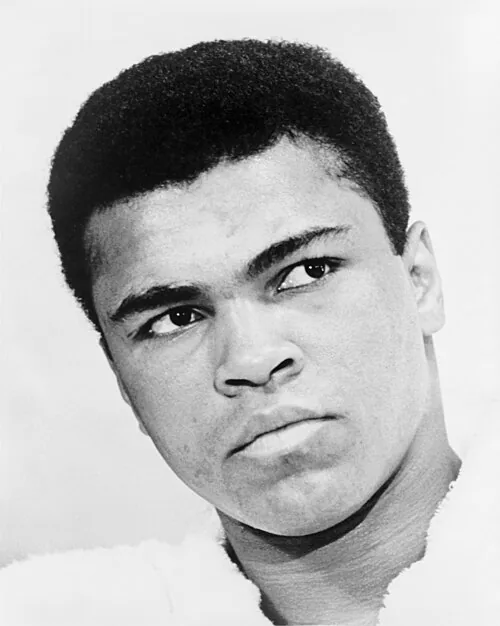
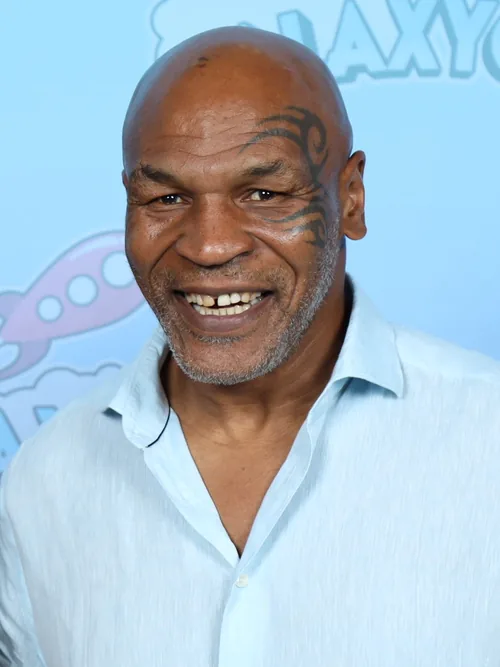
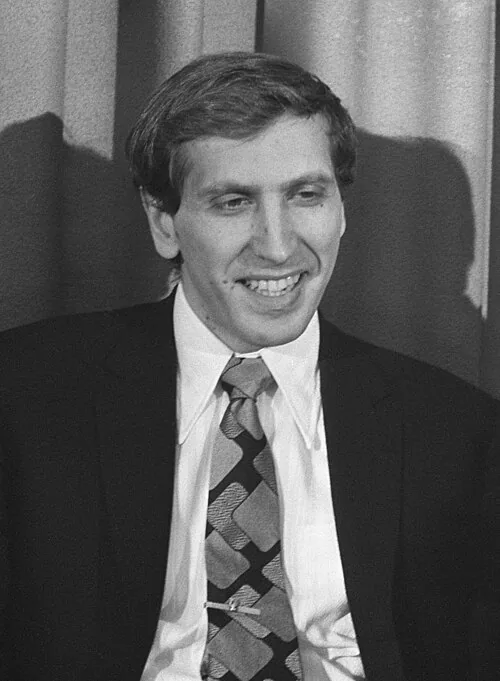
Photograph by Ira Rosenberg for the New York World-Telegram (1967), public domain. Background removed for the portrait above. · Photograph by Super Festivals, CC BY 2.0. Background removed for the portrait above. · Photograph by Bert Verhoeff for Anefo (1972), CC0. Background removed for the portrait above.


An estimate is an inference.
Yours can be measured.
Thirty questions, scored against general-population benchmarks. Your score, your percentile, your ability breakdown and a printable IIF certificate.
Find your IQ score now! →