



What was Bobby Fischer’s IQ?
The one score somebody actually recorded.

Fischer is the closest this site gets to a documented celebrity IQ — and even here, the test itself has never been produced.
Bobby Fischer’s estimated IQ
- A school-administered IQ test at Erasmus Hall High School in Brooklyn, reported by his biographer Frank Brady as producing a result in the high 170s to 180s.
- United States Chess Champion at fourteen, in the 1957–58 championship; International Grandmaster at fifteen, the youngest in history at the time.
- An 11–0 sweep of the 1963–64 US Championship — the only perfect score in the event’s history — and a peak FIDE rating of 2785 in 1972.
The score is second-hand. Brady knew Fischer and had access to people who did, but the test paper has never been published, and a mid-century school test is not a modern normed instrument.
- Born
- 9 March 1943, Chicago
- Died
- 17 January 2008, Reykjavík
- Field
- Chess
- Education
- Erasmus Hall High School (left at sixteen)
- Peak rating
- 2785 FIDE, 1972
- Known for
- 1972 World Championship; 11–0 in 1963–64
What an IQ of 160–180 actually means
Set the claim aside for a moment. If someone genuinely scored in this range, here is what that would represent.
Average is 100 by construction, and about two-thirds of people fall between 85 and 115. Take the test to place your own score on this scale.
| Score range | Classification | Share of people | What it indicates |
|---|---|---|---|
| 85 – 114 | Average | ~68% | The range most people fall into. |
| 115 – 129 | Above average | ~13.6% | Roughly one person in seven. |
| 130 – 144 | Gifted | ~2% | The threshold most high-IQ societies use. |
| Above 144 | Highly gifted | ~0.1% | Figures above this range are extrapolated from the curve rather than measured. |
Percentages are approximate and describe a normal distribution. The same number means different things on tests with different standard deviations.
Thirty questions gives you a measured position on this exact scale — your score, your percentile and the ability breakdown behind it.
Find out in 30 minutes →Who Bobby Fischer was
Bobby Fischer was born in Chicago in 1943 and raised in Brooklyn. He learned chess at six and by thirteen had played the game against Donald Byrne that became known as the Game of the Century. He won the US Championship at fourteen and the grandmaster title at fifteen.
He left Erasmus Hall High School at sixteen to play full time. The 1972 world championship match against Boris Spassky in Reykjavík was the most widely reported chess event ever held, and he did not defend the title — he forfeited it in 1975 without playing.
The decades that followed were difficult and increasingly isolated, ending with his death in Iceland in 2008. The chess record and the later life are usually told as one story about a mind; they are better read as two, which is part of why a single number explains neither.
 By Elora Mercer, Celebrity Research WriterFigures checked by Leon Falkner, Data & Research Analyst
Reviewed by Aarav Vardhan, Editor-in-Chief · Last reviewed August 2026

Bobby Fischer: the documented record
The estimate above rests on this record. Every entry here is a matter of public fact, which is more than can be said for the number itself.
- 1943Born in Chicago; the family later moves to Brooklyn.
- 1949Learns to play chess, aged six.
- 1956Plays the “Game of the Century” against Donald Byrne, aged thirteen.
- 1958Wins the US Championship at fourteen and becomes the youngest grandmaster to date at fifteen.
- 1959Leaves Erasmus Hall High School at sixteen to play full time.
- 1964Completes an 11–0 sweep of the 1963–64 US Championship.
- 1972Defeats Boris Spassky in Reykjavík to become World Champion; peak rating 2785.
- 1975Forfeits the title without playing a defence.
- 2008Dies in Reykjavík.
Where the 180 figure came from
Following a claim back to its first appearance is the part almost nobody does — and it is what most people are actually asking.
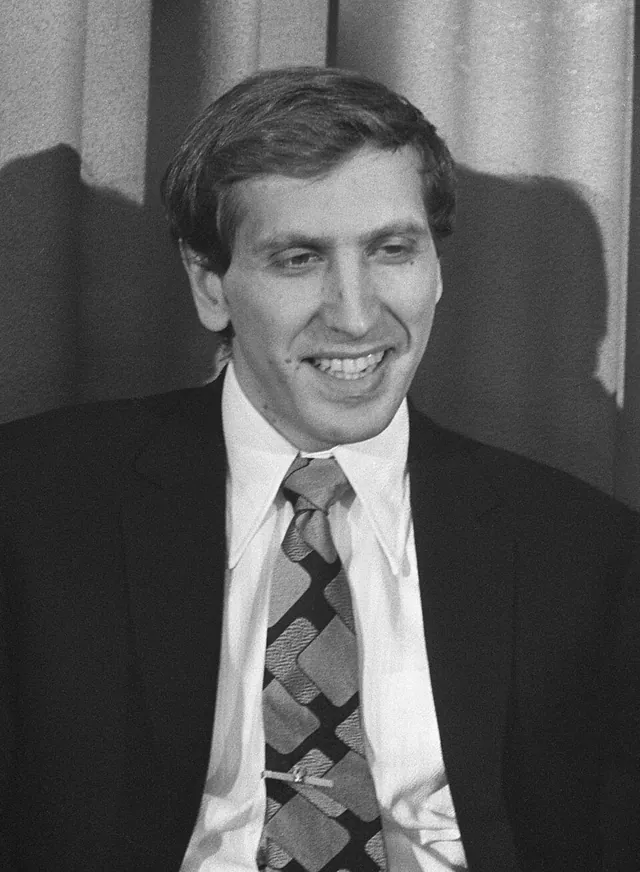
Fischer matters here because he is the counter-example. Everywhere else on this site the answer is that no test exists. For Fischer, one probably did — and looking closely at what that gets us is instructive.
It gets us: no test name, so no way to know the scale or the standard deviation used; no norming date, so no way to correct for the Flynn effect over an intervening seventy years; no score report, so no way to check the number against the paper; and three competing figures in circulation. A documented score with none of its metadata is only marginally better than no score at all.
The chess record has none of these problems. Elo ratings are published, dated and computed from results, which is why the range above leans on the 2785 and the 11–0 rather than on the school test — the same reasoning used for Magnus Carlsen.
How we read a number →The source of the Erasmus Hall test account. Brady knew Fischer personally from the 1950s. The report is credible and remains second-hand.
The earlier biography, written while Fischer was active. Useful for dating the school-years material.
Peak published rating of 2785, a record that stood for over two decades. Dated, computed and publicly archived — the strongest input here.
Champion at fourteen; the 11–0 perfect score remains unmatched in the event.
The Erasmus Hall test paper, its name, its norms and its date have never been published.
The sources behind our estimate
The figures that circulate for Bobby Fischer, what we were able to confirm, and where the two diverge.
180 is the standard figure, with 181 and 187 as common variants. Unusually, all three trace back to a real event rather than to nothing.
This is the strongest documented claim in the whole section, and it is still not a released score. What exists is a biographer’s report of a test taken at Erasmus Hall, without a score report, a test name or a norming date. The variants — 180, 181, 187 — are the tell: a single documented number does not fragment into three.
Three figures for one test. Whatever was on the paper, at least two of these are wrong.
Want a number that does hold up? Every figure on this page is somebody’s claim. Take the 30-question test and get a percentile you can check rather than a figure you have to trust.
Bobby Fischer — frequently asked
What was Bobby Fischer’s IQ?
His biographer Frank Brady reports a school-administered test at Erasmus Hall High School producing a result in the high 170s to 180s. The score report has never been published, so the figure is second-hand.
Is Bobby Fischer’s IQ of 180 verified?
No. It is the best-documented claim on this site and it is still not verified: there is no test name, no norming date and no released paper, and three different figures circulate.
Was Bobby Fischer the smartest chess player ever?
Chess strength is measured directly by Elo rating, and by that measure his 2785 peak was the highest of its era but has since been passed. IQ and chess ability are related but not interchangeable.
Did Bobby Fischer finish school?
No. He left Erasmus Hall High School in Brooklyn at sixteen to play chess professionally.
How does Fischer compare with Magnus Carlsen?
Carlsen’s peak rating of 2882 is higher, though ratings inflate across eras and direct comparison is contested. Both are profiled here under Athletes.
Why does this page trust the chess rating more than the IQ figure?
Because Elo ratings are published, dated and computed from recorded results, while the IQ figure rests on one biographer’s account of an unreleased test.
How does my IQ compare with Bobby Fischer?
You can find out in about fifteen minutes. The IQ Metrics assessment is 30 questions, scored on the same 100-mean scale used throughout this page, so your result and the estimate above are at least expressed in the same units — one measured, one inferred. Once you have a number, the leaderboard shows where it would sit, and how we score and norm it explains the benchmarking.
Where does this estimate come from?
From the documented record rather than a test — the method is named above and set out in full under how we read a number. Compare it against the other athletes profiles, starting with Magnus Carlsen.
- Take the 30-question IQ test — get a measured score and percentile of your own
- Average IQ by country — how the scale behaves across populations
- How IQ Metrics scores its assessment — the method behind our own number
- More on how IQ testing works — reliability, error and what a score can and cannot say
- More athletes profiles — same field, same method
More athletes
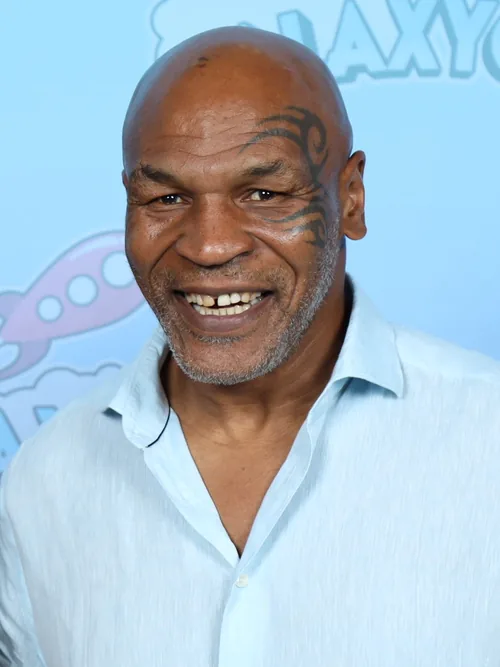
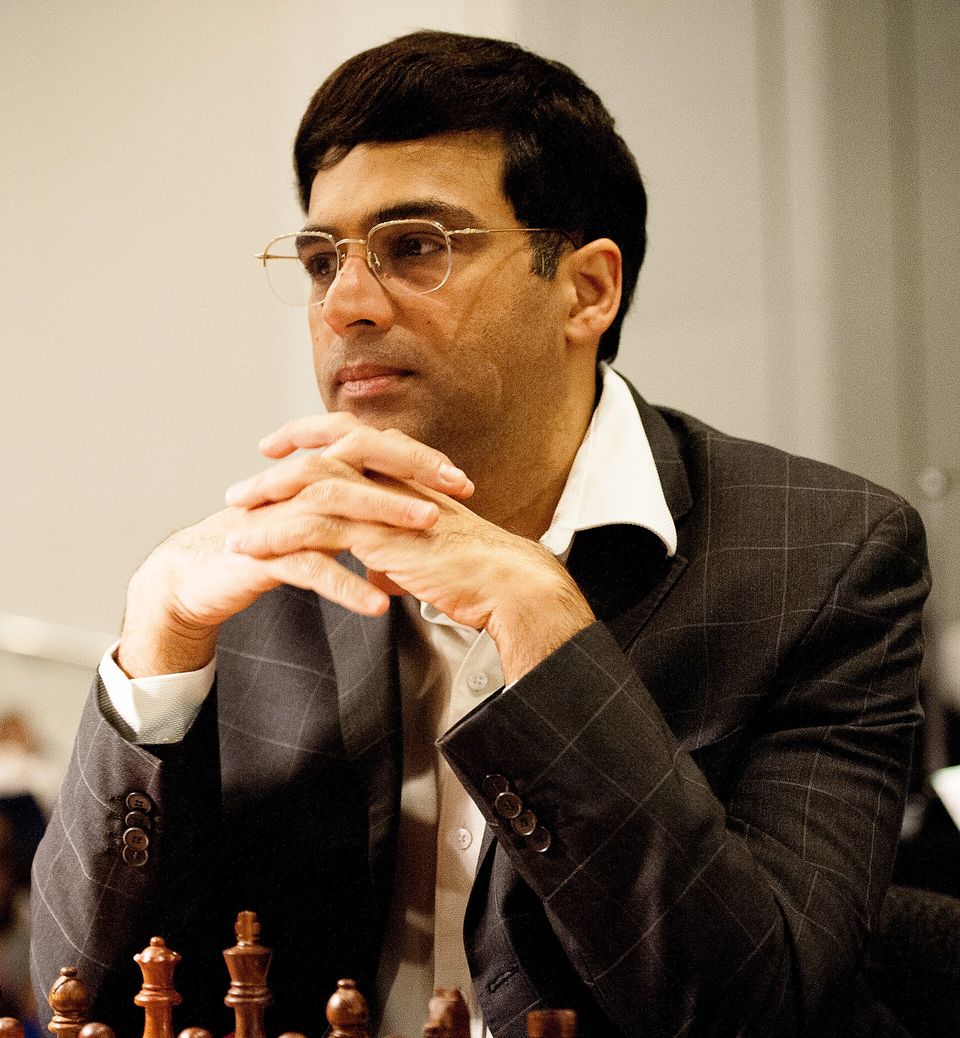
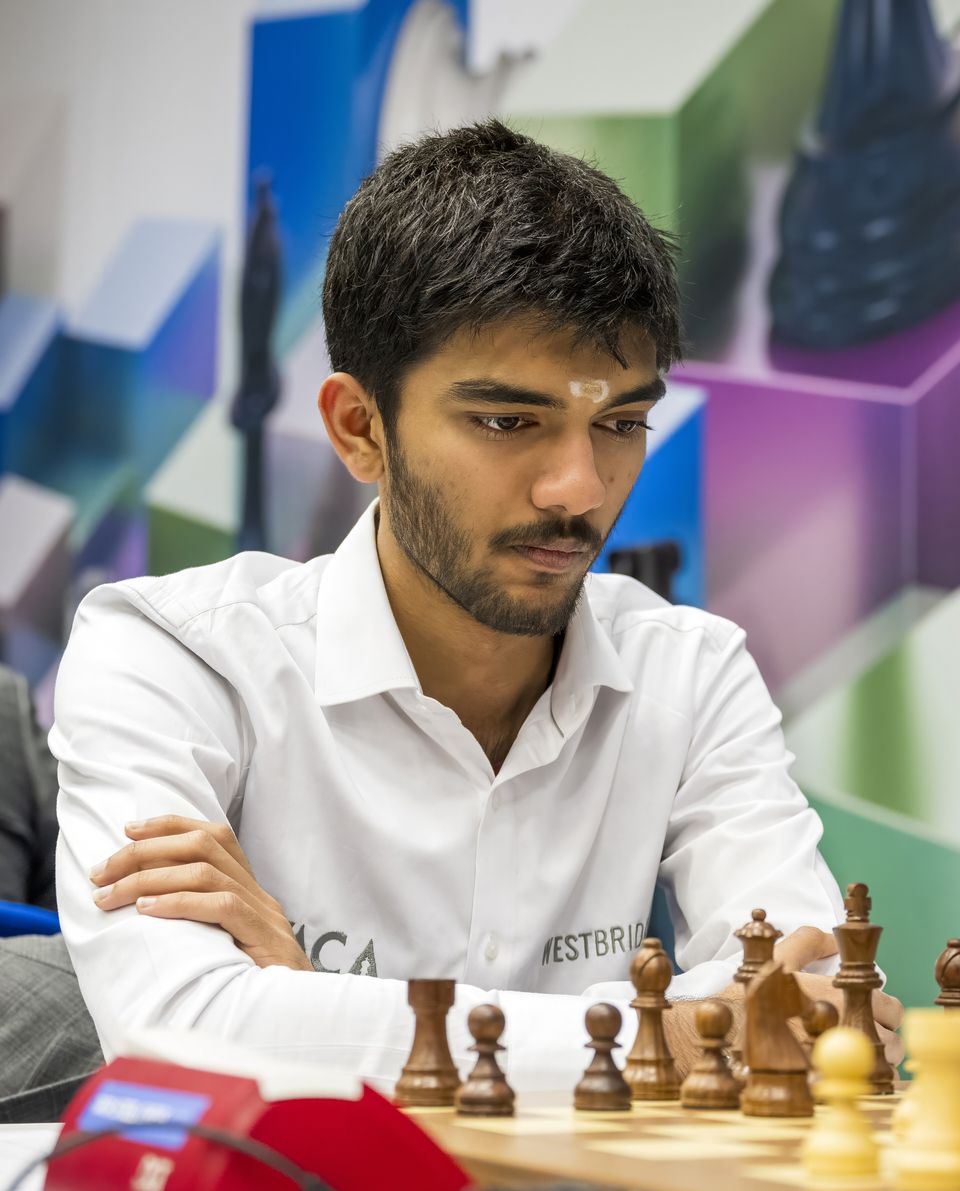
Photograph by Super Festivals, CC BY 2.0. Background removed for the portrait above. · Photograph by Wolfgang Jekel (London Chess Classic, 2016), CC BY 2.0. Background removed for the portrait above. · Photograph by Frans Peeters (Tata Steel Chess Tournament, January 2024), CC BY-SA 2.0. Background removed for the portrait above.

_(cropped).jpeg)
.jpg)
An estimate is an inference.
Yours can be measured.
Thirty questions, scored against general-population benchmarks. Your score, your percentile, your ability breakdown and a printable IIF certificate.
Find your IQ score now! →