



What is Magnus Carlsen’s IQ?
The one number ever measured.

The most interesting entry in the whole database, because he is the one person here with a real, published, continuously measured performance rating.
Magnus Carlsen’s estimated IQ
- Reached the highest FIDE rating ever recorded, peaking above 2880.
- World Chess Champion from 2013 to 2023; grandmaster at 13.
- Elo is a genuinely objective, continuously updated measurement — unlike every other figure on this site.
Elo measures chess strength, not general reasoning. Carlsen has said himself that he has never taken an IQ test and is sceptical of the numbers attached to him — which is a better source than any listicle.
- Born
- 30 November 1990, Tønsberg, Norway
- Field
- Chess
- Peak rating
- 2882 FIDE — the highest ever recorded
- Known for
- World Chess Champion 2013–2023
- Nationality
- Norwegian
What an IQ of 145–160 actually means
Set the claim aside for a moment. If someone genuinely scored in this range, here is what that would represent.
Average is 100 by construction, and about two-thirds of people fall between 85 and 115. Take the test to place your own score on this scale.
| Score range | Classification | Share of people | What it indicates |
|---|---|---|---|
| 85 – 114 | Average | ~68% | The range most people fall into. |
| 115 – 129 | Above average | ~13.6% | Roughly one person in seven. |
| 130 – 144 | Gifted | ~2% | The threshold most high-IQ societies use. |
| Above 144 | Highly gifted | ~0.1% | Figures above this range are extrapolated from the curve rather than measured. |
Percentages are approximate and describe a normal distribution. The same number means different things on tests with different standard deviations.
Thirty questions gives you a measured position on this exact scale — your score, your percentile and the ability breakdown behind it.
Find out in 30 minutes →Who Magnus Carlsen is
Magnus Carlsen became a grandmaster at thirteen, world number one at nineteen, and World Champion at twenty-two. He held the title for a decade and reached a rating no player has matched.
He is also known for an unusually broad game — strong in every phase rather than reliant on opening preparation — and for grinding out wins from positions other players would agree to draw. That reputation for relentless calculation is what invites the IQ speculation.
The irony is that he is the one person profiled here whose ability genuinely is measured, precisely and continuously. It just is not measured on the scale people keep quoting.
 By Elora Mercer, Celebrity Research WriterFigures checked by Leon Falkner, Data & Research Analyst
Reviewed by Aarav Vardhan, Editor-in-Chief · Last reviewed August 2026

Magnus Carlsen: the documented record
The estimate above rests on this record. Every entry here is a matter of public fact, which is more than can be said for the number itself.
- 2004Becomes a grandmaster at thirteen — among the youngest ever at the time.
- 2010Reaches world number one on the FIDE rating list, aged nineteen.
- 2013Defeats Viswanathan Anand to become World Chess Champion.
- 2014Reaches a peak rating of 2882, the highest ever recorded.
- 2014Defends the title against Anand.
- 2016Defends against Sergey Karjakin.
- 2018Defends against Fabiano Caruana.
- 2021Defends against Ian Nepomniachtchi.
- 2023Declines to defend the classical title, ending a decade as champion.
Where the 190 figure came from
Following a claim back to its first appearance is the part almost nobody does — and it is what most people are actually asking.
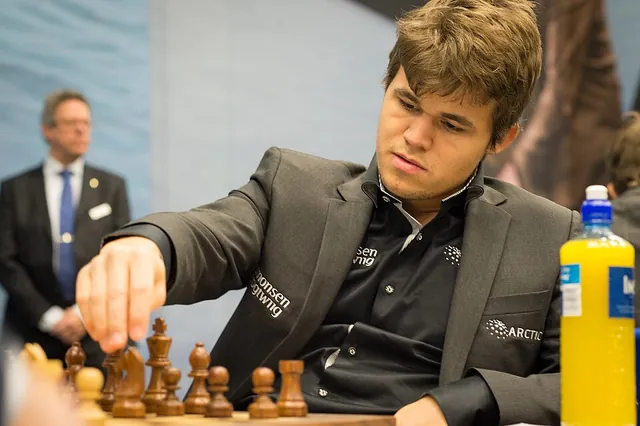
The 190 attached to Carlsen has no source, and unusually, the subject has addressed it himself — he has said he has never taken an IQ test and has been dismissive of the figures published about him. A direct statement from the person beats every aggregator in the chain.
What makes this profile different is that a real measurement does exist, just not of the thing people are asking about. Elo is continuously updated, publicly maintained and genuinely earned — it is arguably the most rigorous performance metric attached to any name on this site.
It measures chess strength. The research on chess skill and general reasoning finds a positive but modest relationship that weakens at elite level, where deliberate practice and preparation dominate. Being the strongest player in recorded history does not license a specific IQ figure, and that gap is the whole point of this page.
How we read a number →Public, continuously maintained record of results-based rating, including the peak of 2882. The most objective figure in this database.
STILL UNVERIFIED — no primary interview located.
The remark is quoted very widely and usually attributed to a ChessBase interview, but no original transcript or recording could be reached. Reported, not confirmed.
Meta-analytic average r = .24, and the association weakens with expertise — r = .32 in unranked samples against r = .14 in ranked players. It is weakest exactly where Carlsen sits.
The sources behind our estimate
The figures that circulate for Magnus Carlsen, what we were able to confirm, and where the two diverge.
The figure most often quoted, typically alongside his rating as though the two were the same kind of measurement.
Carlsen has stated publicly that he has never taken an IQ test. That is a first-hand denial, and it outranks every aggregator quoting a number. Our range is inferred from domain performance, which is measured precisely — but measures chess, not general reasoning.
Note what happens here: a genuinely rigorous number (his rating) gets silently converted into a different kind of number that nobody measured.
Want a number that does hold up? Every figure on this page is somebody’s claim. Take the 30-question test and get a percentile you can check rather than a figure you have to trust.
Magnus Carlsen — frequently asked
What is Magnus Carlsen’s IQ?
He has said he has never taken an IQ test. The figures online — usually 190 — have no source. Our range is inferred from domain performance.
Does a chess rating measure intelligence?
It measures chess strength very precisely and nothing else directly. It is the most objective number in this database, and it still is not an IQ.
How high was his rating?
He reached 2882, the highest FIDE rating ever recorded.
Has Magnus Carlsen commented on his own IQ?
He has said he has never taken an IQ test and has been dismissive of the figures attached to him. That is a better source than any list that quotes one.
What does an Elo rating of 2882 mean?
It is the highest rating in the history of the game. Elo measures results against other rated players, so it is relative, continuously updated and genuinely earned.
Do chess players have higher IQs?
Studies find a positive but modest relationship, and it weakens at elite level, where practice and preparation dominate. Being the best in the world at chess does not imply a specific score.
How does my IQ compare with Magnus Carlsen?
You can find out in about fifteen minutes. The IQ Metrics assessment is 30 questions, scored on the same 100-mean scale used throughout this page, so your result and the estimate above are at least expressed in the same units — one measured, one inferred. Once you have a number, the leaderboard shows where it would sit, and how we score and norm it explains the benchmarking.
Where does this estimate come from?
From the documented record rather than a test — the method is named above and set out in full under how we read a number. Compare it against the other athletes profiles, starting with Bobby Fischer.
- Take the 30-question IQ test — get a measured score and percentile of your own
- Average IQ by country — how the scale behaves across populations
- How IQ Metrics scores its assessment — the method behind our own number
- More on how IQ testing works — reliability, error and what a score can and cannot say
- More athletes profiles — same field, same method
More athletes
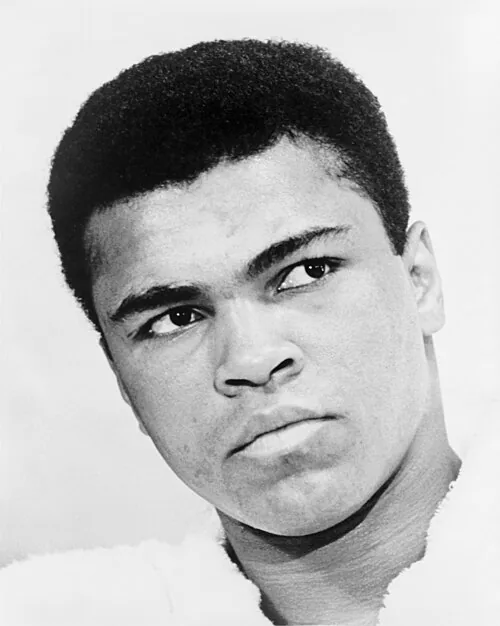

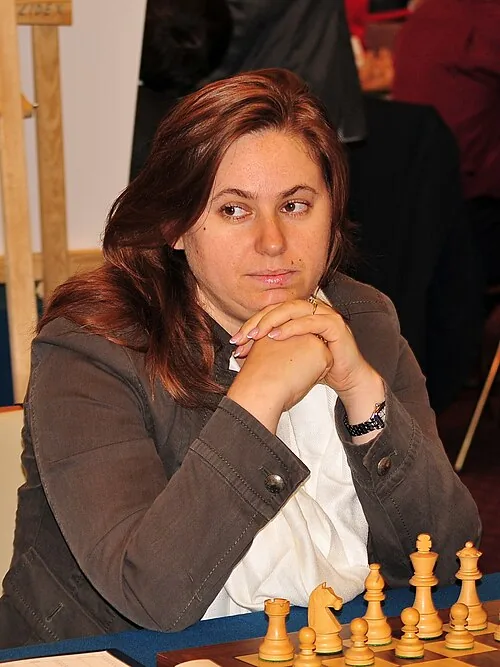
Photograph by Ira Rosenberg for the New York World-Telegram (1967), public domain. Background removed for the portrait above. · Photograph by Erik Drost, CC BY 2.0. Background removed for the portrait above. · Photograph by Przemysław Jahr, CC BY-SA 3.0. Cropped; background removed for the portrait above.

.jpg)

An estimate is an inference.
Yours can be measured.
Thirty questions, scored against general-population benchmarks. Your score, your percentile, your ability breakdown and a printable IIF certificate.
Find your IQ score now! →