



What was Gottfried Leibniz’s IQ?
Cox printed 185 and 190, not 205, and every list that prints 205 puts Goethe above him.
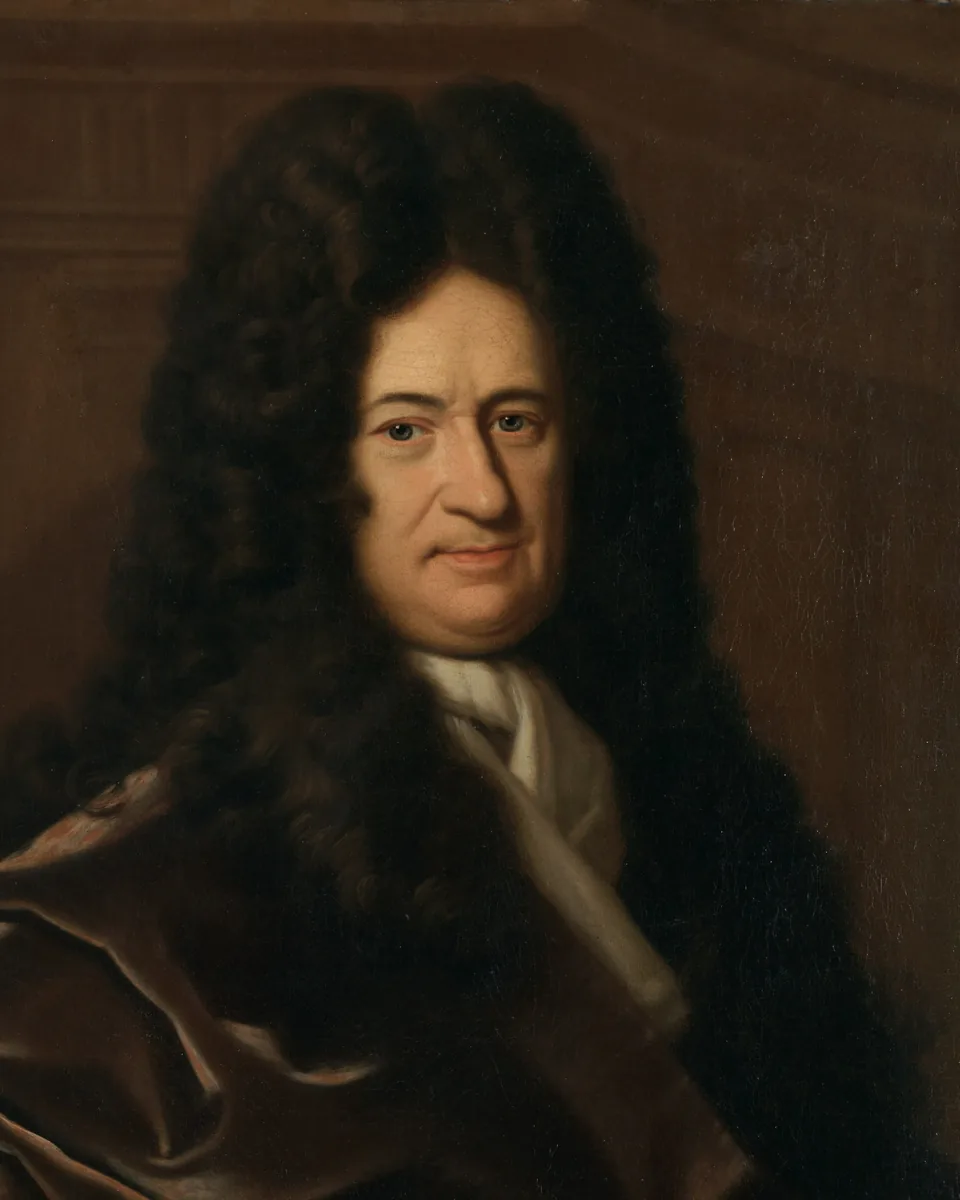
Gottfried Leibniz’s IQ was never tested: he died in 1716, and the “Leibniz IQ 205” on popular lists is not a score. Catharine Cox’s 1926 study printed estimates of 185 for his first 17 years and 190 through age 26, and her fold-out Table 12A corrects the second to 205, the figure on popular lists. This page puts his estimated IQ at 180–195.
Gottfried Leibniz’s estimated IQ
- Catharine Cox’s 1926 study The Early Mental Traits of Three Hundred Geniuses prints AI IQ 185 (first 17 years) and AII IQ 190 (record through age 26) for Leibniz, both uncorrected, each with a stated margin of ±5 and a data reliability of .75 (case study p. 702; Table 38, p. 153). The range 180–195 spans those two values and their margins.
- Two of the three raters put his childhood estimate at 190 and none rated him below 180 (Cox, p. 153); Cox wrote that a minimum childhood IQ for Leibniz, Grotius and Goethe “cannot be less than 180” (p. 155), which fixes the bottom of the range.
- Entered the University of Leipzig in 1661 at fourteen, spent a term at Jena in 1663 under the mathematician Erhard Weigel, and took a doctorate of law at Altdorf at twenty, after Leipzig reportedly refused it because of his youth (November 1666 or February 1667, depending on the source).
- Published his differential calculus in the Acta Eruditorum in 1684 and a paper on the integral calculus in 1686; his binary arithmetic appeared in the 1703 Explication de l’arithmétique binaire, after a 1679 manuscript.
- First president of the Brandenburg Society of Sciences in Berlin, founded on July 11, 1700 (later the Berlin Academy); his surviving correspondence runs to about 20,000 letters exchanged with some 1,300 correspondents.
Leibniz died in 1716, 189 years before the first practical intelligence scale (Binet-Simon, 1905), so nothing here is a measured score. Cox’s figures are retrospective ratings by readers of biographies; she graded his record .75, which her scale equates with two Stanford-Binet tests per year-group (Table 18, p. 76) and which sits below the .82 given to Goethe and Mill, and she warned that the purpose of her corrected estimates is “not to furnish exact values for the score of an individual or even of a group.”
- Born
- July 1, 1646 (June 21, Old Style), Leipzig
- Died
- November 14, 1716, Hanover
- Education
- University of Leipzig from 1661; a term at Jena (1663); doctorate of law at Altdorf (1666–67)
- Known for
- Calculus (published 1684), binary arithmetic (1703), the Monadology (1714), a calculating machine
- Posts
- Librarian and councillor at Hanover from 1676; first president of the Brandenburg Society of Sciences, Berlin (1700)
- Cox 1926 rating
- AI 185 (first 17 years) and AII 190 (to age 26), obtained; reliability .75 (pp. 702, 153)
- Cattell 1903 rank
- 34th of 1,000 most eminent men
- Documented IQ test
- None possible: died 1716; Binet-Simon scale appeared 1905
What an IQ of 180–195 actually means
Set the claim aside for a moment. If someone genuinely scored in this range, here is what that would represent.
Average is 100 by construction, and about two-thirds of people fall between 85 and 115. Take the test to place your own score on this scale.
| Score range | Classification | Share of people | What it indicates |
|---|---|---|---|
| 85 – 114 | Average | ~68% | The range most people fall into. |
| 115 – 129 | Above average | ~13.6% | Roughly one person in seven. |
| 130 – 144 | Gifted | ~2% | The threshold most high-IQ societies use. |
| Above 144 | Highly gifted | ~0.1% | Figures above this range are extrapolated from the curve rather than measured. |
Percentages are approximate and describe a normal distribution. The same number means different things on tests with different standard deviations.
Thirty questions gives you a measured position on this exact scale — your score, your percentile and the ability breakdown behind it.
Find out in 30 minutes →Who Gottfried Leibniz was
Gottfried Wilhelm Leibniz, often written Gottfried Wilhelm von Leibniz, was born in Leipzig on July 1, 1646 (June 21, Old Style). His father, Friedrich Leibniz, was a jurist and professor of moral philosophy at the University of Leipzig and died in 1652, when the boy was six. The Stanford Encyclopedia of Philosophy says he was given access to his father’s extensive library at a young age; Cox’s case study, which lists Gottschalk Guhrauer’s 1846 biography among its references, adds that at eight he found a Livy and Calvisius’s chronological Thesaurus by chance, read the Livy without a dictionary, and later obtained the key to the library through a friend who persuaded his guardians. By twelve he understood Latin and had begun Greek, and at thirteen he wrote 300 hexameters between daybreak and noon when a schoolfellow fell ill (pp. 703–704, 790). These are reports retold from biographies written long after his death, not surviving school records.
Leibniz entered the University of Leipzig in 1661 at fourteen, took his bachelor’s degree at sixteen, and spent a term at Jena in 1663 studying mathematics with Erhard Weigel. Leipzig refused him a doctorate of law, reportedly because he was too young; he took the degree at Altdorf instead, at twenty, with the dissertation De casibus perplexis in jure, and, as Cox notes, declined a professorship there. Sources date the Altdorf degree to November 1666 (Wikipedia) or February 1667 (MacTutor). In 1672 he went to Paris on a diplomatic mission for the Elector of Mainz and stayed until October 1676, studying mathematics and physics under Christiaan Huygens from the fall of 1672 and, in 1673, showing an incomplete calculating machine to the Royal Society in London.
From December 1676 until his death Leibniz served the court of Hanover as librarian and councillor, later also as historian, and in 1691 he also became librarian of the Herzog August Library at Wolfenbüttel. He published his differential calculus in the Acta Eruditorum in 1684 (Nova Methodus pro Maximis et Minimis) and a paper on the integral calculus in 1686; Newton had begun his own calculus in 1666, and the priority dispute between them was argued in print from 1699, through the Royal Society’s Commercium epistolicum of early 1713, until Leibniz’s death in 1716. His first known work on binary numbers, the 1679 manuscript On the Binary Progression, was followed by the 1703 paper Explication de l’arithmétique binaire. In 1700 the Brandenburg Society of Sciences was founded in Berlin on July 11, at his urging, and he became its first president for life. His philosophical works include the Theodicy (1710) and the Monadology (1714), and the New Essays on Human Understanding, finished in 1704 and published in 1765.
Leibniz died in Hanover on November 14, 1716. His surviving papers are unusually large: the Leibniz-Edition describes about 100,000 sheets, including some 20,000 letters, and estimates the edition at about 130 volumes, with around half the corpus printed; the City of Hannover’s Leibniz-Archiv page counts about 20,000 letters to and from some 1,300 correspondents, and UNESCO added the correspondence to its Memory of the World Register in 2007. The Stanford Encyclopedia of Philosophy calls him the last “universal genius” and lists contributions to mathematics, physics, geology, jurisprudence and history alongside his philosophy. That breadth is why he is called a genius; what a genius-level IQ means on a test scale is a separate question. On this site the 180–195 range sits level with Pascal’s and just above the 170–190 given to Newton and to Euler, an ordering that rests on the same kind of record and the same caveat, not on any measured gap.
 By Elora Mercer, Celebrity Research WriterFigures checked by Leon Falkner, Data & Research Analyst
Reviewed by Aarav Vardhan, Editor-in-Chief · Last reviewed August 2026
.jpg)
Gottfried Leibniz: the documented record
The estimate above rests on this record. Every entry here is a matter of public fact, which is more than can be said for the number itself.
- 1646Born in Leipzig on July 1 (June 21, Old Style), the son of a jurist and professor of moral philosophy.
- 1661–63Enters the University of Leipzig at fourteen, takes a bachelor’s degree, and spends a term at Jena studying mathematics with Erhard Weigel.
- 1666–67Refused a doctorate of law at Leipzig, he takes it at Altdorf at twenty (November 1666 or February 1667, by source).
- 1672–76In Paris on a diplomatic mission; studies mathematics and physics with Christiaan Huygens and, in 1673, shows a calculating machine to the Royal Society.
- 1676From December, librarian and councillor at Hanover, where he stays until his death.
- 1684Publishes his differential calculus in the Acta Eruditorum; the integral calculus follows in 1686.
- 1700The Brandenburg Society of Sciences, later the Berlin Academy, is founded on July 11 with Leibniz as first president.
- 1703Publishes Explication de l’arithmétique binaire, after a first manuscript on binary numbers in 1679.
- 1716Dies in Hanover on November 14.
- 1926Cox’s study prints AI 185 and AII 190 for him, under the spelling “Leibnitz.”
Where the 205 figure came from
Following a claim back to its first appearance is the part almost nobody does — and it is what most people are actually asking.
The “Leibniz IQ 205” figure comes from Catharine Cox’s 1926 study The Early Mental Traits of Three Hundred Geniuses, but it is not a rating printed in his case study; it is the corrected figure in her fold-out Table 12A. Cox, who spells his name “Leibnitz” and prints his dates as 1646–1717 (he died in 1716), gives him an “AI” rating of 185 for his first 17 years and an “AII” rating of 190 for the record through age 26 (p. 702). Table 38 (p. 153) repeats both with a stated margin of ±5 and a data reliability of .75, and notes that two of the three raters put his childhood figure at 190 and none below 180. Both are ratio IQs, the old mental-age-to-actual-age quotient explained in ratio IQ versus deviation IQ, estimated by raters reading biographies rather than by testing anyone.
Where 205 comes from is printed in Cox’s fold-out Table 12A (facing page 60), which lists for every subject the obtained ratings and a corrected estimate: for Leibnitz, 195 for the first period and 205 for the second. The correction is arithmetic. Her formula (p. 82) adds to each obtained rating the gap between the person’s professional-group mean and 100, multiplied by one minus the reliability of the record, which undoes the raters’ habit of regressing toward 100 when evidence was thin (see regression to the mean). Applied to Leibniz’s AII of 190 at reliability .75, with her printed group means of 152 for scientists or 156 for philosophers (Table 20B), it adds 13 or 14 points: 203 or 204, which rounds to 205 as her group tables round to the nearest five; his childhood rating of 185 corrects to about 195 in the same way. Taking the higher of the two corrected values reproduces the figures that circulate for Newton (190, from AII 170 at reliability .60), Pascal (195, from 180 at .75) and Goethe (210, from 200 at .82). A correction is a statistical adjustment for incomplete records, not a new measurement.
The pages that print 205 do not say which of Cox’s numbers they mean. wissen.de’s article on Einstein’s IQ puts “Gottfried Wilhelm von Leibniz” at 205, second to Goethe at 210, and credits a study by Catharine M. Cox (1926). Meganoticias (November 9, 2025) lists “Gottfried Leibniz: 205” beside Goethe at 210 and Grotius at 200, says the estimates rest on the first Stanford-Binet scale (1916), and warns that Cox’s originals need updating for the Flynn effect. unlike.net (2012) ranks him fourth at “IQ: 205,” behind Goethe (210), Leonardo da Vinci (205) and Emanuel Swedenborg (205), with no source; briefly.co.za (2022) lists him eighth at “182 to 205”; HistorySnob lists him fifth at “between 182 and 205” and calls its numbers speculative. None says that Cox’s printed ratings are 185 and 190. Geniuses.club’s profile of Gottfried Wilhelm Leibniz shows an “IQ score” of “≈ 182” with no method named, the number at which the Briefly and HistorySnob ranges begin; none of the three pages says where its 182 comes from. For the general picture, see where celebrity IQ numbers come from.
None of the five lists puts him first, and Cox’s own text does not either. On her printed ratings John Stuart Mill leads the childhood band at 190 and Goethe leads the young-adult band at 200 (pp. 155, 162), and she wrote that Mill rates above Leibnitz and Grotius because an estimated IQ “is not an adequate measure of universality of interest and significance of achievement” (p. 159). Cattell’s 1903 ranking of the thousand most eminent men, an eminence list built from the space six reference works gave each name and not an IQ, puts Leibnitz 34th, between Kant (33rd) and Locke (35th). At 205 on a modern scale (mean 100, standard deviation 15) a score would sit seven standard deviations out, beyond the range in which standard tests discriminate; see the highest IQ score a test can report.
How we read a number →Leibniz case study pp. 702–705, printed as “Leibnitz”: AI IQ 185, AII IQ 190, reliability .75 each. Table 38, p. 153; pp. 155, 159, 162 (Mill, Goethe and Grotius comparisons); Table 37, p. 149 (Pascal 180 and 180, reliability .75); Table 18, p. 76 (.75 = two Stanford-Binet tests per year-group); correction formula and group means, pp. 82–84. The fold-out Table 12A (facing p. 60; individual and corrected ratings, Leibnitz 195 and 205) is read from a second archive.org scan, item geneticstudiesof0002cath_c2h2.
Describes Cox’s two estimates per subject (data to age 16 and to age 26), the reliability coefficients and the corrected estimates calculated from them. Leibniz is not discussed.
Ranks the thousand most eminent men by the space six reference works gave them; Leibnitz is the 34th name in the order-of-eminence list (Newton 14th, Kant 33rd, Galileo 46th, Pascal 61st). An eminence rank, not an IQ.
Born July 1, 1646; father a jurist and professor of moral philosophy, died 1652; access to his father’s library; Leipzig 1661; doctorate of law dated 1667; Paris and London 1673; Theodicy 1710, Monadology 1714, New Essays finished 1704 and published 1765; “the last universal genius.”
Leipzig 1661 at fourteen; bachelor’s 1663; Jena and Erhard Weigel; Altdorf doctorate February 1667; Paris 1672 to October 1676 with Huygens; Royal Society 1673; Hanover from December 1676; calculus 1684 and 1686; Brandenburg Society of Sciences, July 11, 1700; Commercium epistolicum, early 1713; died November 14, 1716.
Q9047 is Gottfried Wilhelm Leibniz, born June 21, 1646 (Julian) in Leipzig, died November 14, 1716 in Hanover. Wikipedia dates the bachelor’s to December 1662 and the Altdorf doctorate to November 1666; the controversy and binary pages give Newton’s 1666, Leibniz’s 1684, the 1699 accusation, the 1713 Commercium epistolicum, the 1679 manuscript and the 1703 paper.
About 100,000 sheets including about 20,000 letters; about 1,300 correspondents; about 130 volumes planned, around half printed; the Leibniz correspondence on UNESCO’s Memory of the World Register since 2007.
Both print Leibniz at 205 and Goethe at 210 and credit Catharine Cox’s 1926 study; Meganoticias adds Grotius at 200, says the estimates rest on the 1916 Stanford-Binet and warns about the Flynn effect. Neither separates obtained from corrected figures.
unlike.net ranks him fourth at “IQ: 205” (Goethe first at 210) with no source; Briefly lists him eighth at “182 to 205”; HistorySnob lists him fifth at “between 182 and 205” and calls its numbers speculative. Goethe is first on all three. None gives a method. Geniuses.club’s “Gottfried Wilhelm Leibniz” profile also shows an IQ score of 182 with no method.
He died on November 14, 1716; Binet and Simon published the first version of their intelligence test in 1905 (Wikipedia, “Alfred Binet”). No published IQ test result exists; Cox’s full text (searched under both “Leibniz” and her spelling “Leibnitz”) and the pages above contain only retrospective estimates.
The sources behind our estimate
The figures that circulate for Gottfried Leibniz, what we were able to confirm, and where the two diverge.
A Leibniz IQ of 205 circulates on wissen.de and in a November 2025 Meganoticias list, both crediting Catharine Cox’s 1926 study, and on unlike.net with no source; briefly.co.za and HistorySnob give a range of 182 to 205, and Geniuses.club shows 182.
No test result exists, and 205 is not one of the ratings Cox obtained for him. Her case study (p. 702) and Table 38 (p. 153) give AI 185 and AII 190, both obtained rather than corrected; her fold-out Table 12A prints the corrected estimates, 195 and 205 (her correction formula applied to the 190 gives 203 or 204, which her tables round to 205). wissen.de and Meganoticias name Cox without saying which figure they use; unlike.net, briefly.co.za and HistorySnob give no method at all.
The range runs 180–195 because Cox’s printed 185 and 190 each carry a margin of ±5; the circulating 205 sits ten points above that ceiling. It matches her corrected figure rather than an invention, but a correction adjusts for incomplete records and adds no new measurement.
Want a number that does hold up? Every figure on this page is somebody’s claim. Take the 30-question test and get a percentile you can check rather than a figure you have to trust.
Gottfried Leibniz — frequently asked
What is Gottfried Leibniz’s IQ?
Gottfried Leibniz has no measured IQ, because he died in 1716, long before intelligence tests existed. The 205 on popular lists is not a test score: Catharine Cox’s 1926 study printed estimates of 185 for his first 17 years and 190 through age 26, and this page estimates his IQ level at 180–195 from the documented record.
Did Leibniz take an IQ test?
No. Leibniz died on November 14, 1716, and the first practical intelligence scale, the Binet-Simon test, appeared in 1905. Every figure attached to his name is a retrospective estimate by someone reading biographies, so the Leibniz IQ score you see online is an inference, not a result.
Where does the “Leibniz IQ 205” figure come from?
It traces to Catharine Cox’s 1926 study of 301 geniuses, but not to a rating printed in his case study, which gives 185 and 190. The 205 is the corrected second-period estimate printed in her Table 12A, her correction formula applied to the 190 at a reliability of .75. Pages such as wissen.de and Meganoticias repeat it without saying it is corrected.
Did Leibniz have the highest IQ in history?
No source supports that. Cox’s printed ratings put John Stuart Mill higher for childhood (190) and Goethe higher for early adulthood (200), and every list that prints 205 for Leibniz, alone or as the top of a range, puts Goethe above him at 210 or more. Cox also warned that an estimated IQ does not measure universality of interest or significance of achievement.
Was Leibniz a genius?
On the record, yes in the everyday sense. He published the differential calculus in 1684, designed a calculating machine, described binary arithmetic in 1703 and became first president of the Brandenburg Society of Sciences, the future Berlin Academy, in 1700. The Stanford Encyclopedia of Philosophy calls him the last “universal genius,” which describes breadth, not an IQ.
How does Leibniz’s estimated IQ compare with Pascal’s and Euler’s?
At 180–195, Leibniz’s estimated range matches Blaise Pascal’s and sits just above Leonhard Euler’s 170–190 on this site. Cox printed 180 and 180 for Pascal at the same .75 reliability, against 185 and 190 for Leibniz; she did not rate Euler, so his range rests on achievement alone. None of the three is a score.
What did Leibniz read as a child?
After his father, a Leipzig professor of moral philosophy, died in 1652, Leibniz was given access to his father’s library. Cox’s case study says he read Livy at eight, understood Latin before twelve and began Greek, and read Cicero, Seneca, Pliny, Herodotus and Plato among others; these are biographers’ reports, not tests.
How does my IQ compare with Gottfried Leibniz?
You can find out in about fifteen minutes. The IQ Metrics assessment is 30 questions, scored on the same 100-mean scale used throughout this page, so your result and the estimate above are at least expressed in the same units — one measured, one inferred. Once you have a number, the leaderboard shows where it would sit, and how we score and norm it explains the benchmarking.
Where does this estimate come from?
From the documented record rather than a test — the method is named above and set out in full under how we read a number. Compare it against the other historical profiles, starting with Isaac Newton.
- Take the 30-question IQ test — get a measured score and percentile of your own
- Average IQ by country — how the scale behaves across populations
- How IQ Metrics scores its assessment — the method behind our own number
- More on how IQ testing works — reliability, error and what a score can and cannot say
- More historical profiles — same field, same method
More historical
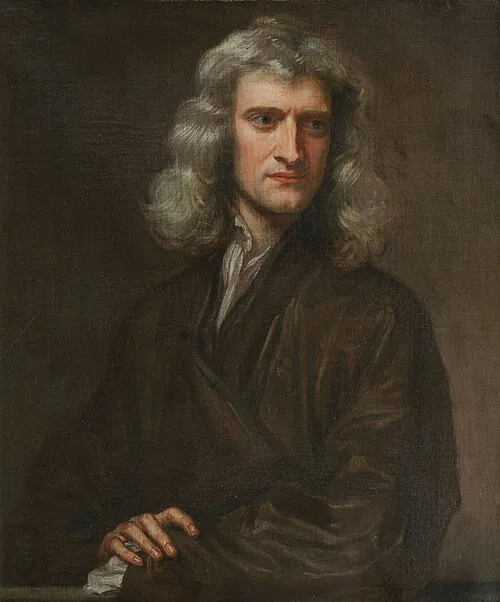
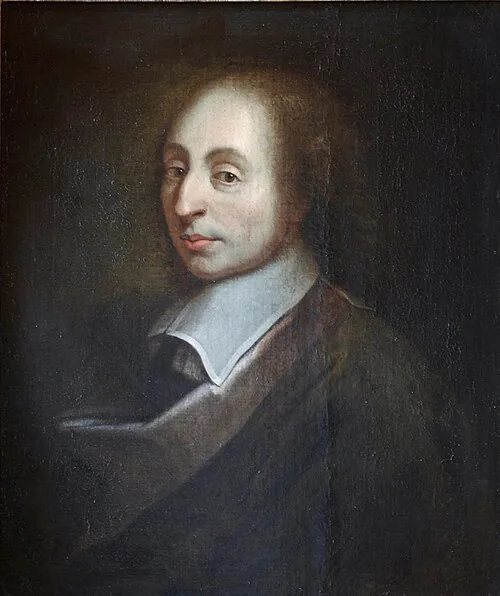
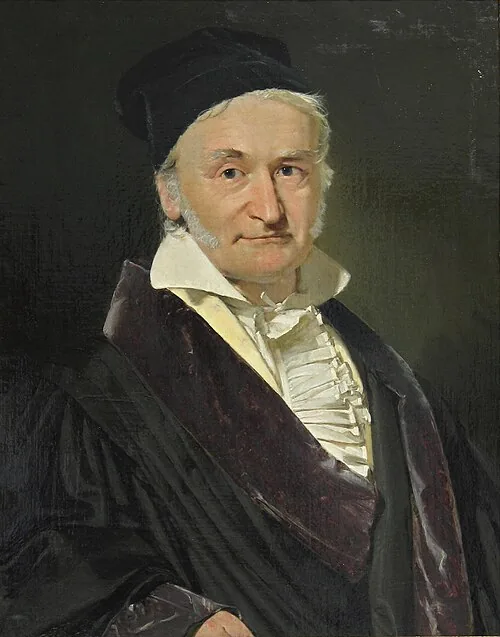
Portrait by Godfrey Kneller (1689), public domain. · Portrait, copy after François II Quesnel, via Wikimedia Commons, public domain. · Portrait by Christian Albrecht Jensen (1840), via Wikimedia Commons, public domain.


An estimate is an inference.
Yours can be measured.
Thirty questions, scored against general-population benchmarks. Your score, your percentile, your ability breakdown and a printable IIF certificate.
Find your IQ score now! →