



What was Blaise Pascal’s IQ?
Cox rated him 195. He predates real testing by two and a half centuries.
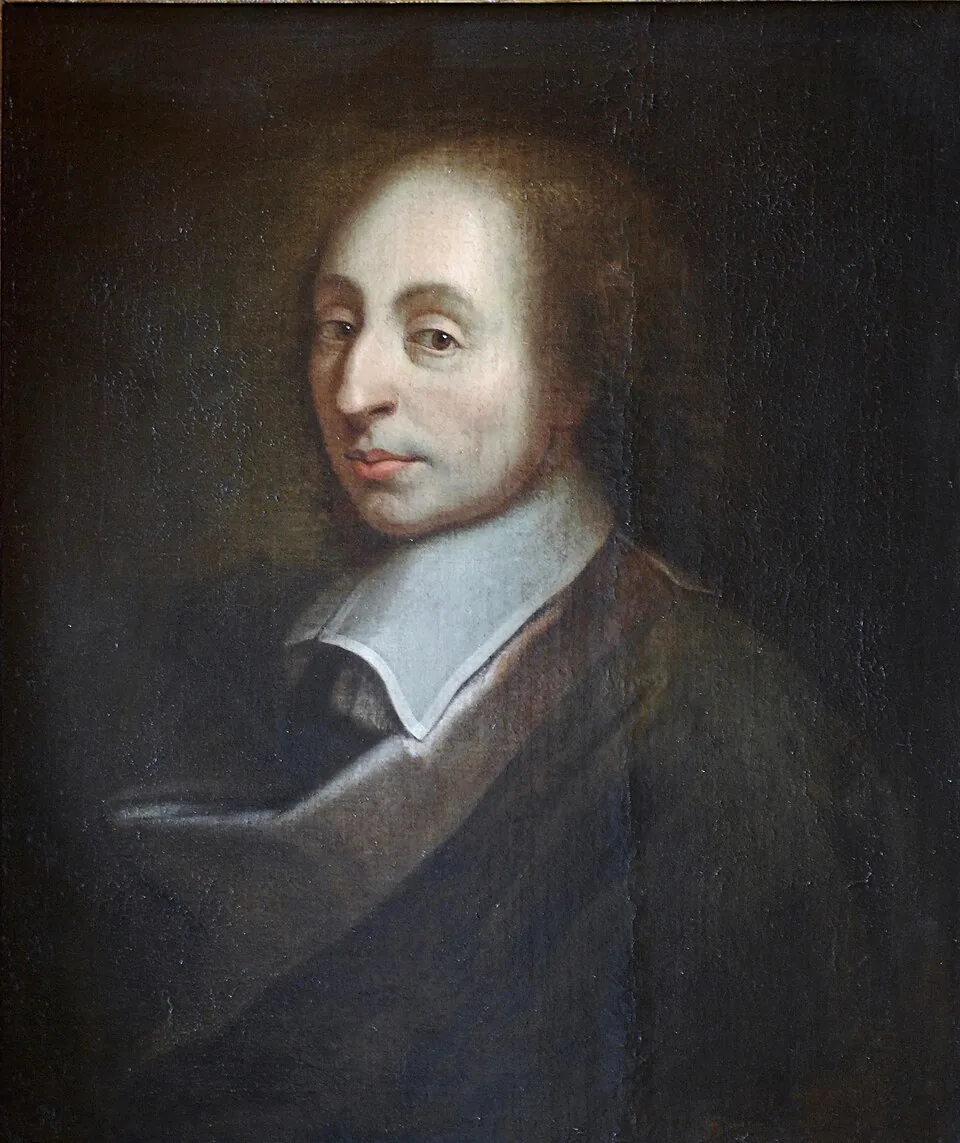
Catharine Cox’s 1926 historiometric study rated Blaise Pascal’s childhood mental ability at 180, corrected to 195 for regression to the mean — the same study behind several other estimates on this site. Pascal built a working mechanical calculator at eighteen or nineteen, and died in 1662, two and a half centuries before any real IQ test existed.
Blaise Pascal’s estimated IQ
- Rated by Catharine Cox’s 1926 study The Early Mental Traits of Three Hundred Geniuses at an “obtained” estimate of 180, corrected to 195 for regression to the mean — among the higher scores in Cox’s table.
- Designed the Pascaline mechanical calculator beginning in 1642, to help his tax-collector father with arithmetic; a working version was presented by 1645 and he held a royal manufacturing patent by 1649.
- Documented by his sister Gilberte’s biography as independently working out, around age twelve and without instruction, a proof equivalent to Euclid’s Book I Proposition 32 — that a triangle’s angles sum to two right angles.
- Corresponded with Pierre de Fermat in the summer of 1654 on the “problem of points,” work historians of mathematics regard as founding formal probability theory.
Pascal died in 1662, two and a half centuries before the first practical intelligence test (the 1905 Binet-Simon scale). Cox’s figures are a retrospective rating of biographical evidence by a review panel, not a recovered score, and her methodology has been debated since publication. Treat this range as a historiometric rating, not a test result.
- Born
- 19 June 1623, Clermont, France
- Died
- 19 August 1662, Paris, aged 39
- Known for
- Pascaline calculator; probability theory (with Fermat); Pascal’s Wager
- Cox 1926 rating
- 180 obtained / 195 corrected
- Documented IQ test
- None possible — predates Binet-Simon (1905) by over two centuries
What an IQ of 180–195 actually means
Set the claim aside for a moment. If someone genuinely scored in this range, here is what that would represent.
Average is 100 by construction, and about two-thirds of people fall between 85 and 115. Take the test to place your own score on this scale.
| Score range | Classification | Share of people | What it indicates |
|---|---|---|---|
| 85 – 114 | Average | ~68% | The range most people fall into. |
| 115 – 129 | Above average | ~13.6% | Roughly one person in seven. |
| 130 – 144 | Gifted | ~2% | The threshold most high-IQ societies use. |
| Above 144 | Highly gifted | ~0.1% | Figures above this range are extrapolated from the curve rather than measured. |
Percentages are approximate and describe a normal distribution. The same number means different things on tests with different standard deviations.
Thirty questions gives you a measured position on this exact scale — your score, your percentile and the ability breakdown behind it.
Find out in 30 minutes →Who Blaise Pascal was
Blaise Pascal was born in Clermont, France, in 1623 and was chronically ill for most of his life. His father withheld mathematics instruction from him as a child; by around age twelve, working alone, Pascal is documented by his sister Gilberte’s biography to have invented his own geometric terminology and reasoned his way to a proof equivalent to Euclid’s Proposition 32 before his father discovered what he had been doing. At sixteen he produced an essay on conics that impressed Descartes, who initially doubted a teenager had written it.
He designed the Pascaline mechanical calculator from 1642, receiving a royal manufacturing patent in 1649; nine surviving machines are held in museums today. In 1654, his correspondence with Pierre de Fermat on dividing stakes in an interrupted game of chance introduced the concept of expected value, work historians regard as founding probability theory. He died in Paris in 1662, aged thirty-nine.
 By Elora Mercer, Celebrity Research WriterFigures checked by Leon Falkner, Data & Research Analyst
Reviewed by Aarav Vardhan, Editor-in-Chief · Last reviewed August 2026

Where the 195 figure came from
Following a claim back to its first appearance is the part almost nobody does — and it is what most people are actually asking.
Pascal is a cleaner case than most historiometric profiles on this site: the numbers that circulate for him genuinely come from Catharine Cox’s 1926 study, rather than from nowhere. What gets lost in transmission is everything Cox herself qualified it with — that it is a retrospective panel rating of biographical accounts, prepared for 301 people born 1450–1850, using documented childhood behavior rather than any administered test.
The stronger, more specific evidence sits elsewhere: Gilberte Pascal’s account of her brother reconstructing Euclidean geometry alone at twelve, and the 1654 correspondence with Fermat that historians credit as the start of probability theory. Both are dated and attributable in a way a Cox score, by its own design, cannot be.
Compare Voltaire and Goethe, other Cox-rated profiles on this site — Pascal’s 195 corrected figure sits near the top of that cohort.
How we read a number →Source of the 180 obtained / 195 corrected estimate, via a transcription of Cox’s Table 12A.
Childhood geometry episode via Gilberte Pascal’s biography; Descartes’ reaction to the 1640 conics essay.
Dated letters establishing the “problem of points” exchange credited with founding probability theory.
He died in 1662; the first practical IQ test (Binet-Simon) dates to 1905.
The sources behind our estimate
The figures that circulate for Blaise Pascal, what we were able to confirm, and where the two diverge.
Figures of 180, 185 and 195 all circulate for Pascal, spread across sites including check-iq.org, geniuses.club and whats-your-iq.com.
All three numbers are Cox’s own two figures (180 obtained, 195 regression-corrected), reported inconsistently and usually stripped of any methodology note. check-iq.org states “it is believed his IQ was 180” while citing “Genetic Studies of Genius” — the correct series title, at least — but most sites present a single number as settled fact rather than what it actually is: one psychologist’s 1926 rating of childhood biographical evidence, prepared more than 260 years after Pascal died.
A narrow spread, unusually — because unlike most profiles here, the circulating numbers are not invented; they are Cox’s real figures, just relayed without their source or caveats.
Want a number that does hold up? Every figure on this page is somebody’s claim. Take the 30-question test and get a percentile you can check rather than a figure you have to trust.
Blaise Pascal — frequently asked
What was Blaise Pascal’s IQ?
No real score exists — intelligence testing wasn’t invented until 1905, over two centuries after Pascal died in 1662. The 180–195 figures that circulate trace to Catharine Cox’s 1926 historiometric study, which retrospectively rated childhood biographical evidence rather than administering a test.
How old was Pascal when he invented his calculator?
He began designing the Pascaline in 1642, aged either eighteen or nineteen depending on the source (accounts differ on whether this was before or after his June birthday that year), presenting a working version by 1645.
Did Pascal really work out geometry alone as a child?
According to a biography by his sister Gilberte, Pascal’s father withheld mathematics instruction from him. By about age twelve, working alone, he is documented to have reasoned his way to a proof that a triangle’s angles sum to two right angles before his father found out.
What did Pascal and Fermat discover about probability?
In summer 1654 they exchanged letters solving the “problem of points” — how to fairly divide stakes in an interrupted game of chance — introducing the concept of expected value and founding what historians regard as formal probability theory.
Did Pascal invent Pascal’s Triangle?
Not the triangle itself, which was known in Persia, China and Italy centuries earlier. His 1654 Traité du triangle arithmétique systematized its properties and applied them to probability; the name “Pascal’s Triangle” wasn’t coined until 1708, 46 years after he died.
What is Pascal’s Wager?
An argument from his posthumously published Pensées: since belief in God offers infinite potential gain and only finite potential loss if wrong, wagering on belief is the rational choice.
How does my IQ compare with Blaise Pascal?
You can find out in about fifteen minutes. The IQ Metrics assessment is 30 questions, scored on the same 100-mean scale used throughout this page, so your result and the estimate above are at least expressed in the same units — one measured, one inferred. Once you have a number, the leaderboard shows where it would sit, and how we score and norm it explains the benchmarking.
Where does this estimate come from?
From the documented record rather than a test — the method is named above and set out in full under how we read a number. Compare it against the other historical profiles, starting with Isaac Newton.
- Take the 30-question IQ test — get a measured score and percentile of your own
- Average IQ by country — how the scale behaves across populations
- How IQ Metrics scores its assessment — the method behind our own number
- More on how IQ testing works — reliability, error and what a score can and cannot say
- More historical profiles — same field, same method
More historical
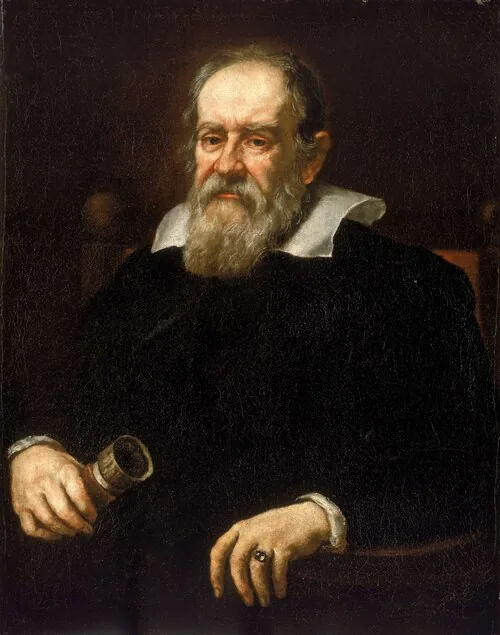
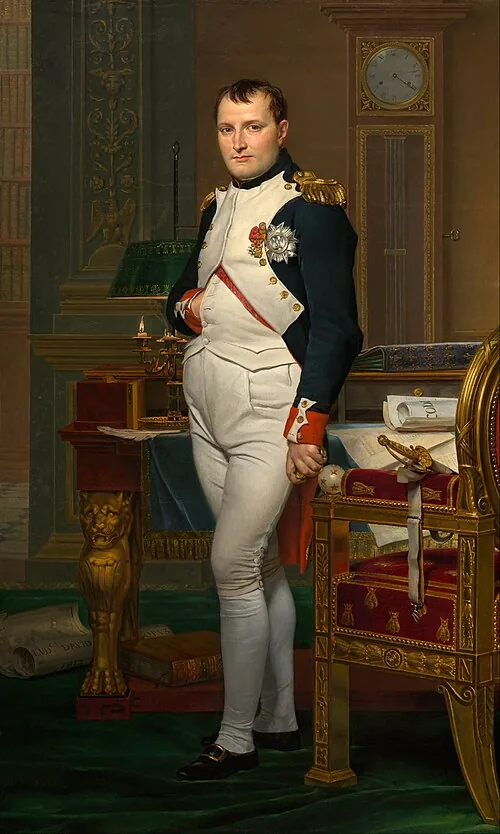
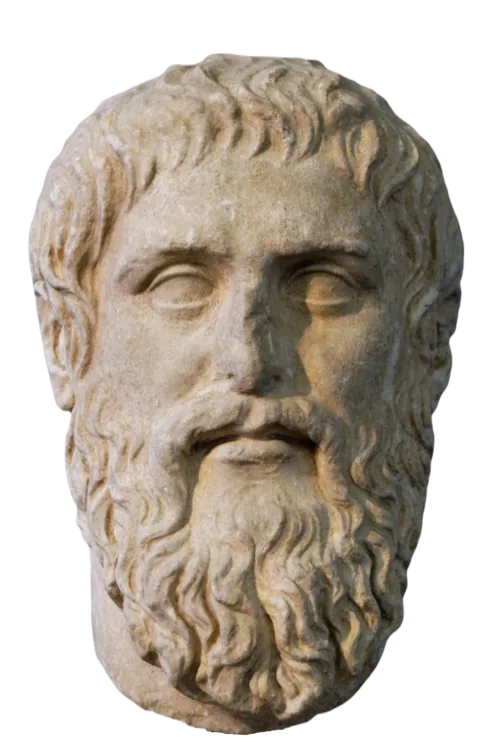
Portrait by Justus Sustermans (1636), via Wikimedia Commons, public domain. · Portrait by Jacques-Louis David (1812), via Wikimedia Commons, public domain. · Photograph by Marie-Lan Nguyen, public domain. Background removed for the portrait above.


An estimate is an inference.
Yours can be measured.
Thirty questions, scored against general-population benchmarks. Your score, your percentile, your ability breakdown and a printable IIF certificate.
Find your IQ score now! →