



What is Will Hunting’s IQ?
The film calls him a genius and compares him to Ramanujan, yet never gives an IQ.

Will Hunting’s IQ is never stated in Good Will Hunting (1997): no line of the film or its screenplay gives a number, and “genius-level IQ” in synopses is a description, not a score. This site’s estimated IQ for the character, inferred from the hallway proofs, the Ramanujan comparison and the limits the film sets, is 155–175.
Will Hunting’s estimated IQ
- The film sets the bar itself: in his lecture Professor Lambeau says a problem on the hallway board took him and his colleagues more than two years to prove, and Will, a 20-year-old janitor, solves it anonymously. Wikipedia’s plot summary then has Will write eight of the ten series-reduced trees of a second problem before Lambeau interrupts him.
- The writers hang two benchmarks on him: Lambeau, introduced by Sean as a Fields Medal winner for combinatorial mathematics, describes Ramanujan to Sean and says “this boy’s just like that,” and Sean later tells Will “you’re a genius, Will.”
- His range is wider than mathematics: in a bar he predicts a Harvard graduate student will repeat the historian Gordon Wood and traces the argument to a named book and page number; in court he cites a legal precedent “going back to 1789” and an 1887 sermon collection; and he tells Skylar he has studied organic chemistry “for kicks.”
- The memory question is left open: asked by Skylar whether he has a photographic memory, he says he does not know and compares it with remembering a phone number, while the screenplay’s stage directions show him flipping through a library book at about a page a second.
- The film also caps him: Wikipedia calls the first problem intermediate-level graph theory, the equations on the boards were written by on-set consultants Daniel Kleitman and Patrick O’Donnell, no original theory or publication of Will’s is shown, and no source gives him a degree.
No test exists and the film never scores him, so this is an inference about how the writers rank the character, not a measurement. “Genius” here is the film’s label for mathematical talent, Lambeau’s Ramanujan comparison is one character’s opinion, and the mathematics shown is modest, so a different weighing of those benchmarks would move the range.
- Film
- Good Will Hunting (1997), directed by Gus Van Sant, written by Matt Damon and Ben Affleck, produced by Lawrence Bender for Miramax; 126 minutes
- Played by
- Matt Damon (Will); Robin Williams (Dr. Sean Maguire), Stellan Skarsgård (Professor Gerald Lambeau), Minnie Driver (Skylar)
- Who Will is
- A 20-year-old self-taught janitor at MIT from South Boston, per Wikipedia’s cast list
- The hallway problems
- An “advanced Fourier system” in Lambeau’s words, intermediate-level graph theory per Wikipedia; a second problem on series-reduced trees on ten nodes, of which Will writes eight
- The film’s yardsticks
- The Fields Medal (Lambeau is introduced as a winner) and the mathematician Ramanujan (“this boy’s just like that”)
- Official description
- Miramax synopsis: “a headstrong, working-class genius”; no IQ mentioned
- Awards
- Nine Academy Award nominations and two wins at the 70th Academy Awards (March 23, 1998): Best Original Screenplay and Best Supporting Actor
- Stated IQ
- None: the screenplay and a transcript of the film contain no “IQ”; “genius-level IQ” appears only in synopsis blurbs
What an IQ of 155–175 actually means
Set the claim aside for a moment. If someone genuinely scored in this range, here is what that would represent.
| Score range | Classification | Share of people | What it indicates |
|---|---|---|---|
| 85 – 114 | Average | ~68% | The range most people fall into. |
| 115 – 129 | Above average | ~13.6% | Roughly one person in seven. |
| 130 – 144 | Gifted | ~2% | The threshold most high-IQ societies use. |
| Above 144 | Highly gifted | ~0.1% | Figures above this range are extrapolated from the curve rather than measured. |
Percentages are approximate and describe a normal distribution. The same number means different things on tests with different standard deviations.
Thirty questions gives you a measured position on this exact scale — your score, your percentile and the ability breakdown behind it.
Find out in 30 minutes →Who Will Hunting is
Will Hunting is the title character of Good Will Hunting, the 1997 drama directed by Gus Van Sant from a screenplay by Matt Damon and Ben Affleck and produced by Lawrence Bender for Miramax. It premiered on December 2, 1997 at the Bruin Theater in Los Angeles, opened in seven theaters in New York and Los Angeles on December 5 and went wide about two weeks later; it runs 126 minutes. At the 70th Academy Awards (March 23, 1998, Shrine Auditorium) it won two of its nine nominations: Best Original Screenplay for Damon and Affleck, and Best Supporting Actor for Robin Williams as the therapist Dr. Sean Maguire. Will is played by Matt Damon, whose own documented record is rated on a separate profile, while this page rates only the character; Ben Affleck plays his friend Chuckie Sullivan.
Will, 20 and from South Boston, is a self-taught janitor at MIT who spends his evenings with his friends Chuckie, Billy and Morgan. In the plot as Wikipedia summarizes it, he anonymously solves a problem that Lambeau, an MIT professor, has chalked on the main hallway board for his graduate students; Lambeau calls it an advanced “Fourier system,” though Wikipedia says it is intermediate-level graph theory. A harder second problem follows, and Lambeau catches Will writing at the board. After a street fight and an arrest Will avoids jail on conditions: study mathematics under Lambeau and see a therapist. Sean Maguire, Lambeau’s former college roommate, is the one who reaches him, and the film ties Will’s guardedness to his years in foster care. He meets Skylar, a Harvard student, turns down a National Security Agency job, accepts one of the offers Lambeau arranges and in the last scene drives to California to find her. For scores at selective schools, see the average IQ of MIT, Oxford and Yale students.
The film gives Will the vocabulary of prodigy without a number. Sean introduces Lambeau to his own psychology class as a Fields Medal winner for combinatorial mathematics and explains the medal as the Nobel Prize of mathematics, given once every four years. Will’s breadth is dramatized alongside his mathematics: in a bar he dismantles a Harvard graduate student’s argument by predicting that he will repeat the historian Gordon Wood and tracing it to Vickers’s Work in Essex County, page 98; in court he cites a precedent going back to 1789 and an 1887 sermon collection; and Sean says he could give a rundown of every art book ever written yet cannot say what the Sistine Chapel smells like. Whether Will’s recall is photographic the film leaves open, because Skylar asks and he answers that he does not know; the research on photographic memory and IQ separates a recall feat from a measured score.
Against the fictional roster on this site, 155–175 sits above Patrick Jane (140–160) and Mike Ross (135–155), overlaps Edward Elric (155–175) and Spider-Man (160–180), and falls below Spencer Reid (170–190, stated 187), Sheldon Cooper (175–195) and Sherlock Holmes (180–200). The ceiling is what the film leaves unshown: a degree, a body of published work, a theory built over years, or a career; the mathematics on the boards, written by consultants, is described by Wikipedia as intermediate-level graph theory. The floor is the writers’ own claims: a problem that cost a professor’s team more than two years, solved by a 20-year-old janitor, and a Fields Medal winner comparing him to Ramanujan. The range rates the character as written.
 By Elora Mercer, Celebrity Research WriterFigures checked by Leon Falkner, Data & Research Analyst
Reviewed by Aarav Vardhan, Editor-in-Chief · Last reviewed October 2026

Will Hunting: the documented record
The estimate above rests on this record. Every entry here is a matter of public fact, which is more than can be said for the number itself.
- January 1913Srinivasa Ramanujan writes to G. H. Hardy, the story Lambeau retells to Sean; Hardy brings him to Trinity College, Cambridge, in 1914 (MacTutor).
- Spring 1997Affleck and Damon, advised by physicist Sheldon Glashow, meet MIT mathematician Daniel Kleitman, who gives them a brief lecture and later works on set as a mathematics consultant, per Wikipedia.
- December 2, 1997Good Will Hunting premieres at the Bruin Theater in Los Angeles.
- December 5, 1997Limited release in seven theaters in New York and Los Angeles; a wide release in 1,787 theaters follows about two weeks later.
- March 23, 1998At the 70th Academy Awards the film wins Best Original Screenplay (Affleck and Damon) and Best Supporting Actor (Robin Williams) from nine nominations.
- January 30, 2017A Lee Enterprises newspaper-site list entry on the film describes Will as having a “genius-level IQ” and gives no number.
Why no figure circulates
Following a claim back to its first appearance is the part almost nobody does — and it is what most people are actually asking.

Will Hunting’s IQ is a number Good Will Hunting never gives, and what circulates is a phrase rather than a figure. “Genius-level IQ” appears in synopsis blurbs, such as a Lee Enterprises newspaper-site list entry (January 30, 2017), with no test or number. The only digit attached to him is in the introduction to Shmoop’s study guide, which asks how someone can have “an IQ of 180” and a low emotional IQ, as a rhetorical aside with no scene or source. This is the pattern traced in where celebrity IQ numbers come from: an adjective is repeated until readers hear a score.
Good Will Hunting IQ: does the film or screenplay state one? No. The screenplay posted on IMSDB and a transcript of the film on Springfield! Springfield contain no “IQ” or “I.Q.” What the dialogue does say is about talent, not a score. Professor Gerald Lambeau tells his class that a problem on the hallway board took him and his colleagues more than two years to prove; in the scene where Lambeau asks Sean Maguire to take Will on, the phrase “boy genius from Southie” is used; Sean later tells Will that no one denies he is a genius; and Lambeau, after describing Ramanujan to Sean, says “this boy’s just like that.” Miramax’s synopsis calls Will a “working-class genius.” None of these is a test result, and the film never shows one.
Will Hunting IQ level against other fictional geniuses is the comparison people type next, and the film supplies one real-world yardstick of its own. Lambeau compares Will to Srinivasa Ramanujan (1887–1920), whom the film describes as a man with no formal education and no access to scientific work whose results Hardy at Cambridge recognized; MacTutor dates his letter to G. H. Hardy to January 1913. This site rates the real Ramanujan 170–190, so Will’s 155–175 overlaps only the bottom of the film’s own benchmark: the film asserts the likeness and shows far less. Among fictional characters, Sheldon Cooper (175–195) has a number stated aloud, 187; Mike Ross (135–155) is the nearest match in type, a lead with a memory gift and no formal credential; and Patrick Jane (140–160) is another television lead whose show states no number.
What would a Will Hunting IQ level in the 155–175 range mean if taken at face value? On the usual scale (mean 100, standard deviation 15), 155 is about 3.7 standard deviations above average, roughly 1 person in 8,100, and 175 is five standard deviations out, about 1 in 3.5 million (arithmetic from the normal curve). What an IQ of 160 means already describes about 1 person in 31,600, and the top of this range is where measurement gets hard; see the highest score a test can report. The Fields Medal the film uses as its bar is a different kind of rarity: the International Mathematical Union awards it every four years to candidates who have not turned 40 by January 1 of the Congress year, so it records work, not a test result. The label itself, covered in what counts as a genius IQ level, is a convention that the film never defines.
How we read a number →Contains no “IQ” or “I.Q.” Uses “genius” only in Lambeau’s Ramanujan line, and has Lambeau call Will “a true prodigy.” Source for the stage directions (twenty library books, “about a page a second”), Will and Chuckie both 20, and the Fields Medal lines. The page does not say which draft it is, and details differ from the released film (the bar scene cites page 421 where the film says page 98, and “boy genius from Southie” is not in it), so film dialogue is taken from the transcript below.
Source of the quoted lines: Lambeau’s “more than two years to prove” and “advanced Fourier system,” the Ramanujan account (“this boy’s just like that”), “boy genius from Southie,” Sean’s “you’re a genius, Will,” the photographic-memory exchange, organic chemistry “for kicks,” the Gordon Wood and Essex County lines, the 1789 precedent and Sean’s Sistine Chapel speech. It contains no “IQ.” The transcript has no speaker labels, so lines are attributed from context.
Credits, release dates (premiere December 2, 1997; limited release December 5; wide release in 1,787 theaters about two weeks later), 126 minutes, the plot summary (two hallway problems, eight of ten trees, intermediate-level graph theory, the job offer), the cast list (Will a self-taught 20-year-old janitor from South Boston), Kleitman and O’Donnell as consultants, ceremony and nominees. No IQ on any page.
Official synopsis: Will Hunting is “a headstrong, working-class genius who is failing the lessons of life”; credits Gus Van Sant, Matt Damon and Ben Affleck. Uses “genius” once and no IQ.
Ceremony held Monday, March 23, 1998 at the Shrine Auditorium; Good Will Hunting listed with 9 nominations and 2 wins: Best Supporting Actor (Robin Williams) and Writing (Screenplay Written Directly for the Screen) for Ben Affleck and Matt Damon.
The medal is awarded every four years at the International Congress of Mathematicians; a candidate’s 40th birthday must not occur before January 1 of the Congress year; the committee is asked to choose at least two, with a strong preference for four.
Born December 22, 1887 in Erode and died April 26, 1920 in Kumbakonam; no university education; wrote to G. H. Hardy in January 1913; Hardy brought him to Trinity College, Cambridge, in 1914.
The Lee entry prints “genius-level IQ” in its plot summary with no test, scene or number. Shmoop’s only figure is a rhetorical question in its introduction (“an IQ of 180”), with no source.
Neither the IMSDB screenplay nor the Springfield! Springfield transcript gives Will an IQ or shows him taking a test.
The sources behind our estimate
The figures that circulate for Will Hunting, what we were able to confirm, and where the two diverge.
Will Hunting has a “genius-level IQ” but no number: that phrase appears in synopsis blurbs, such as a Lee Enterprises newspaper-site list entry (January 30, 2017). Shmoop’s study guide mentions “an IQ of 180” only as a rhetorical aside. People also type “will hunting iq,” “will hunting iq level,” “good will hunting iq” and “will hunting estimated iq.”
No line of Good Will Hunting states an IQ. The screenplay posted on IMSDB and a transcript of the film on Springfield! Springfield contain no “IQ” or “I.Q.”; the words the film uses are genius (“boy genius from Southie”; “you’re a genius, Will”), Lambeau’s Ramanujan comparison and the Fields Medal. Miramax’s own synopsis calls Will a “working-class genius” and gives no number. The “genius-level IQ” blurbs name no test or scene, and Shmoop’s “IQ of 180” is a rhetorical question with no source.
Nobody has put a number on the character, so there is no circulating figure for this range to disagree with; the only digit attached to him, a rhetorical 180 in a study guide, sits just above it and rests on nothing. On the usual scale (mean 100, standard deviation 15), 155 is about 3.7 standard deviations above average, roughly 1 person in 8,100, and 175 is five standard deviations out, about 1 in 3.5 million. Neither is a measurement.
Want a number that does hold up? Every figure on this page is somebody’s claim. Take the 30-question test and get a percentile you can check rather than a figure you have to trust.
Will Hunting — frequently asked
What is Will Hunting’s IQ?
Will Hunting’s IQ is not stated in Good Will Hunting (1997): no line of the film gives a number or shows a test, so there is no canon IQ. This site’s estimated IQ for the character, inferred from the hallway proofs, the Ramanujan comparison and the limits the film sets, is 155–175.
Where does “genius-level IQ” for Will Hunting come from?
From synopsis writers, not the film. “Genius-level IQ” appears in plot blurbs, such as a Lee Enterprises list entry (January 30, 2017), with no test or number named. Shmoop’s study guide mentions “an IQ of 180” only as a rhetorical aside, with no source.
Does Good Will Hunting say Will’s IQ or show him taking an IQ test?
No. The screenplay and a transcript of the film contain no “IQ,” and no scored test appears. The film says genius instead: Sean tells Will that no one denies he is a genius, and Lambeau compares him to Ramanujan.
Is Will Hunting a genius, and what does “genius” mean in the film?
Within the film, yes: Sean says no one denies Will is a genius, and Lambeau sets him beside Ramanujan. But genius there is a character’s label for mathematical talent, tied to benchmarks like the Fields Medal, not a test result. The film never shows a score.
How hard was the problem Will Hunting solved on the MIT blackboard?
In the film, Lambeau says a problem on the board took him and his colleagues more than two years to prove. Wikipedia calls the first problem intermediate-level graph theory, though Lambeau calls it an advanced Fourier system, and the second asks for all series-reduced trees on ten nodes, of which Will writes eight.
How does Will Hunting’s estimated IQ compare with Sheldon Cooper’s?
This site rates Will Hunting at 155–175 and Sheldon Cooper at 175–195, so Sheldon ranks higher. The difference is the record: The Big Bang Theory states 187 aloud and gives Sheldon doctorates and a Nobel Prize, while Good Will Hunting states no number and shows Will solving problems rather than building a career. Both ranges are inferences, not scores.
Does Will Hunting have a photographic memory?
The film does not settle it. Skylar asks whether he has a photographic memory and Will answers that he does not know, comparing it with remembering a phone number; the screenplay has him flipping through a library book at about a page a second. A memory feat is a skill on display, not a measured IQ.
Who plays Will Hunting, and is this page about the actor?
Matt Damon plays Will Hunting and co-wrote the screenplay with Ben Affleck; it won the Academy Award for Best Original Screenplay on March 23, 1998. This page rates the fictional character, not the actor: playing a role says nothing about a performer’s own score, and Damon’s own record has a separate profile.
How does my IQ compare with Will Hunting?
You can find out in about fifteen minutes. The IQ Metrics assessment is 30 questions, scored on the same 100-mean scale used throughout this page, so your result and the estimate above are at least expressed in the same units — one measured, one inferred. Once you have a number, the leaderboard shows where it would sit, and how we score and norm it explains the benchmarking.
Where does this estimate come from?
From the documented record rather than a test — the method is named above and set out in full under how we read a number. Compare it against the other fictional profiles, starting with Sherlock Holmes.
- Take the 30-question IQ test — get a measured score and percentile of your own
- Average IQ by country — how the scale behaves across populations
- How IQ Metrics scores its assessment — the method behind our own number
- More on how IQ testing works — reliability, error and what a score can and cannot say
- More fictional profiles — same field, same method
More fictional
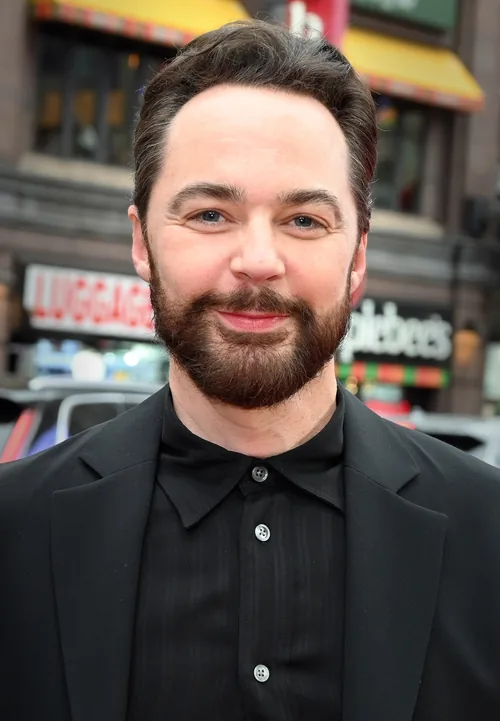


Photograph of actor Jim Parsons by Philip Romano (Broadway opening night of Good Night, and Good Luck, April 3, 2025), CC BY 4.0. Sheldon Cooper is a character created by Chuck Lorre and Bill Prady for The Big Bang Theory, played by Parsons from 2007 to 2019; this is a photograph of the actor who played the role, not of the character. Background removed for the portrait above. · Photograph of actor Patrick J. Adams by Genevieve (promotional event for Suits, January 14, 2013), CC BY 2.0. Mike Ross is a character created by Aaron Korsh for Suits, played by Adams from 2011 to 2019; this is a photograph of the actor who played the role, not of the character. Cropped and with background removed for the portrait above. · Photograph of actor Simon Baker by Martin Kraft (Berlinale, February 23, 2020), CC BY-SA 4.0. Patrick Jane is a character created by Bruno Heller for The Mentalist, played by Baker from 2008 to 2015; this is a photograph of the actor who played the role, not of the character. Cropped and with background removed for the portrait above.


An estimate is an inference.
Yours can be measured.
Thirty questions, scored against general-population benchmarks. Your score, your percentile, your ability breakdown and a printable IIF certificate.
Find your IQ score now! →