



What is Sherlock Holmes’ IQ?
A mind that never existed.
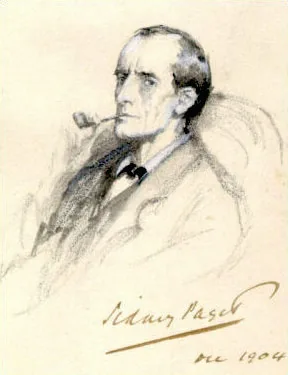
The one category where estimating an IQ is harmless — nobody is misrepresented, because nobody is real.
Sherlock Holmes’ estimated IQ
- Conan Doyle writes him performing chained inference from minute physical detail, at speed, repeatedly.
- Depicted with encyclopaedic recall in chemistry, tobacco ash, typography, soil and sensational literature.
- His limits are written in too — Watson catalogues the gaps in his general knowledge in A Study in Scarlet.
A character can be written to be right every time, which no real reasoner is. Fictional estimates say something about the author’s intent, not about a mind — which is exactly why we can publish one freely.
- First appeared
- A Study in Scarlet, 1887
- Created by
- Arthur Conan Doyle
- Field
- Consulting detective
- Known for
- Deductive reasoning; 221B Baker Street
- Status
- Fictional
What an IQ of 180–200 actually means
Set the claim aside for a moment. If someone genuinely scored in this range, here is what that would represent.
Average is 100 by construction, and about two-thirds of people fall between 85 and 115. Take the test to place your own score on this scale.
| Score range | Classification | Share of people | What it indicates |
|---|---|---|---|
| 85 – 114 | Average | ~68% | The range most people fall into. |
| 115 – 129 | Above average | ~13.6% | Roughly one person in seven. |
| 130 – 144 | Gifted | ~2% | The threshold most high-IQ societies use. |
| Above 144 | Highly gifted | ~0.1% | Figures above this range are extrapolated from the curve rather than measured. |
Percentages are approximate and describe a normal distribution. The same number means different things on tests with different standard deviations.
Thirty questions gives you a measured position on this exact scale — your score, your percentile and the ability breakdown behind it.
Find out in 30 minutes →Who Sherlock Holmes is
Sherlock Holmes first appeared in 1887 and became popular enough through the Strand Magazine that Conan Doyle grew to resent him, killing him off in 1893 and reviving him a decade later under public pressure.
The method the character is famous for — reading a life from a sleeve, a boot, a callus — was drawn from a real person. Conan Doyle studied medicine in Edinburgh under Joseph Bell, a surgeon known for diagnosing patients’ occupations and histories from observation before they spoke.
He is included here for a specific reason. Fictional characters attract genuine IQ search demand, and they are the only subjects in this section where publishing an estimate misrepresents nobody at all.
 By Elora Mercer, Celebrity Research WriterFigures checked by Leon Falkner, Data & Research Analyst
Reviewed by Aarav Vardhan, Editor-in-Chief · Last reviewed August 2026

Sherlock Holmes: the documented record
The estimate above rests on this record. Every entry here is a matter of public fact, which is more than can be said for the number itself.
- 1887First appears in A Study in Scarlet, published in Beeton’s Christmas Annual.
- 1890The Sign of the Four.
- 1891The Strand Magazine stories begin, illustrated by Sidney Paget.
- 1892The Adventures of Sherlock Holmes collected.
- 1893Conan Doyle kills the character in “The Final Problem”.
- 1901The Hound of the Baskervilles, set before Holmes’s death.
- 1903Holmes returns in “The Adventure of the Empty House”.
- 1927The final collection, The Case-Book of Sherlock Holmes.
Where the 190 figure came from
Following a claim back to its first appearance is the part almost nobody does — and it is what most people are actually asking.
Conan Doyle never gives Holmes an IQ, and could not have — the stories begin in 1887, before intelligence testing existed in any recognisable form. Every figure attached to the character was invented by someone else, long afterwards.
What the text does give is a detailed and deliberately uneven picture. In A Study in Scarlet, Watson catalogues Holmes’s knowledge: profound in chemistry and sensational literature, practical in anatomy and law, and — famously — nil in astronomy and philosophy. The character is written as a specialist, not a universal genius.
He is also written to be right. Real reasoning under uncertainty produces wrong answers regularly; Holmes almost never does. That is a property of authorship, not of intellect, and it is the main reason a figure derived from his performance would mean nothing even if we published one confidently.
How we read a number →Four novels and fifty-six short stories by Arthur Conan Doyle. The only evidence base that exists for a fictional character.
Explicitly describes the gaps in Holmes’s general knowledge — the text arguing against a universal-genius reading.
Conan Doyle’s own account, describing “one Joseph Bell, surgeon at the Edinburgh Infirmary” as the model for Holmes’s method.
The sources behind our estimate
The figures that circulate for Sherlock Holmes, what we were able to confirm, and where the two diverge.
The figure most often assigned to the character across fan discussion and IQ listicles.
Conan Doyle never assigns Holmes an IQ, and the concept barely existed when the stories were written. Every figure was invented afterwards. Ours describes how the character is written — a specialist drawn to be right every time — not a person.
Unusually, the spread here does no harm: there is no one being misrepresented, which is exactly why this is the one category where a confident-looking number is harmless.
Want a number that does hold up? Every figure on this page is somebody’s claim. Take the 30-question test and get a percentile you can check rather than a figure you have to trust.
Sherlock Holmes — frequently asked
What is Sherlock Holmes’s IQ?
He is fictional, so there is nothing to measure. Our 180–200 describes how the character is written, not a person.
Why include fictional characters at all?
Because people search for them, and because it is the only part of this subject where estimating a number harms nobody.
Was Holmes based on a real person?
Conan Doyle credited Joseph Bell, a surgeon he studied under in Edinburgh, whose diagnostic observation inspired the method.
Is Sherlock Holmes’s reasoning realistic?
Mostly not. He performs abduction — inference to the best explanation — presented as deduction, and the stories are written so his first guess is always right. Real reasoning under uncertainty is not like that.
What was Holmes’s IQ in the books?
Conan Doyle never gives one. Intelligence testing barely existed when the stories were written, and the character predates the concept of an IQ score.
Who is smarter, Holmes or Mycroft?
The stories are explicit that Mycroft is the sharper of the two — Holmes says so himself — but that Mycroft lacks the energy to do the legwork.
How does my IQ compare with Sherlock Holmes?
You can find out in about fifteen minutes. The IQ Metrics assessment is 30 questions, scored on the same 100-mean scale used throughout this page, so your result and the estimate above are at least expressed in the same units — one measured, one inferred. Once you have a number, the leaderboard shows where it would sit, and how we score and norm it explains the benchmarking.
Where does this estimate come from?
From the documented record rather than a test — the method is named above and set out in full under how we read a number. Compare it against the other fictional profiles, starting with Professor Moriarty.
- Take the 30-question IQ test — get a measured score and percentile of your own
- Average IQ by country — how the scale behaves across populations
- How IQ Metrics scores its assessment — the method behind our own number
- More on how IQ testing works — reliability, error and what a score can and cannot say
- More fictional profiles — same field, same method
More fictional



Photograph of a cosplayer as Shikamaru Nara by Narukyubi (2009), CC BY-SA 3.0. Cropped from the original. The character is the creation of Masashi Kishimoto. · Photograph of a cosplayer as Kurisu Makise by Carter McKendry, CC BY 2.0. Background removed for the portrait above. The character is the creation of 5pb. and Nitroplus. · Photograph of a cosplayer as Itachi Uchiha by BrokenSphere (2010), CC BY-SA 3.0. Cropped from a two-person photograph; background removed for the portrait above. The character is the creation of Masashi Kishimoto.


An estimate is an inference.
Yours can be measured.
Thirty questions, scored against general-population benchmarks. Your score, your percentile, your ability breakdown and a printable IIF certificate.
Find your IQ score now! →