



What is Brian Greene’s IQ?
A Harvard summa graduate, a Rhodes Scholar and a string theorist, with no IQ test on record.

Brian Greene has no published IQ score; our Brian Greene IQ estimate is 150–165 on the usual scale (mean 100, SD 15), as of November 2026. It rests on a Harvard physics degree summa cum laude, a Rhodes Scholarship, an Oxford doctorate and a research career in string theory, not on a test. No sourced figure circulates for him.
Brian Greene’s estimated IQ
- A Bachelor of Science in physics from Harvard, summa cum laude, in 1984, after Stuyvesant High School (Wikipedia).
- A Rhodes Scholarship in 1984 and a doctorate in theoretical physics from Magdalen College, Oxford, in 1987 (Wikipedia).
- Tenure at Cornell in 1993, then a full professorship at Columbia from 1996, where he directs the center for theoretical physics (Wikipedia), and the 1990 paper “Duality in Calabi-Yau moduli space,” with Ronen Plesser, in Nuclear Physics B 338 (Crossref).
- Awards that rank research and writing, not intelligence: a National Science Foundation Young Investigator Award (1992), a Sloan Fellowship (1993) and a Pulitzer Prize finalist listing for The Elegant Universe (2000) (Wikipedia).
This is an inference from degrees, a scholarship and a research record, not from a test. Rhodes selection and a physics chair reflect ability, character and opportunity together, and Greene has published no school or adult test result. The range is moderate and low in confidence.
- Born
- February 9, 1963, New York City
- Known for
- String theory and mirror symmetry; The Elegant Universe; the World Science Festival
- University
- Harvard, Bachelor of Science in physics, summa cum laude (1984)
- Scholarship
- Rhodes Scholarship (1984)
- Doctorate
- Magdalen College, Oxford, theoretical physics (1987)
- Current post
- Professor of physics and mathematics, Columbia University (since 1996)
- Books
- Four New York Times top-10 bestsellers, 1999 to 2020
- Circulating figure
- None found; no IQ score, Mensa listing or school test score is published
What an IQ of 150–165 actually means
Set the claim aside for a moment. If someone genuinely scored in this range, here is what that would represent.
| Score range | Classification | Share of people | What it indicates |
|---|---|---|---|
| 85 – 114 | Average | ~68% | The range most people fall into. |
| 115 – 129 | Above average | ~13.6% | Roughly one person in seven. |
| 130 – 144 | Gifted | ~2% | The threshold most high-IQ societies use. |
| Above 144 | Highly gifted | ~0.1% | Figures above this range are extrapolated from the curve rather than measured. |
Percentages are approximate and describe a normal distribution. The same number means different things on tests with different standard deviations.
Thirty questions gives you a measured position on this exact scale — your score, your percentile and the ability breakdown behind it.
Find out in 30 minutes →Who Brian Greene is
Who is Brian Greene? Brian Randolph Greene was born on February 9, 1963, in New York City. He is an American physicist known for research on string theory, a professor of physics and mathematics at Columbia University and a co-founder of the World Science Festival in 2008 (Wikipedia).
What does Brian Greene’s education show? He graduated from Stuyvesant High School in 1980, took a Bachelor of Science in physics at Harvard, summa cum laude, in 1984 and won a Rhodes Scholarship that year. He earned a doctorate in theoretical physics at Magdalen College, Oxford, in 1987 (Wikipedia). Degrees and a scholarship are evidence of ability, not a score.
What has Brian Greene done since? He joined the Cornell physics faculty in 1990, won tenure in 1993 and moved to Columbia in 1996. Four of his books, from The Elegant Universe (1999) to Until the End of Time (2020), reached The New York Times top 10, and he wrote the stage work Light Falls about Albert Einstein (Wikipedia). See other scientists we have checked, or compare your own result on the same scale with the IQ Metrics test.
 By Elora Mercer, Celebrity Research WriterFigures checked by Leon Falkner, Data & Research Analyst
Reviewed by Aarav Vardhan, Editor-in-Chief · Last reviewed November 2026

Brian Greene: the documented record
The estimate above rests on this record. Every entry here is a matter of public fact, which is more than can be said for the number itself.
- 1963Born February 9 in New York City.
- 1980Graduates from Stuyvesant High School.
- 1984Graduates from Harvard, summa cum laude, and receives a Rhodes Scholarship.
- 1987Receives his doctorate in theoretical physics from Oxford.
- 1990Joins the Cornell physics faculty; publishes “Duality in Calabi-Yau moduli space” with Ronen Plesser in Nuclear Physics B.
- 1993Receives tenure at Cornell.
- 1996Joins Columbia University as a full professor.
- 1999Publishes The Elegant Universe, later a Pulitzer Prize finalist.
- 2008Co-founds the World Science Festival.
- 2020Publishes Until the End of Time.
Why no figure circulates
Following a claim back to its first appearance is the part almost nobody does — and it is what most people are actually asking.
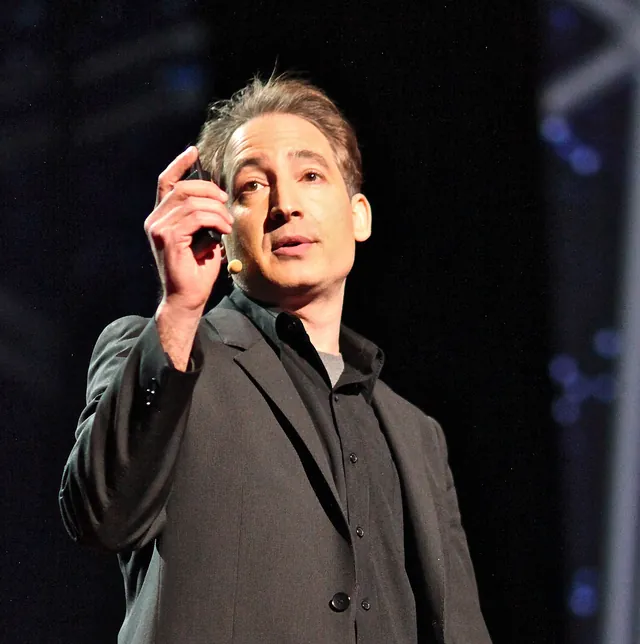
Brian Greene IQ searches lead to no number. Wikipedia’s biography reports no IQ score, Mensa membership or school test result, and a web search for a stated score found none with a test and a date. If you meet a figure, ask which test, which year and which source; for how such labels turn into numbers, see where celebrity IQ numbers come from.
What is Brian Greene’s estimated IQ if he has never published a score? A range inferred from documented achievement, 150–165 here. That matches Michio Kaku (150–165), sits above Brian Cox (125–140) and below Edward Witten (165–185). On the usual scale a 150 is about the 99.96th percentile and a 165 about the 99.999th; our IQ percentile calculator shows the steps in between.
Why do people ask whether Brian Greene is a genius? Because he explains hard physics well, and fluency reads as brilliance. It is a different skill from a test score. For what the evidence shows when famous scientists are put on the IQ scale, see the IQ of Nobel Prize winners: what was measured and what was guessed, and for the school he attended, the average IQ of Harvard students.
How we read a number →Birth date and place, the 1984 Harvard degree (summa cum laude), the 1984 Rhodes Scholarship, the 1987 Oxford doctorate and thesis title, Cornell tenure (1993) and Columbia (1996), the 1992 and 1993 awards, the 2000 Pulitzer finalist listing and the books. The article gives no IQ.
Title, authors, journal, volume, pages and July 1990 date confirmed on Crossref. Used only to show the published research record; it reports no IQ.
Confirms the identifier Q60815 is the American physicist, not a namesake.
Photograph by Steve Jurvetson, February 28, 2012, licensed CC BY 2.0; the Flickr licence review passed.
Ranges used for comparison: Kaku 150–165, Cox 125–140, Witten 165–185.
Wikipedia and a web search for a stated score found no IQ test result, Mensa listing or school test score for Brian Greene.
The sources behind our estimate
The figures that circulate for Brian Greene, what we were able to confirm, and where the two diverge.
People search for “Brian Greene IQ” and “Brian Greene IQ score,” but we found no page that gives a number for him with a test, a date and a source.
Wikipedia’s biography gives degrees, fellowships and honors, and no IQ, Mensa listing or school test score. What is documented is a record of study and research, not a number.
With no circulating figure to audit, the range is the only IQ number on the page. It matches Michio Kaku (150–165), sits above Brian Cox (125–140) and below Edward Witten (165–185). The placement is a judgment, not a measurement.
Want a number that does hold up? Every figure on this page is somebody’s claim. Take the 30-question test and get a percentile you can check rather than a figure you have to trust.
Brian Greene — frequently asked
What is Brian Greene’s IQ?
Brian Greene has no published IQ score. Our estimate is 150–165 on the usual scale (mean 100, SD 15), inferred from his Harvard degree, Rhodes Scholarship, Oxford doctorate and research career, not from a test.
Is Brian Greene a genius?
“Genius” has no fixed meaning. Greene graduated summa cum laude from Harvard, won a Rhodes Scholarship, earned an Oxford doctorate and holds a Columbia chair. Those are high marks in physics, but they are not a test score.
Brian Greene vs Michio Kaku: whose record is stronger?
On this site they are level at 150–165. Both graduated summa cum laude from Harvard and hold doctorates, and both work on string theory. Greene’s record adds a Rhodes Scholarship and an Oxford doctorate, Kaku’s a Berkeley doctorate and a long professorship, so neither range is higher.
Was Brian Greene a Rhodes Scholar?
Wikipedia lists a Rhodes Scholarship for Greene in 1984, the year he graduated from Harvard, followed by his Oxford doctorate in 1987.
Where did Brian Greene study?
He studied physics at Harvard (Bachelor of Science, 1984) and theoretical physics at Magdalen College, Oxford (doctorate, 1987), after Stuyvesant High School in New York.
Has Brian Greene taken an IQ test?
He may have, but no result is public. We found no school score, Mensa listing or test report for him, so this page says so instead of guessing a number.
What would an IQ of 150 to 165 mean?
On the usual scale a 150 is about the 99.96th percentile and a 165 about the 99.999th. Treat it as an IQ Metrics estimate from his record, not as a result from an IQ test.
How does my IQ compare with Brian Greene?
You can find out in about fifteen minutes. The IQ Metrics assessment is 30 questions, scored on the same 100-mean scale used throughout this page, so your result and the estimate above are at least expressed in the same units — one measured, one inferred. Once you have a number, the leaderboard shows where it would sit, and how we score and norm it explains the benchmarking.
Where does this estimate come from?
From the documented record rather than a test — the method is named above and set out in full under how we read a number. Compare it against the other scientists profiles, starting with Albert Einstein.
- Take the 30-question IQ test — get a measured score and percentile of your own
- Average IQ by country — how the scale behaves across populations
- How IQ Metrics scores its assessment — the method behind our own number
- More on how IQ testing works — reliability, error and what a score can and cannot say
- More scientists profiles — same field, same method
More scientists

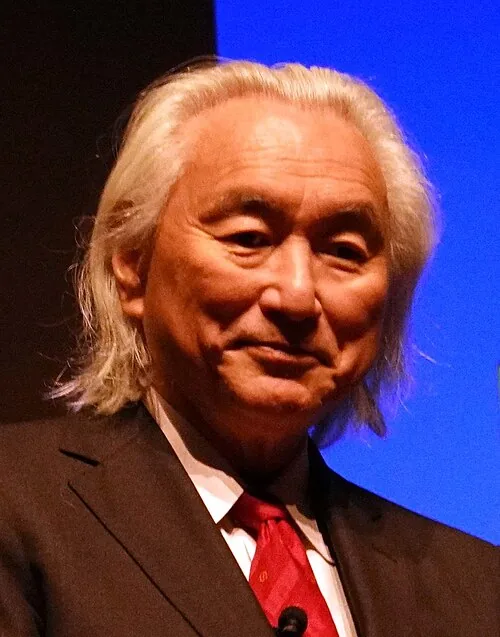
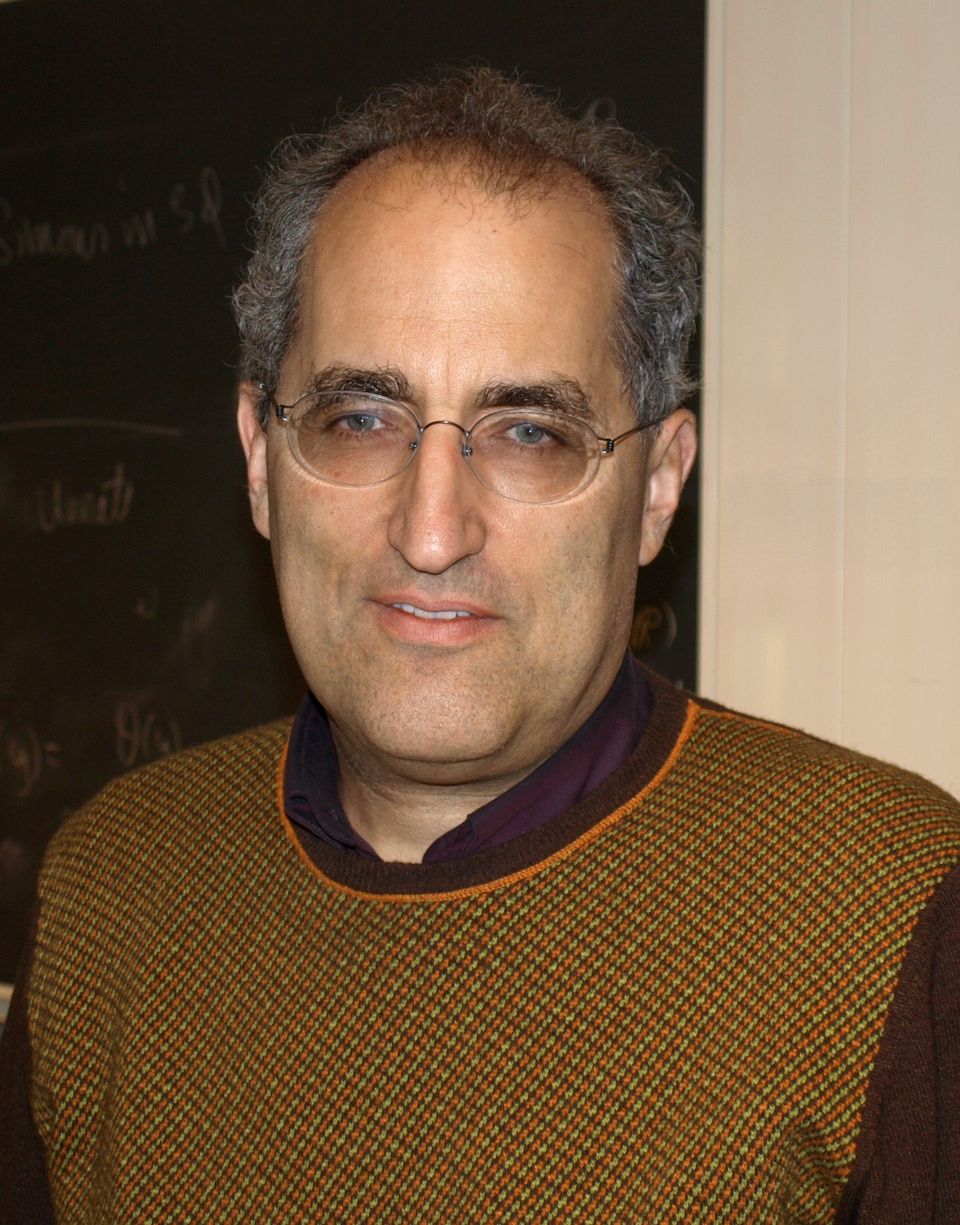
Photograph by Duncan.Hull, CC BY-SA 4.0. Background removed for the portrait above. · Photograph by Jay Murdock, CC BY-SA 4.0. · Photograph by Ojan (Chalmers University of Technology, April 2008), public domain. Background removed for the portrait above.


An estimate is an inference.
Yours can be measured.
Thirty questions, scored against general-population benchmarks. Your score, your percentile, your ability breakdown and a printable IIF certificate.
Find your IQ score now! →