



What is Edward Witten’s IQ?
Physicists themselves picked him as the smartest among them in 1990 — the same year he became the only one of them ever to win mathematics’ top prize.
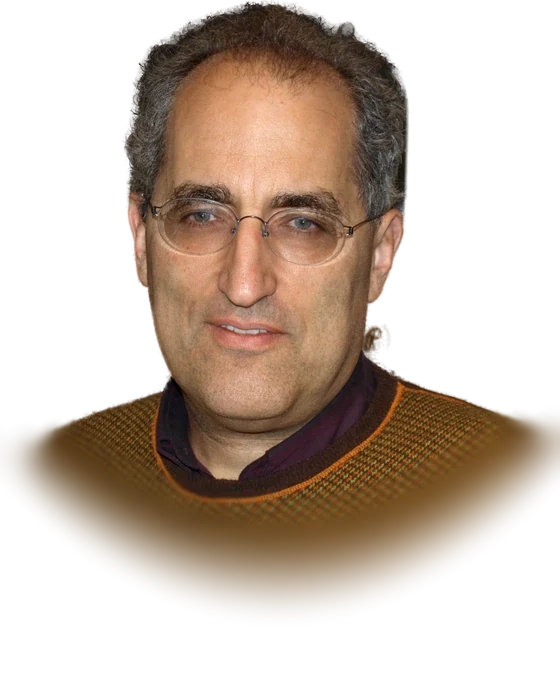
No IQ test result has ever been published for Edward Witten, and the figures that circulate for him — a 140–155 range, 150 and 191 — each admit they are guesses. What is documented is a Princeton physics Ph.D., the only Fields Medal ever awarded to a physicist, a MacArthur Fellowship and a 1990 peer poll that named him the smartest living physicist.
Edward Witten’s estimated IQ
- Ph.D. in physics from Princeton University (1976), advised by David Gross, following a B.A. in history from Brandeis University (1971).
- The only physicist ever awarded the Fields Medal, mathematics’ highest honor, given at the International Congress of Mathematicians in Kyoto in 1990.
- MacArthur Fellowship (1982) and National Medal of Science (2002), the latter awarded by President George W. Bush for leadership across mathematics and theoretical physics.
- One of nine inaugural laureates of the Breakthrough Prize in Fundamental Physics (2012) and the first physicist to win the Kyoto Prize’s Mathematical Sciences category (2014).
- In an informal 1990 poll of physicists at a cosmology conference, Witten’s name came up most often for “smartest living physicist,” ahead of Nobel laureates Steven Weinberg and Murray Gell-Mann, according to science writer John Horgan’s published account.
This is an inference from documented achievement, not a test result. The Fields Medal and the other prizes reward completed, peer-judged mathematical physics — originality, depth and follow-through — which is not the same axis a psychometric test measures, and Witten’s own field, string theory, remains mathematically celebrated but experimentally unconfirmed, a statement about the theory rather than about him. Even the top of this range falls short of the highest number that circulates, which itself rests on an average of two uncredited guesses.
- Born
- August 26, 1951, Baltimore, Maryland
- Field
- Theoretical and mathematical physics; string theory
- Education
- B.A. history, Brandeis University (1971); Ph.D. physics, Princeton University (1976)
- Known for
- M-theory (1995); Seiberg–Witten theory (1994); the only Fields Medal awarded to a physicist (1990)
- Career
- Princeton faculty, 1980–1987; Institute for Advanced Study since 1987, Charles Simonyi Professor, now Emeritus
- Honors
- Fields Medal (1990); MacArthur Fellowship (1982); National Medal of Science (2002); Breakthrough Prize in Fundamental Physics (2012); Kyoto Prize (2014)
- Peer recognition
- Named the smartest living physicist in an informal 1990 poll of physicists at a cosmology conference
- Circulating figure
- 140–191 across aggregator sites; no published test result
What an IQ of 165–185 actually means
Set the claim aside for a moment. If someone genuinely scored in this range, here is what that would represent.
Average is 100 by construction, and about two-thirds of people fall between 85 and 115. Take the test to place your own score on this scale.
| Score range | Classification | Share of people | What it indicates |
|---|---|---|---|
| 85 – 114 | Average | ~68% | The range most people fall into. |
| 115 – 129 | Above average | ~13.6% | Roughly one person in seven. |
| 130 – 144 | Gifted | ~2% | The threshold most high-IQ societies use. |
| Above 144 | Highly gifted | ~0.1% | Figures above this range are extrapolated from the curve rather than measured. |
Percentages are approximate and describe a normal distribution. The same number means different things on tests with different standard deviations.
Thirty questions gives you a measured position on this exact scale — your score, your percentile and the ability breakdown behind it.
Find out in 30 minutes →Who Edward Witten is
How smart is Edward Witten, judged only by what can be checked? He was born in Baltimore, Maryland, on August 26, 1951. He did not start in physics: at Brandeis University he majored in history, minored in linguistics, and graduated in 1971 intending to become a journalist, publishing articles in The New Republic and The Nation in the late 1960s. In 1972 he spent six months working on George McGovern’s presidential campaign, then tried a semester of graduate economics at the University of Michigan before dropping out; for how his eventual field compares with the one he left, see average IQ by college major. He enrolled at Princeton in 1973, first in applied mathematics, then in physics.
Witten completed a Ph.D. in physics at Princeton in 1976, advised by David Gross, with a thesis titled “Some Problems in the Short Distance Analysis of Gauge Theories.” He held a Harvard University fellowship in 1976–77 and was a Junior Fellow of the Harvard Society of Fellows from 1977 to 1980, building enough of a research reputation that Princeton recruited him directly to a full professorship in 1980, an unusual step for someone barely out of graduate school. He moved to the Institute for Advanced Study in Princeton in 1987 as the Charles Simonyi Professor in the School of Natural Sciences, the position from which he is now Professor Emeritus.
His published contributions include a 1981 proof of the positive energy theorem in general relativity using supersymmetric methods, the “Witten index” connecting Morse theory to supersymmetric quantum mechanics, and a mid-1980s reinterpretation of the Jones polynomial, a knot invariant, as an expectation value in quantum field theory — the specific work the Fields Medal committee cited by name. With Nathan Seiberg he developed what is now called Seiberg–Witten theory in 1994, reshaping the study of four-dimensional manifolds. At the Strings ’95 conference at the University of Southern California he proposed that five distinct string theories were limiting cases of one framework, which came to be called M-theory: the event historians of physics call the second superstring revolution.
The honors accumulated for decades: a MacArthur Fellowship in 1982, the Fields Medal in Kyoto in 1990 (to date the only one ever awarded to a physicist), the National Medal of Science from President George W. Bush in 2002, one of nine inaugural Breakthrough Prizes in Fundamental Physics in 2012, the Kyoto Prize’s Mathematical Sciences category in 2014 (the first physicist to win it; the six previous winners in that category were mathematicians or an information theorist), and the Basic Science Lifetime Award in theoretical physics in Beijing in 2024. Peers supplied the kind of praise this site treats cautiously: at a 1990 cosmology conference, an informal poll of physicists named Witten the smartest living physicist ahead of Nobel laureates Steven Weinberg and Murray Gell-Mann, by the science writer John Horgan’s account, and Discover magazine later called him “the most brilliant physicist of his generation.” Reputation is not a score, and what counts as genius-level is a separate question from what a test would show, even for a career this decorated. The Institute for Advanced Study has housed this kind of reputation before, in Albert Einstein, whose own IQ this site also estimates from record rather than from a test.
 By Elora Mercer, Celebrity Research WriterFigures checked by Leon Falkner, Data & Research Analyst
Reviewed by Aarav Vardhan, Editor-in-Chief · Last reviewed August 2026

Edward Witten: the documented record
The estimate above rests on this record. Every entry here is a matter of public fact, which is more than can be said for the number itself.
- 1951Born August 26 in Baltimore, Maryland.
- 1971Graduates from Brandeis University with a B.A. in history.
- 1972Works six months on George McGovern’s presidential campaign and briefly attempts graduate economics at the University of Michigan.
- 1976Earns a Ph.D. in physics from Princeton University, advised by David Gross.
- 1982Awarded a MacArthur Fellowship.
- 1987Joins the Institute for Advanced Study as the Charles Simonyi Professor.
- 1990Receives the Fields Medal in Kyoto — to date the only physicist to win it.
- 1995Proposes M-theory at the Strings ’95 conference at the University of Southern California.
- 2002Receives the National Medal of Science from President George W. Bush.
- 2012Named one of nine inaugural laureates of the Breakthrough Prize in Fundamental Physics.
- 2014Wins the Kyoto Prize’s Mathematical Sciences category, the first physicist to do so.
Where the 140–191 figure came from
Following a claim back to its first appearance is the part almost nobody does — and it is what most people are actually asking.
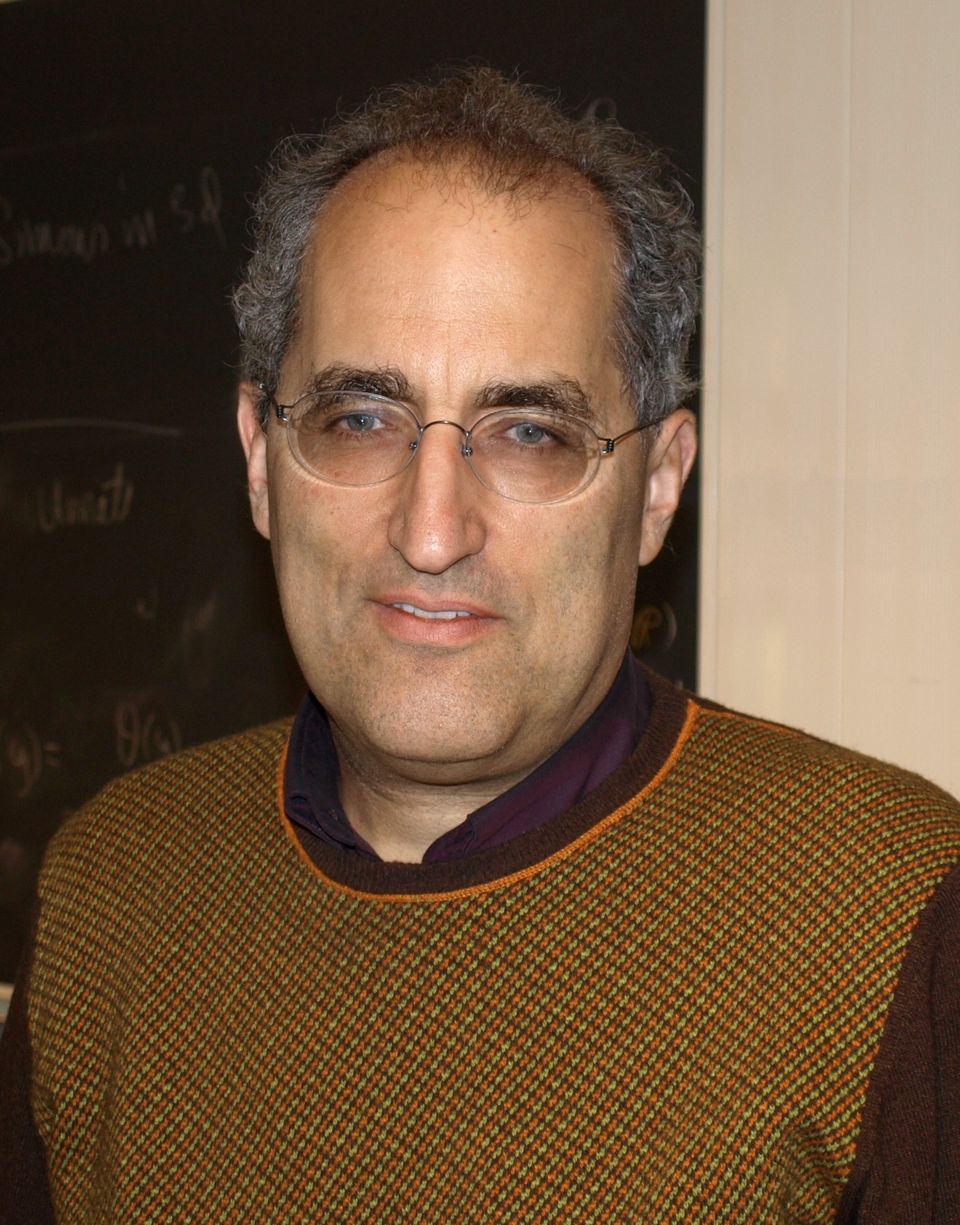
Pages that promise an Edward Witten IQ level do not agree with each other. realiqtestonline.com gives a range of 140–155; celebsiq.com says only that “experts estimate” his IQ at over 150; check-iq.org puts a single number, 191, in its headline; and gudstory.com, which ranks him among the “smartest people in the world,” records his IQ as “Not known.” None cites a test Witten is known to have taken, which is the usual pattern for a celebrity IQ number: a figure appears somewhere without a source, and other pages repeat it until the repetition itself starts to look like evidence.
The 191 has the most detail attached, and the detail undercuts it. check-iq.org (published August 24, 2024, updated August 29, 2024) states plainly that the figure was “determined using two different sources”: 202 from a site called The Scientific Place and 180 from Life Persona, and it labels its own average “Low” confidence. Neither source is a testing organization, and neither page explains how its number was produced. A figure above roughly 160 already exceeds what a standard test can score directly — test ceilings are why — so 202 reads less like a high score and more like a number with nothing underneath it.
The lower figures are closer to plausible without being any better sourced. celebsiq.com’s “over 150” and realiqtestonline.com’s 140–155 sit near each other, but both pages say in the same breath that Witten has never disclosed a score and that no test result is public; realiqtestonline.com’s own words are that “people don’t know it precisely.” gudstory.com goes further and simply leaves the field blank. Three aggregators built around supplying a number, and one of them declined to guess at all — a more honest admission than most pages in this section make.
The record this site can check points to a narrower band than either end of the circulating spread: higher than the 140–155 cluster, lower than 191. That places Witten nearer J. Robert Oppenheimer, another Institute for Advanced Study physicist, than to the extrapolated figures that Terence Tao, the other living Fields Medalist profiled here, attracts from an actual test score. Tao’s 230 comes from stretching a childhood SAT result far past where the test stops measuring; Witten’s 191 comes from averaging two uncredited guesses. Different failure, same result: a number bigger than the documented record supports.
How we read a number →No score report, school record or clinician’s account for Witten turned up in Wikipedia, the Institute for Advanced Study, the MacArthur Foundation, the Breakthrough Prize Foundation, the Kyoto Prize or any of the aggregator pages below; gudstory.com’s own “smartest people” list marks his IQ field “Not known.”
Published August 24, 2024, updated August 29, 2024. States the 191 figure was “determined using two different sources,” The Scientific Place (202) and Life Persona (180), and rates its own estimate “Low” confidence. Cites no test.
celebsiq.com states “experts estimate” his IQ at over 150 with no named source; realiqtestonline.com gives 140–155 and states outright that his score is undisclosed and “people don’t know it precisely.” Neither cites a test or a date.
Lists Witten among ten “smartest people” by reputation but records his IQ field as “Not known,” offering no figure at all.
Confirms this is Edward Witten the American theoretical physicist (born August 26, 1951, Baltimore), not a namesake: employer Princeton University and the Institute for Advanced Study, doctoral advisor David Gross, Fields Medal (1990), MacArthur Fellow (1982).
MacArthur Foundation confirms the 1982 fellowship and that he was “a professor of physics at Princeton University (1980–1987)” before joining the Institute for Advanced Study in 1987. National Medals Foundation confirms the 2002 National Medal of Science, awarded by President George W. Bush, citing his “leadership in a broad range of topics in mathematics and theoretical physics.”
Confirms the 2012 Breakthrough Prize in Fundamental Physics as one of nine inaugural laureates, and quotes its citation covering topology in physics, duality symmetries, string-derived particle models and applications of quantum field theory to mathematics.
kyotoprize.org confirms the 2014 Kyoto Prize in Basic Sciences (Mathematical Sciences category), citation “Outstanding Contributions to the Development of Mathematical Sciences through the Exploration of Superstring Theory.” The Wikipedia winners list shows the six previous Mathematical Sciences laureates (Shannon, Gelfand, Weil, Itô, Gromov, Lovász) were mathematicians or an information theorist, not physicists, which is the basis for calling Witten the first physicist to win that category — the Kyoto Prize itself does not use that framing.
Orientation for the McGovern campaign (1972), the semester of graduate economics at the University of Michigan, the journalism ambitions and New Republic/Nation bylines, current Professor Emeritus status at the Institute for Advanced Study, and the 2024 Basic Science Lifetime Award in Theoretical Physics (Beijing).
Describes an informal poll at a 1990 cosmology conference in which Witten’s name came up most often as the smartest living physicist, ahead of Steven Weinberg and Murray Gell-Mann.
Source for the description of Witten as “the most brilliant physicist of his generation” and for dating the dualities behind the “second superstring revolution” to the mid-1990s.
The sources behind our estimate
The figures that circulate for Edward Witten, what we were able to confirm, and where the two diverge.
Four pages give an Edward Witten IQ level, and they do not agree: a 140–155 range on realiqtestonline.com, “over 150” on celebsiq.com, 191 on check-iq.org, and gudstory.com, which ranks him among the “smartest people in the world” yet marks his IQ score itself “Not known.”
No published IQ test result exists for Edward Witten. check-iq.org (published August 24, 2024; updated August 29, 2024) puts his IQ at 191, built by averaging two figures it separately rates “Low” confidence: 202 from a site called The Scientific Place and 180 from Life Persona, with neither figure explained further on the page itself. celebsiq.com states only that “experts estimate” his IQ at over 150, naming no expert or test. realiqtestonline.com gives 140–155 and says plainly that “people don’t know it precisely.” gudstory.com’s own ranking of the “smartest people in the world” includes Witten but records his IQ field as “Not known.” We also checked Reddit and other discussion sites for a leaked score or a first-person claim; nothing surfaced beyond the same four aggregator numbers above.
Read left to right: 140 is the floor of a range no aggregator sources; 165–185 is the estimated IQ range this site’s record of a Fields Medal and a Princeton doctorate supports; 191 is check-iq.org’s own “Low confidence” average of two other guesses. The documented range sits above the low cluster and short of the high one — closer to the record than either extreme, but still not a measurement.
Want a number that does hold up? Every figure on this page is somebody’s claim. Take the 30-question test and get a percentile you can check rather than a figure you have to trust.
Edward Witten — frequently asked
What is Edward Witten’s IQ?
No published IQ test result exists for Edward Witten, so his exact IQ is not known. The numbers that circulate — a 140–155 range, 150, and 191 — come from aggregator sites that admit they are guesses. This site’s estimated IQ range, 165–185, is inferred from his Fields Medal, Princeton doctorate and other documented achievement, not from a test.
Is Edward Witten a genius?
By documented measure, yes: he is the only physicist ever awarded the Fields Medal, mathematics’ highest honor, and an informal 1990 poll of physicists named him the smartest living physicist of his generation. “Genius” has no fixed IQ threshold, but Witten’s estimated 165–185 range and prize record place him at the top of this site’s science category.
Did Edward Witten ever take an IQ test?
No test result is public. In the sources checked for this page — Wikipedia, the Institute for Advanced Study, the MacArthur Foundation and the Breakthrough Prize Foundation among them — Witten has not published or discussed a personal IQ score, and even the aggregator sites that guess at a number admit no test lies behind it.
Where does the 191 IQ figure for Edward Witten come from?
It comes from check-iq.org averaging two other guesses. The site states its 191 was “determined using two different sources,” 202 from The Scientific Place and 180 from Life Persona, and rates the result “Low” confidence itself. Neither source cites a test, and a figure that high already sits beyond where standard IQ tests can score directly.
What did Edward Witten study, and does his degree support a high IQ estimate?
Witten’s only undergraduate degree is a B.A. in history from Brandeis University (1971); he did not start out in physics. He earned a Ph.D. in physics from Princeton in 1976, then became the only physicist to win the Fields Medal (1990). The unusual path strengthens rather than weakens the case: the physics came later, and it came fast.
How does Edward Witten’s estimated IQ compare with Terence Tao’s?
This site estimates 165–185 for Witten and 170–190 for Tao, the two living Fields Medalists profiled here. The gap in method matters more than the gap in range: Tao’s figure traces to an extrapolated childhood SAT score, while Witten’s rests on career achievement with no test involved at either end.
What is Edward Witten famous for?
Witten is best known for proposing M-theory in 1995, which unified five separate string theories into one framework, and for Seiberg–Witten theory (1994), developed with Nathan Seiberg. In 1990 he became the only physicist ever awarded the Fields Medal, mathematics’ top honor, for applying quantum field theory to knot theory.
How does my IQ compare with Edward Witten?
You can find out in about fifteen minutes. The IQ Metrics assessment is 30 questions, scored on the same 100-mean scale used throughout this page, so your result and the estimate above are at least expressed in the same units — one measured, one inferred. Once you have a number, the leaderboard shows where it would sit, and how we score and norm it explains the benchmarking.
Where does this estimate come from?
From the documented record rather than a test — the method is named above and set out in full under how we read a number. Compare it against the other scientists profiles, starting with Albert Einstein.
- Take the 30-question IQ test — get a measured score and percentile of your own
- Average IQ by country — how the scale behaves across populations
- How IQ Metrics scores its assessment — the method behind our own number
- More on how IQ testing works — reliability, error and what a score can and cannot say
- More scientists profiles — same field, same method
More scientists
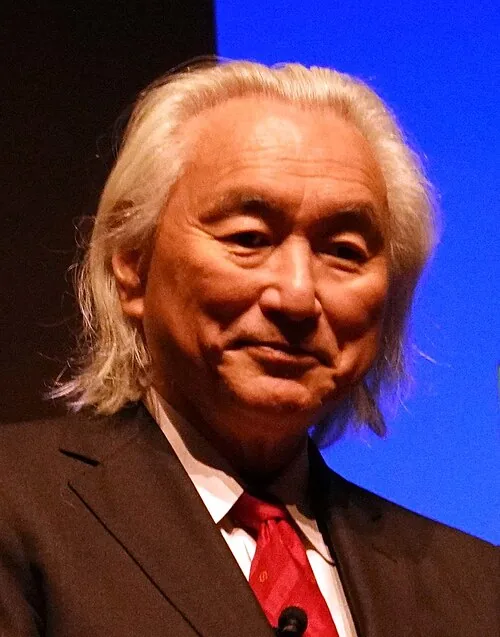
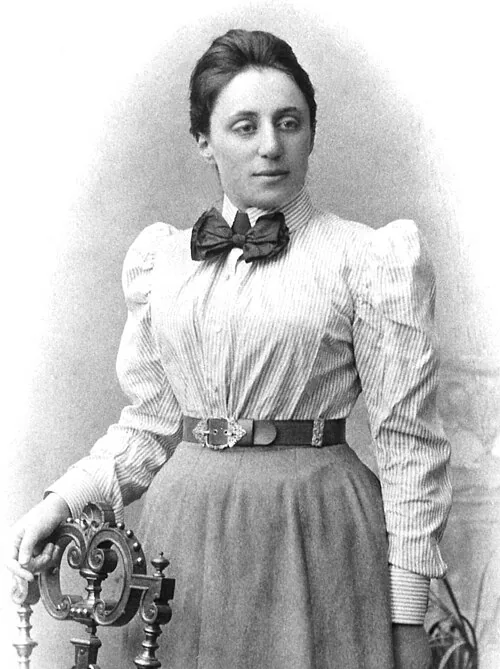
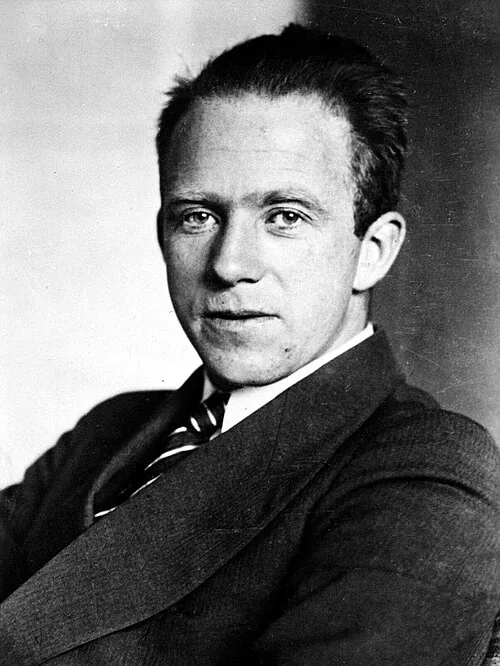
Photograph by Jay Murdock, CC BY-SA 4.0. · Photograph, publisher Mathematical Association of America, via Wikimedia Commons, public domain. Background removed for the portrait above. · Photographer unknown, via Wikimedia Commons, CC BY-SA 3.0 DE. Background removed for the portrait above.
.jpg)
.jpg)
.jpg)
An estimate is an inference.
Yours can be measured.
Thirty questions, scored against general-population benchmarks. Your score, your percentile, your ability breakdown and a printable IIF certificate.
Find your IQ score now! →