



What was Gerald Ford’s IQ?
The only scholarly estimate averages 127.1; the 121 online comes from a 2001 hoax, and his Yale Law standing is on file.

Gerald Ford’s IQ was never measured. The one scholarly estimate, Dean Keith Simonton’s 2006 study, gives four values from 113.3 to 140.4 that average 127.1, while the 121 that circulates comes from a 2001 hoax e-mail. His documented record is a Michigan degree and a 1941 Yale Law degree, which supports an estimate of 120–135 on the usual scale (mean 100, SD 15), as of November 2026.
Gerald Ford’s estimated IQ
- A Bachelor of Arts in economics from the University of Michigan (1935), earned while playing center and linebacker on teams that won national titles in 1932 and 1933 (Wikipedia).
- Admission to Yale Law School in 1938 on a trial basis, then an LL.B. in 1941: the top 25 percent of his class by the National Archives’ wording, the top third by the Miller Center’s and Wikipedia’s.
- Dean Keith Simonton’s 2006 values for Ford, 113.3, 124.4, 130.2 and 140.4, which average 127.1 and rank him 33rd of 42 presidents; they are statistical reconstructions, not test scores (Political Psychology 27(4)).
- Twenty-five years in the U.S. House of Representatives (1949–1973), the last eight as minority leader, before the vice presidency and the presidency (Wikipedia).
This is an inference from a degree, a class standing and a reconstruction, not from a test. A Yale Law result in the top quarter or third fits an IQ well above average, but class standing also reflects work and effort, and Simonton calls his own IQ values tentative. The range is moderate and brackets the middle of his four estimates.
- Born
- July 14, 1913, Omaha, Nebraska, as Leslie Lynch King Jr.
- Died
- December 26, 2006
- Office
- 38th president, 1974–1977; vice president 1973–1974
- University
- University of Michigan, Bachelor of Arts in economics (1935)
- Law degree
- Yale Law School, LL.B. (1941): top 25 percent per the National Archives, top third per the Miller Center and Wikipedia
- Football
- Michigan national titles in 1932 and 1933; teammates voted him most valuable player
- Simonton 2006
- 113.3, 124.4, 130.2 and 140.4, average 127.1, 33rd of 42 presidents (reconstructed, not measured)
- Circulating figure
- 121, from a 2001 hoax e-mail credited to a “Lovenstein Institute”
What an IQ of 120–135 actually means
Set the claim aside for a moment. If someone genuinely scored in this range, here is what that would represent.
Average is 100 by construction, and about two-thirds of people fall between 85 and 115. Take the test to place your own score on this scale.
| Score range | Classification | Share of people | What it indicates |
|---|---|---|---|
| 85 – 114 | Average | ~68% | The range most people fall into. |
| 115 – 129 | Above average | ~13.6% | Roughly one person in seven. |
| 130 – 144 | Gifted | ~2% | The threshold most high-IQ societies use. |
| Above 144 | Highly gifted | ~0.1% | Figures above this range are extrapolated from the curve rather than measured. |
Percentages are approximate and describe a normal distribution. The same number means different things on tests with different standard deviations.
Thirty questions gives you a measured position on this exact scale — your score, your percentile and the ability breakdown behind it.
Find out in 30 minutes →Who Gerald Ford was
Who was Gerald Ford? Gerald Rudolph Ford Jr. was born Leslie Lynch King Jr. in Omaha, Nebraska, on July 14, 1913, and was raised in Grand Rapids, Michigan. He was the 38th president of the United States, from 1974 to 1977, taking office when Richard Nixon resigned, and he died on December 26, 2006 (Wikipedia).
What does Ford’s education show? He earned a Bachelor of Arts in economics at the University of Michigan in 1935. That year he took an assistant coaching job at Yale, hoping to find a way into its law school, and he was admitted on a trial basis in 1938 (Miller Center). He graduated in 1941. The National Archives says the top 25 percent of his class; the Miller Center and Wikipedia say the top third. It is a documented rank, which a hoax list is not.
What did Ford do before the White House? He opened a law practice in Grand Rapids in May 1941, served in the U.S. Navy from 1942 to 1946, and sat in the House of Representatives from 1949 to 1973 (Wikipedia; National Archives). See other politicians we have checked, what lawyers’ test scores look like, or compare your own result on the same scale with the IQ Metrics test.
 By Elora Mercer, Celebrity Research WriterFigures checked by Leon Falkner, Data & Research Analyst
Reviewed by Aarav Vardhan, Editor-in-Chief · Last reviewed November 2026

Gerald Ford: the documented record
The estimate above rests on this record. Every entry here is a matter of public fact, which is more than can be said for the number itself.
- 1913Born July 14 in Omaha, Nebraska, as Leslie Lynch King Jr.
- 1935Graduates from the University of Michigan and starts as a Yale assistant football and boxing coach.
- 1938Admitted to Yale Law School on a trial basis.
- 1941Graduates from Yale Law School and opens a law practice in Grand Rapids in May.
- 1942Commissioned in the U.S. Naval Reserve; serves until 1946.
- 1949Takes his seat in the U.S. House of Representatives.
- 1974Becomes president after Richard Nixon’s resignation.
- 2001A hoax e-mail credited to a “Lovenstein Institute” lists “121 Gerald Ford (R).”
- 2006Simonton’s presidential IQ paper appears in Political Psychology; Ford dies on December 26.
Where the 121 figure came from
Following a claim back to its first appearance is the part almost nobody does — and it is what most people are actually asking.

Gerald Ford IQ searches turn up two numbers, and neither is a test result. The 121 comes from an e-mail dated July 9, 2001 and credited to a “Lovenstein Institute” of Scranton, Pennsylvania; the hoaxes.org copy of its text lists “121 Gerald Ford (R)” and names no test. Our page on where celebrity IQ numbers come from explains how lists like that spread.
The other number is 127.1, the average of four values in Dean Keith Simonton’s 2006 paper in Political Psychology (27(4), 511–526). Cox-style IQ ratings existed for only eight presidents, and Ford is not one of them, so Simonton filled in his four values statistically from other ratings. He calls such IQ scores “more tentative and approximate than the other two scores” in the paper. Our presidents ranked by IQ page lists all 42.
How does Ford compare with the presidents around him? His 127.1 average ranks 33rd of 42. Our range of 120–135 matches Harry S. Truman (120–135) and sits below Richard Nixon (130–145), whose class ranks at Whittier and Duke Law are on file, and Dwight D. Eisenhower (125–140). Jimmy Carter (130–148) is higher. A 127 is about the 96th percentile on the usual scale, and our IQ percentile calculator shows the other steps.
Where does the “dumb” label come from? From Lyndon Johnson. During the 1960s, when Ford and Senator Everett Dirksen held joint press conferences, Johnson said, “Jerry Ford is so dumb he can’t fart and chew gum at the same time,” and the press printed it as “Gerald Ford can’t walk and chew gum at the same time” (Wikipedia). It was a political insult, not an assessment, and it sits beside a Yale Law degree.
How we read a number →Table 1 gives 113.3, 124.4, 130.2 and 140.4 for Ford. The paper says Cox-style IQ ratings exist for eight presidents only, that the other values were imputed, and that the IQ scores are “more tentative and approximate than the other two scores.” Crossref confirms the title, journal, volume, issue and pages.
States that Ford “earned his LL. B. degree from Yale University in 1941, graduating in the top 25 percent of his class,” that he majored in economics at Michigan from 1931 to 1935, and that he served in the Naval Reserve from 1942 to 1946.
Says Ford was accepted to Yale Law School on a trial basis in 1938 and graduated in the top third of his class in January 1941.
Birth and death dates, the Michigan degree and national titles, the NFL offers he turned down, the 1941 Yale Law graduation “in the top third of his class,” his House service from 1949 to 1973, and the Johnson remark in both the original and the press version.
Prints “121 Gerald Ford (R)” in a list of presidents’ IQs. The e-mail names no test and no examiner; our Truman and Reagan pages describe the same list.
Confirms the identifier Q9582 is the 38th president of the United States, not a namesake.
Official presidential portrait by David Hume Kennerly, August 1974, derived from a National Archives image; U.S. government work, public domain.
Ranges used for comparison: Truman 120–135, Nixon 130–145, Eisenhower 125–140, Carter 130–148; the same Simonton table is the basis of the ranking.
The National Archives and Miller Center biographies, Wikipedia and Simonton’s paper report no IQ test result, school score or Mensa listing for Gerald Ford.
The sources behind our estimate
The figures that circulate for Gerald Ford, what we were able to confirm, and where the two diverge.
Searches for “Gerald Ford IQ” turn up two kinds of figure: 121, from a 2001 e-mail credited to a “Lovenstein Institute,” and about 127, from Dean Keith Simonton’s 2006 estimates. Neither is a test score.
The e-mail names no test and no examiner and is a known hoax. Simonton’s four values were filled in statistically from other ratings, and he calls them tentative. What is documented is Ford’s Michigan degree, his Yale Law class standing and his career.
The hoax 121 and Simonton’s 127.1 both sit inside our range, so the range does not argue with either figure, but only the 127.1 has a published method. The range matches Harry S. Truman (120–135) and sits below Richard Nixon (130–145) and Dwight D. Eisenhower (125–140).
Want a number that does hold up? Every figure on this page is somebody’s claim. Take the 30-question test and get a percentile you can check rather than a figure you have to trust.
Gerald Ford — frequently asked
What was Gerald Ford’s IQ?
Gerald Ford’s IQ was never published or measured. Dean Keith Simonton’s 2006 estimates average 127.1 and were filled in statistically, and a 2001 hoax e-mail printed 121. Our estimate from his Michigan and Yale record is 120–135 on the usual scale (mean 100, SD 15).
Was Gerald Ford really “dumb” (the LBJ quote)?
No evidence supports it. The line is Lyndon Johnson’s insult, “Jerry Ford is so dumb he can’t fart and chew gum at the same time,” which the press softened to “Gerald Ford can’t walk and chew gum at the same time.” Ford graduated from Yale Law School in 1941, in the top 25 percent of his class by the National Archives’ wording and the top third by the Miller Center’s.
Gerald Ford vs Richard Nixon: whose estimate is higher?
Nixon’s. Our ranges are Ford 120–135 and Nixon 130–145, and Simonton’s averages are 127.1 for Ford and 131.0 for Nixon. Nixon’s record includes second in his class at Whittier College and third at Duke Law, while Ford’s is a Michigan degree and a Yale Law graduation.
Where did the Gerald Ford IQ of 121 come from?
From a 2001 e-mail credited to a “Lovenstein Institute” that listed recent presidents. It names no test and no examiner and is a hoax, so treat 121 as noise, not as a measurement.
Where did Gerald Ford rank in his Yale Law class?
The National Archives says he graduated in the top 25 percent of his class, while the Miller Center and Wikipedia say the top third. The two wordings are not the same claim, and none of these sources gives his exact rank.
How does Gerald Ford compare with Harry S. Truman and Dwight D. Eisenhower?
Our ranges are Ford 120–135, Truman 120–135 and Eisenhower 125–140, and Simonton’s averages are 127.1, 127.6 and 131.9. The gaps are small next to the uncertainty in each estimate.
What would an IQ of 127 mean?
On the usual scale an IQ of 127 is about the 96th percentile, so roughly 4 in 100 people score higher. Here it is a reading of Simonton’s average, an IQ Metrics estimate, not a result from an IQ test.
How does my IQ compare with Gerald Ford?
You can find out in about fifteen minutes. The IQ Metrics assessment is 30 questions, scored on the same 100-mean scale used throughout this page, so your result and the estimate above are at least expressed in the same units — one measured, one inferred. Once you have a number, the leaderboard shows where it would sit, and how we score and norm it explains the benchmarking.
Where does this estimate come from?
From the documented record rather than a test — the method is named above and set out in full under how we read a number. Compare it against the other politics profiles, starting with Thomas Jefferson.
- Take the 30-question IQ test — get a measured score and percentile of your own
- Average IQ by country — how the scale behaves across populations
- How IQ Metrics scores its assessment — the method behind our own number
- More on how IQ testing works — reliability, error and what a score can and cannot say
- More politics profiles — same field, same method
More politics
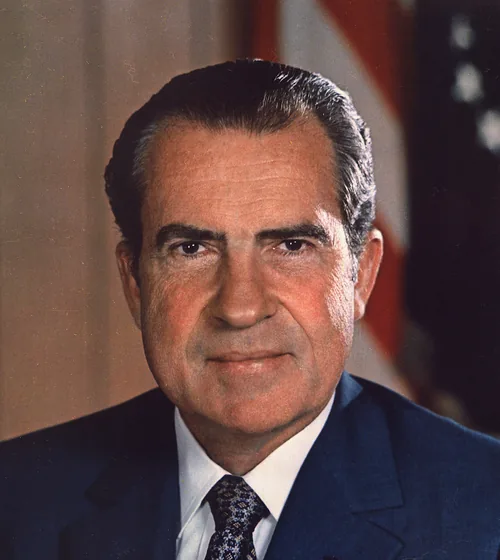
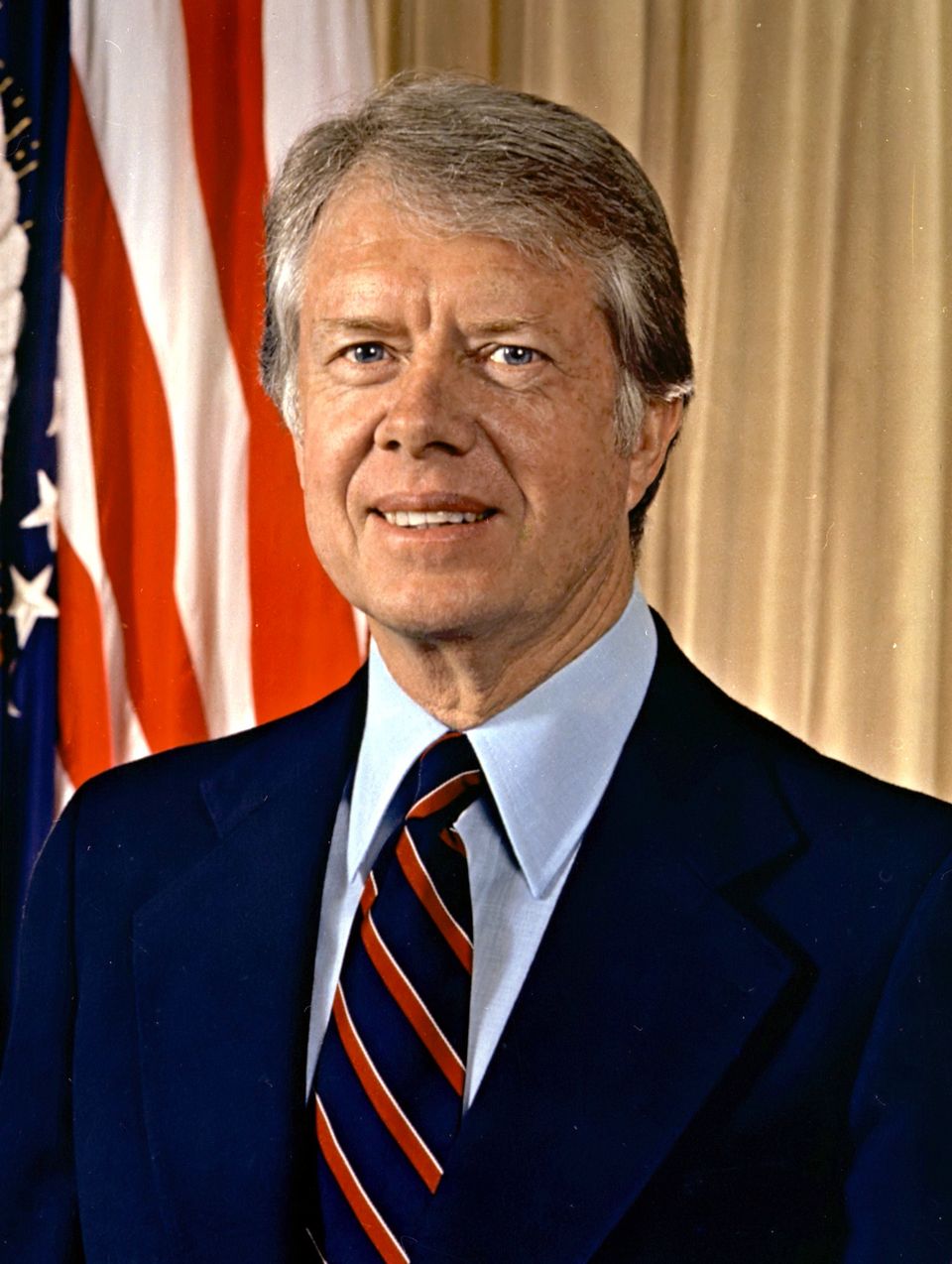

Official presidential portrait (U.S. Army Audiovisual Center, about 1972; Commons file), public domain (U.S. federal government work), cropped. Background removed for the portrait above. · Official U.S. government portrait (Department of Defense / Department of the Navy, 1977), via Wikimedia Commons, public domain. Background removed for the portrait above. · Studio portrait of Harry S. Truman by Harris & Ewing, about 1945, National Portrait Gallery, Smithsonian Institution (Commons file), released under CC0. Cropped for the portrait above.


An estimate is an inference.
Yours can be measured.
Thirty questions, scored against general-population benchmarks. Your score, your percentile, your ability breakdown and a printable IIF certificate.
Find your IQ score now! →