



What was Richard Nixon’s IQ?
The Nixon IQ of 143 began as a score out of 160 against a norm of 117; the 155 began as a joke e-mail.
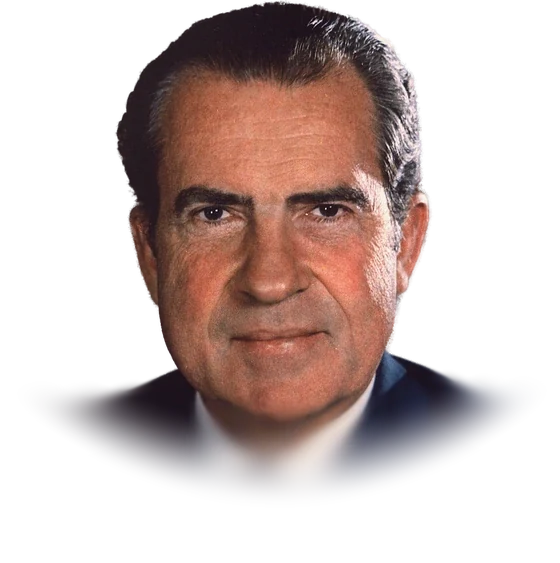
Richard Nixon’s IQ was never officially published. The 143 that circulates comes from a first-year high-school Otis score in a 1990 biography, and the 155 comes from a 2001 hoax. What is documented is second in his class at Whittier College and third at Duke Law with the Order of the Coif, which supports an estimated IQ of about 130–145.
Richard Nixon’s estimated IQ
- Third in a class of 207 at Whittier High School in 1930, then second in a graduating class of 85 at Whittier College in 1934, as recorded in Roger Morris’s 1990 biography; Whittier College’s own archive also says he graduated second in his class.
- A $250 full-tuition scholarship to Duke University School of Law, where he was president of the student bar association and, in June 1937, ranked third overall in his class with an 80.49 average and qualified for the Order of the Coif (Morris; Duke Law’s history timeline confirms the 1937 graduation).
- Admission to the California Bar on November 9, 1937, and a place at the Whittier law firm of Wingert and Bewley, according to the Richard Nixon Presidential Library and Museum.
- A first-year high-school Otis intelligence-test score of 143 out of 160 against a norm of 117, reported by Morris; it is not stated as an IQ and is not converted here.
- Dean Keith Simonton’s 2006 study in Political Psychology: four statistical estimates of 118.9, 129.2, 133.0 and 142.9, averaging 131.0 and ranking Nixon 23rd of 42 presidents.
A class rank in a small, selected group, such as 85 college graduates or one law-school class, is not a population-normed score, and Simonton’s four figures are statistical inferences from two expert ratings that do not include grades or test results; he calls them tentative and approximate. The 143 school-test score comes without the test’s scoring tables, so it cannot be read as an IQ on the usual scale; it is treated as a data point near the top of the range, not as an anchor.
- Born
- January 9, 1913, Yorba Linda, California
- Died
- April 22, 1994, New York City
- Education
- Whittier High School, 1930 (third of 207); Whittier College, 1934 (second of 85); Duke University School of Law, LL.B. 1937 (third overall; Order of the Coif)
- School test
- Otis intelligence test, first year of high school: 143 out of 160 against a norm of 117, as reported by biographer Roger Morris (1990); not stated as an IQ
- Military
- U.S. Naval Reserve, active duty 1942–1946; South Pacific; released as a lieutenant commander
- Offices
- U.S. House 1947–1950; U.S. Senate 1950–1953; Vice President 1953–1961; 37th President, January 20, 1969 – August 9, 1974
- Simonton (2006)
- Average of four statistical estimates 131.0 (range 118.9–142.9); 23rd of 42 presidents
- Circulating IQ figures
- 143 (a school-test score later repeated as an IQ); 155 (2001 hoax e-mail)
What an IQ of 130–145 actually means
Set the claim aside for a moment. If someone genuinely scored in this range, here is what that would represent.
Average is 100 by construction, and about two-thirds of people fall between 85 and 115. Take the test to place your own score on this scale.
| Score range | Classification | Share of people | What it indicates |
|---|---|---|---|
| 85 – 114 | Average | ~68% | The range most people fall into. |
| 115 – 129 | Above average | ~13.6% | Roughly one person in seven. |
| 130 – 144 | Gifted | ~2% | The threshold most high-IQ societies use. |
| Above 144 | Highly gifted | ~0.1% | Figures above this range are extrapolated from the curve rather than measured. |
Percentages are approximate and describe a normal distribution. The same number means different things on tests with different standard deviations.
Thirty questions gives you a measured position on this exact scale — your score, your percentile and the ability breakdown behind it.
Find out in 30 minutes →Who Richard Nixon was
Was Richard Nixon smart? On paper, at every stage the record puts him at or near the top of his class. Richard Milhous Nixon was born on January 9, 1913, in Yorba Linda, California, and attended Fullerton Union High School and then Whittier High School, from which he graduated in 1930 third in a class of 207. He enrolled at Whittier College in September 1930, took part in student government, drama and football, and graduated in 1934 second in a graduating class of 85, with a bachelor’s degree in history. Whittier College’s own archive records that he graduated second in his class and won a scholarship to study law at Duke University.
In May 1934 Duke University School of Law admitted him with a $250 full-tuition scholarship, and he studied in Durham, North Carolina, from 1934 to 1937. He was president of the school’s student bar association, and when he graduated in June 1937 the law school ranked him third overall in his class, with an 80.49 average, and he qualified for the Order of the Coif, the national law honor society. Duke Law’s own history timeline lists his graduation in 1937. On November 9, 1937 he was admitted to the California Bar and joined the Whittier firm of Wingert and Bewley. A rank like third at Duke Law is measured inside a selected pool, which is part of why an extreme result on one measure tends to sit nearer the middle on another, and why achievement records and IQ tests are not interchangeable.
Nixon was commissioned a lieutenant (junior grade) in the U.S. Naval Reserve on June 15, 1942. He served on active duty in the South Pacific from 1943 to 1945, including New Caledonia, Bougainville and Green Island, as officer in charge of the South Pacific Combat Air Transport Command at New Caledonia, and was released from active duty as a lieutenant commander on March 10, 1946. He was sworn in to the U.S. House of Representatives on January 3, 1947, for California’s 12th district, served in the Senate from December 1, 1950, to January 1, 1953, and was Vice President under Dwight D. Eisenhower from 1953 to 1961, inaugurated on January 20, 1953. He became the 37th President of the United States on January 20, 1969, and resigned the presidency on August 9, 1974. He died on April 22, 1994, in New York City.
 By Elora Mercer, Celebrity Research WriterFigures checked by Leon Falkner, Data & Research Analyst
Reviewed by Aarav Vardhan, Editor-in-Chief · Last reviewed August 2026
.jpg)
Richard Nixon: the documented record
The estimate above rests on this record. Every entry here is a matter of public fact, which is more than can be said for the number itself.
- 1913–30Born January 9, 1913, in Yorba Linda, California; spends his first two years of high school at Fullerton Union High School and graduates from Whittier High School in 1930, third in a class of 207.
- 1934Graduates second in a class of 85 from Whittier College with a bachelor’s degree in history; wins a full-tuition scholarship to Duke University School of Law.
- 1937Graduates from Duke Law in June, third overall in his class and qualified for the Order of the Coif; admitted to the California Bar on November 9.
- 1942–46Commissioned a lieutenant (junior grade) in the U.S. Naval Reserve on June 15, 1942; released from active duty as a lieutenant commander on March 10, 1946.
- 1947–61Sworn in to the U.S. House on January 3, 1947; serves in the Senate from December 1, 1950; Vice President from 1953 to 1961.
- 1969Takes office as the 37th President on January 20.
- 1990Roger Morris’s biography reports the first-year high-school Otis score: 143 out of 160, against a norm of 117.
- 1991Fortune (July 15) repeats Morris’s figure as a test result of 143 and treats it as an IQ.
- 2001A hoax e-mail credits a “Lovenstein Institute” with an IQ of 155 for Nixon; the institute does not exist.
- 2006Dean Keith Simonton’s peer-reviewed study estimates his IQ statistically at 118.9–142.9, averaging 131.0.
Where the 143 figure came from
Following a claim back to its first appearance is the part almost nobody does — and it is what most people are actually asking.
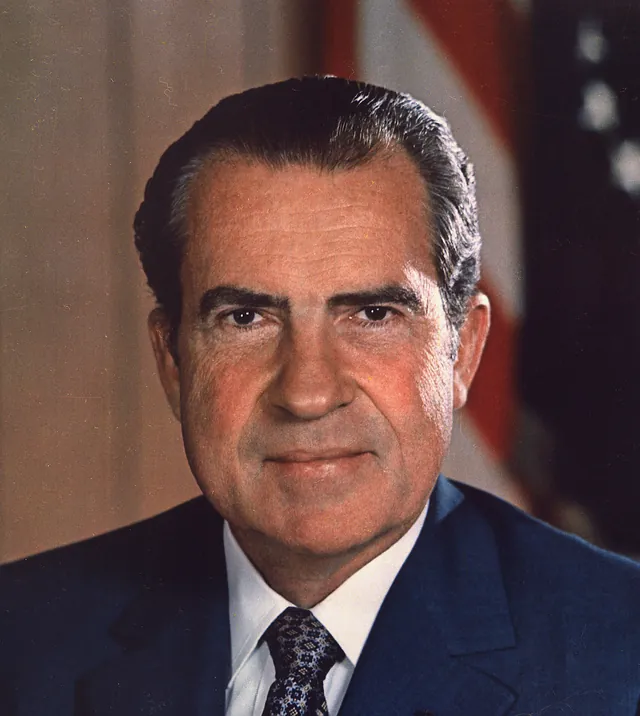
The 143 that answers searches for Richard Nixon’s IQ has a paper trail that most circulating celebrity figures lack, and the trail ends at a high-school test. In his 1990 biography Richard Milhous Nixon: The Rise of an American Politician, Roger Morris writes that Nixon, given the nationally used Otis intelligence test in his first year of high school, “scored 143 out of 160, far above the norm of 117.” The sentence sits in a passage about his Fullerton Union High School record, where Morris’s notes cite the school’s permanent record for Nixon’s grades. Morris does not call the result an IQ, and he reports it against a norm of 117 on a 160-point scale, so without the test’s scoring tables it cannot be read as an IQ on the usual scale, where the average is 100.
The number then lost its context. Fortune carried it on July 15, 1991, in a column by Daniel Seligman that credited Morris with Nixon testing at 143 at Fullerton High School, treated it as an IQ, added the Otis test’s reported standard error of six points and suggested Nixon might be “worth 149.” By January 14, 2001 an article from the Unit for the Study of Personality in Politics at the College of Saint Benedict and Saint John’s University was printing “a reported IQ of 143” with no source, and lists such as a 2012 Christian Post piece repeat it as fact. The same Fortune column set Nixon’s figure beside the 119 on John F. Kennedy’s page, which it also credits to an Otis test.
The 155 is a different kind of number. It comes from the July 2001 e-mail that credited a “Lovenstein Institute” of Scranton, Pennsylvania with IQ scores for 12 presidents, Franklin D. Roosevelt through George W. Bush, and ranked Nixon fourth behind Bill Clinton (182), Jimmy Carter (175) and Kennedy (174), with George W. Bush last at 91. The institute never existed: the e-mail began as a joke on linkydinky.com, The Guardian printed it on July 19, 2001 and later retracted it, and a copy survives on a University of California San Diego faculty page. For how a figure like this keeps circulating, see where celebrity IQ numbers come from.
What was Richard Nixon’s estimated IQ? The only peer-reviewed number is Dean Keith Simonton’s 2006 study in Political Psychology, discussed in US presidents ranked by IQ. It prints four estimates for Nixon, 118.9, 129.2, 133.0 and 142.9, and their average, 131.0, ranks him 23rd of 42 presidents. None is a test result, though ranking pages print the 131 as his estimated IQ. Nixon is not one of the eight presidents with IQ estimates rooted in Catharine Cox’s 1926 study, so his figures were inferred from two expert ratings, an Intellectual Brilliance z-score of 0.4 and an Openness to Experience score of 14.0 on a 0–100 scale, and Simonton calls the IQ scores “tentative and approximate.” The paper’s Table 1 note describes the scores as having a hypothetical mean of 100 and a standard deviation of 16, while its footnote 2 says they follow the old ratio definition of IQ and have no pre-set standard deviation; see why scales with a standard deviation of 15 or 16 differ. This page’s 130–145 starts at Simonton’s average and ends just above his highest estimate, because the school record is the better-documented evidence, though it measures academic performance in small selected groups, not a general IQ.
How we read a number →Reports the Otis intelligence-test score (143 out of 160, norm of 117) in his first year of high school; class ranks of third of 207 (Whittier High), second of 85 (Whittier College) and third overall at Duke Law (80.49 average, Order of the Coif); and the $250 full-tuition Duke scholarship. In that passage Morris does not call the Otis result an IQ.
The earliest printed source found that treats 143 as an IQ: credits biographer Roger Morris with Nixon testing at 143 at Fullerton High School, names the Otis test, adds a standard error of six points and says Nixon might be “worth 149.”
Table 1 (p. 516) prints Nixon’s four IQ estimates (118.9, 129.2, 133.0, 142.9; average 131.0, 23rd of 42) with Intellectual Brilliance 0.4 and Openness 14.0 as the original inputs. The estimates are imputed, not measured, and the paper calls them tentative and approximate. Its Table 1 note gives a hypothetical standard deviation of 16, while footnote 2 says they have no pre-set standard deviation.
Fabricated. The copy lists 12 presidents, Franklin D. Roosevelt through George W. Bush, and ranks Nixon fourth at 155. No such institute exists; the e-mail began as a joke on linkydinky.com, and The Guardian printed it on July 19, 2001 and later retracted it.
The first prints “a reported IQ of 143” for Nixon with no source, months before the hoax e-mail circulated; the second says Nixon “actually tested” at 143, again without a citation, and reprints the 155 list.
The Christian Post list says Nixon “reportedly had an IQ of 143” with no test, date, source or disclaimer.
Library: Whittier College 1930–1934, Duke scholarship in May 1934, student bar association president, California Bar admission on November 9, 1937, Navy service and release as a lieutenant commander on March 10, 1946, office dates, birth and death. Duke Law’s timeline lists his graduation in 1937. Neither gives a class rank or an IQ.
The college’s own archive says he graduated second in his class in 1934 and won a scholarship to study law at Duke.
Confirms Q9588 is the 37th U.S. president (born January 9, 1913; died April 22, 1994), the Navy dates, the Whittier High rank and the Duke rank and Order of the Coif; the page does not mention an IQ or the Otis test.
No score report, school-record page or testing-company document for Nixon has been published. Checked the Nixon Library, Whittier College’s archive, Duke Law’s timeline, Wikipedia and the circulating-figure pages above; the only test figure is the biographer’s Otis report, and the 155 is a hoax.
The sources behind our estimate
The figures that circulate for Richard Nixon, what we were able to confirm, and where the two diverge.
Two numbers circulate as Nixon’s IQ. 143 is repeated on pages ranging from a January 2001 political-psychology article to a 2012 Christian Post list, neither of which cites a source. 155 comes from a July 2001 chain e-mail that credited a “Lovenstein Institute” with IQ scores for 12 presidents and ranked Nixon fourth. A third figure, 131, is the average of Simonton’s four estimates, printed on ranking pages as an estimated IQ.
The 143 has a paper trail. Biographer Roger Morris (1990) reports that Nixon “scored 143 out of 160, far above the norm of 117” on the Otis intelligence test in his first year of high school, in a passage about his Fullerton Union High School record. Fortune retold it on July 15, 1991 as a test result of 143 and treated it as an IQ; later pages repeat the number without the 160 or the 117. Morris does not call it an IQ and gives no conversion. The 155 is a fabrication. The “Lovenstein Institute” of Scranton, Pennsylvania does not exist, the e-mail began as a joke on linkydinky.com, and a copy on a University of California San Diego faculty page still prints Nixon at 155. No IQ score report for Nixon appears on the Nixon Library, Whittier College, Duke Law or Wikipedia pages checked for this profile.
143 sits inside the range, near its top, and 155 sits ten points above it. They are different kinds of number: 143 comes from a school test a biographer reported, 155 from an e-mail about an institute that never existed. Simonton’s average, 131.0, sits at the bottom of the range.
Want a number that does hold up? Every figure on this page is somebody’s claim. Take the 30-question test and get a percentile you can check rather than a figure you have to trust.
Richard Nixon — frequently asked
What is Richard Nixon’s IQ?
No IQ score for Richard Nixon has been officially published. The figure most often repeated, 143, comes from a high-school Otis intelligence-test score of 143 out of 160, reported by biographer Roger Morris in 1990 and later recopied as an IQ. Based on his academic record, this site estimates his IQ at about 130–145.
What was Richard Nixon’s estimated IQ?
The only peer-reviewed estimate is Dean Keith Simonton’s 2006 study, which gives four statistical figures for Nixon (118.9, 129.2, 133.0 and 142.9) averaging 131.0, 23rd of 42 presidents. They are inferences from expert ratings, not tests. This site’s Richard Nixon estimated IQ range, built on his academic record, is 130–145.
Is the Nixon IQ of 143 real?
Not as a documented IQ. The 143 traces to Roger Morris’s 1990 biography, which says Nixon scored 143 out of 160 on the Otis intelligence test in his first year of high school, against a norm of 117. Fortune repeated it as a test result in 1991, and later pages dropped the 160 and the 117.
Was Richard Nixon’s IQ 155?
No. The 155 comes from a fabricated July 2001 e-mail that credited a “Lovenstein Institute” of Scranton, Pennsylvania with IQ scores for 12 presidents; no such institute exists. The Guardian printed the list on July 19, 2001 and later retracted it. Nixon’s documented record supports a lower range, about 130–145.
Was Richard Nixon smart?
By the documented record, yes in academic terms: third in a class of 207 at Whittier High School, second in a graduating class of 85 at Whittier College in 1934, and third overall at Duke University School of Law in 1937, where he qualified for the Order of the Coif. Class rank measures schoolwork in small groups, not a general IQ.
Did Richard Nixon take an IQ test?
Biographer Roger Morris reports that he took the Otis intelligence test in his first year of high school and scored 143 out of 160, against a norm of 117. No IQ score report for Nixon has been published, and Morris does not call that result an IQ, so it should not be read as one.
How does Richard Nixon’s estimated IQ compare with Jimmy Carter’s?
This site estimates 130–145 for Nixon and 130–148 for Jimmy Carter, both from academic and career records rather than test scores. In Simonton’s 2006 study Nixon averages 131.0 (23rd of 42) and Carter 145.1 (tied fifth), though those are statistical inferences, not measured IQs.
How does my IQ compare with Richard Nixon?
You can find out in about fifteen minutes. The IQ Metrics assessment is 30 questions, scored on the same 100-mean scale used throughout this page, so your result and the estimate above are at least expressed in the same units — one measured, one inferred. Once you have a number, the leaderboard shows where it would sit, and how we score and norm it explains the benchmarking.
Where does this estimate come from?
From the documented record rather than a test — the method is named above and set out in full under how we read a number. Compare it against the other politics profiles, starting with Thomas Jefferson.
- Take the 30-question IQ test — get a measured score and percentile of your own
- Average IQ by country — how the scale behaves across populations
- How IQ Metrics scores its assessment — the method behind our own number
- More on how IQ testing works — reliability, error and what a score can and cannot say
- More politics profiles — same field, same method
More politics
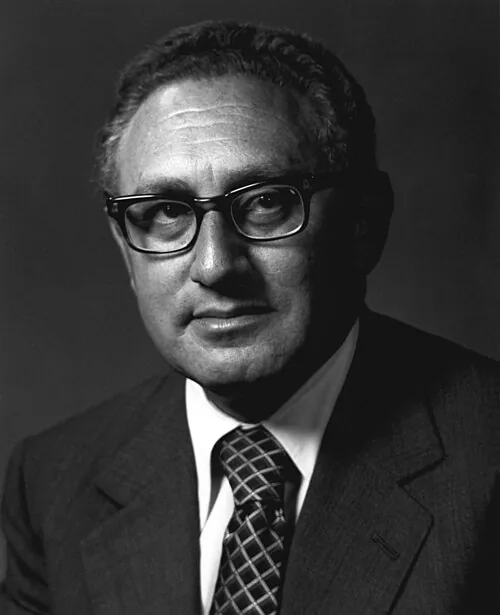
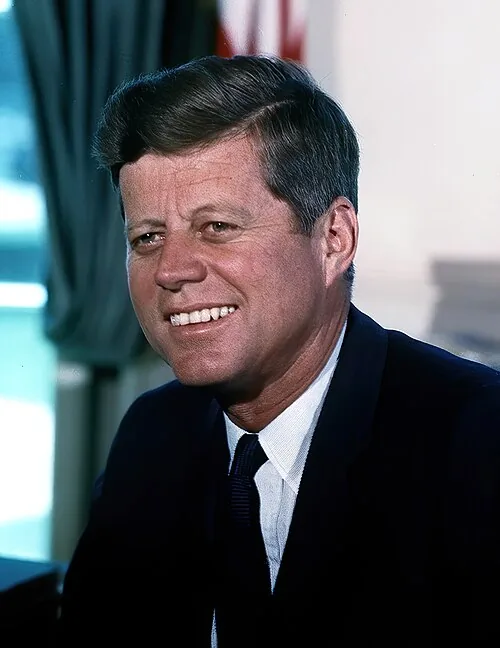
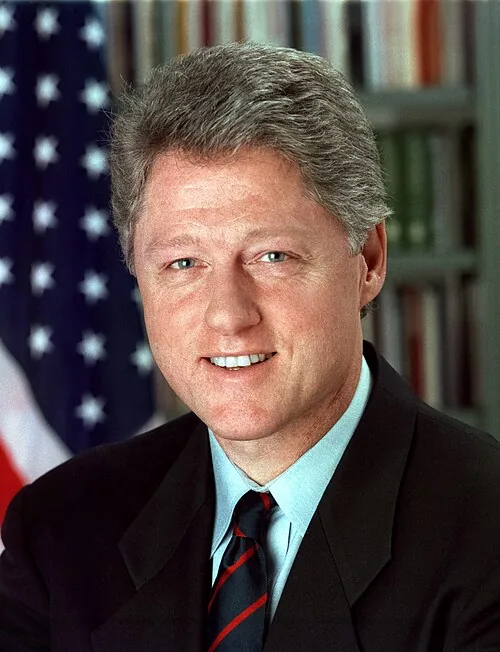
Official U.S. Department of State portrait, public domain, via Wikimedia Commons. · Photograph by Cecil W. Stoughton, White House, public domain. Background removed for the portrait above. · Photograph by Bob McNeely, The White House, public domain, via Wikimedia Commons. Background removed for the portrait above.


An estimate is an inference.
Yours can be measured.
Thirty questions, scored against general-population benchmarks. Your score, your percentile, your ability breakdown and a printable IIF certificate.
Find your IQ score now! →