


What is Natalie Portman’s IQ?
Harvard, and a published paper.
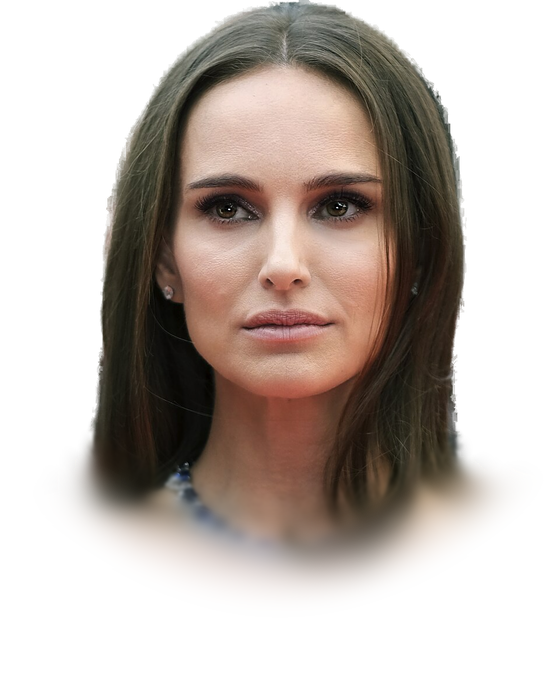
One of the few names in this section with a documented academic record rather than only a circulating number.
Natalie Portman’s estimated IQ
- Bachelor’s degree in psychology from Harvard, completed in 2003 while working as an actor.
- Co-authored research published in a peer-reviewed journal while still at school, under her birth name Natalie Hershlag.
- Speaks several languages; has spoken publicly about prioritising study over film work during her degree.
An academic record shows what somebody did with the opportunities they had. It is a far better basis than a listicle, and still not a test result.
- Born
- 9 June 1981, Jerusalem
- Field
- Film, psychology
- Education
- Harvard University, BA psychology, 2003
- Known for
- Léon, Black Swan, Thor
- Nationality
- Israeli-American
What an IQ of 135–145 actually means
Set the claim aside for a moment. If someone genuinely scored in this range, here is what that would represent.
Average is 100 by construction, and about two-thirds of people fall between 85 and 115. Take the test to place your own score on this scale.
| Score range | Classification | Share of people | What it indicates |
|---|---|---|---|
| 85 – 114 | Average | ~68% | The range most people fall into. |
| 115 – 129 | Above average | ~13.6% | Roughly one person in seven. |
| 130 – 144 | Gifted | ~2% | The threshold most high-IQ societies use. |
| Above 144 | Highly gifted | ~0.1% | Figures above this range are extrapolated from the curve rather than measured. |
Percentages are approximate and describe a normal distribution. The same number means different things on tests with different standard deviations.
Thirty questions gives you a measured position on this exact scale — your score, your percentile and the ability breakdown behind it.
Find out in 30 minutes →Who Natalie Portman is
Natalie Portman was cast in Léon at thirteen and had made Beautiful Girls, Mars Attacks! and the first Star Wars prequel before finishing school. She enrolled at Harvard in 1999 and completed a psychology degree in 2003, studying through the height of the Star Wars press cycle.
She has said she would rather be intelligent than a film star — a line quoted often enough to have become part of the mythology. The record behind it is unusually solid: an Intel Science Talent Search semi-final, a co-authored journal paper, a completed degree at a selective university, all while working.
That combination is exactly why a number gets attached to her. It is also why the estimate here is narrower than most on this site: there is something real to reason from.
 By Elora Mercer, Celebrity Research WriterFigures checked by Leon Falkner, Data & Research Analyst
Reviewed by Aarav Vardhan, Editor-in-Chief · Last reviewed August 2026
.jpg)
Natalie Portman: the documented record
The estimate above rests on this record. Every entry here is a matter of public fact, which is more than can be said for the number itself.
- 1994Screen debut in Léon, aged thirteen, under the stage name Natalie Portman.
- 1998Named a semi-finalist in the Intel Science Talent Search while at high school.
- 1999Cast as Padmé Amidala in Star Wars: Episode I; enrols at Harvard the same year.
- 1998Co-authors a paper in the Journal of Chemical Education under her birth name, Natalie Hershlag, while still at high school.
- 2002Co-authors a second paper, in NeuroImage, on frontal-lobe activation during object permanence.
- 2003Graduates from Harvard with a bachelor’s degree in psychology.
- 2010Black Swan.
- 2011Wins the Academy Award for Best Actress.
- 2018Awarded the Genesis Prize.
Where the 140 figure came from
Following a claim back to its first appearance is the part almost nobody does — and it is what most people are actually asking.
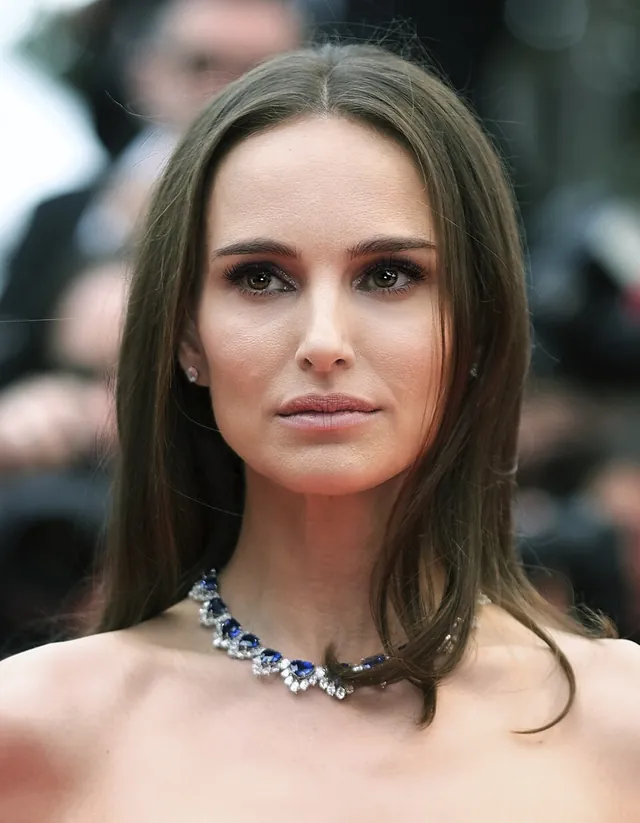
The figure of 140 appears across celebrity-IQ listicles with no attribution. It is not traceable to any test, interview or profile. As with most numbers in this section, its authority comes entirely from how often it has been repeated.
What makes Portman unusual here is that the underlying record is checkable in a way almost none of these are. Harvard degrees are public. Journal papers are indexed. An estimate built on those is still an inference, but it is an inference about documented facts rather than about a reputation.
Note the direction of the error: the sourced record supports a narrower, lower range than the circulating figure. That is the usual pattern once a number is actually checked.
How we read a number →Bachelor’s degree in psychology. A matter of public record and the strongest single input to the estimate.
Published while she was still at high school. Note the year — this paper is routinely misdated to 2002, which is a different study.
A second peer-reviewed paper, co-authored during her Harvard years.
Source URLs and first-appearance date pending audit.
No original could be located. The number circulates without attribution.
The sources behind our estimate
The figures that circulate for Natalie Portman, what we were able to confirm, and where the two diverge.
The figure quoted almost universally on celebrity-IQ lists, always without attribution.
We found no evidence that Natalie Portman has ever taken an IQ test. What the record does contain is a Harvard psychology degree and a co-authored journal paper — checkable facts that support a narrower and lower range than the number in circulation.
A tight spread, which usually indicates copying rather than independent reporting: the same figure passed from one list to the next.
Want a number that does hold up? Every figure on this page is somebody’s claim. Take the 30-question test and get a percentile you can check rather than a figure you have to trust.
Natalie Portman — frequently asked
What is Natalie Portman’s IQ?
No verified score exists. The 140 that circulates has no traceable source. Our 135–145 range is inferred from a documented academic record.
Did Natalie Portman really go to Harvard?
Yes — she graduated with a bachelor’s degree in psychology in 2003, studying alongside her film career.
Has she published research?
She co-authored work published in a peer-reviewed journal as a school student, under her birth name Natalie Hershlag.
Is Natalie Portman actually a scientist?
She holds a psychology degree and has co-authored published research, but she has worked as an actor throughout. The point is that the academic record is real and checkable, which is unusual in this section.
How does her estimate compare to other actors?
She is currently the only actor profiled here, so the ranking is trivial. It will become meaningful as the category fills out.
Why is her range lower than most on this site?
Because it rests on a documented record rather than on reputation. Estimates built from achievement mythology drift upward; estimates built from evidence usually do not.
How does my IQ compare with Natalie Portman?
You can find out in about fifteen minutes. The IQ Metrics assessment is 30 questions, scored on the same 100-mean scale used throughout this page, so your result and the estimate above are at least expressed in the same units — one measured, one inferred. Once you have a number, the leaderboard shows where it would sit, and how we score and norm it explains the benchmarking.
Where does this estimate come from?
From the documented record rather than a test — the method is named above and set out in full under how we read a number. Compare it against the other actors profiles, starting with James Woods.
- Take the 30-question IQ test — get a measured score and percentile of your own
- Average IQ by country — how the scale behaves across populations
- How IQ Metrics scores its assessment — the method behind our own number
- More on how IQ testing works — reliability, error and what a score can and cannot say
- More actors profiles — same field, same method
More actors


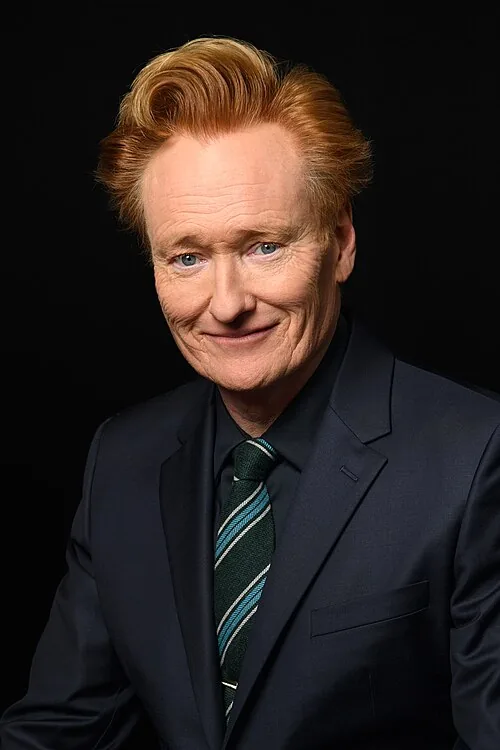
Photograph by Eva Rinaldi, CC BY-SA 2.0. Background removed for the portrait above. · Photograph by PhilipRomano, CC BY-SA 4.0. Background removed for the portrait above. · Photograph by Montclair Film, CC BY 4.0. Background removed for the portrait above.


An estimate is an inference.
Yours can be measured.
Thirty questions, scored against general-population benchmarks. Your score, your percentile, your ability breakdown and a printable IIF certificate.
Find your IQ score now! →