



What is James Woods’ IQ?
One real score, and one invented one.
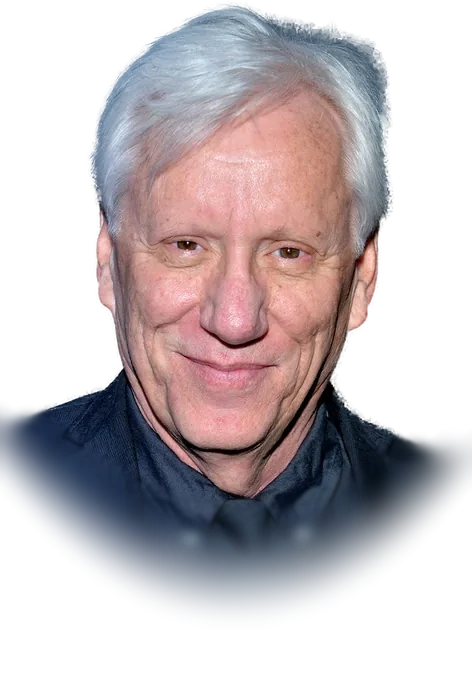
Woods is the rare case where a documented test score exists — it just is not an IQ test, and it is not 180.
James Woods’ estimated IQ
- A verbal SAT score in the high 700s out of 800, which Woods has cited in interviews over several decades.
- Admitted to the Massachusetts Institute of Technology, where he enrolled to study political science before leaving to act.
- The pre-1995 SAT correlates strongly enough with general cognitive ability that a high score supports a range — which is why this page can give a narrower one than most.
SAT-derived estimates inherit every problem of the SAT: coaching, practice and testing conditions all move the score. It anchors a range. It does not produce a score.
- Born
- 18 April 1947, Vernal, Utah
- Field
- Film and television acting
- Education
- Massachusetts Institute of Technology (left, no degree)
- Known for
- Salvador, Once Upon a Time in America, Casino
- Nationality
- American
What an IQ of 135–150 actually means
Set the claim aside for a moment. If someone genuinely scored in this range, here is what that would represent.
Average is 100 by construction, and about two-thirds of people fall between 85 and 115. Take the test to place your own score on this scale.
| Score range | Classification | Share of people | What it indicates |
|---|---|---|---|
| 85 – 114 | Average | ~68% | The range most people fall into. |
| 115 – 129 | Above average | ~13.6% | Roughly one person in seven. |
| 130 – 144 | Gifted | ~2% | The threshold most high-IQ societies use. |
| Above 144 | Highly gifted | ~0.1% | Figures above this range are extrapolated from the curve rather than measured. |
Percentages are approximate and describe a normal distribution. The same number means different things on tests with different standard deviations.
Thirty questions gives you a measured position on this exact scale — your score, your percentile and the ability breakdown behind it.
Find out in 30 minutes →Who James Woods is
James Woods was born in Vernal, Utah in 1947 and grew up in Rhode Island. He was admitted to MIT, enrolled in political science, and left before graduating to work in theatre in New York.
The screen career that followed is built almost entirely on fast, verbal, high-density performances — Salvador, Once Upon a Time in America, Casino, Ghosts of Mississippi — which is very likely why a large IQ figure attached itself to him rather than to other actors with comparable academic records.
That is a reputation effect, not a measurement. Playing quickly is not the same as testing highly, and the site’s position is the same here as everywhere: use the document that exists, and say plainly when it does not reach as far as the claim.
 By Elora Mercer, Celebrity Research WriterFigures checked by Leon Falkner, Data & Research Analyst
Reviewed by Aarav Vardhan, Editor-in-Chief · Last reviewed August 2026

James Woods: the documented record
The estimate above rests on this record. Every entry here is a matter of public fact, which is more than can be said for the number itself.
- 1947Born in Vernal, Utah.
- c.1965Admitted to MIT; enrols in political science.
- c.1968Leaves MIT without a degree to work in theatre in New York.
- 1972Screen debut in The Visitors.
- 1986Salvador; nominated for the Academy Award for Best Actor.
- 1995Casino.
- 1996Ghosts of Mississippi; a second Academy Award nomination.
Where the 180 figure came from
Following a claim back to its first appearance is the part almost nobody does — and it is what most people are actually asking.
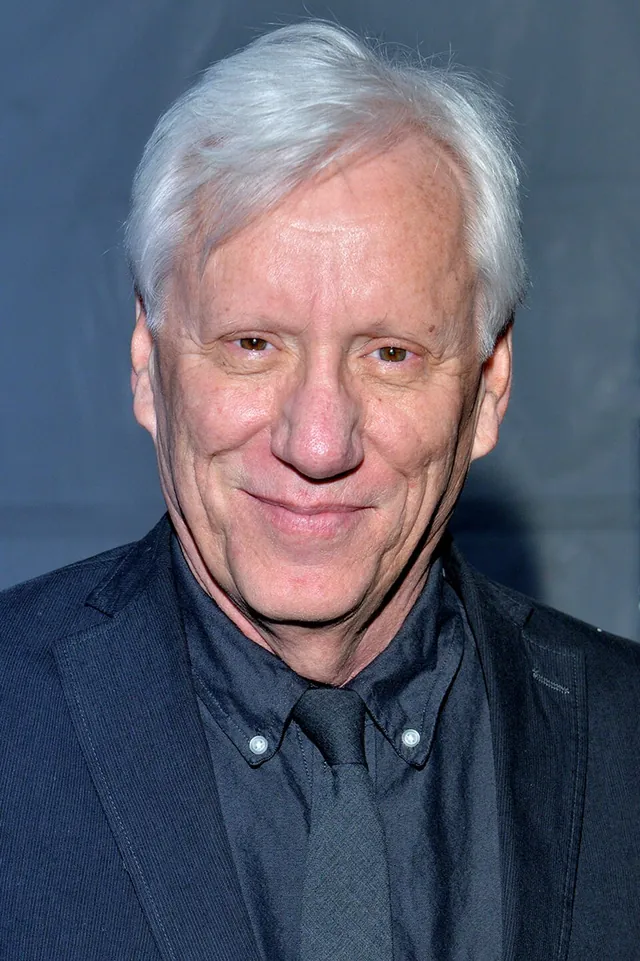
This entry is worth reading next to Natalie Portman, because the pattern is identical: a real, checkable academic record exists, and the circulating figure is higher than anything that record supports.
The MIT admission is the part people remember, and it is genuine. What it is not is a score. Admissions decisions weigh essays, interviews, recommendations and institutional priorities alongside test results. Treating an offer letter as a measurement is the same mistake as treating a company valuation as one.
The honest reading is that Woods sits comfortably in the range this page gives, on genuine evidence, and that the extra thirty to forty points came from a listicle rather than from anywhere.
How we read a number →Enrolled to study political science; left before completing the degree to work in theatre. The admission is documented; the departure is not evidence about ability.
Woods has repeated the figure across decades of interviews. Self-reported, consistent, and never accompanied by a released score report.
The standard citation for the SAT–general-ability correlation, and the basis for the conversion used in the estimate above. It is also the source of the error bars that make a point estimate untenable.
No score report, school record or clinician’s account has ever been published.
Source URLs and first-appearance date pending audit.
No original could be located.
The sources behind our estimate
The figures that circulate for James Woods, what we were able to confirm, and where the two diverge.
180 is the figure attached to Woods on essentially every celebrity-IQ list, usually with “MIT” alongside it as though the two were the same claim.
The verifiable number is a verbal SAT result, not an IQ. The two are related but not interchangeable: the SAT is an achievement test with its own scale, and converting between them is an approximation with wide error bars. Nothing in the record supports 180, and Woods himself has never produced a test to back it.
The variants track each other closely, which again indicates copying. Note that 184 is sometimes given with false precision — a decimal point on an invented number does not make it a measurement.
Want a number that does hold up? Every figure on this page is somebody’s claim. Take the 30-question test and get a percentile you can check rather than a figure you have to trust.
James Woods — frequently asked
What is James Woods’s IQ?
No IQ test result has ever been published. The 180 in circulation is unsourced. Our 135–150 range is anchored on a reported high verbal SAT score, which is a different test on a different scale.
Did James Woods go to MIT?
Yes. He was admitted and enrolled to study political science, and left before completing the degree to pursue acting.
Is an SAT score the same as an IQ?
No. The SAT is an achievement test with its own scale. It correlates with general cognitive ability well enough to support a range, but converting a single score into a single IQ number carries error bars wide enough to make the point estimate meaningless.
Where does the 180 figure come from?
No original source could be located. It appears alongside the MIT detail on aggregator pages, which suggests the admission was reworked into a score at some point and then copied.
Has James Woods claimed an IQ of 180?
He has spoken about a high SAT result in interviews. We found no interview in which he produced an IQ test or a score report.
Why is this estimate narrower than most on the site?
Because it rests on a reported result from a real, normed test rather than on reputation. That is the same reason the Natalie Portman range is narrow.
How does my IQ compare with James Woods?
You can find out in about fifteen minutes. The IQ Metrics assessment is 30 questions, scored on the same 100-mean scale used throughout this page, so your result and the estimate above are at least expressed in the same units — one measured, one inferred. Once you have a number, the leaderboard shows where it would sit, and how we score and norm it explains the benchmarking.
Where does this estimate come from?
From the documented record rather than a test — the method is named above and set out in full under how we read a number. Compare it against the other actors profiles, starting with Natalie Portman.
- Take the 30-question IQ test — get a measured score and percentile of your own
- Average IQ by country — how the scale behaves across populations
- How IQ Metrics scores its assessment — the method behind our own number
- More on how IQ testing works — reliability, error and what a score can and cannot say
- More actors profiles — same field, same method
More actors

Photograph by Sam Shaw (1954), public domain. Background removed for the portrait above. · Photograph by Gabriel Hutchinson, CC BY-SA 4.0. Background removed for the portrait above. · Photograph by iDominick, CC BY-SA 2.0. Background removed for the portrait above.

.jpg)

An estimate is an inference.
Yours can be measured.
Thirty questions, scored against general-population benchmarks. Your score, your percentile, your ability breakdown and a printable IIF certificate.
Find your IQ score now! →