



What was Baruch Spinoza’s IQ?
Cox rated his early record at 130 and 145, then corrected the scores to 170 and 175, on data graded .20 and .43.
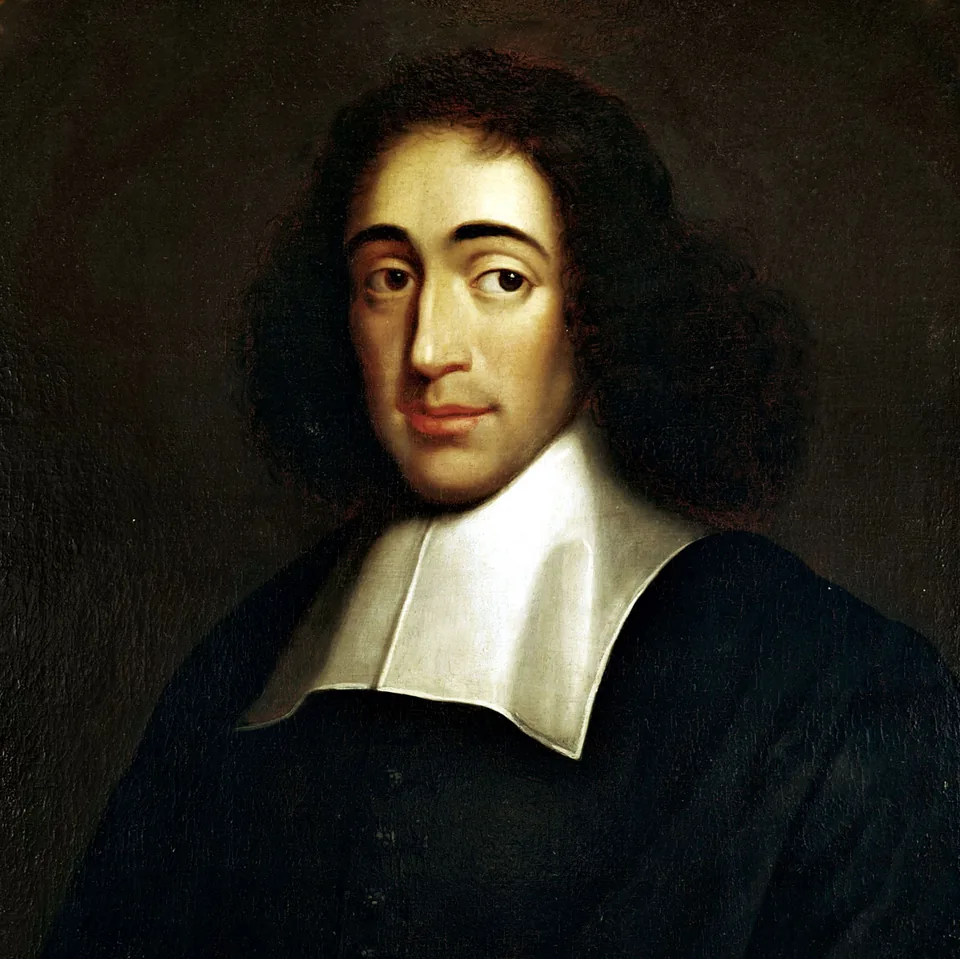
Baruch Spinoza has no IQ test score; he died in 1677. The numbers that exist are Catharine Cox’s 1926 estimates from his early record: 130 and 145 as obtained, and 170 and 175 after correction. Our Spinoza IQ estimate is 150–170, and the data behind it are thin (reliability .20 and .43).
Baruch Spinoza’s estimated IQ
- Cox rated his record to age 17 at IQ 130 and his years 17 to 26 at 145, on data she graded at only .20 and .43. Her corrected estimates are 170 and 175 (Early Mental Traits of Three Hundred Geniuses, case study pp. 376–377 and Table 12A).
- In Cox’s account he “showed uncommon ability in the perplexing questions he put to his teacher”, Rabbi Mortiera, and learned Spanish and Portuguese from his parents, Dutch from friends and Latin. She notes that much of his schooling is inferred.
- The Stanford Encyclopedia of Philosophy says he was a star pupil of the community’s Talmud Torah school but had to cut short his formal studies at 17 to help run the family’s importing business. From 19 to 22 he studied Latin, Greek, medicine and physics, and probably Descartes’s philosophy, under Van den Enden (Cox).
- On July 27, 1656, aged 23, he was excommunicated by the Sephardic community of Amsterdam, a ban that was never rescinded (Stanford Encyclopedia of Philosophy).
Cox rated biographies, never tests, and for Spinoza her data are thin: reliability .20 for his first 17 years and .43 for the next nine. Her corrected figures are her own adjustment, and Simonton (2006) notes that they “may be overestimates”. We keep our range between her later obtained figure and the corrected ones.
- Born
- November 24, 1632, Amsterdam
- Education
- Jewish community school in Amsterdam; formal studies cut short at 17; later Latin, Greek and science under Van den Enden
- Excommunicated
- July 27, 1656, aged 23
- Cox 1926 ratings
- 130 and 145 as obtained; 170 and 175 corrected (Table 12A)
- Cox data reliability
- .20 (to age 17) and .43 (17 to 26)
- Only book under his name
- Descartes’s Principles of Philosophy, completed in 1663
- Died
- February 21, 1677, The Hague
- Circulating IQ figure
- 170 and 175 (Cox’s corrected scores)
- Documented IQ test
- None; died in 1677
What an IQ of 150–170 actually means
Set the claim aside for a moment. If someone genuinely scored in this range, here is what that would represent.
Average is 100 by construction, and about two-thirds of people fall between 85 and 115. Take the test to place your own score on this scale.
| Score range | Classification | Share of people | What it indicates |
|---|---|---|---|
| 85 – 114 | Average | ~68% | The range most people fall into. |
| 115 – 129 | Above average | ~13.6% | Roughly one person in seven. |
| 130 – 144 | Gifted | ~2% | The threshold most high-IQ societies use. |
| Above 144 | Highly gifted | ~0.1% | Figures above this range are extrapolated from the curve rather than measured. |
Percentages are approximate and describe a normal distribution. The same number means different things on tests with different standard deviations.
Thirty questions gives you a measured position on this exact scale — your score, your percentile and the ability breakdown behind it.
Find out in 30 minutes →Who Baruch Spinoza was
Who was Spinoza? He was born on November 24, 1632, in Amsterdam, in the city’s Portuguese-Jewish community, and died in The Hague on February 21, 1677, aged 44. His given names Bento, Baruch and Benedictus are Portuguese, Hebrew and Latin forms of the same word, and all three mean “blessed” (Stanford Encyclopedia of Philosophy).
What happened in 1656? On July 27, 1656, the Sephardic community of Amsterdam issued the harshest writ of herem, or excommunication, it had ever pronounced, and it was never rescinded. The Stanford Encyclopedia says we do not know for certain which “monstrous deeds” and “abominable heresies” he was accused of. He later worked as a lens grinder (Cox).
What did he publish? Only one book under his own name in his lifetime: his critical exposition of Descartes’s Principles of Philosophy, completed in 1663. The Theological-Political Treatise appeared anonymously in 1670, and friends published his other writings after his death. Wikipedia adds that he refused an offer of the philosophy chair at Heidelberg. See other thinkers in our historical figures category.
 By Elora Mercer, Celebrity Research WriterFigures checked by Leon Falkner, Data & Research Analyst
Reviewed by Aarav Vardhan, Editor-in-Chief · Last reviewed November 2026

Baruch Spinoza: the documented record
The estimate above rests on this record. Every entry here is a matter of public fact, which is more than can be said for the number itself.
- 1632Born on November 24 in Amsterdam.
- 1649–50At about 17, cuts short his formal studies to help run the family’s importing business.
- 1656On July 27 the Sephardic community of Amsterdam issues the herem against him.
- 1663Completes his exposition of Descartes’s Principles of Philosophy, the only book under his own name in his lifetime.
- 1670The Theological-Political Treatise appears anonymously.
- 1677Dies in The Hague on February 21 with the Political Treatise unfinished; friends publish his writings.
- 1926Catharine Cox publishes her ratings of his early record.
- 2006Simonton notes that Cox’s corrected scores may be overestimates.
Where the 170–175 figure came from
Following a claim back to its first appearance is the part almost nobody does — and it is what most people are actually asking.
What is Spinoza’s IQ? He has no test score, because he died in 1677. Catharine Cox rated his record in 1926 and gave 130 for his first 17 years and 145 for ages 17 to 26, then corrected them to 170 and 175. Our philosophers ranked by IQ page lists the same four figures, with a reliability of .43 for the longer record.
Why 170 and 175 on a record graded only .43? The corrected figures are Cox’s own adjustment for thin records, not extra evidence about Spinoza. In the rows of her table we read (Spinoza, Adams, Hegel, Kant) the corrected scores are higher than the obtained ones. Simonton warned in 2006 that her corrected scores “may be overestimates”.
How does he compare with Kant, Hegel and Descartes? Immanuel Kant has the same corrected 175 on our philosophers page, Hegel 170 and 165, and René Descartes 170 and 180. Our ranges for all four are 150–170, and Gottfried Leibniz sits higher at 180–195. For what a score of 170 would mean, see what an IQ of 170 means.
How we read a number →Read in the archive.org scan. The case study gives “AI IQ 130” (data reliability .20) and “AII IQ 145” (.43); Table 12A (page 6) gives corrected estimates of 170 and 175 (Cattell rank 65). It names his teacher Rabbi Mortiera, Van den Enden, the excommunication and lens grinding.
Says that Cox’s corrected scores “may be overestimates”. The DOI and title were checked on Crossref.
Born 1632 in Amsterdam; the three names meaning “blessed”; studies cut short at 17; the herem of July 27, 1656; the 1663 exposition of Descartes, the anonymous Theological-Political Treatise of 1670 and his death in 1677 in The Hague.
The birth date November 24, 1632 and death date February 21, 1677; the refused offer of the philosophy chair at Heidelberg.
Confirms Q35802 is the Dutch philosopher (1632–1677).
Spinoza died in 1677. Cox’s table and the Stanford entry give no test score; the only numbers are Cox’s ratings.
Our philosophers page prints Spinoza at 130 / 145 and 170 / 175 with reliability .43, level with Kant at 175. On this site Kant, Hegel and Descartes are 150–170 and Leibniz 180–195.
The sources behind our estimate
The figures that circulate for Baruch Spinoza, what we were able to confirm, and where the two diverge.
The only numbers published for Spinoza are Catharine Cox’s of 1926: 130 and 145 as obtained, corrected to 170 and 175 in her Table 12A. People type “spinoza iq”, “spinoza estimated iq” and “was spinoza a genius”.
Cox’s table prints 130 for his record to age 17 and 145 for ages 17 to 26, from her ratings of biographical data, and 170 and 175 after a statistical correction. She graded the reliability of the data at .20 and .43. No test, school mark or contemporary IQ claim exists. Our page on philosophers ranked by IQ prints the same four numbers.
The obtained figures are 130 and 145 and the corrected ones 170 and 175, a gap of 40 points that shows how much of the number is Cox’s method and how little is data. Our 150–170 sits between her later obtained figure (145) and the corrected ones.
Want a number that does hold up? Every figure on this page is somebody’s claim. Take the 30-question test and get a percentile you can check rather than a figure you have to trust.
Baruch Spinoza — frequently asked
What is Spinoza’s IQ?
Spinoza has no IQ test score; he died in 1677. Catharine Cox’s 1926 estimates are 130 and 145 as obtained and 170 and 175 after correction. Our Spinoza IQ estimate is 150–170, and the data behind it are thin.
What is Spinoza’s estimated IQ?
Cox’s four figures are 130, 145, 170 and 175, taken from ratings of his biography, not from a test. The 170 and 175 are her corrected scores. Our range, 150–170, sits between her later obtained figure and the corrected ones.
Why does Cox give Spinoza 170 and 175 on a record graded .43?
The corrected scores are Cox’s own adjustment for thin records, not new evidence. She graded the data for his first 17 years at .20 and for ages 17 to 26 at .43. Simonton warned in 2006 that her corrected scores “may be overestimates”.
Was Spinoza a genius?
His record shows a gifted student. Cox’s case study quotes an early biographer who says his “quick fancy and penetrating wit” were easily seen in childhood. “Genius” is not an IQ category, and our range for him is 150–170.
How does Spinoza’s IQ estimate compare with Hegel’s and Kant’s?
On Cox’s corrected figures Spinoza and Kant both reach 175, and Hegel 170 and 165. On this site all three have ranges of 150–170, and all are estimates from biographies, not tests.
What did Spinoza publish?
Only his exposition of Descartes’s Principles of Philosophy appeared under his own name in his lifetime; the Theological-Political Treatise was anonymous (1670). His other writings were published after his death in 1677. To see where a score lands, take our IQ test.
How does my IQ compare with Baruch Spinoza?
You can find out in about fifteen minutes. The IQ Metrics assessment is 30 questions, scored on the same 100-mean scale used throughout this page, so your result and the estimate above are at least expressed in the same units — one measured, one inferred. Once you have a number, the leaderboard shows where it would sit, and how we score and norm it explains the benchmarking.
Where does this estimate come from?
From the documented record rather than a test — the method is named above and set out in full under how we read a number. Compare it against the other historical profiles, starting with Isaac Newton.
- Take the 30-question IQ test — get a measured score and percentile of your own
- Average IQ by country — how the scale behaves across populations
- How IQ Metrics scores its assessment — the method behind our own number
- More on how IQ testing works — reliability, error and what a score can and cannot say
- More historical profiles — same field, same method
More historical
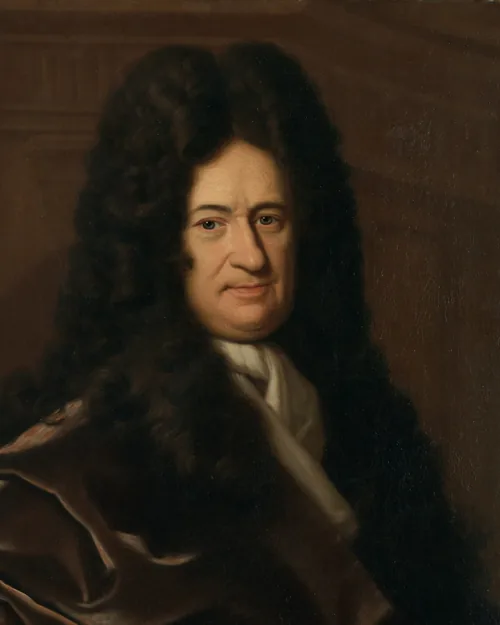
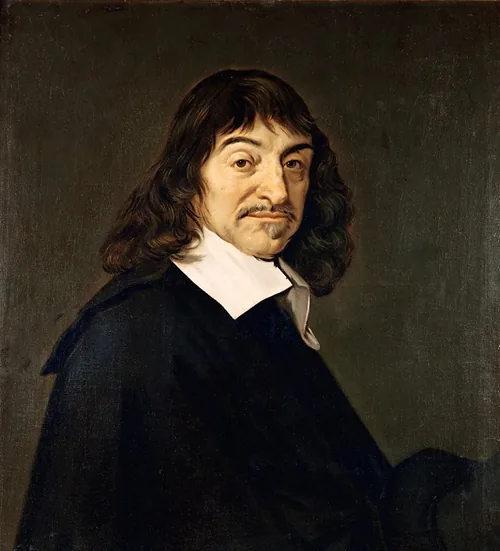
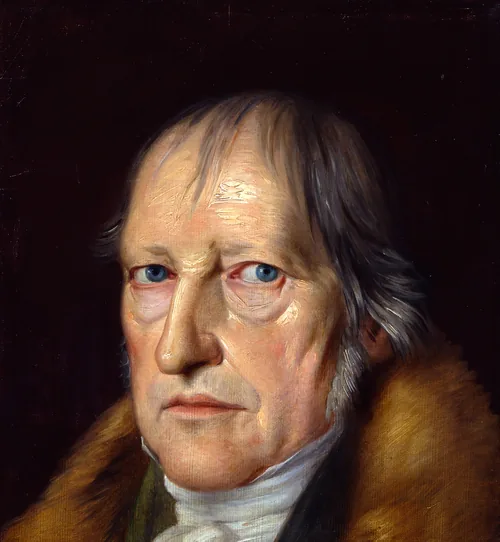
Portrait by Christoph Bernhard Francke (about 1695; Herzog Anton Ulrich-Museum, Braunschweig; Commons file), public domain, cropped. · Portrait of René Descartes, a painting after Frans Hals, Louvre, Paris (inventory 1317; Commons file). Public domain. It is a painted portrait made after Hals’s original, not a photograph. Cropped for the portrait above. · Painting of G. W. F. Hegel by Jakob Schlesinger (1831, Alte Nationalgalerie, Berlin). Public domain. It is a painted portrait, not a photograph. Cropped for the portrait above.


An estimate is an inference.
Yours can be measured.
Thirty questions, scored against general-population benchmarks. Your score, your percentile, your ability breakdown and a printable IIF certificate.
Find your IQ score now! →