



What was Theodore Roosevelt’s IQ?
Teddy Roosevelt’s IQ: the 153 online is the top of four statistical estimates from one 2006 study, and their average is 142.3.
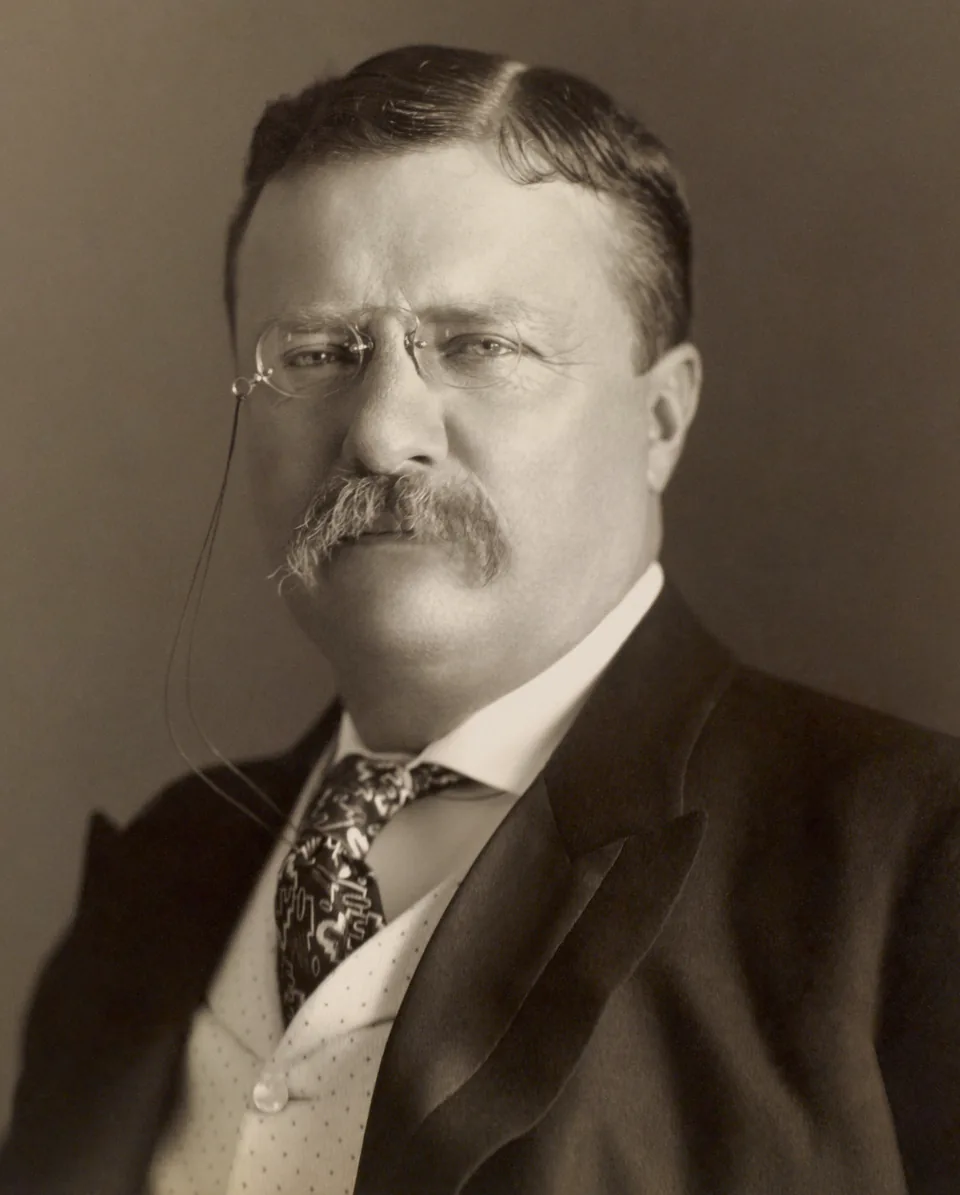
No IQ test result has ever been published for Theodore Roosevelt, so any Theodore Roosevelt IQ score is an estimate, not a documented number. What is documented is a Harvard A.B. magna cum laude in 1880, a first book in 1882, more than thirty books in all and the 1906 Nobel Peace Prize; his estimated IQ here is 135–150, below the 153 that circulates.
Theodore Roosevelt’s estimated IQ
- Graduated from Harvard College on June 30, 1880, with an A.B. magna cum laude and Phi Beta Kappa, ranked 21st in his class (the Theodore Roosevelt Center counts 177 in the class; a Harvard Crimson article counts 161 graduating).
- Published his first work, The Summer Birds of the Adirondacks, in the summer of 1877 while an undergraduate, and his first book, The Naval War of 1812, in 1882.
- Wrote more than thirty books by the Theodore Roosevelt Center’s count, including the four-volume The Winning of the West (1889–1896) and An Autobiography (1913).
- Held a long run of public offices, from the New York State Assembly (1882–1884) to Governor of New York (1899–1900), Vice President (1901) and the 26th President (from September 14, 1901 to March 4, 1909).
- Appears in Dean Keith Simonton’s 2006 study with four imputed IQ estimates of 129.7 to 153.0, averaging 142.3, eighth among 42 presidents; Simonton called such figures tentative and approximate.
A class rank inside one college, a long bibliography and a run of offices are evidence of academic and verbal performance and of reputation, not of a measured general IQ, and a 1957 Harvard Crimson article called him “not an outstanding scholar” who did well enough to make Phi Beta Kappa. Simonton’s four numbers were computed from two expert ratings rather than from any test, so this range is a judgment, not a finding.
- Born
- October 27, 1858, New York City
- Died
- January 6, 1919, Sagamore Hill, Oyster Bay, New York
- Education
- Harvard College, A.B. 1880, magna cum laude, Phi Beta Kappa, 21st in his class; Columbia Law School, left after one year without a degree
- Office
- 26th President of the United States, from September 14, 1901 to March 4, 1909
- Books
- First book The Naval War of 1812 (1882); more than thirty books by the Theodore Roosevelt Center’s count, more than thirty-five by the Association’s
- Honors
- Nobel Peace Prize, 1906; Medal of Honor, awarded posthumously on January 16, 2001
- Peer-reviewed estimate
- Simonton (2006): average 142.3, range 129.7–153.0, eighth of 42 presidents; imputed from expert ratings, not a test
- Documented IQ test
- None on record
What an IQ of 135–150 actually means
Set the claim aside for a moment. If someone genuinely scored in this range, here is what that would represent.
Average is 100 by construction, and about two-thirds of people fall between 85 and 115. Take the test to place your own score on this scale.
| Score range | Classification | Share of people | What it indicates |
|---|---|---|---|
| 85 – 114 | Average | ~68% | The range most people fall into. |
| 115 – 129 | Above average | ~13.6% | Roughly one person in seven. |
| 130 – 144 | Gifted | ~2% | The threshold most high-IQ societies use. |
| Above 144 | Highly gifted | ~0.1% | Figures above this range are extrapolated from the curve rather than measured. |
Percentages are approximate and describe a normal distribution. The same number means different things on tests with different standard deviations.
Thirty questions gives you a measured position on this exact scale — your score, your percentile and the ability breakdown behind it.
Find out in 30 minutes →Who Theodore Roosevelt was
Was Theodore Roosevelt smart? The documented record shows a strong student and a prolific writer, not a test score. He was born on October 27, 1858, at 28 East 20th Street in Manhattan, entered Harvard College in September 1876, wrote and published The Summer Birds of the Adirondacks in the summer of 1877, and took his best marks in natural history, where he hoped to become a professional naturalist. He graduated on June 30, 1880, with an A.B. magna cum laude and Phi Beta Kappa, ranked 21st; the Theodore Roosevelt Center gives the class as 177, a 1957 Harvard Crimson article as 161 graduating, and Wikipedia has him 22nd of 177. The Center adds that he and others sometimes felt he was mediocre academically, and a class rank is an achievement measure, not an IQ test (see achievement tests versus IQ tests).
After Harvard he enrolled at Columbia Law School and dropped out after one year, without a degree. He was elected to the New York State Assembly on November 8, 1881, and served from January 1, 1882 to December 31, 1884. His first book, The Naval War of 1812, appeared in 1882; Gouverneur Morris followed in 1888, The Winning of the West in four volumes between 1889 and 1896, and An Autobiography in 1913. Counts of his books differ by source: the Theodore Roosevelt Center’s short biography says more than thirty, its encyclopedia entry on reading and writing says over fifty, and the Theodore Roosevelt Association says more than thirty-five. The Theodore Roosevelt Presidential Library’s page on him as a reader says he often finished a book a day, without citing a source, and calls his memory photographic; that label is popular rather than measured (see photographic memory and IQ).
The offices run in order. He sat on the U.S. Civil Service Commission from May 7, 1889 to 1895, was New York City Police Commissioner from May 6, 1895 to April 19, 1897, and was Assistant Secretary of the Navy from 1897 to May 10, 1898. He was Governor of New York from January 1, 1899 to December 31, 1900 and Vice President from March 4, 1901, and became the 26th President on September 14, 1901, at age 42, serving until March 4, 1909. These posts are documented career facts, not test results: they show reputation and performance in office, which is not the same as a measured IQ.
In 1906 Roosevelt received the Nobel Peace Prize for his role as mediator in ending the Russo-Japanese War; the Theodore Roosevelt Association’s chronology dates it December 10, 1906 and calls him the first American to win a Nobel Prize in any field. On January 16, 2001, President Bill Clinton presided at a White House ceremony awarding him the Medal of Honor posthumously for his actions at the Battle of San Juan on July 1, 1898. He died at Sagamore Hill in Oyster Bay, New York, on January 6, 1919. Neither honor measures ability; they are listed because readers ask about them, not because they convert to a number.
 By Elora Mercer, Celebrity Research WriterFigures checked by Leon Falkner, Data & Research Analyst
Reviewed by Aarav Vardhan, Editor-in-Chief · Last reviewed August 2026
_(2).jpg)
Theodore Roosevelt: the documented record
The estimate above rests on this record. Every entry here is a matter of public fact, which is more than can be said for the number itself.
- 1858Born October 27 at 28 East 20th Street, Manhattan.
- 1877Publishes his first work, The Summer Birds of the Adirondacks, while at Harvard.
- 1880Graduates from Harvard on June 30, A.B. magna cum laude and Phi Beta Kappa.
- 1882The Naval War of 1812, his first book, is published; he begins the first of two New York Assembly terms on January 1.
- 1889Appointed to the U.S. Civil Service Commission on May 7.
- 1898Takes part in the Battle of San Juan on July 1 with the 1st U.S. Volunteer Cavalry, the Rough Riders; elected Governor of New York on November 8.
- 1901Sworn in as Vice President on March 4; becomes the 26th President on September 14.
- 1906Awarded the Nobel Peace Prize; the Theodore Roosevelt Association’s chronology dates it December 10.
- 1919Dies January 6 at Sagamore Hill, Oyster Bay, New York.
- 2001Awarded the Medal of Honor posthumously at a White House ceremony on January 16.
- 2006Simonton’s IQ estimates for 42 presidents are published in Political Psychology; his highest figure for Roosevelt, 153, is repeated by ranking lists from a November 2006 blog post to a Reader’s Digest list updated in February 2026.
Where the 153 figure came from
Following a claim back to its first appearance is the part almost nobody does — and it is what most people are actually asking.
Theodore Roosevelt’s IQ of 153, the number that answers the search, is not a test result: it is the highest of four estimates in one 2006 study, the only peer-reviewed estimate we found, and no IQ test result has ever been published for him. So what was Theodore Roosevelt’s IQ? Nobody measured it, but Dean Keith Simonton’s paper in Political Psychology gave every president from George Washington to George W. Bush four estimates, and Table 1 prints Roosevelt’s as 129.7, 144.6, 141.8 and 153.0. Their average, 142.3, ranks him eighth of 42 in US presidents ranked by IQ; the 153 alone would rank him ninth, which is where the 2025 AOL list puts him.
Teddy Roosevelt’s IQ score of 153 comes from a column, not a test. Simonton took IQ figures from Catharine Cox’s 1926 study of 301 geniuses for only eight presidents. For the other 34, Roosevelt among them, he reconstructed all four with a statistical method for missing data (an expectation-maximization algorithm), starting from two expert ratings: an Intellectual Brilliance score of 0.9 (a z score from his own 1986 study) and an Openness to Experience score of 56.0 on a 0–100 scale (from Rubenzer and Faschingbauer’s 2004 ratings). The four versions cover ages 0–17 and ages 18–26, each uncorrected and corrected for how complete the biography is. The 153 is the ages 18–26 corrected one, the same column that a 2006 History News Network post and a Reader’s Digest list updated in 2026 use for Bill Clinton (159) and Jimmy Carter (156.8).
The 153 also comes from a column its own author flagged. Simonton noted that corrected scores run above uncorrected ones and raised “whether the corrected scores might be too high”; he called the IQ figures “more tentative and approximate” than his two ratings, and said they have no pre-set standard deviation because they follow the old ratio definition of IQ, so they are not modern deviation IQ scores. Roosevelt’s lowest estimate, 129.7, sits 23.3 points below his highest. This site’s 135–150 falls between them, centered on their average and below the 153, which matches the usual pattern: the sourced record supports a lower number than the one that spreads. Among the political profiles here it is a little above Jimmy Carter (130–148) and below Abraham Lincoln (140–160), Winston Churchill (140–160) and Thomas Jefferson (150–170).
A second trap is the name. The fabricated 2001 “Lovenstein Institute” list of twelve presidents, reproduced on a University of California San Diego faculty page that labels it a hoax, does not include Theodore Roosevelt: it runs from Franklin D. Roosevelt to George W. Bush and gives Franklin D. Roosevelt 147, so a Roosevelt IQ of 147 that turns up online belongs to the other Roosevelt’s hoax entry, not to him. Apart from Simonton’s four estimates, we could trace no other IQ figure for him on any page we could open; for how such numbers spread, see where celebrity IQ numbers come from.
How we read a number →The paper itself (a JSTOR scan). Table 1 (p. 516): T. Roosevelt, Intellectual Brilliance 0.9, Openness 56.0, IQ estimates 129.7, 144.6, 141.8 and 153.0, the four IQ figures in regular type, meaning imputed rather than original; average 142.3. Imputed with an expectation-maximization algorithm (p. 518), leaving the IQ figures “more tentative and approximate” than the two ratings; footnote 2 (p. 515): no pre-set standard deviation. Matches the row in our own published reading.
Lists “Theodore Roosevelt (153)” among the presidents with the highest IQs, naming Simonton’s study, and says the figures use “the fourth and apparently most up-to-date category,” ages 18–26 corrected for data reliability. Does not print the other three estimates.
Reader’s Digest prints “with an IQ of 153” for Roosevelt, credits Simonton’s 2006 study and says he estimated abilities “after age 18”; its numbers for other presidents (175, 160, 159.8, 159, 156.8, 155.2, 152.3, 150.5, 150) match the ages 18–26 corrected column of Table 1. AOL ranks him ninth “with an estimated IQ of 153” and concedes that no president has taken a public IQ test. Neither says 153 is one of four estimates; AOL’s other claims about him were not used.
A fabrication, described on the page as widely reported as a hoax. It covers twelve presidents from Franklin D. Roosevelt to George W. Bush; Theodore Roosevelt is not on it, and Franklin D. Roosevelt gets 147. The Guardian printed it on July 19, 2001 and later retracted it.
Harvard entry in 1876 and graduation on June 30, 1880 “magna cum laude”; The Naval War of 1812 (1882) as his first book; election to the Assembly on November 8, 1881; start dates for the Civil Service Commission (May 7, 1889) and police board (May 6, 1895); the 1906 Nobel Peace Prize as the first American Nobel Prize in any field; the presidency at age 42; death at Sagamore Hill on January 6, 1919; “more than thirty-five” books.
Class rank 21st of 177, best marks in natural history, The Summer Birds of the Adirondacks in summer 1877, magna cum laude, and that he and others sometimes felt he was mediocre academically. The White House Medal of Honor ceremony of January 16, 2001, presided over by President Bill Clinton, for the Battle of San Juan on July 1, 1898. Book counts of “more than thirty” and “over 50.”
Columbia Law School “dropped out after one year”; The Naval War of 1812 in 1882; Assembly service 1882–1884; Gouverneur Morris (1888) and The Winning of the West (four volumes, 1889–1896); the Nobel Peace Prize for “his role as mediator” in the 1904–1905 Russo-Japanese War, “the first U.S. President to do so.”
The Crimson says he “did well enough to make Phi Beta Kappa” though “not an outstanding scholar,” 21st in a graduating class of 161 (the rank agrees with the Center’s 21st, the class size does not). Wikipedia, used for orientation and exact office dates, gives 22nd of 177. Wikidata Q33866 is the 26th President of the United States (1858–1919), not a namesake.
The library page says he often finished a book a day and had a photographic memory but cites no source for the book-a-day claim; the Center’s record confirms that Roosevelt described his own reading habits in an April 1915 magazine article.
Searched Simonton’s paper, the three ranking pages, the Theodore Roosevelt Center, the Theodore Roosevelt Association, the Miller Center, the Harvard Crimson and Wikipedia; none contains an administered IQ test score for Roosevelt, only the four imputed estimates and the academic and career record.
The sources behind our estimate
The figures that circulate for Theodore Roosevelt, what we were able to confirm, and where the two diverge.
153 is the figure that circulates for Theodore Roosevelt. A Reader’s Digest list updated in February 2026 says “with an IQ of 153, he was also one of the smartest,” a July 2025 AOL list ranks him ninth with “an estimated IQ of 153,” and a November 2006 History News Network post names “Theodore Roosevelt (153)” among the presidents with the highest IQs. All three rest on Dean Keith Simonton’s 2006 study.
No test result exists, and 153 is the top of four estimates. Table 1 of Simonton’s 2006 paper in Political Psychology prints Roosevelt’s four IQ estimates as 129.7, 144.6, 141.8 and 153.0, all reconstructed statistically from two expert ratings. The History News Network post says its figures use “the fourth and apparently most up-to-date category,” ages 18–26 corrected for data reliability, which is the 153.0 column; its figures for John F. Kennedy (159.8) and Jimmy Carter (156.8), repeated in the Reader’s Digest list, come from the same column. Reader’s Digest says only that Simonton estimated abilities “after age 18” and that the estimates “aren’t perfect”; AOL concedes that no president has taken a public IQ test; neither says that 153 is one of four. We also checked the Theodore Roosevelt Center, the Theodore Roosevelt Association and the Miller Center; none reports an administered IQ test.
The circulating 153 sits just above the top of this site’s range, the usual direction of the error. Simonton’s average, 142.3, falls in the middle of the range and his lowest estimate for Roosevelt, 129.7, below it; the one figure that gets repeated is the highest of the four.
Want a number that does hold up? Every figure on this page is somebody’s claim. Take the 30-question test and get a percentile you can check rather than a figure you have to trust.
Theodore Roosevelt — frequently asked
What is Theodore Roosevelt’s IQ?
No IQ test result has ever been published for Theodore Roosevelt, so his IQ is not a documented number. The 153 that circulates is the highest of four estimates in a 2006 study by Dean Keith Simonton, whose average is 142.3; his Harvard and career record supports an estimated range of about 135–150.
What was Theodore Roosevelt’s estimated IQ?
This site estimates 135–150, an inference from his Harvard A.B. magna cum laude and Phi Beta Kappa, a first book in 1882, more than thirty books in all and a long run of public offices. Simonton’s 2006 study gives four statistical estimates from 129.7 to 153.0, averaging 142.3; none comes from a test.
Is Teddy Roosevelt’s IQ really 153?
No test confirms it. The 153 is the highest of Simonton’s four 2006 estimates, the one for ages 18–26 corrected for incomplete biographies, a correction Simonton said raises the question of whether corrected scores run too high. His average is 142.3, and these figures use an old ratio scale, not a modern deviation IQ.
Did Theodore Roosevelt take an IQ test?
No IQ test result for Theodore Roosevelt has been published, and none appears in the Theodore Roosevelt Center, the Theodore Roosevelt Association, the Miller Center or Simonton’s paper. What is documented is academic and literary: his Harvard honors in 1880, his books and a long public career, none of which is a test score.
Was Theodore Roosevelt smart?
The documented record shows a strong student and prolific writer: a Harvard A.B. magna cum laude and Phi Beta Kappa in 1880, a first book in 1882, more than thirty books by the Theodore Roosevelt Center’s count, and the 1906 Nobel Peace Prize. Those are achievements, which show ability in those settings but are not a measured IQ.
Was Theodore Roosevelt a genius?
Nothing in the record labels Theodore Roosevelt a genius in the test sense, because no test result exists. His documented achievements are high, and this site’s estimate of 135–150 is high too, but it is an inference. He ranked 21st in his Harvard class, not first, and Simonton’s figures are imputed estimates.
Is Theodore Roosevelt on the “Lovenstein Institute” list of presidential IQs?
No. The fabricated 2001 list covers twelve presidents from Franklin D. Roosevelt to George W. Bush and does not include Theodore Roosevelt. It gives Franklin D. Roosevelt 147, a figure sometimes mistaken for Theodore’s. No such institute existed.
How does Theodore Roosevelt’s estimated IQ compare with Abraham Lincoln’s?
This site estimates 135–150 for Roosevelt and 140–160 for Abraham Lincoln. Simonton’s averages are 142.3 and 140.0, but Lincoln’s four figures come from Catharine Cox’s 1926 scoring of his documented youth while Roosevelt’s were imputed from two expert ratings, so the 2.3-point gap in Roosevelt’s favor means nothing.
How does my IQ compare with Theodore Roosevelt?
You can find out in about fifteen minutes. The IQ Metrics assessment is 30 questions, scored on the same 100-mean scale used throughout this page, so your result and the estimate above are at least expressed in the same units — one measured, one inferred. Once you have a number, the leaderboard shows where it would sit, and how we score and norm it explains the benchmarking.
Where does this estimate come from?
From the documented record rather than a test — the method is named above and set out in full under how we read a number. Compare it against the other politics profiles, starting with Thomas Jefferson.
- Take the 30-question IQ test — get a measured score and percentile of your own
- Average IQ by country — how the scale behaves across populations
- How IQ Metrics scores its assessment — the method behind our own number
- More on how IQ testing works — reliability, error and what a score can and cannot say
- More politics profiles — same field, same method
More politics
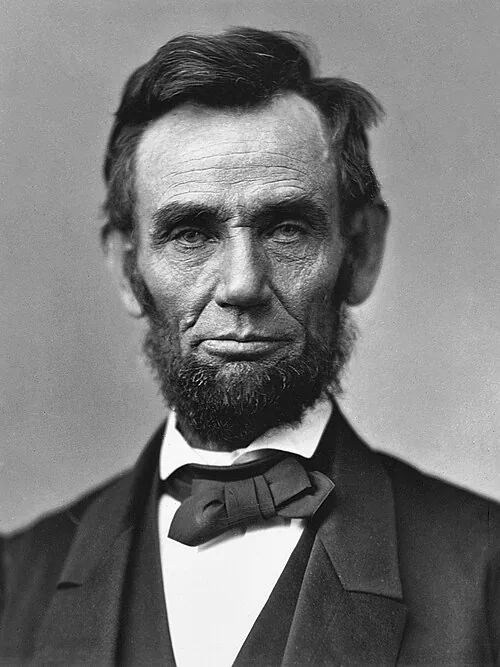
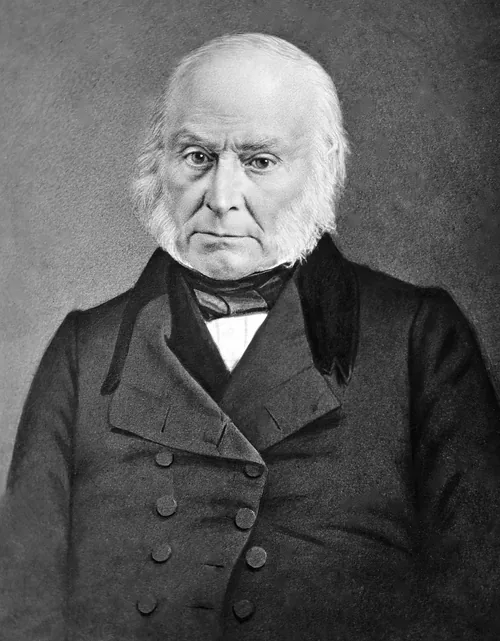
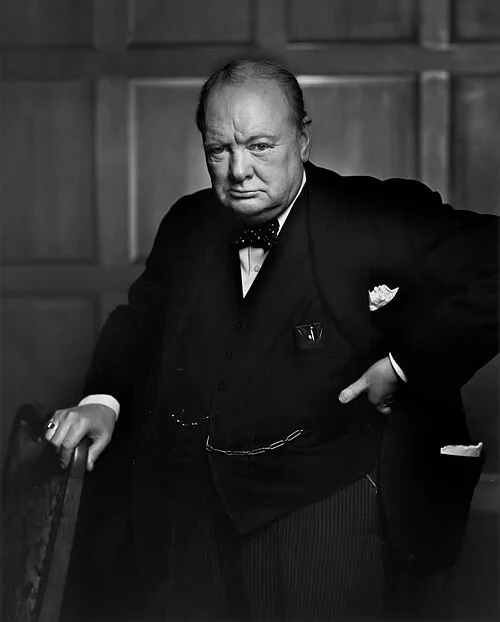
Photograph by Alexander Gardner (8 November 1863), public domain. Background removed for the portrait above. · Copy by Mathew Brady (c. 1855–1865) of a daguerreotype made between 1843 and 1848 by an unknown photographer, from the U.S. National Archives (Record Group 111) and digitally restored, via Wikimedia Commons, public domain. Background removed for the portrait above. · Photograph by Yousuf Karsh, Ottawa, 1941 — public domain in Canada and the United States; the Library and Archives Canada scan is CC BY 2.0.
.jpg)
.jpg)
.jpg)
An estimate is an inference.
Yours can be measured.
Thirty questions, scored against general-population benchmarks. Your score, your percentile, your ability breakdown and a printable IIF certificate.
Find your IQ score now! →