



What was Tom Lehrer’s IQ?
Tom Lehrer entered Harvard at 15 after skipping two grades, but no IQ test result backs the word “prodigy.”

No IQ score has been published for Tom Lehrer, so Tom Lehrer’s IQ is unknown as of November 2026. What is documented is a Harvard bachelor’s degree in mathematics at 18, a master’s in mathematics the next year, and decades of teaching mathematics at Harvard, MIT and the University of California, Santa Cruz.
Tom Lehrer’s estimated IQ
- Entry to Harvard at 15 after skipping two grades, according to the Associated Press (July 27, 2025). The Harvard Crimson names the Loomis Chaffee School in Windsor, Connecticut, as the school he attended before Harvard.
- A bachelor’s degree in mathematics at 18 and a master’s in mathematics the following year, per The Harvard Crimson (August 2, 2025), and induction into Phi Beta Kappa, per Peter Lynch in The Irish Times (2018).
- Doctoral study in mathematics at Harvard and Columbia University, on and off, for more than a decade, without a completed thesis, per The Harvard Crimson.
- Two mathematical papers credited to him in the American Mathematical Society’s database, according to Peter Lynch in The Irish Times (2018).
- Teaching mathematics at Harvard, MIT and Wellesley, then as a lecturer at the University of California, Santa Cruz from 1972 to 2001, per The Harvard Crimson.
This is an inference from a record, not a test result: early entry to Harvard shows how fast he was moved through school, not what a test would have scored. The record stops short of a completed doctorate. The range speaks to mathematical ability only, not to the wit and craft of his songs.
- Born
- April 9, 1928, New York City
- Died
- July 26, 2025, Cambridge, Massachusetts, aged 97
- Education
- Harvard: bachelor’s in mathematics at 18, master’s in mathematics the following year
- Doctoral study
- Harvard and Columbia, on and off for more than a decade; no completed thesis
- Teaching
- Harvard, MIT and Wellesley; lecturer at the University of California, Santa Cruz, 1972–2001
- Known for
- Songs by Tom Lehrer (1953), “The Elements,” “New Math,” “Lobachevsky”
- Songs
- Copyrights relinquished; public-domain statement dated November 26, 2022
- Circulating figure
- None found; no published IQ test result
What an IQ of 140–155 actually means
Set the claim aside for a moment. If someone genuinely scored in this range, here is what that would represent.
| Score range | Classification | Share of people | What it indicates |
|---|---|---|---|
| 85 – 114 | Average | ~68% | The range most people fall into. |
| 115 – 129 | Above average | ~13.6% | Roughly one person in seven. |
| 130 – 144 | Gifted | ~2% | The threshold most high-IQ societies use. |
| Above 144 | Highly gifted | ~0.1% | Figures above this range are extrapolated from the curve rather than measured. |
Percentages are approximate and describe a normal distribution. The same number means different things on tests with different standard deviations.
Thirty questions gives you a measured position on this exact scale — your score, your percentile and the ability breakdown behind it.
Find out in 30 minutes →Who Tom Lehrer was
Was Tom Lehrer a mathematician? Yes: he was trained as one, and he taught mathematics at Harvard, MIT, Wellesley and the University of California, Santa Cruz.
Thomas Andrew Lehrer was born in New York City on April 9, 1928, according to Wikipedia, and died at his home in Cambridge, Massachusetts, on July 26, 2025, at 97, according to The Harvard Crimson. The Crimson says he attended the Loomis Chaffee School in Windsor, Connecticut, and the Associated Press says he skipped two grades before entering Harvard at 15.
At Harvard he took a bachelor’s degree in mathematics at 18 and a master’s in mathematics the following year, according to The Harvard Crimson. Peter Lynch’s 2018 profile in The Irish Times adds that he was inducted into Phi Beta Kappa, and Wikipedia gives the bachelor’s as magna cum laude in 1946.
The Crimson reports that he then pursued doctoral studies at Harvard and at Columbia University, on and off, for more than a decade but never completed a thesis. The Associated Press quotes him as saying he “just wanted to be a grad student.”
The mathematics did not stop with the degrees. The Crimson says he spent a short time in the 1950s as a researcher at Los Alamos, New Mexico, and Lynch dates his U.S. Army service to 1955–1957, in work involving the National Security Agency.
From 1972 to 2001 he was a lecturer at the University of California, Santa Cruz, where Lynch says he taught “The Nature of Mathematics” to liberal arts majors. Lynch also reports that the American Mathematical Society’s database names Lehrer as co-author of two papers, “Random walks with restraining barrier as applied to the biased binary counter” and “The distribution of the number of locally maximal elements in a random sample.”
The songs made him famous. His first album, Songs by Tom Lehrer, came out in 1953. The Associated Press lists More of Tom Lehrer and the live An Evening Wasted with Tom Lehrer in 1959, the live album being nominated for a Grammy for best comedy performance (musical) in 1960.
“The Elements,” a 1959 song, recites the chemical elements known at the time, up to number 102, nobelium, to the tune of the “Major-General’s Song” from Gilbert and Sullivan’s The Pirates of Penzance, according to Wikipedia.
Lynch says “New Math” takes on the school-mathematics reform of the 1960s. The Crimson says he played his last public show in 1972. A statement on his songs website, dated November 26, 2022, says his copyrights have been “permanently and irrevocably relinquished,” and the Associated Press reports that in 2020 he granted the public permission to use his lyrics in any format.
 By Elora Mercer, Celebrity Research WriterFigures checked by Leon Falkner, Data & Research Analyst
Reviewed by Aarav Vardhan, Editor-in-Chief · Last reviewed November 2026

Tom Lehrer: the documented record
The estimate above rests on this record. Every entry here is a matter of public fact, which is more than can be said for the number itself.
- 1928Born April 9 in New York City.
- 1946Takes a bachelor’s degree in mathematics at Harvard, aged 18.
- 1947Earns a master’s degree in mathematics the following year.
- 1953Releases his first album, Songs by Tom Lehrer.
- 1955Begins U.S. Army service, which runs to 1957.
- 1959Releases More of Tom Lehrer and the live An Evening Wasted with Tom Lehrer; “The Elements” dates from this year.
- 1965Releases his fourth and final album; Peter Lynch says he abandons his mathematical research this year.
- 1972Plays his last public show and joins the University of California, Santa Cruz, as a lecturer, a post he holds until retiring in 2001.
- 2020The Associated Press reports that he grants the public permission to use his lyrics; his songs website carries a public-domain statement dated November 26, 2022.
- 2025Dies July 26 at his home in Cambridge, Massachusetts, aged 97.
Why no figure circulates
Following a claim back to its first appearance is the part almost nobody does — and it is what most people are actually asking.

No IQ test result has been published for Tom Lehrer, so there is no sourced Tom Lehrer IQ score to audit. A figure attached to his name without a named test, a date and an examiner is a guess, however often it is repeated.
The Associated Press obituary (July 27, 2025), The Harvard Crimson obituary (August 2, 2025) and Peter Lynch’s 2018 profile in The Irish Times describe degrees, teaching posts and songs, and none gives an IQ. For how such numbers spread, and what to check first, see where celebrity IQ numbers come from.
Was Tom Lehrer a genius? His documented record is that of a mathematical prodigy who became a teacher and a satirist. The Associated Press called him “a Harvard prodigy” in 2025, and The Irish Times headlined Peter Lynch’s 2018 profile “a comical, musical, mathematical genius.” Both are descriptions, not scores. “Genius” has no fixed IQ cut-off; see what genius-level IQ means.
How smart was Tom Lehrer compared with other musicians on this site? The record points to a very high mathematical ability, and his estimated IQ, 140–155, matches Brian May (140–155), whose range rests on a completed doctorate in astrophysics. It sits a few points above Art Garfunkel (135–150), who studied mathematics at Columbia, and overlaps from 140 to 145 with Weird Al Yankovic (130–145), another parody songwriter profiled here. See also other musicians we have checked.
On the usual scale (mean 100, SD 15), 140 is about 1 in 261 people and 155 is about 1 in 8,100. Use the percentile calculator to see any score in between. Because this range rests on degrees and teaching posts rather than a test, both of its ends are judgments, not measurements.
How we read a number →No school, army or adult IQ result for Lehrer is public. The Associated Press and Harvard Crimson obituaries, Peter Lynch’s Irish Times profile and Lehrer’s own songs website describe degrees, posts and songs, and none gives an IQ. No IQ figure for him appears in the sources listed here.
Says he died on July 26, 2025, at his home in Cambridge, aged 97; attended the Loomis Chaffee School; entered Harvard at 15 for a degree in mathematics, graduated at 18 and took a master’s in mathematics the following year; did doctoral studies at Harvard and Columbia without completing a thesis; taught at Harvard, MIT, Wellesley and, from 1972, the University of California, Santa Cruz.
Says he skipped two grades and entered Harvard at 15, earned a math degree there at 18, released his first record in 1953 and two albums in 1959 (the live one nominated for a Grammy in 1960), served two years in the Army, and in 2020 granted the public permission to use his lyrics.
Says he entered university at 15, took a BA in mathematics at 18 and an MA the following year, was inducted into Phi Beta Kappa, served in the U.S. Army from 1955 to 1957, and is named by the American Mathematical Society’s database as co-author of two mathematical papers.
Lehrer’s own statement that all copyrights to his lyrics and music have been relinquished and the songs are in the public domain. The site lists his songs, including “The Elements,” “New Math” and “Lobachevsky.”
Used for details the other sources lack: the birth date April 9, 1928, a bachelor’s degree in mathematics magna cum laude in 1946, and “The Elements” as a 1959 song set to the “Major-General’s Song.” Nothing else rests on it.
Confirms identity: Tom Lehrer, described as “American musician (1928–2025).”
The sources behind our estimate
The figures that circulate for Tom Lehrer, what we were able to confirm, and where the two diverge.
No IQ figure circulates for Tom Lehrer in his obituaries or biographies, although people do search for “Tom Lehrer IQ” and “Tom Lehrer IQ score.”
The Associated Press obituary of July 27, 2025, The Harvard Crimson obituary, Peter Lynch’s 2018 profile in The Irish Times and Lehrer’s own songs website describe degrees, teaching posts and songs. None gives an IQ. “Prodigy” and “genius” appear as descriptions of a record, not as scores.
With nothing circulating, there is no spread to audit. 140–155 is this site’s estimated range for Tom Lehrer and the only figure on the page. It rests on a record, not a test, so its floor, its top and its fifteen-point width are judgments.
Want a number that does hold up? Every figure on this page is somebody’s claim. Take the 30-question test and get a percentile you can check rather than a figure you have to trust.
Tom Lehrer — frequently asked
What was Tom Lehrer’s IQ?
No IQ test result has been published for Tom Lehrer, so Tom Lehrer’s IQ is unknown. This site’s estimated range is 140–155, on a scale with a mean of 100 and a standard deviation of 15. It is inferred from his Harvard mathematics degrees and his teaching career, not from a test.
Did Tom Lehrer take an IQ test?
No IQ test result has been published for him, and the Associated Press and Harvard Crimson obituaries and Peter Lynch’s 2018 Irish Times profile do not mention one. The AP says he skipped two grades before Harvard, which is a school record, not a test. There is no Tom Lehrer IQ score on record.
How smart was Tom Lehrer?
Tom Lehrer’s record is that of an exceptional mathematics student. The Associated Press says he entered Harvard at 15, and The Harvard Crimson says he took a mathematics degree at 18 and a master’s the next year. No test score measures this; the estimated range of 140–155 is an inference.
Was Tom Lehrer a genius?
The documented record is that of a mathematical prodigy: Harvard at 15, a mathematics degree at 18, a master’s a year later, then decades of teaching. “Genius” has no fixed IQ cut-off, and no test score backs the word. The Irish Times used it in a 2018 headline, which is a description, not a measurement.
Did Tom Lehrer go to Harvard at 15?
Yes. The Associated Press says Tom Lehrer entered Harvard at 15 after skipping two grades, and The Harvard Crimson says he graduated at 18 with a degree in mathematics. He earned a mathematics master’s the following year and stayed for doctoral studies without completing a thesis.
How does Tom Lehrer’s estimated IQ compare with Brian May’s?
This site estimates 140–155 for both Tom Lehrer and Brian May, so the ranges are identical. May’s rests on a completed doctorate in astrophysics; Lehrer’s rests on Harvard mathematics degrees and years of doctoral study without a thesis. Both come from records, not tests, so neither can be called higher.
Where did Tom Lehrer teach mathematics?
Tom Lehrer taught mathematics at Harvard, MIT, Wellesley and the University of California, Santa Cruz. The Harvard Crimson says he was a lecturer at Santa Cruz from 1972, and Peter Lynch’s 2018 Irish Times profile says his course there, “The Nature of Mathematics,” was for liberal arts majors.
How does my IQ compare with Tom Lehrer?
You can find out in about fifteen minutes. The IQ Metrics assessment is 30 questions, scored on the same 100-mean scale used throughout this page, so your result and the estimate above are at least expressed in the same units — one measured, one inferred. Once you have a number, the leaderboard shows where it would sit, and how we score and norm it explains the benchmarking.
Where does this estimate come from?
From the documented record rather than a test — the method is named above and set out in full under how we read a number. Compare it against the other musicians profiles, starting with Brian May.
- Take the 30-question IQ test — get a measured score and percentile of your own
- Average IQ by country — how the scale behaves across populations
- How IQ Metrics scores its assessment — the method behind our own number
- More on how IQ testing works — reliability, error and what a score can and cannot say
- More musicians profiles — same field, same method
More musicians


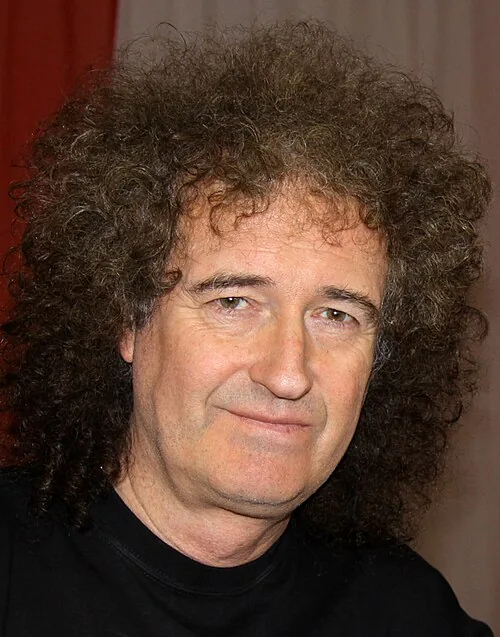
Photograph by Super Festivals (GalaxyCon St. Louis, October 11, 2025), CC BY 4.0, cropped from a larger picture. Background removed for the portrait above. · Photograph by Raph_PH, CC BY 2.0. Background removed for the portrait above. · Portrait © David J. Cable / Arcadia Photographic UK, CC BY-SA 2.0. The background-removed portrait above is a derivative work and is likewise offered under the same licence.


An estimate is an inference.
Yours can be measured.
Thirty questions, scored against general-population benchmarks. Your score, your percentile, your ability breakdown and a printable IIF certificate.
Find your IQ score now! →