



What is Brian May’s IQ?
A guitarist with a doctorate.
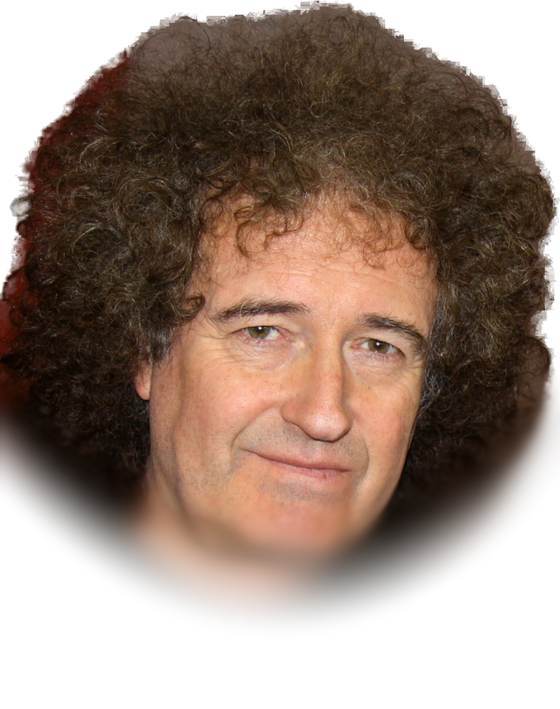
The rare case where the claim can be checked against an actual doctorate — and where the popular figure is still unsourced.
Brian May’s estimated IQ
- PhD in astrophysics from Imperial College London, on radial velocities in the zodiacal dust cloud.
- Began the research in the early 1970s, set it aside for Queen, and completed and defended it decades later.
- Co-author of published astronomy work and books on stereoscopic imaging.
A doctorate evidences sustained technical capability and persistence. It does not convert to a score, and the widely quoted 180 has no source at all.
- Born
- 19 July 1947, Hampton, London
- Field
- Rock music, astrophysics
- Education
- Imperial College London — BSc physics; PhD astrophysics
- Known for
- Queen; Bohemian Rhapsody; asteroid research advocacy
- Nationality
- British
What an IQ of 140–155 actually means
Set the claim aside for a moment. If someone genuinely scored in this range, here is what that would represent.
Average is 100 by construction, and about two-thirds of people fall between 85 and 115. Take the test to place your own score on this scale.
| Score range | Classification | Share of people | What it indicates |
|---|---|---|---|
| 85 – 114 | Average | ~68% | The range most people fall into. |
| 115 – 129 | Above average | ~13.6% | Roughly one person in seven. |
| 130 – 144 | Gifted | ~2% | The threshold most high-IQ societies use. |
| Above 144 | Highly gifted | ~0.1% | Figures above this range are extrapolated from the curve rather than measured. |
Percentages are approximate and describe a normal distribution. The same number means different things on tests with different standard deviations.
Thirty questions gives you a measured position on this exact scale — your score, your percentile and the ability breakdown behind it.
Find out in 30 minutes →Who Brian May is
Brian May studied physics at Imperial College London and had begun doctoral research on interplanetary dust when Queen’s success made continuing impossible. He put the thesis down in 1974 and did not pick it up again for more than thirty years.
In the intervening decades he wrote “We Will Rock You”, “Fat Bottomed Girls” and “The Show Must Go On”, and built one of the most recognisable guitar sounds in rock on an instrument he had made with his father. He returned to the thesis in 2007, completed it, and was awarded the doctorate the following year.
It is a genuinely unusual record, and it is the reason his name attracts a number. What it evidences is capability and persistence — not a measured score.
 By Elora Mercer, Celebrity Research WriterFigures checked by Leon Falkner, Data & Research Analyst
Reviewed by Aarav Vardhan, Editor-in-Chief · Last reviewed August 2026
.jpg)
Brian May: the documented record
The estimate above rests on this record. Every entry here is a matter of public fact, which is more than can be said for the number itself.
- 1968Forms the band Smile with Tim Staffell and Roger Taylor while studying physics at Imperial College.
- 1970Queen forms, with Freddie Mercury replacing Staffell.
- 1970Begins doctoral research at Imperial College on the zodiacal dust cloud.
- 1974Sets the research aside as Queen’s career takes off.
- 1975A Night at the Opera and “Bohemian Rhapsody”.
- 1985Queen’s Live Aid set at Wembley.
- 2006Returns to astrophysical research after more than thirty years away.
- 2007Completes and submits the thesis; the PhD is awarded the same year.
- 2008Serves as Chancellor of Liverpool John Moores University.
- 2015Works on stereoscopic imaging for the New Horizons mission to Pluto.
Where the 180 figure came from
Following a claim back to its first appearance is the part almost nobody does — and it is what most people are actually asking.
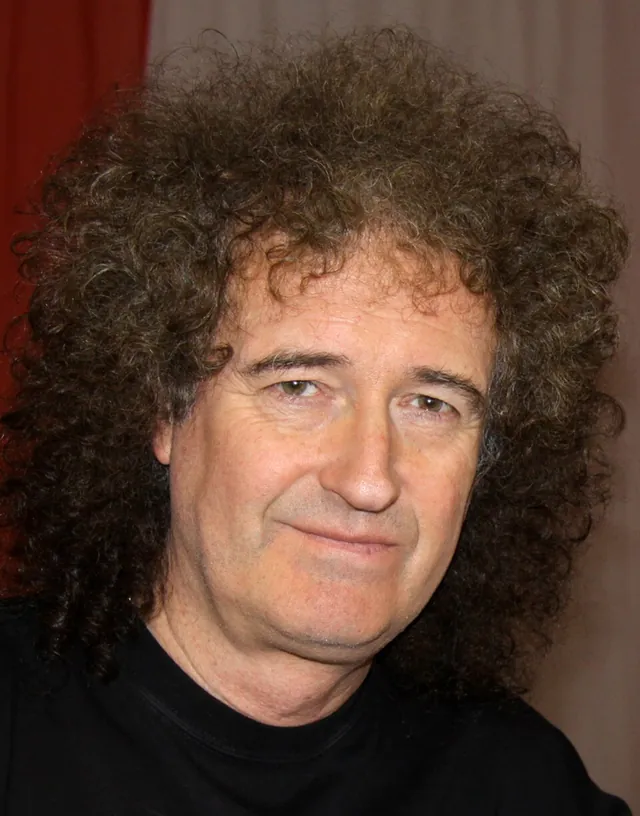
The figure of 180 circulates widely and traces to nothing. It is a striking number for a striking biography, and no source in the chain ever produced a test.
The doctorate, by contrast, is entirely checkable. A thesis exists, an institution awarded the degree, and the work is on the record. That is a far better foundation than any listicle offers — and it still does not convert to a score.
There is a specific reason to be cautious here. A PhD completed across thirty-five years evidences persistence and technical ability, but the interruption itself tells you the work was set aside for a career, not that it was completed at unusual speed. Historiometric methods weight precocity heavily, and this record does not fit that shape.
How we read a number →Begun in 1970, set aside in 1974, resumed in 2006 and awarded in 2007. The strongest documented input for this profile.
The award of the PhD is a matter of institutional record.
Source URLs and first-appearance date pending audit.
No original located. The figure appears without attribution wherever it is quoted.
The sources behind our estimate
The figures that circulate for Brian May, what we were able to confirm, and where the two diverge.
The number attached to him on nearly every list, on the strength of the doctorate rather than any assessment.
No IQ test result for Brian May has been published. The doctorate is real and verifiable; the 180 is not connected to it by anything. We estimate from the qualification, which supports a lower range than the figure being quoted.
The gap between the circulating figure and what the evidence supports is wider here than on almost any other profile in this section.
Want a number that does hold up? Every figure on this page is somebody’s claim. Take the 30-question test and get a percentile you can check rather than a figure you have to trust.
Brian May — frequently asked
What is Brian May’s IQ?
No test result has been published. The 180 figure that circulates is unsourced. Our range is inferred from his completed doctorate.
Does Brian May really have a PhD?
Yes — in astrophysics from Imperial College London. He began it in the 1970s, paused it for Queen, and completed it much later.
Is a PhD evidence of a high IQ?
It is evidence of sustained technical ability and persistence. Those correlate with reasoning-test performance, but they are not the same measurement.
How long did his PhD take?
He began the research in the early 1970s, set it aside when Queen took off, and returned to complete and defend it decades later.
What was his thesis about?
Radial velocities in the zodiacal dust cloud — the faint disc of interplanetary dust that scatters sunlight in the plane of the solar system.
Does he still work in astronomy?
He has continued to publish and collaborate on astronomy outreach and imaging work alongside music.
How does my IQ compare with Brian May?
You can find out in about fifteen minutes. The IQ Metrics assessment is 30 questions, scored on the same 100-mean scale used throughout this page, so your result and the estimate above are at least expressed in the same units — one measured, one inferred. Once you have a number, the leaderboard shows where it would sit, and how we score and norm it explains the benchmarking.
Where does this estimate come from?
From the documented record rather than a test — the method is named above and set out in full under how we read a number. Compare it against the other musicians profiles, starting with Wolfgang Amadeus Mozart.
- Take the 30-question IQ test — get a measured score and percentile of your own
- Average IQ by country — how the scale behaves across populations
- How IQ Metrics scores its assessment — the method behind our own number
- More on how IQ testing works — reliability, error and what a score can and cannot say
- More musicians profiles — same field, same method
More musicians


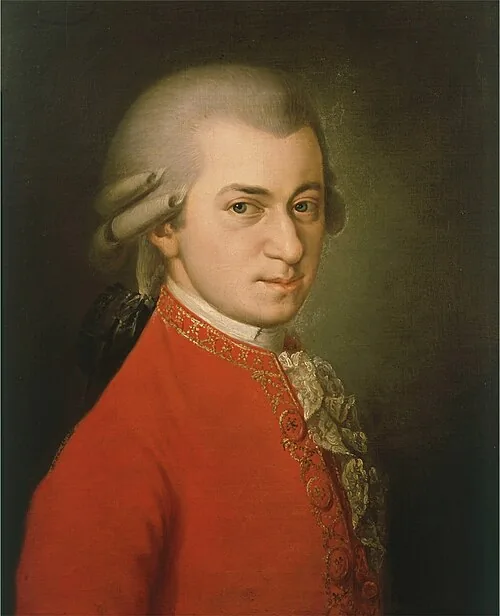
Still from a video by K-POPIT 케이팝잇 on YouTube (Seoul, November 24, 2023), CC BY 3.0. Background removed for the portrait above. · Photograph by Glenn Francis (www.PacificProDigital.com; iHeartRadio Music Awards, Los Angeles, March 14, 2019), CC BY-SA 4.0. Background removed for the portrait above. · Portrait by Barbara Krafft (1819), public domain. Background removed for the portrait above.


.jpg)
An estimate is an inference.
Yours can be measured.
Thirty questions, scored against general-population benchmarks. Your score, your percentile, your ability breakdown and a printable IIF certificate.
Find your IQ score now! →