
IIF Certified Assessment
Start IQ Test
IIF Certified Assessment
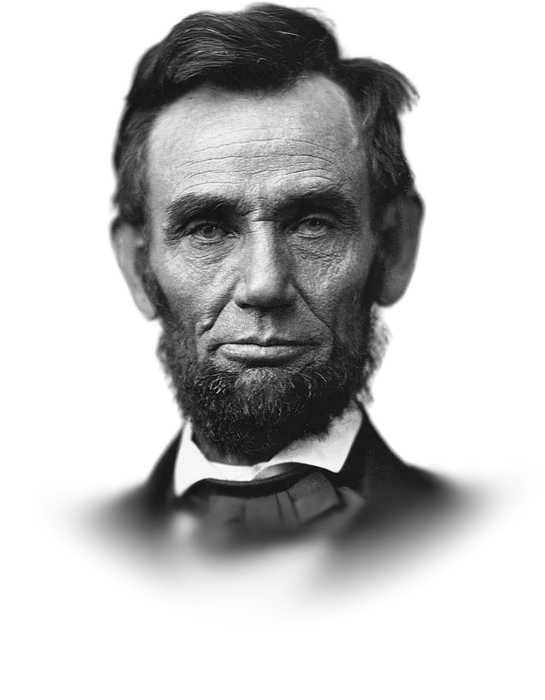
Lincoln had roughly twelve months of formal schooling in his life. He is also in the one academic study that ever tried to put numbers on historical figures — which makes his page a test of that study rather than of him.
Cox’s method scores the density of the surviving childhood record, which means it rewards figures whose youth was well documented and penalises those whose was not. Lincoln’s childhood is sparsely recorded, and Cox herself noted that such cases are systematically underrated. Our range sits above her band for that reason, which is a judgement call and should be read as one.
Set the claim aside for a moment. If someone genuinely scored in this range, here is what that would represent.
Average is 100 by construction, and about two-thirds of people fall between 85 and 115. Take the test to place your own score on this scale.
| Score range | Classification | Share of people | What it indicates |
|---|---|---|---|
| 85 – 114 | Average | ~68% | The range most people fall into. |
| 115 – 129 | Above average | ~13.6% | Roughly one person in seven. |
| 130 – 144 | Gifted | ~2% | The threshold most high-IQ societies use. |
| Above 144 | Highly gifted | ~0.1% | Figures above this range are extrapolated from the curve rather than measured. |
Percentages are approximate and describe a normal distribution. The same number means different things on tests with different standard deviations.
Thirty questions gives you a measured position on this exact scale — your score, your percentile and the ability breakdown behind it.
Find out in 30 minutes →Abraham Lincoln was born in a one-room cabin in Kentucky in 1809 and raised in Indiana and Illinois. His formal education was intermittent and brief — he later estimated it at under a year in total — and he taught himself grammar, mathematics and law from borrowed books.
He was licensed to practise law in 1836 and built a substantial practice, appearing before the Illinois Supreme Court in more than 175 cases. In 1849 he patented a system of bellows for lifting riverboats over sandbars, having twice been aboard vessels that ran aground.
Elected president in 1860, he led the United States through the Civil War, issued the Emancipation Proclamation in 1863, and was assassinated in April 1865, days after the war’s effective end. The Gettysburg Address, delivered in November 1863, is the same year as the photograph above.
The estimate above rests on this record. Every entry here is a matter of public fact, which is more than can be said for the number itself.
Following a claim back to its first appearance is the part almost nobody does — and it is what most people are actually asking.

Catharine Cox’s The Early Mental Traits of Three Hundred Geniuses is the source of most defensible historical IQ figures, and it works by rating how advanced a subject’s documented childhood achievements were for their age. It measures the record, not the person. A figure with well-kept letters, tutors and published juvenilia scores high; a frontier child does not.
Lincoln is the clearest illustration of that bias in the whole study. Almost nothing survives of his boyhood in Indiana beyond the fact that he read whatever he could borrow. Cox’s indices place him in the 125–150 band, and she was explicit that subjects with thin childhood records are underestimated by her own procedure. We put him at 140–160 for that reason, above her band and above John F. Kennedy’s documented 119, but below Jefferson, whose childhood is far better recorded and who Cox rated accordingly.
The adult record is what carries the estimate: a self-taught lawyer who argued before the Illinois Supreme Court, a patent holder, and the author of the Gettysburg Address, which runs to 272 words and is still studied as a piece of construction. None of that required a test to notice.
How we read a number →Exact A I and A II values for Lincoln pending verification against the original tables.
The only systematic historiometric study of its kind. Lincoln is included; we cite the band rather than a point figure until the original tables are checked.
Granted patent, publicly archived. Still the only patent held by a US president.
Obtained by private study, without attending a law school.
A fabrication that several newspapers reprinted as fact. No such institute existed. It contaminates the presidential-IQ genre Lincoln now appears in.
Lincoln died in 1865, four decades before the first practical intelligence scale.
The figures that circulate for Abraham Lincoln, what we were able to confirm, and where the two diverge.
150 is the figure that circulates most often, with 128 and 140 also common — the lower numbers usually traceable to lists of presidential IQs.
Lincoln is one of the few figures here with a genuine academic estimate behind him, from Cox’s 1926 study. That is worth far more than the aggregator figures. But the presidential-IQ genre he now appears in is badly contaminated: the 2001 “Lovenstein Institute” ranking of presidents, which several newspapers reprinted, was a fabrication and the institute did not exist. Any presidential IQ list should be treated as suspect until its source is identified.
The low end comes from hoax-derived presidential rankings and the high end from list culture. The scholarly estimate sits between them and is the only one with a method attached.
Want a number that does hold up? Every figure on this page is somebody’s claim. Take the 30-question test and get a percentile you can check rather than a figure you have to trust.
No measured score exists — he died four decades before intelligence tests were invented. Cox’s 1926 historiometric study places him in the 125–150 band; our 140–160 range adjusts upward for the thinness of his childhood record.
By his own estimate, less than a year in total. He taught himself grammar, mathematics and law from borrowed books, and was licensed to practise law in 1836 without attending a law school.
Yes — US Patent 6,469, granted in 1849, for a system of bellows to lift riverboats over sandbars. He remains the only US president to hold a patent.
No. The best-known one, attributed to the “Lovenstein Institute” in 2001, was a hoax reprinted by several newspapers; no such institute existed. Treat any presidential IQ list as suspect until its source is named.
Jefferson’s childhood is far better documented, and Cox’s method rates the density of that record. Lincoln’s youth is barely recorded, which depresses the estimate rather than reflecting less ability.
A 1926 Stanford study that estimated IQs for 301 historical figures from their documented childhood achievements. It is the source of most defensible historical estimates, and it systematically underrates people whose early lives went unrecorded.
You can find out in about fifteen minutes. The IQ Metrics assessment is 30 questions, scored on the same 100-mean scale used throughout this page, so your result and the estimate above are at least expressed in the same units — one measured, one inferred. Once you have a number, the leaderboard shows where it would sit, and how we score and norm it explains the benchmarking.
From the documented record rather than a test — the method is named above and set out in full under how we read a number. Compare it against the other politics profiles, starting with Thomas Jefferson.


Portrait © Matthew Yohe, CC BY-SA 3.0. The background-removed portrait above is a derivative work and is likewise offered under the same licence. · Portrait © Debbie Rowe / The Royal Society, CC BY-SA 3.0. The background-removed portrait above is a derivative work and is likewise offered under the same licence. · Portrait by Christopher Smith, U.S. Department of Health and Human Services — a work of the U.S. federal government, public domain. Background removed for the portrait above.
Thirty questions, scored against general-population benchmarks. Your score, your percentile, your ability breakdown and a printable IIF certificate.
Find your IQ score now! →The assessment costs nothing and you always get a real result. Upgrades add precision, analysis and a certificate — never access to the test itself.
Whatever you paid comes off the next tier for 30 days. Start small without losing the money.
Not what you expected? Full refund, no questions, no form to hunt for.
Prices adjust to your country automatically, so the certificate is reachable outside high-income markets.
Coming later: an annual membership (~$89/year) for unlimited retests, practice sets and progress tracking. Monthly billing is deliberately not offered — a once-a-year assessment does not justify a monthly charge, and it would churn.



.jpg)

.jpg)
