


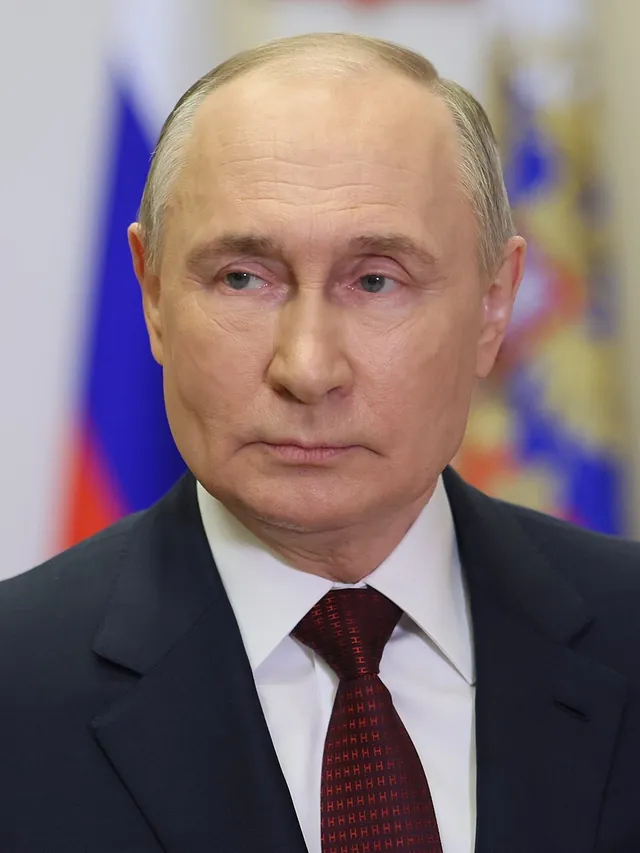
What is Vladimir Putin’s IQ?
The one credential he claims doesn’t hold up.

No IQ test result for Putin has ever been published, unsurprising for a head of state who releases little personal information. What is documented is stranger: the one advanced academic credential he has claimed was found, by outside researchers, to be substantially copied.
Vladimir Putin’s estimated IQ
- Earned a law degree from Leningrad State University in 1975, a competitive Soviet institution.
- Served as a KGB foreign intelligence officer from 1975 to 1991, including a posting in Dresden, East Germany.
- Rose from a St Petersburg deputy mayor role in the early 1990s to acting President of Russia by the end of 1999, and has held the presidency or premiership continuously since.
- A 2006 analysis by Brookings Institution economists Clifford Gaddy and Igor Danchenko found that large sections of Putin’s 1997 “candidate of science” dissertation, submitted to the St Petersburg Mining Institute, closely matched a 1978 American management textbook, without proper attribution.
A law degree and a rapid political rise are real, checkable achievements; they are not a test score, and this range should not be read as one. The dissertation finding is a specific, documented mark against the one advanced credential in the record, not a broader judgment — it is included because the section audits claimed credentials, not only claimed test scores.
- Born
- 7 October 1952, Leningrad, USSR
- Field
- Law, intelligence, government
- Education
- Leningrad State University (law degree, 1975)
- Known for
- President of Russia (2000–2008, 2012–present); Prime Minister (1999–2000, 2008–2012)
- Documented record
- Law degree; a 1997 dissertation found to closely match an uncredited 1978 American textbook
What an IQ of 115–130 actually means
Set the claim aside for a moment. If someone genuinely scored in this range, here is what that would represent.
Average is 100 by construction, and about two-thirds of people fall between 85 and 115. Take the test to place your own score on this scale.
| Score range | Classification | Share of people | What it indicates |
|---|---|---|---|
| 85 – 114 | Average | ~68% | The range most people fall into. |
| 115 – 129 | Above average | ~13.6% | Roughly one person in seven. |
| 130 – 144 | Gifted | ~2% | The threshold most high-IQ societies use. |
| Above 144 | Highly gifted | ~0.1% | Figures above this range are extrapolated from the curve rather than measured. |
Percentages are approximate and describe a normal distribution. The same number means different things on tests with different standard deviations.
Thirty questions gives you a measured position on this exact scale — your score, your percentile and the ability breakdown behind it.
Find out in 30 minutes →Who Vladimir Putin is
Vladimir Putin was born in Leningrad (now St Petersburg) in 1952 and graduated in law from Leningrad State University in 1975. He served as a KGB foreign intelligence officer for sixteen years, including a posting in Dresden, East Germany, before entering St Petersburg city government after the collapse of the Soviet Union.
He moved to Moscow in 1996, was appointed prime minister by President Boris Yeltsin in 1999, and became acting president when Yeltsin resigned that December. He has served as President or Prime Minister of Russia continuously since, elected to the presidency in 2000, 2004, 2012, 2018 and 2024.
 By Elora Mercer, Celebrity Research WriterFigures checked by Leon Falkner, Data & Research Analyst
Reviewed by Aarav Vardhan, Editor-in-Chief · Last reviewed August 2026
_(cropped)_(higher_res)_2.jpg)
Vladimir Putin: the documented record
The estimate above rests on this record. Every entry here is a matter of public fact, which is more than can be said for the number itself.
- 1952Born in Leningrad, USSR.
- 1975Graduates in law from Leningrad State University; joins the KGB.
- 1985Posted to Dresden, East Germany, as a KGB foreign intelligence officer.
- 1991Leaves the KGB after the Soviet collapse; enters St Petersburg city government.
- 1997Submits a “candidate of science” dissertation to the St Petersburg Mining Institute.
- 1999Appointed prime minister; becomes acting president in December.
- 2000Elected President of Russia for the first time.
- 2006Brookings Institution researchers publish findings of extensive uncredited passages in his 1997 dissertation.
Where the 130 figure came from
Following a claim back to its first appearance is the part almost nobody does — and it is what most people are actually asking.
Most entries on this site document a real achievement inflated into an unsupported number. Putin’s page documents something slightly different: alongside the usual unsourced circulating figure, there is a specific, named academic study finding that his one advanced credential — the 1997 dissertation — does not hold up on its own terms.
The Gaddy–Danchenko analysis is a real, citable piece of research, not an internet rumour: it identified extended passages in Putin’s dissertation that closely tracked, sometimes nearly word for word, a 1978 textbook, Strategic Planning and Policy, by American professors William King and David Cleland — a book not listed in the dissertation’s own references. The finding concerns academic attribution, not a test score, but it is the most concrete documented fact available about the intellectual record behind the man, which is why it anchors this page rather than a quiz-site number.
How we read a number →Institutional academic record.
Identified extensive uncredited passages matching King, W. & Cleland, D. (1978), Strategic Planning and Policy.
Contemporary reporting on the Gaddy–Danchenko findings.
No test score for Putin has been published or referenced by Russian state media or independent reporting.
Source URLs and first-appearance date pending audit.
Typical source of the 130 figure; none reviewed cite a test or methodology.
The sources behind our estimate
The figures that circulate for Vladimir Putin, what we were able to confirm, and where the two diverge.
Figures around 130 appear on general “world leader IQ” lists and quiz sites, without a cited test or methodology.
There is no published IQ test result for Putin. The closest thing to a quantified academic credential in his record is the 1997 dissertation, and the Brookings analysis by Gaddy and Danchenko found that substantial passages appeared to be copied nearly verbatim from a 1978 textbook by American academics William King and David Cleland, without attribution — reporting later covered in The Washington Post. A circulating figure of 130 rests on neither the degree nor the disputed dissertation; it appears to originate in the same unsourced quiz-site ecosystem that assigns numbers to most heads of state.
The circulating figure and the top of the achievement-based range happen to be close — a coincidence of an unremarkable, round quiz-site number, not agreement between two independent measurements.
Want a number that does hold up? Every figure on this page is somebody’s claim. Take the 30-question test and get a percentile you can check rather than a figure you have to trust.
Vladimir Putin — frequently asked
What is Vladimir Putin’s IQ?
No test result has ever been published. A figure around 130 circulates on general quiz and ranking sites, citing no test or methodology.
Did Vladimir Putin really plagiarize his dissertation?
A 2006 analysis by Brookings Institution researchers Clifford Gaddy and Igor Danchenko found extensive passages in his 1997 dissertation closely matching a 1978 American management textbook, without attribution — reporting later covered by The Washington Post.
What did Vladimir Putin study at university?
Law, at Leningrad State University, graduating in 1975.
Has Vladimir Putin ever taken a public IQ test?
There is no record of one.
What was Putin’s career before becoming president?
A KGB foreign intelligence officer for sixteen years, including a posting in Dresden, East Germany, followed by St Petersburg city government roles in the 1990s.
Why does this page focus on a dissertation instead of an IQ claim?
Because it is the most concrete, independently documented piece of evidence available about Putin’s academic record — and because the section audits claimed credentials generally, not only claimed test scores.
How does my IQ compare with Vladimir Putin?
You can find out in about fifteen minutes. The IQ Metrics assessment is 30 questions, scored on the same 100-mean scale used throughout this page, so your result and the estimate above are at least expressed in the same units — one measured, one inferred. Once you have a number, the leaderboard shows where it would sit, and how we score and norm it explains the benchmarking.
Where does this estimate come from?
From the documented record rather than a test — the method is named above and set out in full under how we read a number. Compare it against the other politics profiles, starting with Thomas Jefferson.
- Take the 30-question IQ test — get a measured score and percentile of your own
- Average IQ by country — how the scale behaves across populations
- How IQ Metrics scores its assessment — the method behind our own number
- More on how IQ testing works — reliability, error and what a score can and cannot say
- More politics profiles — same field, same method
More politics
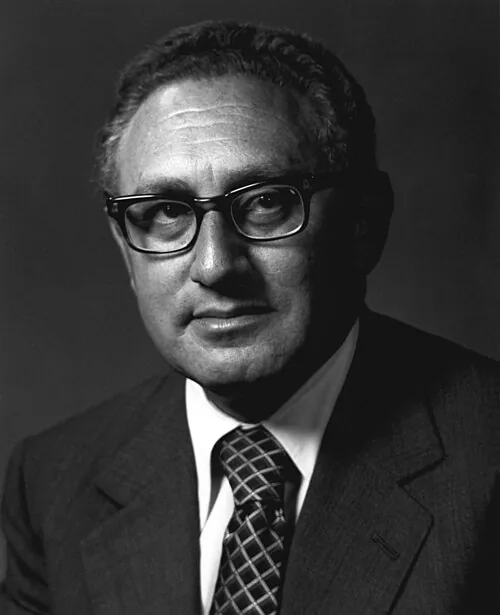
Photograph by Rob Bogaerts, Nationaal Archief, CC0. Background removed for the portrait above. · Photograph by Raimond Spekking, CC BY-SA 4.0. Background removed for the portrait above. · Official U.S. Department of State portrait, public domain, via Wikimedia Commons.
.jpg)


An estimate is an inference.
Yours can be measured.
Thirty questions, scored against general-population benchmarks. Your score, your percentile, your ability breakdown and a printable IIF certificate.
Find your IQ score now! →