



What is Lionel Messi’s IQ?
No test exists. The number that circulates anyway reaches as high as 190.
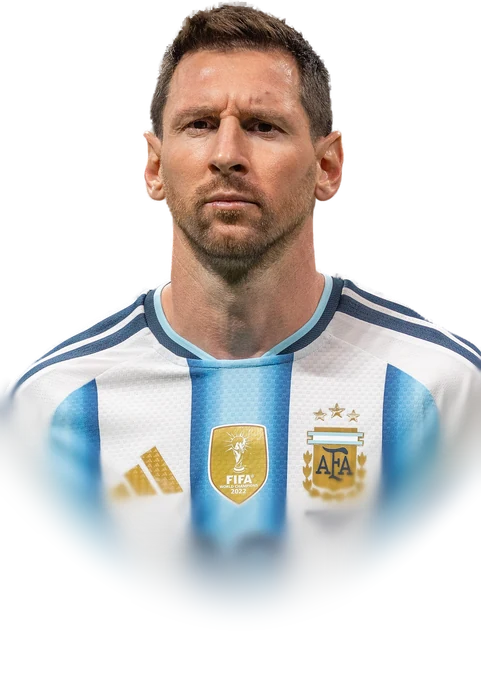
Lionel Messi has never taken a publicized IQ test. Real research on elite footballers measures something else entirely — executive function under pressure — and it is worth reading on its own terms, not converted into a fake score.
Lionel Messi’s estimated IQ
- A 2012 PLOS ONE study (Vestberg et al.) found top-division Swedish players scored in the top 5% nationally on tests of executive function such as design fluency, and that these scores predicted goals and assists over the following two seasons.
- A 2017 follow-up found elite youth players outperformed non-elite peers on working-memory and design-fluency measures specifically — the same executive-function domain, not general intelligence.
- Sports scientists studying elite players’ decision-making describe it as pattern-based “expert intuition” built from repetition, comparable to the board-reading of expert chess players — not raw processing speed.
- Messi left formal schooling in Rosario, Argentina at 13 to join Barcelona’s youth academy; no academic record beyond that point is documented.
Executive-function tests measure a real, elite-level ability, but it is domain-specific and does not reliably transfer outside football. This range is centred close to the population mean because the evidence supports exceptional football decision-making, not general cognitive ability.
- Born
- 24 June 1987, Rosario, Argentina
- Field
- Football
- Education
- Left formal schooling at 13 for Barcelona’s La Masia academy
- Known for
- A record eight Ballon d’Or awards; the 2022 World Cup with Argentina
What an IQ of 100–115 actually means
Set the claim aside for a moment. If someone genuinely scored in this range, here is what that would represent.
Average is 100 by construction, and about two-thirds of people fall between 85 and 115. Take the test to place your own score on this scale.
| Score range | Classification | Share of people | What it indicates |
|---|---|---|---|
| 85 – 114 | Average | ~68% | The range most people fall into. |
| 115 – 129 | Above average | ~13.6% | Roughly one person in seven. |
| 130 – 144 | Gifted | ~2% | The threshold most high-IQ societies use. |
| Above 144 | Highly gifted | ~0.1% | Figures above this range are extrapolated from the curve rather than measured. |
Percentages are approximate and describe a normal distribution. The same number means different things on tests with different standard deviations.
Thirty questions gives you a measured position on this exact scale — your score, your percentile and the ability breakdown behind it.
Find out in 30 minutes →Who Lionel Messi is
Lionel Messi was born in Rosario, Argentina, in 1987 and began playing for Newell’s Old Boys at six. Diagnosed with a growth-hormone deficiency as a child, he moved to Spain at 13 when Barcelona agreed to fund his treatment and enrol him in its La Masia academy.
He made his first-team debut for Barcelona in 2004 and went on to win a record eight Ballon d’Or awards. He led Argentina to the 2022 World Cup title, widely described as the missing achievement in his career, before moving to Inter Miami in 2023.
He is Barcelona’s all-time leading scorer and one of the most decorated players in football history, with a playing style built around close control, vision and improvisation rather than physical power.
 By Elora Mercer, Celebrity Research WriterFigures checked by Leon Falkner, Data & Research Analyst
Reviewed by Aarav Vardhan, Editor-in-Chief · Last reviewed August 2026

Lionel Messi: the documented record
The estimate above rests on this record. Every entry here is a matter of public fact, which is more than can be said for the number itself.
- 1987Born in Rosario, Argentina.
- 2000Moves to Barcelona’s La Masia academy at 13.
- 2004Makes his Barcelona first-team debut.
- 2012Vestberg et al. publish the first executive-function study of elite footballers.
- 2021Wins his seventh Ballon d’Or; moves to Paris Saint-Germain.
- 2022Leads Argentina to the FIFA World Cup title.
- 2023Joins Inter Miami CF.
Where the 190 figure came from
Following a claim back to its first appearance is the part almost nobody does — and it is what most people are actually asking.

This profile pairs naturally with Cristiano Ronaldo’s, and the comparison is instructive precisely because the two are measured differently in the literature that actually exists. Ronaldo’s documented results are perceptual and motor — anticipating a cross in near-darkness. The Vestberg studies behind this page measured something adjacent but distinct: executive function, the ability to plan, switch and inhibit under working-memory load, tested with pen-and-paper neuropsychological tasks off the pitch.
A 2017 Frontiers in Psychology analysis of 181 Messi and Ronaldo goals found genuinely different attacking signatures: Messi generating shots through improvisational dribbling from the right, Ronaldo through more repeatable patterns from the left, both built from anticipation rather than reaction. Coaches describe the same thing in plainer language — Gerardo “Tata” Martino once said Messi “sees passes that most people can only see whilst watching the game on TV.”
None of this is an IQ score, and none of the researchers behind it have claimed it is. It is a real, replicated finding about a real, narrow cognitive skill, and it does not need to be inflated into a general-intelligence number to be worth taking seriously.
How we read a number →Found top-division Swedish players in the top 5% nationally on design-fluency tests, predicting future goals and assists.
Replicated the finding in elite youth players using working-memory measures.
Compared 181 goals and found distinct anticipatory attacking patterns for each player.
No record exists of Messi taking a formal intelligence test.
No original source located for any version.
The sources behind our estimate
The figures that circulate for Lionel Messi, what we were able to confirm, and where the two diverge.
Figures as high as 190–191 circulate for “Messi IQ”, alongside lower unsourced figures around 134–140.
There is no record of Lionel Messi ever taking an IQ test. What is real is a body of published research on elite footballers’ executive function — the 2012 and 2017 Vestberg studies — which measured design fluency and working memory, not intelligence quotient, and found elite players scored exceptionally on those specific tasks.
A near sixty-point spread across unsourced sites, framing the same nonexistent test as both modest and superhuman, is the signature of numbers invented to fit a reputation rather than measured from a person.
Want a number that does hold up? Every figure on this page is somebody’s claim. Take the 30-question test and get a percentile you can check rather than a figure you have to trust.
Lionel Messi — frequently asked
What is Lionel Messi’s IQ?
No test exists. Figures from 134 to 191 circulate online with no traceable source.
Has Messi ever taken a cognitive test?
Not a formal IQ test. Published sports-science research (Vestberg et al., 2012 and 2017) has tested elite footballers’ executive function — planning, switching and working memory — not IQ.
How does Messi compare to Ronaldo in this research?
Differently, not directly. Messi’s documented strength is in executive-function measures; Ronaldo’s comes from perceptual and motor testing filmed for a 2011 documentary. They are adjacent but distinct types of evidence.
Does elite football performance imply a high general IQ?
The research doesn’t support that jump. Executive-function advantages found in elite players appear to be domain-specific, built through years of pattern exposure, rather than evidence of higher general intelligence.
What does the research actually show about elite players’ thinking?
That top-division and elite youth players outperform lower-level peers on specific executive-function tasks like design fluency and working memory, and that these scores correlate with future on-field output.
Why is there no single IQ figure on this page?
Because none exists to report. The 100–115 range reflects the population mean, adjusted only slightly for the specific, real, but narrow evidence available.
How does my IQ compare with Lionel Messi?
You can find out in about fifteen minutes. The IQ Metrics assessment is 30 questions, scored on the same 100-mean scale used throughout this page, so your result and the estimate above are at least expressed in the same units — one measured, one inferred. Once you have a number, the leaderboard shows where it would sit, and how we score and norm it explains the benchmarking.
Where does this estimate come from?
From the documented record rather than a test — the method is named above and set out in full under how we read a number. Compare it against the other athletes profiles, starting with Magnus Carlsen.
- Take the 30-question IQ test — get a measured score and percentile of your own
- Average IQ by country — how the scale behaves across populations
- How IQ Metrics scores its assessment — the method behind our own number
- More on how IQ testing works — reliability, error and what a score can and cannot say
- More athletes profiles — same field, same method
More athletes


Photograph by Przemysław Jahr, CC BY-SA 3.0. Cropped; background removed for the portrait above. · Photograph by Jay Godwin, LBJ Presidential Library, public domain (U.S. government work). · Photograph by Jeffrey Beall, CC BY 3.0. Cropped from the original.


An estimate is an inference.
Yours can be measured.
Thirty questions, scored against general-population benchmarks. Your score, your percentile, your ability breakdown and a printable IIF certificate.
Find your IQ score now! →