



What is Cristiano Ronaldo’s IQ?
Measured in a laboratory, and still not an IQ.
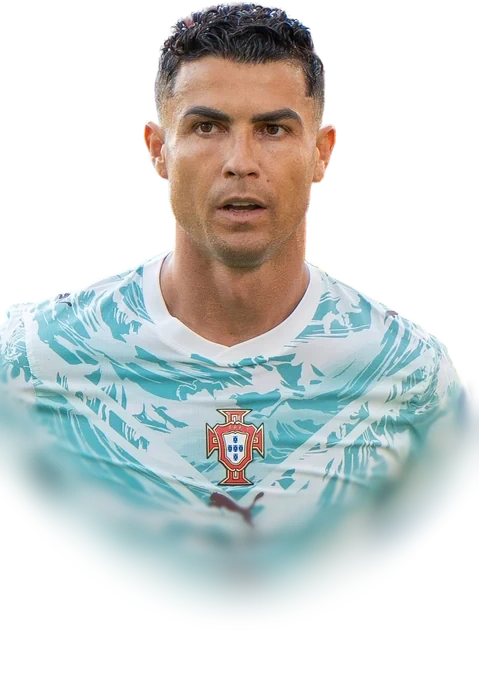
Ronaldo is the rare case where laboratory cognitive testing genuinely happened, was filmed, and produced elite results — none of which is an IQ, and all of which gets reported as one.
Cristiano Ronaldo’s estimated IQ
- Documented elite visuomotor anticipation. In the 2011 Castrol documentary Ronaldo: Tested to the Limit he scored from crosses in total darkness across three attempts of rising difficulty — on the hardest the lights were cut before the ball had even been struck, leaving him nothing to read but the crosser’s body position, and he finished it with his shoulder.
- Reaction-time, agility and decision-speed testing in the same programme placed him at the top of the measured range for elite athletes.
- A career record of five Ballon d’Or awards, five Champions League titles, and the most goals scored in the history of men’s international football.
- He left school at fourteen, with his mother’s agreement, to train full time. There is no secondary or tertiary academic record to weigh.
The tests he actually took measure perceptual anticipation in one trained domain. There is good evidence that such expertise does not transfer outside the domain it was built in, so it constrains a general estimate only loosely — hence a band centred close to the population mean.
- Born
- 5 February 1985, Funchal, Madeira
- Field
- Association football
- Education
- Left school at fourteen to train full time
- Measured
- Reaction time, anticipation and agility, under laboratory conditions, 2011
- Known for
- Five Ballon d’Or awards; most goals in men’s international football
- On record about IQ
- Nothing. He has never claimed a score
What an IQ of 100–115 actually means
Set the claim aside for a moment. If someone genuinely scored in this range, here is what that would represent.
Average is 100 by construction, and about two-thirds of people fall between 85 and 115. Take the test to place your own score on this scale.
| Score range | Classification | Share of people | What it indicates |
|---|---|---|---|
| 85 – 114 | Average | ~68% | The range most people fall into. |
| 115 – 129 | Above average | ~13.6% | Roughly one person in seven. |
| 130 – 144 | Gifted | ~2% | The threshold most high-IQ societies use. |
| Above 144 | Highly gifted | ~0.1% | Figures above this range are extrapolated from the curve rather than measured. |
Percentages are approximate and describe a normal distribution. The same number means different things on tests with different standard deviations.
Thirty questions gives you a measured position on this exact scale — your score, your percentile and the ability breakdown behind it.
Find out in 30 minutes →Who Cristiano Ronaldo is
Cristiano Ronaldo was born in Funchal, Madeira in 1985 and joined Sporting CP’s academy at twelve, moving to Lisbon alone. Manchester United signed him in 2003, when he was eighteen.
He moved to Real Madrid in 2009, to Juventus in 2018, back to Manchester United in 2021, and to Al-Nassr in 2023. He passed 900 career goals in September 2024 and remains the leading goalscorer in the history of men’s international football.
He submitted to the most detailed public scientific examination any footballer has undergone, in a 2011 documentary funded by Castrol and directed by Mike McDowall. The results of that programme are the only laboratory cognitive data on any athlete profiled here.
 By Elora Mercer, Celebrity Research WriterFigures checked by Leon Falkner, Data & Research Analyst
Reviewed by Aarav Vardhan, Editor-in-Chief · Last reviewed August 2026
.jpg)
Cristiano Ronaldo: the documented record
The estimate above rests on this record. Every entry here is a matter of public fact, which is more than can be said for the number itself.
- 1985Born in Funchal, Madeira.
- 1997Joins Sporting CP’s academy and moves to Lisbon at twelve.
- 1999Leaves school at fourteen to train full time.
- 2003Signs for Manchester United at eighteen.
- 2008Wins a first Ballon d’Or and a first Champions League.
- 2009Transfers to Real Madrid.
- 2011Filmed undergoing laboratory testing for Ronaldo: Tested to the Limit.
- 2018Transfers to Juventus.
- 2023Joins Al-Nassr.
- 2024Passes 900 career goals.
Where the 144 figure came from
Following a claim back to its first appearance is the part almost nobody does — and it is what most people are actually asking.
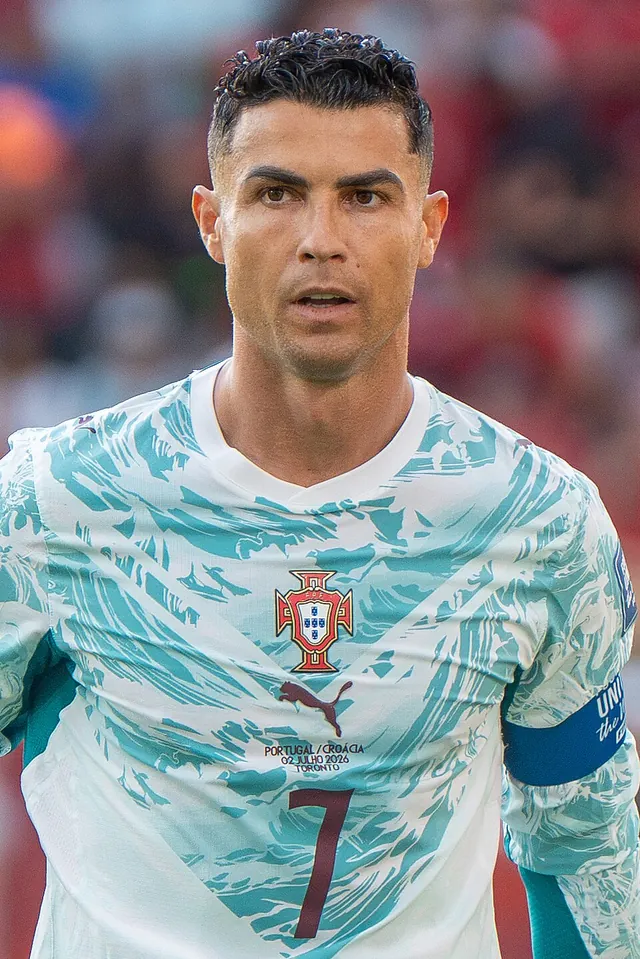
This profile is the clearest example on the site of a real measurement being laundered into a fake one. Something genuinely was tested. It was published, filmed and repeatable. And then it was renamed.
What the lights-out experiment demonstrates is anticipation built from pattern exposure: after enough repetitions, an expert reads ball flight from the striker’s body position and the first fraction of trajectory, and no longer needs to see the rest. That is the same mechanism documented in expert chess players, who reconstruct real board positions almost perfectly and random ones no better than novices.
It is worth comparing this page with Magnus Carlsen. Both are domain performance entries, but a chess rating is derived from contests of reasoning against other rated humans, which is why Carlsen’s band sits higher. Ronaldo’s measured advantage lies in perception and motor timing. Both are elite. Only one of them is the kind of thing an IQ test tries to sample.
The absence of an academic record is not evidence of anything. Leaving school at fourteen to train full time was a career decision made by a family with one plausible route out, and it succeeded. It simply means this page has less to work with than most, and the range reflects that rather than a judgement.
How we read a number →The source of every cognitive measurement attached to Ronaldo. Includes the pitch-black cross challenge, reaction-time and agility testing. Contains no IQ test.
The foundational demonstration that expert recall is domain-bound: chess masters reconstruct real positions far better than novices and random positions no better. The reason perceptual expertise is not read here as general ability.
Searched: the documentary itself, contemporary interviews and biographies. Ronaldo has never taken a publicly reported IQ test, nor claimed a score.
Several attribute their figure to the Castrol documentary, which produced no such number. The mutual disagreement is the most informative thing about them.
The sources behind our estimate
The figures that circulate for Cristiano Ronaldo, what we were able to confirm, and where the two diverge.
Numbers between 99 and 160 circulate. 144 is the most commonly repeated, and several sites present it as a measured result from the Castrol documentary.
No IQ test appears anywhere in the documentary. The programme measured sprint speed, reaction time, jump height and visuomotor anticipation. Those are real results, obtained under controlled conditions, and they are genuinely exceptional. They are also not an intelligence quotient, and no figure of 144 — or any other IQ figure — was produced by it.
A sixty-point spread, with the low end used to disparage him and the high end to flatter him. Both ends are opinions about footballers, not readings from an instrument.
Want a number that does hold up? Every figure on this page is somebody’s claim. Take the 30-question test and get a percentile you can check rather than a figure you have to trust.
Cristiano Ronaldo — frequently asked
What is Cristiano Ronaldo’s IQ?
No IQ test result exists. The figures online range from 99 to 160 and none is a measurement. Our estimate from domain testing and career record is 100 to 115.
Didn’t the Castrol documentary measure his IQ?
No. Ronaldo: Tested to the Limit measured reaction time, agility, sprint speed and visuomotor anticipation. It produced no IQ score, though several sites credit it with one.
What was the lights-out experiment?
The lights were cut mid-cross, and on the hardest of three attempts before the crosser had struck the ball at all. Ronaldo scored every time — the first with a diving header, the last with his shoulder — reading the delivery from the crosser’s body position rather than from the ball. It demonstrates elite anticipation built from pattern exposure.
Does that make him a genius?
It makes him exceptional at a trained perceptual task. The research on expert cognition, going back to Chase and Simon in 1973, shows this kind of skill does not transfer outside the domain it was built in.
Why is his range lower than Magnus Carlsen’s?
Because a chess rating comes from contests of reasoning against other rated humans, which overlaps more with what IQ tests sample. Ronaldo’s measured advantage is perceptual and motor.
Did Ronaldo go to school?
He left at fourteen to train full time, with his mother’s agreement. There is no academic record to weigh, which is why this page leans on the laboratory data instead.
How does my IQ compare with Cristiano Ronaldo?
You can find out in about fifteen minutes. The IQ Metrics assessment is 30 questions, scored on the same 100-mean scale used throughout this page, so your result and the estimate above are at least expressed in the same units — one measured, one inferred. Once you have a number, the leaderboard shows where it would sit, and how we score and norm it explains the benchmarking.
Where does this estimate come from?
From the documented record rather than a test — the method is named above and set out in full under how we read a number. Compare it against the other athletes profiles, starting with Magnus Carlsen.
- Take the 30-question IQ test — get a measured score and percentile of your own
- Average IQ by country — how the scale behaves across populations
- How IQ Metrics scores its assessment — the method behind our own number
- More on how IQ testing works — reliability, error and what a score can and cannot say
- More athletes profiles — same field, same method
More athletes
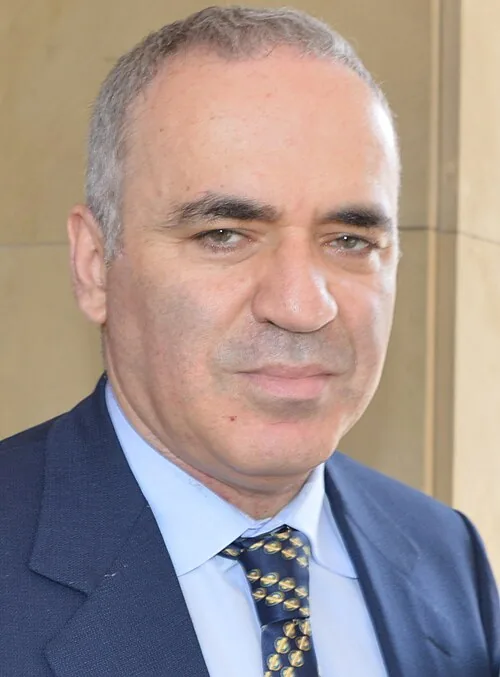
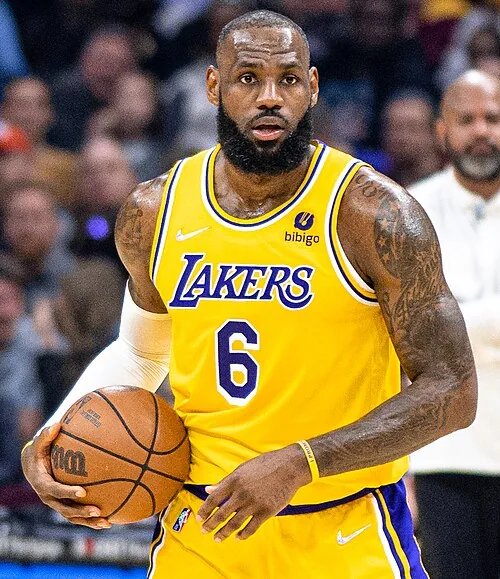
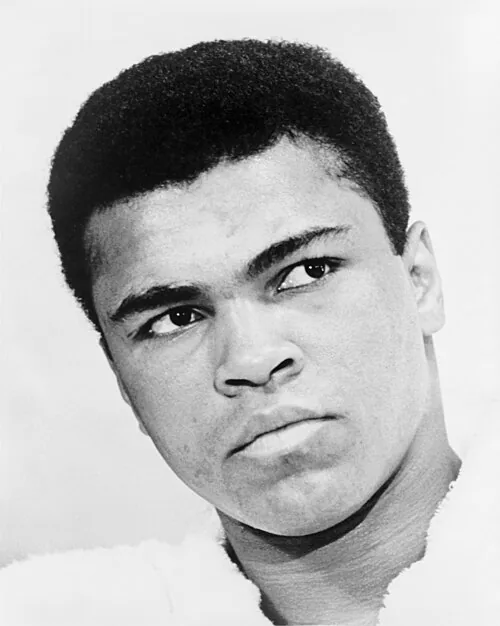
Photograph by Fryta 73 (2015), CC BY-SA 2.0. Background removed for the portrait above. · Photograph by Erik Drost, CC BY 2.0. The background-removed portrait above is a derivative work offered under the same licence. · Photograph by Ira Rosenberg for the New York World-Telegram (1967), public domain. Background removed for the portrait above.
_(cropped)_2.jpg)
_(cropped2).jpg)

An estimate is an inference.
Yours can be measured.
Thirty questions, scored against general-population benchmarks. Your score, your percentile, your ability breakdown and a printable IIF certificate.
Find your IQ score now! →