



What was Leonhard Euler’s IQ?
Almost half of Euler’s work came after 1766, as his sight failed. The Euler IQ numbers online, 180 to 210, come with no test and no working.
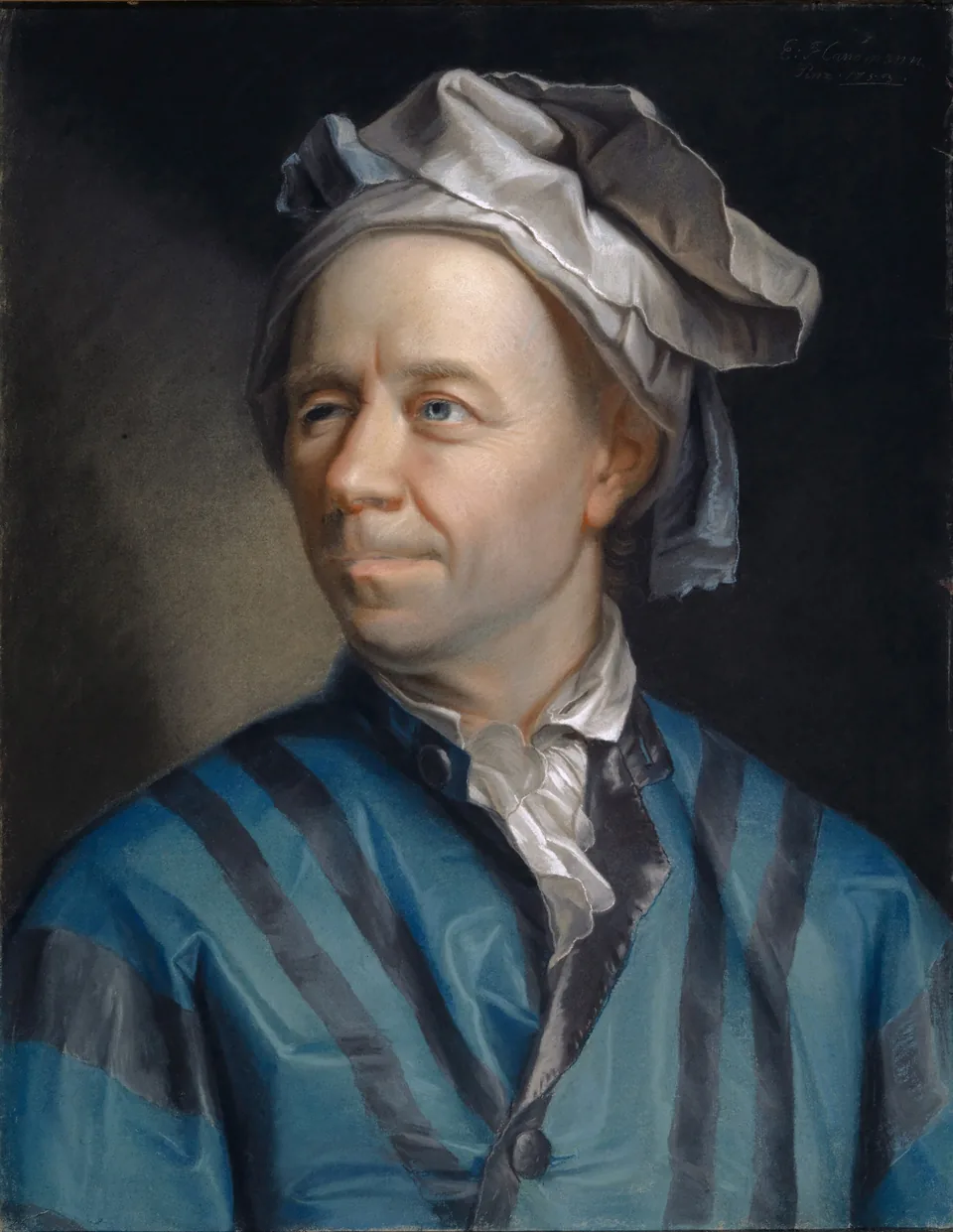
No IQ test of Leonhard Euler exists, and the Leonhard Euler IQ figures online (195–210 on one list, 180–200 on another) cite none. What is documented: a master’s degree in philosophy in 1723, about 866 publications, and a 775-page theory of the Moon’s motion (1772) calculated largely in memory and imagination after his sight failed.
Leonhard Euler’s estimated IQ
- Entered the University of Basel in 1720, took a master’s degree in philosophy in 1723 with a comparison of Descartes and Newton, and was noticed as a student by Johann Bernoulli, whom his eulogist called the greatest of the living geometers.
- Reached the St. Petersburg Academy of Sciences in May 1727; in 1735 he proved that the reciprocals of the squares sum to π²/6, the Basel problem that had defeated Jakob, Johann and Daniel Bernoulli, Leibniz, Stirling and de Moivre, and solved the Seven Bridges of Königsberg problem the same year.
- Shared the Paris Academy’s Grand Prize in 1738 and 1740, became a Fellow of the Royal Society in 1747, and published the Introductio in analysin infinitorum in 1748, which contains the formula e^(ix) = cos x + i sin x.
- About 866 publications by the usual count (the Euler Archive lists more than 850 works), almost half of them written after his return to St. Petersburg in 1766, when his sight began to fail.
- A 775-page work on the motion of the Moon, published in 1772, whose calculations he made, by Nicolas Fuss’s account, mostly by “the sole intermediary of his memory and imagination” (with help credited to his son Johann Albrecht, W. L. Krafft and A. J. Lexell).
Leonhard Euler’s estimated IQ is inferred from output, not measured: no intelligence test existed in his lifetime, and the evidence Cox-style estimates lean on most, a documented childhood, is short for him. His adult record is enormous, but much of it was written with assistants, so volume is not a clean measure of one mind.
- Born
- April 15, 1707, Basel, Switzerland
- Died
- September 18, 1783, St. Petersburg, Russia (age 76)
- Education
- University of Basel from 1720; master’s degree in philosophy, 1723; mathematics under Johann Bernoulli
- Academies
- St. Petersburg Academy of Sciences (1727–1741, 1766–1783); Berlin Academy (1741–1766); Fellow of the Royal Society, 1747
- Output
- 866 publications by the usual count; the Euler Archive lists more than 850 works
- Best known for
- Basel problem and Seven Bridges of Königsberg (1735), Introductio in analysin infinitorum (1748), the notation f(x), e, i and Σ
- Documented IQ test
- None on record; the circulating figures (180–210) come from two lists that cite no test
What an IQ of 170–190 actually means
Set the claim aside for a moment. If someone genuinely scored in this range, here is what that would represent.
Average is 100 by construction, and about two-thirds of people fall between 85 and 115. Take the test to place your own score on this scale.
| Score range | Classification | Share of people | What it indicates |
|---|---|---|---|
| 85 – 114 | Average | ~68% | The range most people fall into. |
| 115 – 129 | Above average | ~13.6% | Roughly one person in seven. |
| 130 – 144 | Gifted | ~2% | The threshold most high-IQ societies use. |
| Above 144 | Highly gifted | ~0.1% | Figures above this range are extrapolated from the curve rather than measured. |
Percentages are approximate and describe a normal distribution. The same number means different things on tests with different standard deviations.
Thirty questions gives you a measured position on this exact scale — your score, your percentile and the ability breakdown behind it.
Find out in 30 minutes →Who Leonhard Euler was
Leonhard Euler was born in Basel on April 15, 1707, and entered the University of Basel in 1720, at thirteen or fourteen (biographers differ), to prepare for the ministry his father had planned for him. Johann Bernoulli, whom Fuss called the greatest of the living geometers, noticed his ability and let him bring problems to be worked through on weekly visits. In 1723 Euler completed a master’s degree in philosophy with a comparison of the ideas of Descartes and Isaac Newton, began theology that fall, and then, with his father’s consent, turned to mathematics. His childhood is thinly documented; Fuss says only that a prodigious memory let him get through the non-mathematical courses with ease and spend the rest of his time on geometry.
Euler reached the St. Petersburg Academy of Sciences on May 17, 1727. He became professor of physics there in 1730 and, after Daniel Bernoulli left, took over his mathematics chair in 1733. In 1735 he showed that ζ(2) = π²/6, the Basel problem, and solved the Seven Bridges of Königsberg problem, an early result in what became graph theory. His Mechanica (1736–37) presented Newtonian dynamics as mathematical analysis for the first time. He shared the Paris Academy’s Grand Prize in 1738 and 1740, and in 1741 accepted Frederick the Great’s invitation to the Berlin Academy, where he stayed until 1766 and wrote around 380 articles. He became a Fellow of the Royal Society in 1747, and in 1748 published the Introductio in analysin infinitorum, which contains e^(ix) = cos x + i sin x, from which Euler’s identity e^(iπ) + 1 = 0 follows. The notation f(x), e, i and Σ is also credited to him.
By 1740, by his own account, Euler had lost the sight of one eye. He returned to St. Petersburg in 1766 at Catherine the Great’s invitation and soon afterward, following an illness, became almost entirely blind. A fire destroyed his home in 1771; a cataract operation that year restored his sight for a few days, after which he was totally blind. He kept working: MacTutor reports that almost half of his total output dates from after his return. He had help from his sons Johann Albrecht and Christoph, from W. L. Krafft and A. J. Lexell, and from Nicolas Fuss, who came to the Academy in 1772 and became his assistant in 1776; the historian Alexander Yushkevich writes that these assistants “were not mere secretaries,” and Euler credited Albrecht, Krafft and Lexell for their part in the 775-page lunar theory of 1772. Fuss still wrote that Euler made most of its immense calculations through memory and imagination alone.
On September 18, 1783, Euler gave a mathematics lesson to one of his grandchildren, did calculations in chalk on two boards about the motion of balloons, and discussed the recently discovered planet Uranus with Lexell and Fuss; he died that evening, at about eleven o’clock. The St. Petersburg Academy went on publishing his unpublished work for nearly fifty more years. His 866 publications and his correspondence were collected in the Opera Omnia, and Wikipedia relays an estimate that he wrote about a quarter of the eighteenth century’s combined output in mathematics, physics, mechanics, astronomy and navigation.
 By Elora Mercer, Celebrity Research WriterFigures checked by Leon Falkner, Data & Research Analyst
Reviewed by Aarav Vardhan, Editor-in-Chief · Last reviewed August 2026
.jpg)
Leonhard Euler: the documented record
The estimate above rests on this record. Every entry here is a matter of public fact, which is more than can be said for the number itself.
- 1707Born in Basel on April 15.
- 1723Completes a master’s degree in philosophy, comparing Descartes and Newton.
- 1727Arrives at the St. Petersburg Academy of Sciences on May 17.
- 1735Solves the Basel problem, showing ζ(2) = π²/6, and the Seven Bridges of Königsberg problem.
- 1741Leaves St. Petersburg for the Berlin Academy at Frederick the Great’s invitation.
- 1748Publishes the Introductio in analysin infinitorum, containing e^(ix) = cos x + i sin x.
- 1766Returns to St. Petersburg; soon afterward he becomes almost entirely blind.
- 1771A cataract operation restores his sight for a few days; he is then totally blind.
- 1772His 775-page work on the motion of the Moon is published.
- 1783Still doing calculations on the day he dies, September 18, in St. Petersburg.
Where the 180–210 figure came from
Following a claim back to its first appearance is the part almost nobody does — and it is what most people are actually asking.
Leonhard Euler’s IQ is quoted as 195–210 on one list and 180–200 on another, and neither number comes from a test: Euler died in St. Petersburg on September 18, 1783, and nothing in the biographical record reports a measured score. historysnob.com’s “20 historical geniuses with the highest estimated IQs” ranks him ninth, just ahead of John Stuart Mill, and gives 195–210 inside a sentence about his mathematical notation, after warning readers that “these are all speculative numbers.” unanswered.io’s explainer, dated July 2026, gives a 180–200 range with a narrower 190, states that Euler never took a modern IQ test, and says its figures are retrospective, based on output and expert judgment. It cites a “Genius IQs” page at eoht.info for the range. The general pattern is laid out in where celebrity IQ numbers come from.
Euler IQ lists like these borrow the look of Catharine Cox’s 1926 study, The Early Mental Traits of Three Hundred Geniuses, which scored 301 subjects who lived between 1450 and 1850 from the documented record of their youth. Euler, born in 1707, falls inside that window but is not one of the subjects: the book’s table of contents includes Lagrange, Laplace, Leibniz and Pascal and has no entry for him, and his name appears in the text only as reading matter in other subjects’ biographies. Cox also noted that when records were thin, her raters’ scores drifted toward 100, a reminder that a lightly documented childhood is a poor basis for a precise figure. Numbers near 200 sit beyond the norms of most standardized tests as well, which is the IQ ceiling effect.
Leonhard Euler’s estimated IQ rests on the record, not the number, and the calculation record is the most unusual part of it. Fuss, who worked as his assistant, reported in his 1783 eulogy that in 1735, when others had dragged out some calculations the Academy needed over months, Euler finished them in three days; that he could recite Virgil’s Aeneid from beginning to end and name the first and last line of every page of his edition, a skill he kept in old age; and that he made most of the calculations for his lunar theory through memory and imagination once his sight had failed. François Arago’s verdict, as retold in Robin Wilson’s 2007 Gresham College lecture, was that Euler “calculated without any apparent effort, just as men breathe.” That is the kind of evidence a historiometric estimate can use; it does not convert to a score. How memory relates to tested ability is covered in memory and IQ.
An estimated IQ level of 170–190 puts Euler in the same band this site gives Carl Friedrich Gauss and John von Neumann, and the same as Newton. Nothing in the evidence separates these mathematicians by a margin any method could measure; Euler’s distinguishing record is volume and range, from number theory and mechanics to optics, shipbuilding and lunar theory. Scores that high are rare by construction, as how rare a high IQ score is shows, and what “genius” means as a number is covered in genius IQ level. Whether Leonhard Euler was a genius is better answered by what he did than by a figure that no one measured.
How we read a number →Dates and places; University of Basel from 1720, master’s degree in philosophy 1723, arrival in St. Petersburg May 17, 1727, Basel problem 1735, Berlin 1741–1766, return 1766, total blindness after the 1771 cataract operation, almost half of his works after 1766, the 775-page lunar work of 1772, the day of his death (Yushkevich).
Contemporary account by his assistant: the Aeneid recitation, the three-day calculation of 1735, the lunar theory worked out largely by memory and imagination, the 1723 master’s degree. A eulogy, so written by an admirer.
Seven Bridges of Königsberg in 1735, the Introductio and the formula e^(ix) = cos x + i sin x, Euler’s notation, the return to St. Petersburg at Catherine the Great’s invitation and Arago’s remark about his calculating. It dates the master’s degree to 1724, against 1723 in MacTutor and Fuss.
States that the Archive has a page for each work Euler wrote, “more than 850” of them.
Establishes that Euler is not one of the 301 subjects; includes Lagrange, Laplace, Leibniz and Pascal; notes that thin records pulled raters’ scores toward 100.
Confirms identity (Swiss mathematician, physicist and engineer, 1707–1783), the 866-publication count and the one-quarter-of-the-century’s-output estimate.
Source of the 195–210 figure (ranked ninth, just ahead of John Stuart Mill); no test or method given; the page warns the numbers are speculative.
Source of the 180–200 range and the narrower 190; says Euler never took a modern IQ test; cites a “Genius IQs” page at eoht.info for the range.
None found in the biographical sources above, in Fuss’s eulogy, or in Cox’s 1926 volume. Intelligence tests did not exist in Euler’s lifetime (1707–1783).
The sources behind our estimate
The figures that circulate for Leonhard Euler, what we were able to confirm, and where the two diverge.
Two lists attach a figure to Euler: 195–210 on historysnob.com, where he is ranked ninth among “20 historical geniuses with the highest estimated IQs,” and 180–200, with a narrower 190 also mentioned, on a July 2026 explainer at unanswered.io.
Neither page cites a test, a date of measurement or a method. historysnob.com opens by warning that “these are all speculative numbers” and gives Euler 195–210 without a source. unanswered.io says plainly that Euler never took a modern IQ test and that every figure is retrospective; it points to a “Genius IQs” page at eoht.info. Euler is also absent from the 301 subjects of Catharine Cox’s 1926 study, which includes Lagrange, Laplace, Leibniz and Pascal, so no Cox-method figure exists for him either.
The two lists differ from each other by up to thirty points (180 to 210) and share no method, which is what unsourced estimates look like. The 170–190 range on this page overlaps only their lower ends; a score of 195 or more would need childhood and test evidence that does not exist for Euler.
Want a number that does hold up? Every figure on this page is somebody’s claim. Take the 30-question test and get a percentile you can check rather than a figure you have to trust.
Leonhard Euler — frequently asked
What is Leonhard Euler’s IQ?
No IQ test result exists for Leonhard Euler, so his IQ is not known; this page estimates 170–190 from his documented record. He died in 1783, long before intelligence tests existed. The figures that circulate, 195–210 and 180–200, come from lists that cite no test, and Euler is not among the 301 subjects of Cox’s 1926 study.
What was Euler’s IQ, and did he ever take an IQ test?
No. Euler died in 1783 and no intelligence test existed in his lifetime, so no score was ever recorded. Lists that put his IQ at 180–200 or 195–210 are retrospective guesses, and one of them states that he never took a modern IQ test. Any figure is an inference from his record, not a measurement.
Was Leonhard Euler a genius?
By the documented record, yes in the sense that matters in mathematics: a master’s degree in 1723, the Basel problem in 1735, the 1748 Introductio, about 866 publications and a lunar theory completed after his sight failed. Laplace is credited with the advice “Read Euler, read Euler, he is the master of us all.”
How does Leonhard Euler’s estimated IQ compare with Gauss’s and Newton’s?
This site’s estimate for Leonhard Euler, 170–190, matches its ranges for Carl Friedrich Gauss and Isaac Newton, 170–190 each, and all three are inferred from records, not tests. Nothing in the evidence separates them by a measurable margin. Euler’s own distinguishing record is volume: about 866 publications and a calculation record kept up after he lost his sight.
Where do the Euler IQ numbers of 195–210 and 180–200 come from?
They come from two online lists: historysnob.com, which gives 195–210 and ranks him ninth, and unanswered.io, which gives 180–200 with a narrower 190. Neither cites a test or a method; the first calls its numbers speculative and the second says Euler never took a modern IQ test.
How did Euler keep working after he lost his sight?
He relied on assistants: his sons Johann Albrecht and Christoph, colleagues W. L. Krafft and A. J. Lexell, and Nicolas Fuss, who helped him write and calculate. His own contribution was memory: by Fuss’s account he made most of the calculations for his 1772 lunar theory through memory and imagination. MacTutor reports that almost half his total works came after 1766.
How many works did Euler publish?
Wikipedia counts 866 publications, collected with his correspondence in the Opera Omnia, and the Euler Archive says it has pages for more than 850 works. MacTutor reports that almost half were produced after his return to St. Petersburg in 1766, in the years his sight was failing and then gone.
How does my IQ compare with Leonhard Euler?
You can find out in about fifteen minutes. The IQ Metrics assessment is 30 questions, scored on the same 100-mean scale used throughout this page, so your result and the estimate above are at least expressed in the same units — one measured, one inferred. Once you have a number, the leaderboard shows where it would sit, and how we score and norm it explains the benchmarking.
Where does this estimate come from?
From the documented record rather than a test — the method is named above and set out in full under how we read a number. Compare it against the other scientists profiles, starting with Albert Einstein.
- Take the 30-question IQ test — get a measured score and percentile of your own
- Average IQ by country — how the scale behaves across populations
- How IQ Metrics scores its assessment — the method behind our own number
- More on how IQ testing works — reliability, error and what a score can and cannot say
- More scientists profiles — same field, same method
More scientists
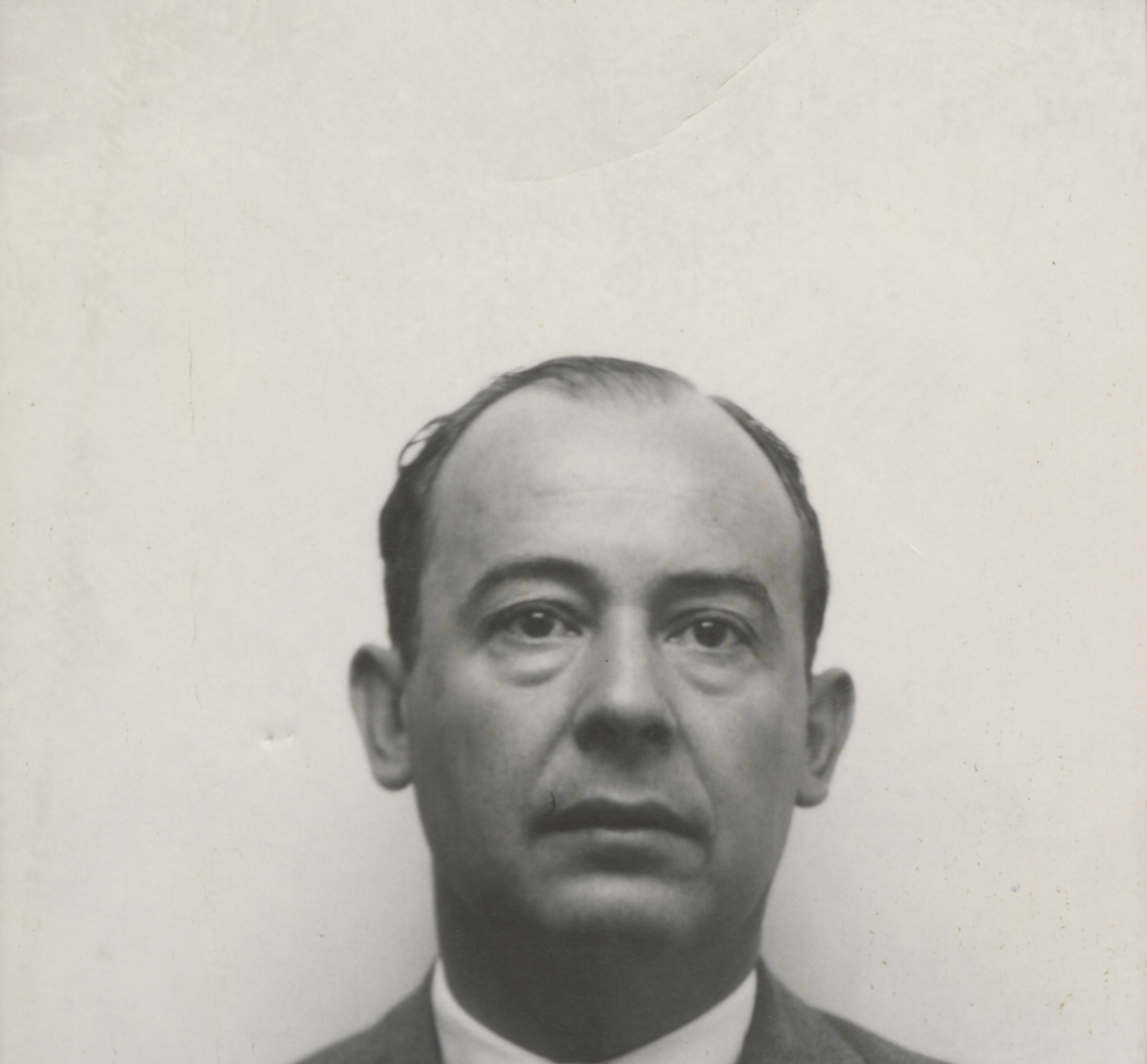

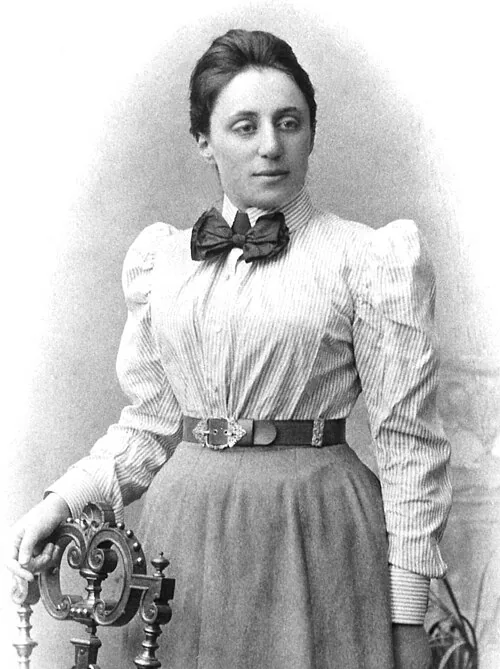
Los Alamos National Laboratory badge photograph, c. 1940s, public domain (PD-LosAlamos). Background removed for the portrait above. · Photograph by the Institute for Pure & Applied Mathematics (2026), CC BY 4.0. Background removed for the portrait above. · Photograph, publisher Mathematical Association of America, via Wikimedia Commons, public domain. Background removed for the portrait above.

_(cropped).jpg)
.jpg)
An estimate is an inference.
Yours can be measured.
Thirty questions, scored against general-population benchmarks. Your score, your percentile, your ability breakdown and a printable IIF certificate.
Find your IQ score now! →