



What was Stanley Kubrick’s IQ?
A reported 67 grade average, no degree and an “above average” childhood IQ: the 200 beside his name has no test behind it.
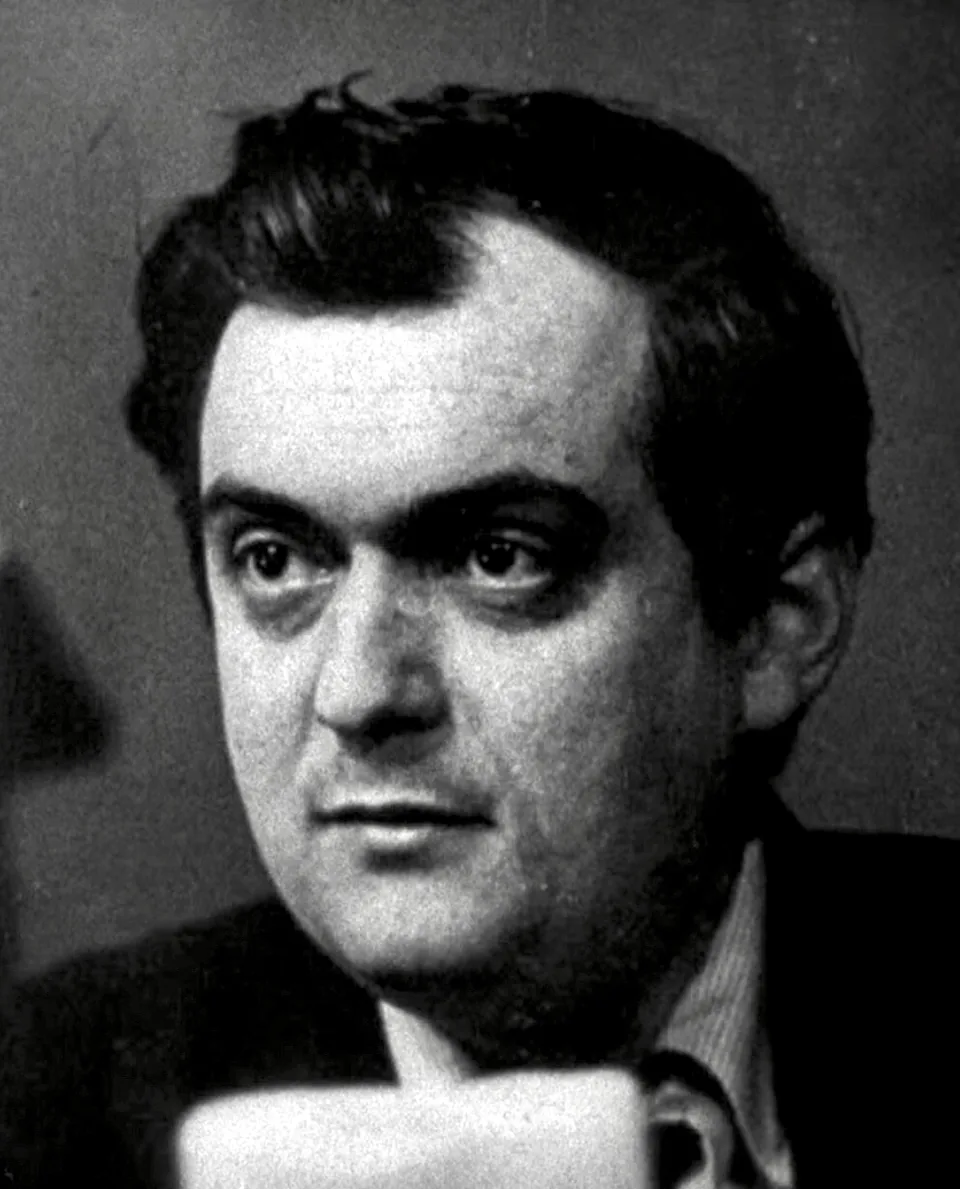
Stanley Kubrick’s IQ is listed as 200 on celebrity-IQ pages, but none names a test; the only IQ line in his biographies calls his childhood IQ “above average,” beside a reported 67 grade average at Taft High School. What is documented is self-education, from City College evening classes to Look magazine to an Academy Award for the visual effects of 2001, and it supports an estimated IQ of about 130–145.
Stanley Kubrick’s estimated IQ
- Graduated from William Howard Taft High School in the Bronx in 1945 with a grade average reported as 67 and a poor attendance record, then took only evening classes at the City College of New York; no degree is recorded.
- Worked as a photographer for Look magazine from his teens: his first photographic series ran on June 26, 1945, when he was 16, he became an apprentice there in 1946 and later a full-time staff photographer, and he made the 16-minute documentary Day of the Fight in 1951.
- At the 37th Academy Awards (April 5, 1965), Dr. Strangelove earned four nominations, with Kubrick named in three: Best Picture as producer, Directing, and Writing (screenplay based on material from another medium), shared with Peter George and Terry Southern.
- At the 41st Academy Awards (April 14, 1969), won the Oscar for Visual Effects for 2001: A Space Odyssey, his only personal Academy Award, and was nominated for Directing and, with Arthur C. Clarke, for Writing.
- Spent about two years researching a planned Napoleon film, reading several hundred books, and left an archive of 853 linear meters, now at the University of the Arts London, that includes research books, magazines and location photographs.
No test score exists to anchor this range, and the school record cannot do it: a reported 67 grade average with poor attendance neither supports nor caps any number, since grades also track attendance and fit with a school. The range therefore rests on a career that juries and the Academy rewarded for craft, technical invention and screenwriting, which sit inside the usual range of accomplished professionals and are not psychometric measures. It lands level with Christopher Nolan’s and Quentin Tarantino’s 130–145, not above them.
- Born
- July 26, 1928, Manhattan, New York City; raised in the Bronx
- Died
- March 7, 1999
- Education
- William Howard Taft High School, Bronx (1941–1945); briefly evening classes at the City College of New York; no degree recorded
- School record
- Grade average reported as 67; poor attendance; childhood IQ described only as “above average”
- Early career
- Photographer for Look magazine (apprentice 1946, later staff); short documentary Day of the Fight (1951)
- Academy Awards
- Visual Effects for 2001: A Space Odyssey (41st ceremony, 1969), his only win; four nominations for Dr. Strangelove (1965)
- Circulating figure
- 200, with no test; an averaged 187 also appears
- Documented IQ test
- None published
What an IQ of 130–145 actually means
Set the claim aside for a moment. If someone genuinely scored in this range, here is what that would represent.
Average is 100 by construction, and about two-thirds of people fall between 85 and 115. Take the test to place your own score on this scale.
| Score range | Classification | Share of people | What it indicates |
|---|---|---|---|
| 85 – 114 | Average | ~68% | The range most people fall into. |
| 115 – 129 | Above average | ~13.6% | Roughly one person in seven. |
| 130 – 144 | Gifted | ~2% | The threshold most high-IQ societies use. |
| Above 144 | Highly gifted | ~0.1% | Figures above this range are extrapolated from the curve rather than measured. |
Percentages are approximate and describe a normal distribution. The same number means different things on tests with different standard deviations.
Thirty questions gives you a measured position on this exact scale — your score, your percentile and the ability breakdown behind it.
Find out in 30 minutes →Who Stanley Kubrick was
Stanley Kubrick was born on July 26, 1928, in Manhattan and grew up in the Bronx. He attended Public School 3, then Public School 90, and William Howard Taft High School from 1941 to 1945. Biographical summaries describe a mediocre student, with a grade average reported as 67, who often skipped school to watch double-feature films. He graduated in 1945, but poor grades and the demand for college places from soldiers returning from the Second World War closed off higher education, and he briefly took evening classes at the City College of New York. Wikipedia, citing Baxter, adds that he showed an interest in literature from a young age and read Greek and Roman myths and the fables of the Brothers Grimm.
Photography came first. The Stanley Kubrick Archive’s catalog says he was 16 when he photographed a newsvendor the day after President Roosevelt died, that Look magazine printed the picture and hired him as a freelance photographer, and that he worked on more than 300 jobs; Wikipedia dates a photographic series he sold to Look to June 26, 1945, and says he became an apprentice photographer there in 1946 and later a full-time staff photographer. Chess ran alongside it: he learned the game at 12 and supplemented his income by playing “for quarters” in Washington Square Park and Manhattan chess clubs. A published chess rating can anchor an estimate, as it does for Garry Kasparov, but no rating for Kubrick turned up in any source opened here, so the game is a documented interest, not a measure; see chess ratings and IQ.
The films followed from short documentaries. He made the 16-minute Day of the Fight in 1951, then the features Killer’s Kiss (1955), The Killing (1956), Paths of Glory (1957) and Spartacus (1960). By 1961 he was living in England, and the later films were Lolita (1962), Dr. Strangelove (1964), 2001: A Space Odyssey (1968), A Clockwork Orange (1971), Barry Lyndon (1975), The Shining (1980), Full Metal Jacket (1987) and Eyes Wide Shut (1999). At the 37th Academy Awards on April 5, 1965, Dr. Strangelove was nominated for Best Picture, Directing, Actor (Peter Sellers) and Writing; at the 41st, on April 14, 1969, 2001 won the Oscar for Visual Effects, Kubrick’s only personal Academy Award, and he was also nominated for Directing and, with Arthur C. Clarke, for Writing.
His working method is the best-documented part of the record. For a planned film on Napoleon he conducted about two years of research and read several hundred books, according to Wikipedia. The Stanley Kubrick Archive at the University of the Arts London, spanning about 1945 to 2002 and measuring 853 linear meters, was accumulated by Kubrick and held at his home until it was transferred in March 2007; it has been open to the public since October 2007. It holds scripts, production paperwork and, in the university’s words, “research materials like books, magazines and location photographs.” Kubrick died on March 7, 1999, and Eyes Wide Shut opened in US theaters on July 16, 1999. Thorough research is a documented habit, not an IQ score; it shows persistence and range, which overlap with but do not equal what a test measures, and for the scale itself see what a genius IQ level means.
 By Elora Mercer, Celebrity Research WriterFigures checked by Leon Falkner, Data & Research Analyst
Reviewed by Aarav Vardhan, Editor-in-Chief · Last reviewed August 2026
_Cropped.jpg)
Stanley Kubrick: the documented record
The estimate above rests on this record. Every entry here is a matter of public fact, which is more than can be said for the number itself.
- 1928Born July 26 in Manhattan, New York City.
- 1941–1945Attends William Howard Taft High School in the Bronx; graduates in 1945.
- 1945Look magazine prints a photographic series he sold to it, on June 26, when he is 16.
- 1946Becomes an apprentice photographer at Look, later a full-time staff photographer.
- 1951Makes the 16-minute documentary Day of the Fight.
- 1955–1960Directs Killer’s Kiss, The Killing, Paths of Glory and Spartacus.
- 1961Settles in England.
- 1964–1965Dr. Strangelove is released; at the 37th Academy Awards on April 5, 1965, it earns four nominations.
- 1969On April 14, wins the Academy Award for Visual Effects for 2001: A Space Odyssey.
- 1999Dies March 7; Eyes Wide Shut opens in US theaters on July 16.
Where the 200 figure came from
Following a claim back to its first appearance is the part almost nobody does — and it is what most people are actually asking.
The Stanley Kubrick IQ 200 figure has no test behind it, and the pages that carry it say so by what they leave out. celebrityiqs.com prints “IQ: 200” in a profile card beside his place of birth, with a disclaimer that its scores are “not guaranteed” and “for entertainment purposes only.” sociosite.net states “Stanley Kubrick IQ is 200, which is a world record,” and iqtesta.com calls it “200 points – an incredible score in history”; both add that a 200 puts him level with Leonardo da Vinci, Isaac Newton and James Maxwell, none of whom could have sat a modern IQ test. calendar-australia.com’s FAQ says only that he “famously had an IQ of 200.” None of the four names a test, an examiner, a date or Mensa membership (see where celebrity IQ numbers come from).
The other numbers in circulation disagree with 200 and with each other. check-iq.org gives Stanley Kubrick an “estimated IQ of 187,” averaged from “four sources – ArtNet, Reddit, IQ-test.net, and Geniuses,” with estimates running from 150 to 200 and a confidence level it labels “Low”; it lists three of the four at 200. The 187 is an average that leans on the same unsourced 200, which is what a copied or averaged number looks like, not a measured one.
The only Stanley Kubrick IQ statement with a biography behind it is far smaller than 200. Wikipedia’s early-life section, in the passage on his Bronx primary schools (Public School 3, then Public School 90 from June 1938), says: “His IQ was above average but his attendance was poor,” footnoted to page 17 of John Baxter’s 1997 biography. The sentence gives no number, test or date. “Above average” covers everything from 101 upward and does not reach a ceiling. A 200 on a 15-point scale would sit 6.7 standard deviations above the mean, roughly one person in 76 billion on a perfect bell curve, which is where the ceiling effect makes any single score least reliable and standard tests have too few items to measure it.
Stanley Kubrick’s estimated IQ has to be inferred from output and self-directed study, because the school record is weak and no score survives. A reported 67 grade average and poor attendance say little about ability, since grades also track attendance and fit with a school (see whether IQ predicts school success); what the record does show is a habit of deep preparation, from reading several hundred books for a planned Napoleon film to an Academy Award for the visual effects of 2001. Placed against this site’s other directors, that supports a range level with Christopher Nolan’s 130–145 and Quentin Tarantino’s 130–145, another director who never went to film school and whose circulating 160 also has no test behind it. The error runs in the usual direction: the record supports a lower range than the 200 that circulates, not a higher one.
How we read a number →All four state 200 with no test, examiner or date. celebrityiqs.com prints “IQ: 200” and disclaims its scores as “for entertainment purposes only”; sociosite.net calls it “a world record” and iqtesta.com “an incredible score in history,” both comparing it with Leonardo da Vinci, Isaac Newton and James Maxwell; calendar-australia.com’s FAQ says he “famously had an IQ of 200.” None names Mensa or a test.
check-iq.org averages “four sources – ArtNet, Reddit, IQ-test.net, and Geniuses” to 187, estimates 150 to 200, confidence “Low”.
Early life (Public Schools 3 and 90, Taft 1941–1945, evening classes at City College, Look magazine, chess for quarters in Washington Square Park), the sentence “His IQ was above average but his attendance was poor” (footnoted to Baxter 1997, p. 17), the Napoleon research, filmography years, England since 1961, Eyes Wide Shut’s US release date and Kubrick’s dates.
Both report a 67 grade average for Taft High School (the Wikipedia revision cites “Schwam 2000, p. 70”); the current Wikipedia text keeps only “mediocre student.” The transcript itself was not seen, so 67 is a reported figure.
41st ceremony (April 14, 1969): 2001: A Space Odyssey wins Visual Effects, with Kubrick also nominated for Directing and, with Arthur C. Clarke, Writing. 37th ceremony (April 5, 1965): Dr. Strangelove nominated for Best Picture (Kubrick, producer), Directing, Actor (Peter Sellers) and Writing (Kubrick, Peter George, Terry Southern).
Extent 853 linear metres; dates c. 1945–2002; the collection was accumulated by Kubrick, held at his home until its transfer in March 2007 and open to the public since October 2007; includes research paperwork and books. Also says Look hired him as a freelance photographer after printing a newsvendor photograph taken when he was 16, and that he worked on over 300 jobs.
States that the archive spans his career from Look magazine to Eyes Wide Shut and includes “research materials like books, magazines and location photographs.”
Confirms Q2001 is the filmmaker and photographer (1928–1999), born 1928-07-26 and died 1999-03-07, not a namesake.
None from Kubrick, a school or a psychologist. Looked for on the pages carrying 200 or 187, the Wikipedia and New World Encyclopedia biographies, the Oscars.org ceremony pages and the Kubrick Archive catalog entries; only an unnumbered “above average” appears, in Wikipedia, with no test named.
The sources behind our estimate
The figures that circulate for Stanley Kubrick, what we were able to confirm, and where the two diverge.
Ask what was Stanley Kubrick’s IQ and the pages that answer give 200, sometimes called a “world record.” The figure appears on celebrityiqs.com, sociosite.net, iqtesta.com and calendar-australia.com; check-iq.org averages four sources to 187.
No Stanley Kubrick IQ test result has been published, and none of the pages carrying 200 or 187 names a test, an examiner or a date. celebrityiqs.com prints “IQ: 200” and disclaims its scores as “for entertainment purposes only.” sociosite.net and iqtesta.com state 200 as fact and compare it with Leonardo da Vinci, Isaac Newton and James Maxwell, with no source. calendar-australia.com says he “famously had an IQ of 200.” check-iq.org labels its own 187 average “Low” confidence. The one IQ statement with a biography behind it is Wikipedia’s line that his IQ was “above average,” footnoted to John Baxter’s 1997 biography, with no number. What can be checked is the record: a Look magazine photographer, an Oscar for visual effects and a documented research habit.
The 200 sits 55 points above the top of the range his record supports, and the other figure in circulation, 187, is a 13-point-lower average of the same unsourced claims. A measurement does not come in unrelated versions; a copied or averaged number does. As with most profiles here, the documented record points lower than the number in circulation.
Want a number that does hold up? Every figure on this page is somebody’s claim. Take the 30-question test and get a percentile you can check rather than a figure you have to trust.
Stanley Kubrick — frequently asked
What is Stanley Kubrick’s IQ?
No published IQ test result exists for Stanley Kubrick, so there is no measured score to report. The 200 that circulates names no test, and the only IQ line in his biographies calls his childhood IQ “above average” without a number. Our estimate of 130–145 is inferred from his self-education, his research method and an Academy Award for the visual effects of 2001.
Did Stanley Kubrick take an IQ test?
No score, examiner or date is on record. Wikipedia says his childhood IQ was “above average,” citing a 1997 biography by John Baxter, but gives no number or test name. The pages listing 200 or 187 cite no test either.
Is Stanley Kubrick’s IQ really 200?
There is no evidence that it is. celebrityiqs.com, sociosite.net, iqtesta.com and calendar-australia.com carry 200, none with a test or a date, and one disclaims its scores as “for entertainment purposes only.” A 200 on a 15-point scale would be 6.7 standard deviations above average, roughly one person in 76 billion.
What was Stanley Kubrick’s IQ score at school?
No score is published. Wikipedia says only that his childhood IQ was “above average” while his attendance was poor, and summaries report a 67 grade average when he graduated from Taft High School in 1945. A grade average is not an IQ result, because grades also reflect attendance and how well a pupil fits a school.
Is Stanley Kubrick a genius?
“Genius” is not a term this site measures, but his record is unusual for someone with a reported 67 high-school average and no recorded college degree: an Academy Award for the visual effects of 2001: A Space Odyssey, Oscar nominations for directing and writing, and about two years of Napoleon research spanning several hundred books. None of that is an IQ score.
How does Stanley Kubrick’s estimated IQ compare with Christopher Nolan’s?
IQ Metrics places Kubrick’s estimated IQ range of 130–145 level with Christopher Nolan’s 130–145. Nolan finished a university degree; Kubrick took only evening classes at the City College of New York and graduated high school with a reported 67 average. Both ranges rest on directing and writing careers with no published test, so the match reflects achievement, not equal scores.
Did Stanley Kubrick go to college?
No degree is recorded. After he graduated from Taft High School in 1945, poor grades and competition for places from returning World War II soldiers closed off higher education, per Wikipedia, and he briefly took evening classes at the City College of New York. His route into film ran through photography at Look magazine and the short documentary Day of the Fight (1951).
How does my IQ compare with Stanley Kubrick?
You can find out in about fifteen minutes. The IQ Metrics assessment is 30 questions, scored on the same 100-mean scale used throughout this page, so your result and the estimate above are at least expressed in the same units — one measured, one inferred. Once you have a number, the leaderboard shows where it would sit, and how we score and norm it explains the benchmarking.
Where does this estimate come from?
From the documented record rather than a test — the method is named above and set out in full under how we read a number. Compare it against the other actors profiles, starting with Natalie Portman.
- Take the 30-question IQ test — get a measured score and percentile of your own
- Average IQ by country — how the scale behaves across populations
- How IQ Metrics scores its assessment — the method behind our own number
- More on how IQ testing works — reliability, error and what a score can and cannot say
- More actors profiles — same field, same method
More actors
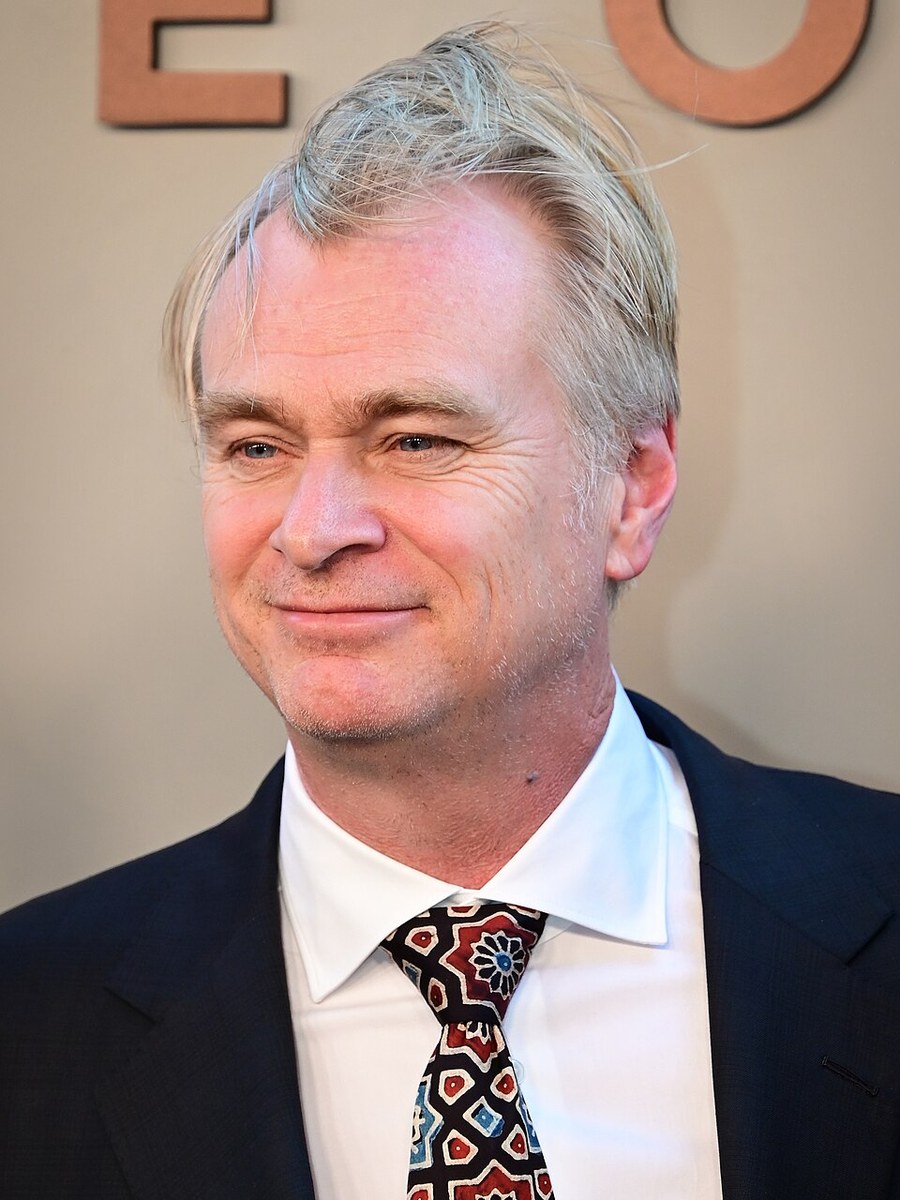
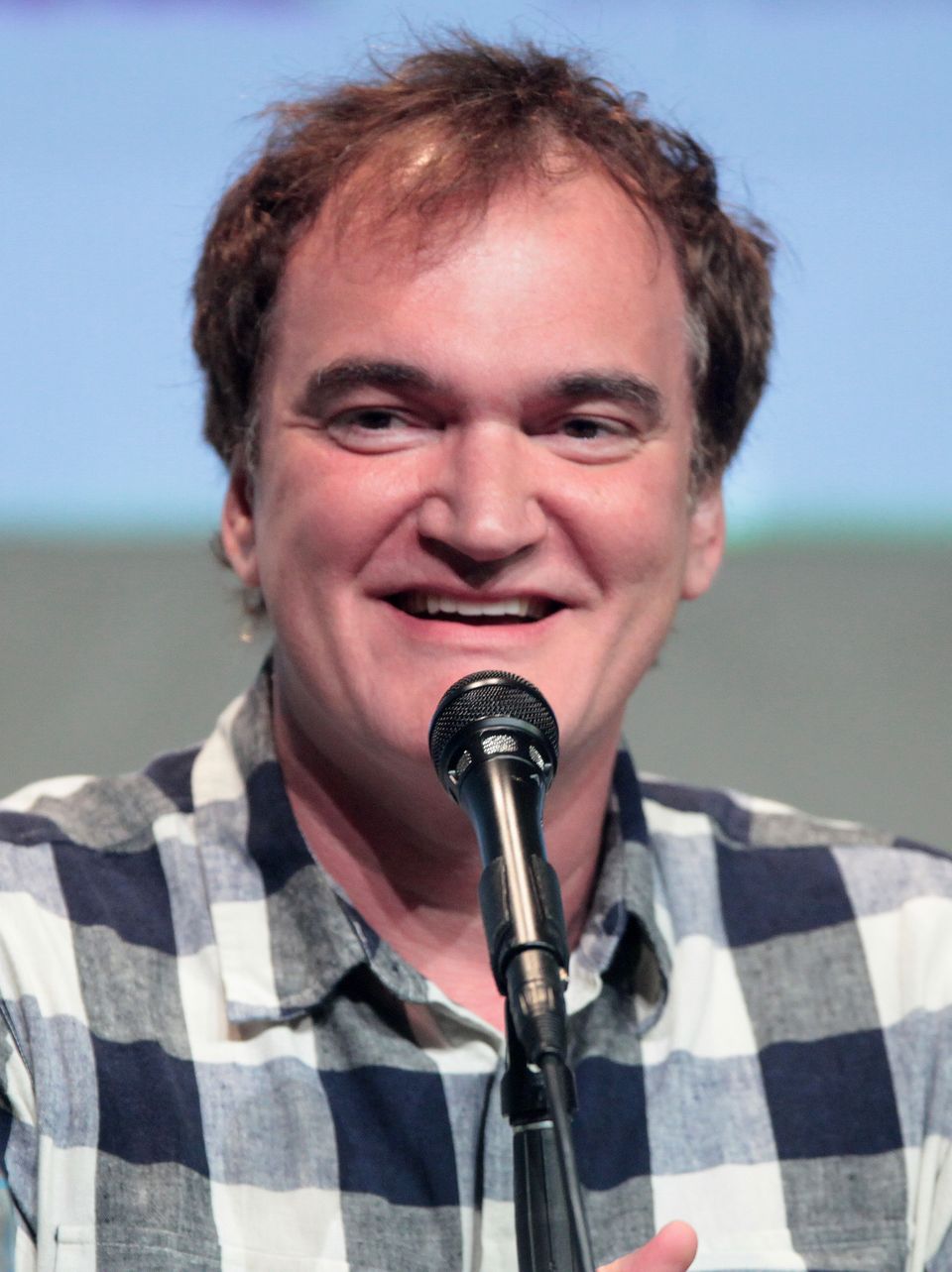
Photograph by PhilipRomano (NYC premiere of The Odyssey, July 2026), CC BY-SA 4.0. Background removed for the portrait above. · Photograph by Gage Skidmore (San Diego Comic-Con International, July 2015), CC BY-SA 3.0. Background removed for the portrait above. · Photograph by LucaFazPhoto (Venice International Film Festival, September 8, 2026), CC BY-SA 4.0. Background removed for the portrait above.
.jpg)

.jpg)
An estimate is an inference.
Yours can be measured.
Thirty questions, scored against general-population benchmarks. Your score, your percentile, your ability breakdown and a printable IIF certificate.
Find your IQ score now! →