



What is Garry Kasparov’s IQ?
He sat a real test battery for Der Spiegel in 1987. It returned 135 and 123, not 190.
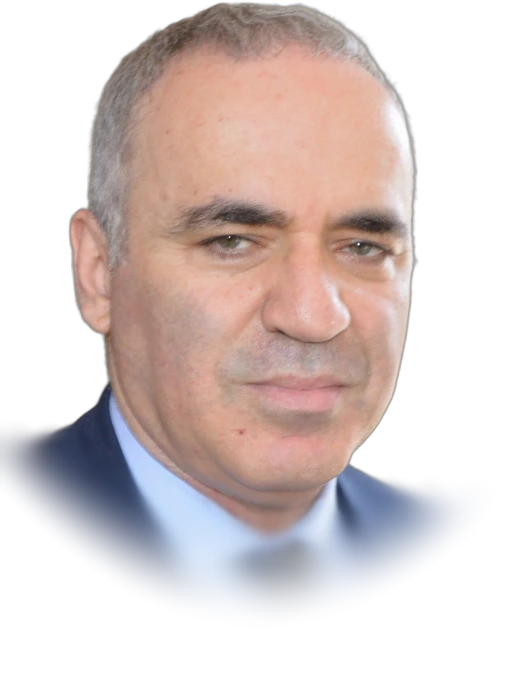
Garry Kasparov scored 135 on a test battery Hans Jürgen Eysenck compiled for Der Spiegel in 1987 and 123 on Raven’s Progressive Matrices; the 190 that circulates has no test behind it. Both results come from one magazine session, so they describe that session, not his chess strength.
Garry Kasparov’s estimated IQ
- In 1987 Der Spiegel had Kasparov tested in Baku: he scored 135 on an intelligence test Hans Jürgen Eysenck compiled for the occasion and 123 on Raven’s Progressive Matrices.
- In the memory tasks of the same session he reconstructed 117 of 120 pieces from five chess positions.
- Peak FIDE rating of 2851 in July 1999, a record that stood until Magnus Carlsen reached 2861 in January 2013.
- World champion from November 9, 1985, when he beat Anatoly Karpov 13–11 at age 22, until he lost the classical title to Vladimir Kramnik in 2000.
- Retired from regular competitive chess in March 2005 at the top of the world rankings.
Two tests from one 1987 session gave 135 and 123, and the range begins at 135, the higher of the two results; the 123 sits below it. Different instruments do not return identical scores for one person, and neither of these samples chess skill. We have not averaged the two results into a single figure.
- Born
- April 13, 1963, Baku, Azerbaijan SSR
- Field
- Chess
- Peak rating
- 2851 (July 1999)
- World champion
- 1985–2000
- Tested IQ
- 135 (Eysenck-compiled battery) and 123 (Raven’s), Der Spiegel, 1987
- Circulating figure
- 190, with no test behind it
What an IQ of 135–155 actually means
Set the claim aside for a moment. If someone genuinely scored in this range, here is what that would represent.
Average is 100 by construction, and about two-thirds of people fall between 85 and 115. Take the test to place your own score on this scale.
| Score range | Classification | Share of people | What it indicates |
|---|---|---|---|
| 85 – 114 | Average | ~68% | The range most people fall into. |
| 115 – 129 | Above average | ~13.6% | Roughly one person in seven. |
| 130 – 144 | Gifted | ~2% | The threshold most high-IQ societies use. |
| Above 144 | Highly gifted | ~0.1% | Figures above this range are extrapolated from the curve rather than measured. |
Percentages are approximate and describe a normal distribution. The same number means different things on tests with different standard deviations.
Thirty questions gives you a measured position on this exact scale — your score, your percentile and the ability breakdown behind it.
Find out in 30 minutes →Who Garry Kasparov is
Garry Kasparov was born in Baku on April 13, 1963, and at ten began training at Mikhail Botvinnik’s chess school under coach Vladimir Makogonov. He became a grandmaster in 1980. On November 9, 1985, he beat Anatoly Karpov 13–11 to become, at 22, the youngest undisputed world champion, and he kept the title in Seville in 1987 with a 12–12 draw.
In 1995 he played Viswanathan Anand in New York, winning four games to one with 13 draws. He beat IBM’s Deep Blue 4–2 in Philadelphia in February 1996, then lost the May 1997 rematch in New York 3½–2½. In 2000 he lost the classical title to Vladimir Kramnik, 8½–6½.
He announced his retirement from regular competitive chess on March 10, 2005, while ranked first in the world. Since then he has written books, including How Life Imitates Chess (2007), on decision-making in chess and business, and Deep Thinking (2017, with Mig Greengard).
 By Elora Mercer, Celebrity Research WriterFigures checked by Leon Falkner, Data & Research Analyst
Reviewed by Aarav Vardhan, Editor-in-Chief · Last reviewed October 2026

Garry Kasparov: the documented record
The estimate above rests on this record. Every entry here is a matter of public fact, which is more than can be said for the number itself.
- 1963Born in Baku.
- 1980Becomes a grandmaster.
- 1985Beats Anatoly Karpov 13–11 on November 9 and becomes world champion at 22.
- 1987Keeps the title in Seville (12–12 with Karpov). Der Spiegel tests him in Baku and prints 135 and 123 on December 21.
- 1997Loses the rematch with IBM’s Deep Blue 3½–2½ in New York, a year after winning the first match 4–2.
- 1999Reaches a peak rating of 2851 in July.
- 2000Loses the classical title to Vladimir Kramnik.
- 2005Announces his retirement from regular competitive chess on March 10.
- 2013Magnus Carlsen passes his rating record in January with 2861.
Where the 190 figure came from
Following a claim back to its first appearance is the part almost nobody does — and it is what most people are actually asking.

Garry Kasparov’s documented IQ results come from a session Der Spiegel arranged in Baku and reported in its issue of December 20, 1987. He scored 135 on an intelligence test Hans Jürgen Eysenck compiled for the occasion and 123 on Raven’s Progressive Matrices. Two instruments, one session, 12 points apart.
The testing ran three days in a suite at the Hotel Azerbaijan. Besides the Eysenck battery and Raven’s matrices, it used a third instrument built on Adolf Otto Jäger’s Berlin model of intelligence structure, a chess test and shorter tasks. In the memory tasks Kasparov reconstructed 117 of 120 pieces from five chess positions. Recalling chess positions is a skill chess players train, so that result says more about chess than about general reasoning.
The 190 has no test behind it. Reader’s Digest’s list of high-IQ people says Kasparov’s IQ is “reportedly in the 190s” and names no source. The Check-IQ ranking page prints 190 from two of its three inputs and names no test, examiner or date. The measured numbers are public, and the unsourced one is more popular.
A rating and a test answer different questions. A rating records results against the strongest opponents over years; a test samples a few reasoning tasks in one session. Bobby Fischer ranks above Kasparov on this site, though the two ranges rest on different kinds of evidence. For the wider field, see chess players ranked by IQ.
How we read a number →The magazine’s own report of three days of testing in Baku: 135 on Hans Jürgen Eysenck’s test and 123 on John C. Raven’s, and 117 of 120 chess pieces recalled from five positions.
Reports 135 on a battery Eysenck assembled and 123 on Raven’s matrices from the Der Spiegel testing in Baku, and cites Der Spiegel 52/1987, “Genieblitze und Blackouts,” December 20, 1987. Says no test supports 190.
Gives the publication date (December 20, 1987), three days of testing in a suite at the Hotel Azerbaijan in Baku, the Eysenck-assembled test, Raven’s and Jäger’s Berlin model, and 117 of 120 pieces recalled across five positions.
Names the three instruments, reports 135 and 123, and places the findings in Der Spiegel issue 52 of 1987. Says the 185–190 figures name no test, date or examiner.
Peak rating 2851 in July 1999; world champion 1985–2000; 13–11 over Karpov on November 9, 1985; Seville 1987 (12–12); Deep Blue 1996 (4–2) and 1997 (3½–2½); Kramnik 8½–6½ in 2000; Carlsen’s 2861 in January 2013.
Infobox lists 2851 (July 1999) and the title years 1985–2000; states he ended his professional career on March 10, 2005, while at the top of the world rankings.
Lists the Grandmaster title with the year 1980 and a birth year of 1963.
Heading “Garry Kasparov: IQ 190s”; says his IQ is reportedly in the 190s and names no source or test. Page updated October 22, 2024.
Shows 190 from two of three listed inputs and 135 from the third; names no test, examiner or date for the 190.
None is attached to the figure in the lists that print it, and Riot IQ and Geniuses Club both state that no test supports it.
The sources behind our estimate
The figures that circulate for Garry Kasparov, what we were able to confirm, and where the two diverge.
190 is the figure that circulates. A Reader’s Digest list of high-IQ people prints it as “reportedly in the 190s,” and the Check-IQ ranking page repeats 190 without naming a test, a date or an examiner.
Kasparov sat a real test battery, and the numbers are nothing like 190. Der Spiegel sent a testing team to Baku and printed the results on December 20, 1987: 135 on a battery Hans Jürgen Eysenck compiled for the occasion and 123 on Raven’s Progressive Matrices. The Reader’s Digest list and the Check-IQ page, which print 190, name no test, date or examiner.
The lowest figures are the measured ones, 123 and 135, and the higher figures carry no test. That ordering repeats across this site often enough to be the section’s central finding.
Want a number that does hold up? Every figure on this page is somebody’s claim. Take the 30-question test and get a percentile you can check rather than a figure you have to trust.
Garry Kasparov — frequently asked
What is Garry Kasparov’s IQ?
Garry Kasparov (Garri Kasparow in the German spelling, and “Kasparov QI” in French) scored 135 on an intelligence test Hans Jürgen Eysenck compiled for Der Spiegel and 123 on Raven’s Progressive Matrices, both in a 1987 session in Baku. No test returning 190 is on record.
Did Garry Kasparov take an IQ test?
Yes. Der Spiegel sent a testing team to Baku and printed the results on December 20, 1987. The three-day session used the Eysenck-compiled battery, Raven’s Progressive Matrices, a test built on Adolf Otto Jäger’s Berlin model of intelligence structure, a chess test and shorter tasks.
Is Garry Kasparov’s IQ 135?
135 is his score on one of the instruments, the battery Eysenck compiled for the session. His score on Raven’s Progressive Matrices in the same session was 123, so no single number describes the result. Different instruments do not return identical scores for one person.
Is Garry Kasparov’s IQ 190?
No test result of 190 exists. Reader’s Digest’s list of high-IQ people calls his IQ “reportedly in the 190s” without a source, and the Check-IQ ranking prints 190 while naming no test. The measured results are 123 and 135.
Does Garry Kasparov have a high IQ?
Both tested scores are above average. On the usual scale (average 100, standard deviation 15), 135 falls near the 99th percentile and 123 near the 94th. See the IQ bell curve for how percentiles are read.
Why is Garry Kasparov’s tested IQ lower than people expect?
A general test and elite chess measure different things. Chess strength rests on pattern knowledge built over years of study, and in the memory tasks he recalled 117 of 120 pieces from chess positions. A general battery does not sample that; see chess and IQ.
What was Garry Kasparov’s peak chess rating?
2851, reached in July 1999. It stood as the record until Magnus Carlsen reached 2861 in January 2013. Kasparov held the world title from 1985 until he lost the classical title to Vladimir Kramnik in 2000.
Who has the higher IQ, Garry Kasparov or Magnus Carlsen?
Carlsen ranks higher on our estimates, 145–160 against Kasparov’s 135–155. Carlsen has no published test result, while Kasparov has two, so the two are not the same kind of number.
How does my IQ compare with Garry Kasparov?
You can find out in about fifteen minutes. The IQ Metrics assessment is 30 questions, scored on the same 100-mean scale used throughout this page, so your result and the estimate above are at least expressed in the same units — one measured, one inferred. Once you have a number, the leaderboard shows where it would sit, and how we score and norm it explains the benchmarking.
Where does this estimate come from?
From the documented record rather than a test — the method is named above and set out in full under how we read a number. Compare it against the other athletes profiles, starting with Magnus Carlsen.
- Take the 30-question IQ test — get a measured score and percentile of your own
- Average IQ by country — how the scale behaves across populations
- How IQ Metrics scores its assessment — the method behind our own number
- More on how IQ testing works — reliability, error and what a score can and cannot say
- More athletes profiles — same field, same method
More athletes
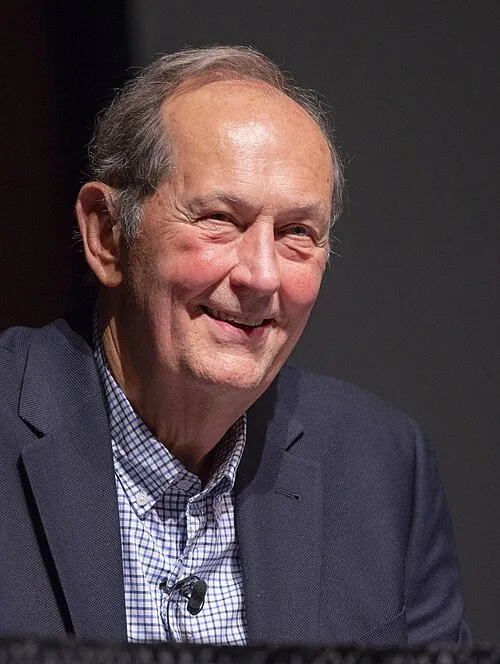

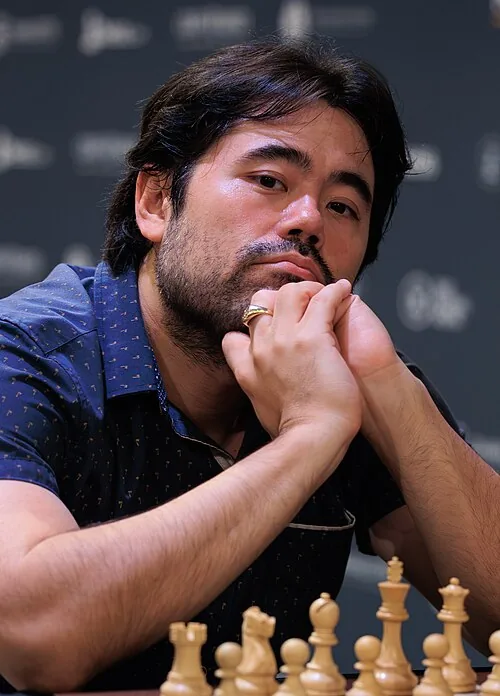
Photograph by Jay Godwin, LBJ Presidential Library, public domain (U.S. government work). · Photograph by Jeffrey Beall, CC BY 3.0. Cropped from the original. · Photograph by ChessKelly, CC BY 4.0. Background removed for the portrait above.


An estimate is an inference.
Yours can be measured.
Thirty questions, scored against general-population benchmarks. Your score, your percentile, your ability breakdown and a printable IIF certificate.
Find your IQ score now! →