



What was Immanuel Kant’s IQ?
A Königsberg chair at 46, three Critiques — and a Cox rating of 135 and 145 built on thin school records.
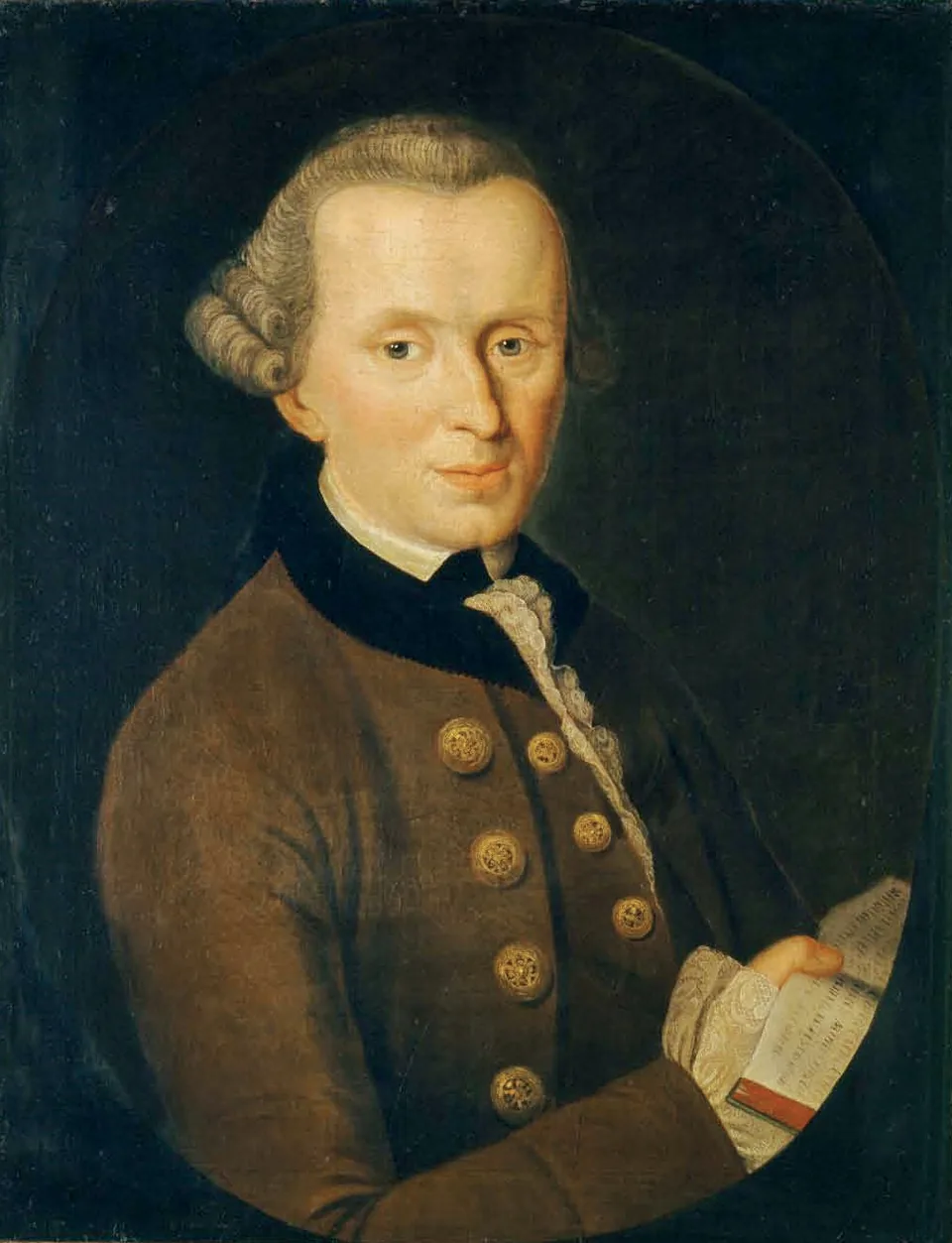
Immanuel Kant’s IQ was never measured, but he is one of the 301 people in Catharine Cox’s 1926 study, which rated him 135 for his first 17 years and 145 for ages 17–26 on records she graded only .43 reliable. The 175 that circulates cites no table; the documented record supports an estimated IQ of 150–170, an inference from a career and not a score.
Immanuel Kant’s estimated IQ
- Catharine Cox’s 1926 table rates him 135 for development to age 17 and 145 for ages 17–26, each with a probable error of ±8 and a data-reliability coefficient of .43; the averages of her 282-person Group A are 134.9 and 144.7, so Kant’s printed numbers mark a typical member of a sample already chosen for eminence.
- Cox’s case study records first place in his class from age 9 to 14 and entry to the University of Königsberg at 16½ with no field of study named; the Neue Deutsche Biographie adds that he left the Collegium Fridericianum in the fall of 1740 as the second-best of his class and matriculated on September 24, 1740, at sixteen.
- In 1755 he submitted the Latin dissertation de igne on April 17, was promoted Magister in a public ceremony on June 12, and on September 27 qualified to lecture with a second Latin dissertation, the Nova dilucidatio.
- He was appointed professor of logic and metaphysics at Königsberg in 1770, at 46, after declining a call to Erlangen in 1769, and served as rector in the summer semesters of 1786 and 1788.
- The Critique of Pure Reason (May 1781, when he was 57; second edition 1787), the Critique of Practical Reason (1788) and the Critique of the Power of Judgment (1790).
Cox’s ratings stop at age 26 and rest on thin records for Kant — nothing but school interests and school reading survives for his first 17 years — and her own text says such ratings were pulled toward the middle by missing data; her correction formula would lift his two ratings to about 162 and 177 on this site’s arithmetic, but she calls it crude, and in her sample eminence tracked her IQ estimates only weakly (r = .25). Immanuel Kant’s estimated IQ of 150–170 is therefore an editorial judgment placed between her printed and corrected figures, not a recovered score, and influence on philosophy is not a measure of reasoning ability.
- Born
- April 22, 1724, Königsberg, Kingdom of Prussia (today Kaliningrad, Russia)
- Died
- February 12, 1804, Königsberg
- School
- Collegium Fridericianum, Königsberg, until the fall of 1740
- University
- University of Königsberg (the Albertina), matriculated September 24, 1740, aged 16
- Degrees
- Magister, 1755 (dissertation de igne; Wikipedia lists it as M.A./PhD); habilitation September 27, 1755
- Chair
- Logic and metaphysics, University of Königsberg, from 1770
- Major works
- Critique of Pure Reason (1781, 1787); Critique of Practical Reason (1788); Critique of the Power of Judgment (1790)
- In Cox’s 1926 study?
- Yes — rated 135 (to age 17) and 145 (ages 17–26), each ±8, data reliability .43
What an IQ of 150–170 actually means
Set the claim aside for a moment. If someone genuinely scored in this range, here is what that would represent.
Average is 100 by construction, and about two-thirds of people fall between 85 and 115. Take the test to place your own score on this scale.
| Score range | Classification | Share of people | What it indicates |
|---|---|---|---|
| 85 – 114 | Average | ~68% | The range most people fall into. |
| 115 – 129 | Above average | ~13.6% | Roughly one person in seven. |
| 130 – 144 | Gifted | ~2% | The threshold most high-IQ societies use. |
| Above 144 | Highly gifted | ~0.1% | Figures above this range are extrapolated from the curve rather than measured. |
Percentages are approximate and describe a normal distribution. The same number means different things on tests with different standard deviations.
Thirty questions gives you a measured position on this exact scale — your score, your percentile and the ability breakdown behind it.
Find out in 30 minutes →Who Immanuel Kant was
Immanuel Kant was born on April 22, 1724 in Königsberg, then in the Kingdom of Prussia and today Kaliningrad, Russia, and he died there on February 12, 1804. He attended the Pietist Collegium Fridericianum from the age of eight, holding first place in his class from age 9 to 14 by Cox’s account and leaving in the fall of 1740 as the second-best of his class by the Neue Deutsche Biographie’s. On September 24, 1740, at sixteen, he matriculated at the University of Königsberg, the Albertina; Cox’s case study says he did not confine himself to one faculty and drew on the library of the young philosopher Knutzen, whose volumes had introduced German students to Newton.
His studies were interrupted in 1746, and from 1748 until his return to Königsberg in August 1754 he worked as a private tutor in households outside the city. His first work, Thoughts on the True Estimation of Living Forces, was submitted to the philosophy faculty in 1746 but appeared only in 1749 (the Stanford Encyclopedia of Philosophy dates it 1747). In March 1755 he published, at first anonymously, the Universal Natural History and Theory of the Heavens, in which he developed what later became known as the nebular hypothesis; Laplace independently proposed a similar model in 1796. The degrees followed that year: on April 17, 1755 he submitted the Latin dissertation de igne (Succinct Exposition of Some Meditations on Fire), a public promotion ceremony on June 12 made him a Magister, and on September 27 his habilitation with Principiorum primorum cognitionis metaphysicae nova dilucidatio entitled him to teach as an unsalaried lecturer.
The academic ladder was slow. In December 1758 his application for the Königsberg chair of logic and metaphysics went to a more senior colleague; in fall 1769 he declined a call to a chair at Erlangen, and apparently an inquiry from Jena as well, in hopes of a post at home. In 1770, at 46, he was appointed professor of logic and metaphysics at Königsberg, was installed on May 2, and presented the Latin inaugural dissertation De mundi sensibilis atque intelligibilis forma et principiis. He served as rector of the university in the summer semesters of 1786 and 1788, and taught there for the next four decades.
The books that made his name came late. The Critique of Pure Reason appeared in May 1781, when he was 57, followed by a revised second edition in 1787, the Critique of Practical Reason in 1788 and the Critique of the Power of Judgment in 1790. These are documented achievements, not an IQ test, and Cox’s ratings, which stop at age 26, never took them into account. Kant died in Königsberg on February 12, 1804, just short of his eightieth birthday.
 By Elora Mercer, Celebrity Research WriterFigures checked by Leon Falkner, Data & Research Analyst
Reviewed by Aarav Vardhan, Editor-in-Chief · Last reviewed August 2026

Immanuel Kant: the documented record
The estimate above rests on this record. Every entry here is a matter of public fact, which is more than can be said for the number itself.
- 1724Born April 22 in Königsberg, Prussia.
- 1740Leaves the Collegium Fridericianum in the fall as the second-best of his class; matriculates at the University of Königsberg on September 24, aged 16.
- 1749Thoughts on the True Estimation of Living Forces appears in print, three years after it was submitted to the philosophy faculty.
- 1755Universal Natural History and Theory of the Heavens appears in March; Magister after a public promotion ceremony on June 12; habilitation on September 27.
- 1758In December his application for the Königsberg chair of logic and metaphysics goes to a more senior colleague.
- 1770Appointed professor of logic and metaphysics at Königsberg, aged 46; installed May 2 with the inaugural dissertation De mundi sensibilis atque intelligibilis forma et principiis.
- 1781Critique of Pure Reason appears in May, when he is 57.
- 1787–1790Second edition of the first Critique (1787); Critique of Practical Reason (1788); Critique of the Power of Judgment (1790).
- 1804Dies in Königsberg on February 12.
- 1926Catharine Cox’s Early Mental Traits of Three Hundred Geniuses prints his ratings: 135 to age 17, 145 for ages 17–26.
Where the 145–175 figure came from
Following a claim back to its first appearance is the part almost nobody does — and it is what most people are actually asking.
Immanuel Kant’s IQ is quoted anywhere from 145 to 175, and none of the pages that quote it cites a test. HistorySnob’s “20 Historical Geniuses With The Highest Estimated IQs” says Kant’s estimated IQ ranges from 145 to 175 and adds that all of its numbers are speculative. Dr. Diane Hamilton’s page reproduces a chart “from aceviper.net” that lists him at 175 under the heading “IQ (SB)”, in the same column that gives Voltaire 190, Isaac Newton 190 and Goethe 210. A 2023 Twitter survey of estimated IQs for 54 public figures put the median guess for Kant at 149, second only to Newton’s 160. This is the pattern this site traces across celebrity IQ numbers: a round figure copied from chart to chart until the citation is gone.
Unlike Friedrich Nietzsche, whose supposed “Cox estimate” does not exist, Immanuel Kant really is in Catharine Cox’s Early Mental Traits of Three Hundred Geniuses (1926), the second volume of Lewis Terman’s Genetic Studies of Genius. Cox, Terman and Maud Merrill each read case studies she had compiled from biographies of 301 eminent people born between 1450 and 1850, and estimated, in Terman’s words, “the IQ that would most reasonably account for the recorded facts” — once for development to age 17 and once for ages 17 to 26. For Kant the averaged ratings are 135 and 145, each with a probable error of ±8 (see how an IQ score’s margin of error works) and a data-reliability coefficient of .43 (Table 28, p. 113; case study, pp. 411–413). Those are almost exactly the averages of her 282-person Group A, 134.9 and 144.7, and the case study shows why: for his first 17 years it records only school interests and school reading, first place in his class from age 9 to 14, and entry to the University of Königsberg at 16½ without naming a field of study.
Cox did not treat 135 as Kant’s ceiling. On page 115 she writes that a rating of 135 in several cases “clearly involves a regression for lack of data” and that the true upper limit of that group, “set by such youths as Cousin, Darwin, Erasmus, Da Vinci, and Kant,” is probably above 160. Her correction formula (pp. 81–83) pulls a rating toward its field’s average in proportion to how unreliable the data are; for the philosophers in her sample it lifts the group means of 147 and 156 to 170 and 180 (Tables 20A–20B). Applied to Kant’s two ratings it gives roughly 162 and 177 — this site’s arithmetic, not figures Cox printed for him, from a method she calls a crude approximation that marks a point below which the true IQ probably did not fall. The 177 sits two points from the 175 on the web, but no page that prints 175 shows that route, and a number that lands near a calculation is not a citation.
So what was Immanuel Kant’s IQ? He died in 1804, a century before Alfred Binet and Théodore Simon published the first practical intelligence test in 1905 (the history of intelligence testing), so every Immanuel Kant IQ score is a reconstruction. This site’s estimated IQ of 150–170 (what an IQ of 150 means) starts above Cox’s printed 145, because her own text says thin records pulled such ratings down, and stops below the corrected 177, because that correction assumes a subject belongs with the average of an already-eminent field. In Cox’s own sample the ranking of eminence and her 17-to-26 IQ estimate correlated at only .25, or .16 after adjusting for data reliability, as Dean Keith Simonton summarized in a 2020 Gifted Child Quarterly article, so Kant’s influence cannot simply be read back as a quotient. The range puts him below Voltaire (170–190) and Johann Wolfgang von Goethe (165–185), whom Cox rated 170 and 180, and 185 and 200, and below Isaac Newton (170–190), whom she rated 130 and 170: five points under Kant’s first rating, twenty-five over his second.
How we read a number →Source of the only rating on this page that comes from a study: Kant’s case study (pp. 411–413) prints 135 and 145; Table 28 (p. 113) gives ±8 and a reliability coefficient of .43 for both; the Group A means (134.9 and 144.7), the rating method and the correction formula (pp. 81–83, Tables 20A–20B), and the remark on p. 115 about the group’s upper limit “set by … Kant”. Voltaire 170/180, Goethe 185/200 and Newton 130/170 come from their own case-study headings.
Dates for leaving the Fridericianum as the second-best of his class (fall 1740), matriculation on September 24, 1740, the Living Forces work (submitted 1746, in print 1749), the Universal Natural History (March 1755), the de igne dissertation (April 17, 1755) and the public promotion on June 12, the habilitation on September 27, 1755 with the Nova dilucidatio, the failed 1758 application, the Erlangen and Jena offers, installation on May 2, 1770, two terms as rector, the Critique of Pure Reason in May 1781 and the death on February 12, 1804.
Birth on April 22, 1724; the Fridericianum from age eight; the Magister degree for the 1755 fire dissertation; the Nova dilucidatio as the second Latin dissertation; the nebular hypothesis in the 1755 Universal Natural History; the 1770 chair at age 46; the three Critiques; the death date. It dates the Living Forces work to 1747, where the NDB and Wikipedia give 1749.
Describes Cox’s three raters, the two IQ periods, the published reliability coefficients and corrected estimates, and the correlation between Cattell’s eminence ranking and her 17-to-26 estimate (.25, or .16 adjusted for data reliability).
Cross-checks: the tutoring years from 1748 to August 1754, the 1749 first work, the 1755 degrees listed as M.A./PhD, the 1770 chair, Laplace’s independent model of 1796, the Binet–Simon test of 1905 and Cox’s volume as the second in Terman’s series. Wikidata Q9312 reads “German philosopher (1724–1804)”, born 1724-04-22, died 1804-02-12.
The only circulating figure with a traceable origin: the tables list a median of 149 for Immanuel Kant (standard deviation of the estimates 17.86), second to Isaac Newton at 160.
States that Kant’s estimated IQ ranges from 145 to 175 and warns that the numbers are speculative; names no source and does not mention Cox or any test.
Reproduces a chart “from aceviper.net” with a column headed “IQ (SB)” that lists Immanuel Kant at 175 (Newton 190, Voltaire 190, Goethe 210). No derivation, date, disclaimer or mention of Cox; “SB” is not defined.
No test score for Kant appears in any biography, encyclopedia entry or academic page consulted, and none could: he died a century before the Binet–Simon scale. The circulating figures are Cox’s reconstructed ratings, a poll median, and two pages that cite nothing.
The sources behind our estimate
The figures that circulate for Immanuel Kant, what we were able to confirm, and where the two diverge.
Figures from 145 to 175 circulate for the IQ of Immanuel Kant: HistorySnob’s list of 20 historical geniuses says his estimated IQ ranges from 145 to 175; a chart on Dr. Diane Hamilton’s site, credited to aceviper.net, lists him at 175 under “IQ (SB)”; and a 2023 Twitter survey put the median guess at 149.
No IQ test result exists for Immanuel Kant, but unlike many names on this site he does have a Cox rating. Catharine Cox’s 1926 table prints 135 for his development to age 17 and 145 for ages 17–26, each with a probable error of ±8 and a data-reliability coefficient of .43. Neither page that gives 175 mentions Cox: HistorySnob names no source and calls its numbers speculative, and the Hamilton page says only that its chart is from aceviper.net, never explains how the numbers were derived and does not define “SB”. The 149 is the only circulating figure with a traceable procedure — the median of a Twitter survey in which Kant ranked second to Isaac Newton’s 160.
The circulating figures span 30 points. The 149 is a poll median, the 145 equals Cox’s printed rating for ages 17–26 although HistorySnob never names her, and the 175 has no stated source at all. This site’s 150–170 sits inside the span: it starts five points above Cox’s printed 145 and stops five points under the unsourced 175.
Want a number that does hold up? Every figure on this page is somebody’s claim. Take the 30-question test and get a percentile you can check rather than a figure you have to trust.
Immanuel Kant — frequently asked
What is Immanuel Kant’s IQ?
Immanuel Kant’s IQ was never measured, so no true score exists; the nearest thing is Catharine Cox’s 1926 historiometric rating of 135 for his first 17 years and 145 for ages 17–26. From his documented record — a Königsberg chair at 46 and three Critiques — this site estimates 150–170, an inference rather than a test result.
What is Immanuel Kant’s IQ score in Catharine Cox’s study?
Cox’s 1926 study prints 135 for Kant’s development to age 17 and 145 for ages 17–26, each with a probable error of ±8 and a data-reliability coefficient of .43. Those match the averages of her whole sample, 134.9 and 144.7, because the records of his youth were thin, not because he was tested.
What was Immanuel Kant’s IQ — did he ever take an IQ test?
No. Kant died in 1804, a century before Alfred Binet and Théodore Simon published the first practical intelligence test in 1905, so no score of any kind was available to him. Every figure online is an estimate: Cox’s 1926 reconstruction, a Twitter-poll median of 149, or an unsourced chart entry of 175.
Was Immanuel Kant a genius?
By the documented record he was an exceptional scholar: second-best of his class when he left the Collegium Fridericianum, a university student at 16, a Magister in 1755, a professor at 46 and the author of the Critique of Pure Reason. Genius is a judgment about influence, though, not a score, and this site’s 150–170 is an estimate.
Is Immanuel Kant smart?
Every checkable source points to very high ability: top places in his school class, two Latin dissertations in 1755, the logic and metaphysics chair at Königsberg from 1770, and two terms as rector. What none supplies is a measured IQ; Cox’s ratings of 135 and 145 and this site’s 150–170 are reconstructions from the record.
Where does the 175 figure for Immanuel Kant’s IQ come from?
No source is given for it. A chart on Dr. Diane Hamilton’s site, credited to aceviper.net, lists Kant at 175 under “IQ (SB)” without saying how it was derived, and HistorySnob gives a range of 145 to 175 while calling its numbers speculative. Neither mentions Cox, whose printed ratings for him are 135 and 145.
How does Immanuel Kant’s estimated IQ compare with Voltaire’s or Isaac Newton’s?
This site’s 150–170 for Kant sits below Voltaire (170–190) and Isaac Newton (170–190). Cox’s own table shows the gap: she rated Voltaire 170 and 180, Newton 130 and 170, and Kant 135 and 145. All three are historical reconstructions from biographies, not test results.
How does my IQ compare with Immanuel Kant?
You can find out in about fifteen minutes. The IQ Metrics assessment is 30 questions, scored on the same 100-mean scale used throughout this page, so your result and the estimate above are at least expressed in the same units — one measured, one inferred. Once you have a number, the leaderboard shows where it would sit, and how we score and norm it explains the benchmarking.
Where does this estimate come from?
From the documented record rather than a test — the method is named above and set out in full under how we read a number. Compare it against the other writers profiles, starting with Voltaire.
- Take the 30-question IQ test — get a measured score and percentile of your own
- Average IQ by country — how the scale behaves across populations
- How IQ Metrics scores its assessment — the method behind our own number
- More on how IQ testing works — reliability, error and what a score can and cannot say
- More writers profiles — same field, same method
More writers
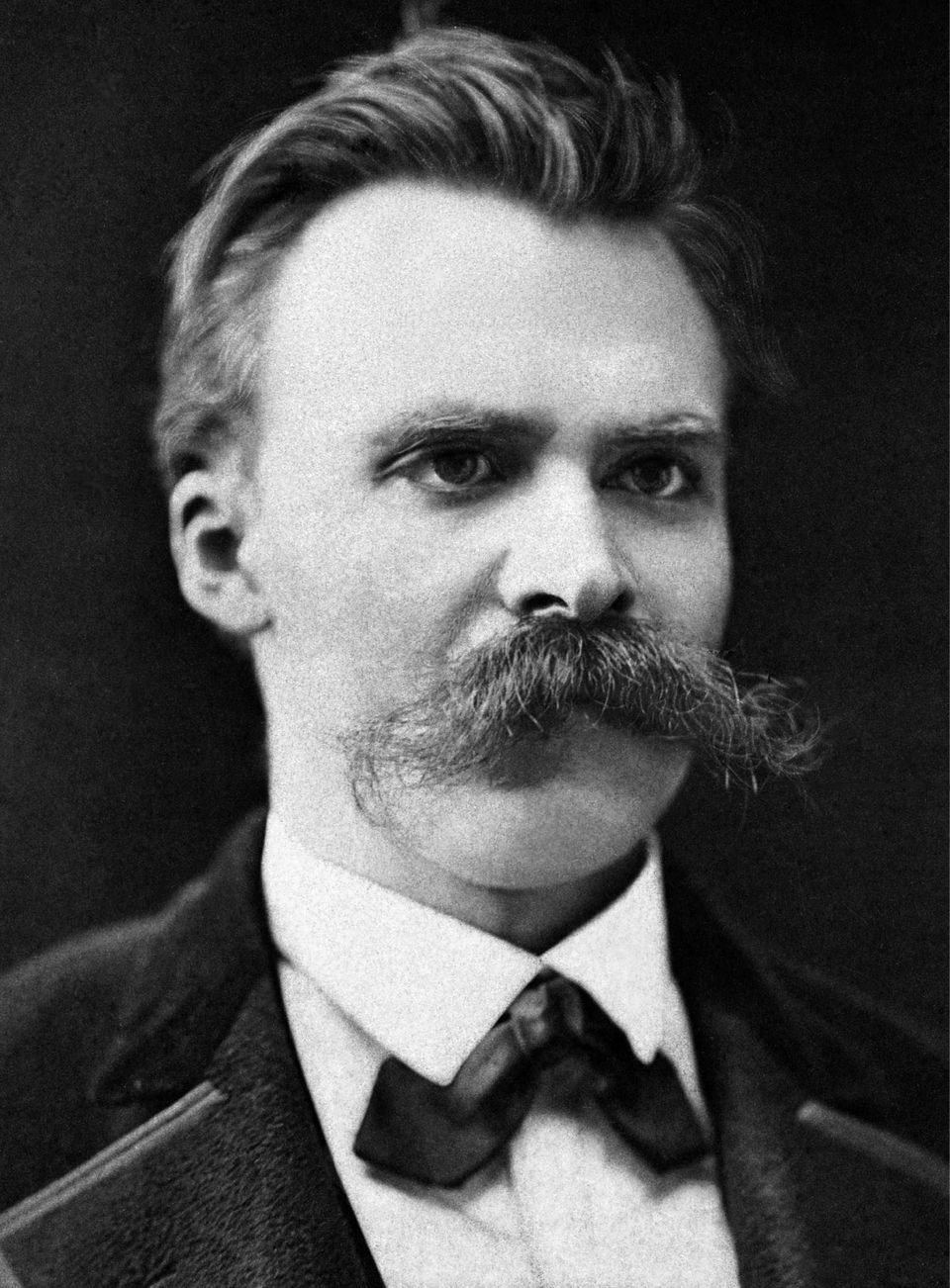
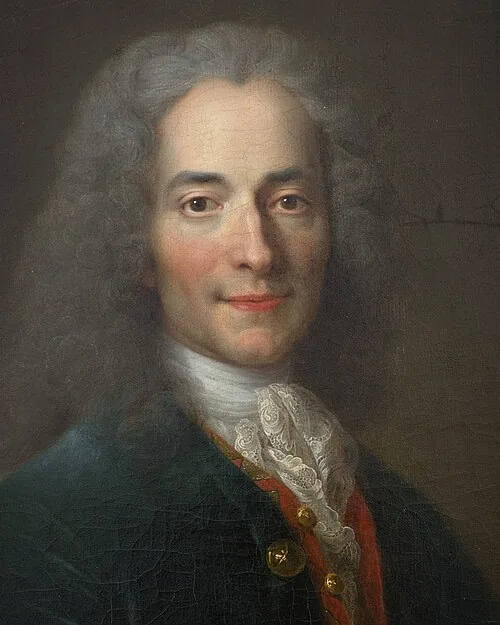
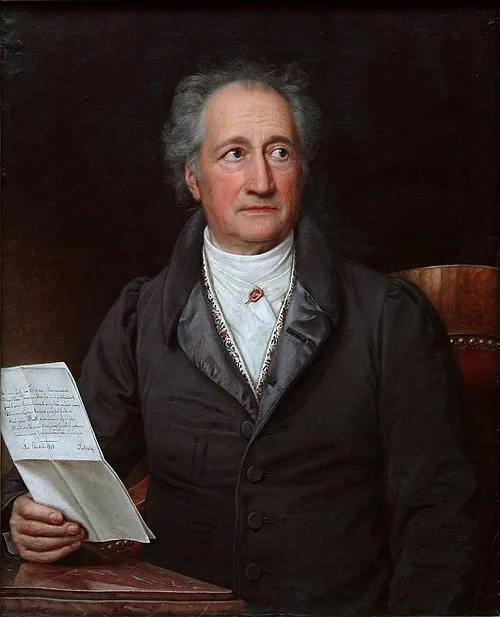
Photograph by Friedrich Hermann Hartmann (c. 1875), public domain. Background removed for the portrait above. · Portrait from the workshop of Nicolas de Largillière, public domain. · Portrait by Joseph Karl Stieler (1828), public domain. Background removed for the portrait above.

_-002.jpg)
.jpg)
An estimate is an inference.
Yours can be measured.
Thirty questions, scored against general-population benchmarks. Your score, your percentile, your ability breakdown and a printable IIF certificate.
Find your IQ score now! →