



What was Friedrich Nietzsche’s IQ?
A chair at 24, a doctorate without an exam — and a “Cox estimate” that Catharine Cox never made.
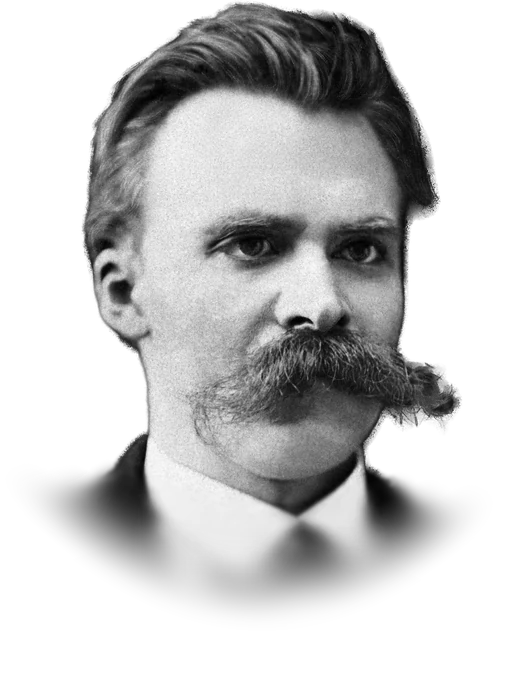
Friedrich Nietzsche’s IQ was never measured — he died in 1900, five years before the first practical intelligence test — and the 165 and 190 quoted for the IQ of Nietzsche cite no test. What is documented is a scholarship to Schulpforta and, at 24, a Basel chair in classical philology, which supports an estimated IQ of 150–165: an inference from a career, not a score, and 25 points short of 190.
Friedrich Nietzsche’s estimated IQ
- A scholarship place at Schulpforta from 1858 until his Abitur in 1864, then university study at Bonn and, from October 1865, at Leipzig under the philologist Friedrich Ritschl.
- A prize in 1867 for a study of the sources of Diogenes Laertius, and essays in Ritschl’s Rheinisches Museum für Philologie — on the Theognidean verse collection (1867) and on Laertius (1868–69) — written in his early twenties.
- Called to the chair of classical philology at Basel at 24 (offered in January 1869, appointed in February, in post from April), and a full professor from April 1870.
- Ritschl, who had noticed his talent early, recommended him warmly to Basel; his letter, as Basel’s university history summarizes it, credited him with extraordinary energy, a keen intellect and unusual philosophical seriousness.
- The Birth of Tragedy (1872), Human, All Too Human (1878), Thus Spoke Zarathustra (1883–85), Beyond Good and Evil (1886) and On the Genealogy of Morality (1887), a body of work produced in a life plagued by migraine and spells of near-blindness.
Basel’s own university history calls the 1869 appointment largely pragmatic — its finances in those years required hiring many young scholars, and Nietzsche’s predecessor in the chair was only 25 — and the Leipzig doctorate was waived rather than examined, so neither is a ranked result like a wrangler’s place or a first-class degree. Cox never scored a childhood record for him (he is not among her 301 subjects), and influence on philosophy is not a measure of reasoning ability, so Friedrich Nietzsche’s estimated IQ of 150–165 is an editorial inference from a career, not a recovered score.
- Born
- October 15, 1844, Röcken, near Lützen, Prussian Saxony
- Died
- August 25, 1900, Weimar, aged 55
- School
- Schulpforta, near Naumburg, on a scholarship, 1858–1864
- Studied
- Bonn (1864–65), then Leipzig under Friedrich Ritschl (1865–69)
- Doctorate
- Dr. phil., Leipzig, March 23, 1869 — in absentia, without a dissertation or examination
- Chair
- Classical philology, University of Basel, 1869–1879 (full professor from April 1870)
- Best-known works
- The Birth of Tragedy (1872); Thus Spoke Zarathustra (1883–85); Beyond Good and Evil (1886); On the Genealogy of Morality (1887)
- In Cox’s 1926 study?
- No — born 1844, inside her 1450–1850 window, but not among her 301 subjects
What an IQ of 150–165 actually means
Set the claim aside for a moment. If someone genuinely scored in this range, here is what that would represent.
Average is 100 by construction, and about two-thirds of people fall between 85 and 115. Take the test to place your own score on this scale.
| Score range | Classification | Share of people | What it indicates |
|---|---|---|---|
| 85 – 114 | Average | ~68% | The range most people fall into. |
| 115 – 129 | Above average | ~13.6% | Roughly one person in seven. |
| 130 – 144 | Gifted | ~2% | The threshold most high-IQ societies use. |
| Above 144 | Highly gifted | ~0.1% | Figures above this range are extrapolated from the curve rather than measured. |
Percentages are approximate and describe a normal distribution. The same number means different things on tests with different standard deviations.
Thirty questions gives you a measured position on this exact scale — your score, your percentile and the ability breakdown behind it.
Find out in 30 minutes →Who Friedrich Nietzsche was
Friedrich Wilhelm Nietzsche was born on October 15, 1844 in Röcken, near Lützen in the Prussian Province of Saxony, the son of the Lutheran pastor Carl Ludwig Nietzsche, who died in 1849. In September 1858 the rector of Schulpforta, the boarding school near Naumburg housed in a former Cistercian abbey, offered him a scholarship place; he stayed until the Abitur in September 1864. He enrolled at the University of Bonn that year to study theology, moved to classical philology in the next semester, and in fall 1865 followed his teacher Friedrich Ritschl to the University of Leipzig, where his matriculation is entered under October 20, 1865. In 1867 he received a prize for a philological study of the sources of Diogenes Laertius and published an essay on the Theognidean verse collection in Ritschl’s Rheinisches Museum für Philologie; essays on Laertius followed there in 1868 and 1869.
In January 1869 Basel offered Nietzsche an extraordinary professorship in Greek language and literature, the chair that Adolf Kiessling — another Ritschl pupil, appointed at 25 — was leaving for Hamburg. Kiessling had noticed Nietzsche’s early work and asked Ritschl about him; Ritschl recommended him warmly, attesting in his letter, as Basel’s university history summarizes it, extraordinary energy, a keen intellect and unusual philosophical seriousness. Nietzsche was appointed in February, aged 24, though he had no doctorate; Leipzig’s Philosophical Faculty, acting in what its archive calls great haste and with rare unanimity among the full professors, conferred the Dr. phil. on March 23, 1869 in absentia, on the strength of his earlier work, without a specially submitted dissertation and without an examination. He reached Basel in April 1869, taught at the Pädagogium as well as the university, and became a full professor in April 1870; in August 1870 he took leave to serve as a volunteer medical orderly in the Franco-Prussian War, where he contracted diphtheria and dysentery. Basel’s history of its own university calls the quick appointment a largely pragmatic decision, driven by practical necessity more than by a wish to secure a young genius: the university’s finances in those years made hiring many young scholars necessary, and Kiessling had been only 25 when he took the same chair.
His first book, The Birth of Tragedy (1872), was mocked by Ulrich von Wilamowitz-Moellendorff — like Nietzsche a Schulpforta alumnus — as “future philology”, and the Encyclopedia of Philosophy says it all but destroyed his standing as an academic philologist. From Human, All Too Human (1878), dedicated to the memory of Voltaire on the centenary of his death, he published a book or major section of a book every year until 1888. Illness ran alongside the work — migraine, spells of near-blindness and violent indigestion had plagued him since childhood — and on grounds of health Basel relieved him of his Pädagogium teaching in 1876 and granted a year’s leave; in May 1879 he asked to be released and left with a pension — assured for six years and extended in 1885 — that the university’s history calls generous. He then spent winters near the Mediterranean, mostly in Italy, and summers at Sils Maria in Switzerland, writing Thus Spoke Zarathustra (1883–85), Beyond Good and Evil (1886) and On the Genealogy of Morality (1887); in 1888, his last year of writing, he completed five books, among them Twilight of the Idols, The Antichrist and Ecce Homo.
On January 3, 1889, in Turin, Nietzsche collapsed in the street and in the following days sent a series of increasingly disordered letters; the familiar story that he threw his arms around a horse being flogged is a much-repeated tale that dates from shortly after his death. Franz Overbeck traveled to Turin and brought him to a psychiatric clinic in Basel; he was then treated in Jena, taken by his mother to Naumburg in May 1890, and after her death in 1897 lived in Weimar in his sister Elisabeth’s care. He wrote no more books. The cause of his illness remains unexplained — the diagnosis of his day, tertiary syphilis, has since been challenged — and for the IQ question the point is simply that it ended a documented career at 44. He died in Weimar on August 25, 1900, aged 55, after pneumonia and a stroke, and is buried at Röcken.
 By Elora Mercer, Celebrity Research WriterFigures checked by Leon Falkner, Data & Research Analyst
Reviewed by Aarav Vardhan, Editor-in-Chief · Last reviewed August 2026

Friedrich Nietzsche: the documented record
The estimate above rests on this record. Every entry here is a matter of public fact, which is more than can be said for the number itself.
- 1844Born October 15 in Röcken, near Lützen, in the Prussian Province of Saxony.
- 1858Offered a scholarship place at Schulpforta, the boarding school near Naumburg; he stays until the Abitur in September 1864.
- 1865After a year at Bonn, follows his teacher Friedrich Ritschl to Leipzig; matriculates on October 20.
- 1867Receives a prize for a study of the sources of Diogenes Laertius; his essay on the Theognidean collection appears in the Rheinisches Museum für Philologie.
- 1869Offered the Basel chair in January and appointed in February; Leipzig confers the Dr. phil. on March 23 in absentia, without examination; takes up the post in April, aged 24.
- 1870Becomes a full professor in April; from August serves as a volunteer medical orderly in the Franco-Prussian War.
- 1872Publishes The Birth of Tragedy.
- 1879Asks to be released in May; leaves Basel on grounds of ill health, with a pension.
- 1889Collapses in a street in Turin on January 3; his last books were completed in 1888.
- 1900Dies in Weimar on August 25.
Where the 144–190 figure came from
Following a claim back to its first appearance is the part almost nobody does — and it is what most people are actually asking.
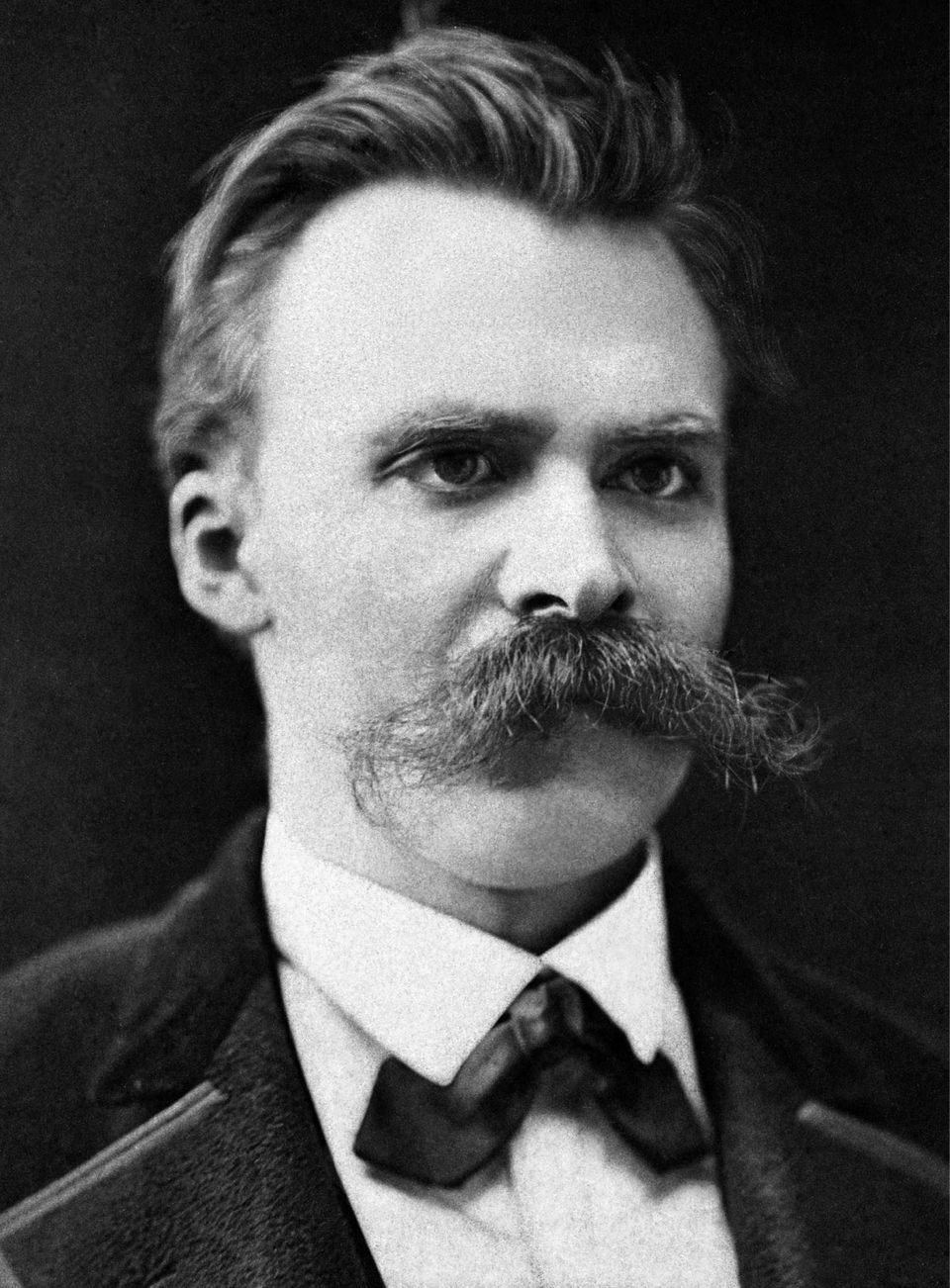
Friedrich Nietzsche’s IQ level is quoted at three heights, and none of them comes from a test. iqtests.com, in a blog post dated April 30, 2024, calls 190 a rumor and admits it is guesswork; geniuses.club shows 190 without a source; corebrain.app gives 165 and labels it a “Cox estimate”; and a Substack essay of April 2023 repeats the 190 after what it calls a quick online search. This is the pattern this site traces across celebrity IQ numbers — a round figure copied from page to page until the citation is gone — and it matches the spread on Karl Marx’s profile, another nineteenth-century German philosopher with several unsourced numbers and no test.
Two of those pages lean on Catharine Cox: iqtests.com says scholars like her put his IQ among the highest in history, and corebrain.app labels its 165 a “Cox estimate” and lists her 1926 Early Mental Traits of Three Hundred Geniuses first among its references. Nietzsche is not in that study. Cox scored 301 people born between 1450 and 1850 — 282 taken from the first 510 names of James McKeen Cattell’s 1903 list of the thousand most eminent men in history, and 19 from further down it — and he appears in neither list: not in the book’s name index, not in iqcomparisonsite.com’s transcription of her table, and not among Cattell’s thousand, which was published less than three years after he died. Franz Kafka, born in 1883, misses her window by three decades; Nietzsche, born in 1844, is inside it but was never on the list she drew from. So no Cox estimate exists for him, sourced or not.
The only Nietzsche IQ score whose origin can be traced is the lowest one. A survey published in March 2023 asked people on Twitter to estimate the IQ of 54 individuals, and in its published tables 229 raters gave Nietzsche a median of 144 (mean 146, individual guesses from 79 to 200). That is a poll of how clever Nietzsche seems to an audience recruited through one Twitter account — Ronald Henss’s write-up of the survey calls the sample very atypical — and a result in the 140s (a score around 140) mostly records that he is thought highly of, not an estimate built from what he did.
The 190 is the hardest of the three to defend. On the usual scale (mean 100, standard deviation 15) it sits six standard deviations above average, about one person in a billion — see how rare a high IQ score is — and Nietzsche died five years before Binet and Simon published the first practical intelligence test in 1905 (the history of intelligence testing), so no score of any height was ever available to him. The record supports a range that tops out at the lower of the two quoted figures: 150–165 puts him between Oscar Wilde (140–155), another product of a classical education who died in 1900, and Bertrand Russell (160–175), whose seventh-wrangler placing and Nobel Prize give his record firmer footing than Nietzsche’s.
How we read a number →Confirms the Dr. phil. of March 23, 1869, awarded in absentia and in great haste, without a specially submitted dissertation and without examination; his matriculation on October 20, 1865; and a prize for his Diogenes Laertius study in 1867. The archive does not call the degree honorary.
The January 1869 offer, Ritschl’s recommendation, Nietzsche at 24 without a doctorate, Basel’s own verdict that the appointment was largely pragmatic (the university’s finances required young hires; his predecessor Kiessling was 25), teaching at the Pädagogium, the 1876 leave, the 1879 resignation and the pension.
Dates for the 1858 scholarship, the 1864 Abitur, Leipzig in fall 1865, the Basel appointment (February 1869; full professor April 1870) with the Leipzig doctorate given in March on the basis of his earlier work, the August 1870 medical-orderly service, the May 1879 request for release and its pension terms, the collapse on January 3, 1889, the clinics in Basel and Jena, the note that the causes of his illness remain unexplained, and the death on August 25, 1900.
Appointment to Basel at 24; leave in 1876–77 and resignation by 1879; the January 1889 collapse in Turin; care by his mother, then his sister; death in 1900 of a stroke complicated by pneumonia.
Schulpforta; the Basel post offered before he had begun a dissertation; the Rheinisches Museum publications and the Leipzig degree without a dissertation; Kiessling’s post; Wilamowitz’s mockery of The Birth of Tragedy; the January 3, 1889 date, with the horse story given only as “reportedly”; the clinics in Basel and Jena; burial at Röcken.
Three archive.org scans of Cox’s full text contain no mention of Nietzsche, and her name index runs from Ney to Niebuhr to O’Connell. She took 282 subjects from the first 510 names of Cattell’s list and 19 from beyond it; Cattell’s printed list of the thousand most eminent men does not include him. iqcomparisonsite.com’s transcription of Table 12A omits him too.
The only figure with a traceable origin: 229 raters recruited on Twitter gave Nietzsche a median of 144 (mean 146, guesses from 79 to 200). Henss’s write-up calls the sample very atypical.
Sources of the 165 and 190 figures. iqtests.com calls 190 a rumor and guesswork and names Cox without a citation; corebrain.app labels 165 a “Cox estimate” and lists Cox (1926) among its references; geniuses.club and the Substack essay give 190 with no source.
Cross-checks: the 1878 dedication to Voltaire, the harm The Birth of Tragedy did to his academic standing, the diphtheria and dysentery in 1870, the 1888 output, the aftermath of the collapse and the 1905 Binet–Simon date — and the “honorary doctorate” wording that Leipzig’s own archive does not use.
No test score for Nietzsche appears in any biography, encyclopedia entry, university archive or IQ-ranking page consulted, and none could: he died five years before the Binet–Simon scale. The circulating figures are guesses, a Twitter poll, or an unsourced Cox attribution.
The sources behind our estimate
The figures that circulate for Friedrich Nietzsche, what we were able to confirm, and where the two diverge.
Figures from 144 to about 190 circulate for the IQ of Nietzsche: iqtests.com (a blog post of April 30, 2024) says around 190, geniuses.club shows 190, corebrain.app lists 165 as a “Cox estimate”, and a 2023 Twitter poll put the median guess at 144.
No IQ test result exists for Friedrich Nietzsche, and the study two of these pages lean on never scored him. corebrain.app gives 165 with the source label “Cox estimate”; iqtests.com calls 190 a rumor and guesswork while naming Catharine Cox without a citation; geniuses.club shows 190 with no source at all. Nietzsche is not among Cox’s 301 subjects — he is missing from her book’s name index and from iqcomparisonsite.com’s transcription of her Table 12A. The one figure whose origin can be traced is 144, the median of 229 raters in a 2023 Twitter poll: a measure of reputation, not of a mind.
The spread runs 46 points, and only its lowest figure can be traced to a documented procedure, a poll of guesses. This site’s 150–165 sits inside it: its top end matches the 165, and it stops 25 points under the 190.
Want a number that does hold up? Every figure on this page is somebody’s claim. Take the 30-question test and get a percentile you can check rather than a figure you have to trust.
Friedrich Nietzsche — frequently asked
What is Friedrich Nietzsche’s IQ?
Friedrich Nietzsche’s IQ was never measured, so no true score exists. He died in 1900, five years before the first practical intelligence test. From his documented record — a Basel chair in classical philology at 24 and a body of philosophical work — this site estimates a range of 150–165, an inference rather than a test result.
Did Friedrich Nietzsche ever take an IQ test?
No IQ test result exists for Friedrich Nietzsche. Intelligence testing began with the Binet–Simon scale in 1905, after his death, and none of the figures online — 144, 165 or 190 — cites a test. Pages that give them either name no source or point to Catharine Cox’s 1926 study, which never scored him.
Where does the 190 figure for Nietzsche’s IQ come from?
No source is given for it. iqtests.com calls it a rumor and admits it is guesswork, geniuses.club lists 190 without a citation, and a 2023 Substack essay repeats it after an online search. On the usual scale it would mean roughly one person in a billion, which is reason enough not to take it at face value.
Is Friedrich Nietzsche in Catharine Cox’s study of 301 geniuses?
No. Cox’s 1926 study scored 301 people born between 1450 and 1850, chosen from James McKeen Cattell’s 1903 list of the thousand most eminent men. Nietzsche, born in 1844, is in neither, so pages that label 165 a “Cox estimate” are crediting her with a score she never gave him.
Was Nietzsche really a professor at 24?
Yes. Basel appointed Nietzsche to its chair of classical philology in 1869, aged 24 and without a doctorate; Leipzig conferred one on March 23, 1869 in absentia, with no dissertation or examination. Basel’s own university history calls the appointment pragmatic: its finances required young hires, and his predecessor in the chair was only 25.
Why did Nietzsche leave his professorship at Basel?
Ill health. Nietzsche suffered from migraine, spells of near-blindness and violent indigestion, and on grounds of health Basel relieved him of school teaching in 1876 and granted a year’s leave; in May 1879 he asked to be released and left with a pension, aged 34. He went on writing until 1888.
How does Friedrich Nietzsche’s estimated IQ compare with Bertrand Russell’s or Oscar Wilde’s?
This site’s estimate for Nietzsche, 150–165, sits between Oscar Wilde’s 140–155 and Bertrand Russell’s 160–175. All three rest on achievement and academic records rather than tests; Russell’s includes ranked examination results and a Nobel Prize, which Nietzsche’s record lacks.
How does my IQ compare with Friedrich Nietzsche?
You can find out in about fifteen minutes. The IQ Metrics assessment is 30 questions, scored on the same 100-mean scale used throughout this page, so your result and the estimate above are at least expressed in the same units — one measured, one inferred. Once you have a number, the leaderboard shows where it would sit, and how we score and norm it explains the benchmarking.
Where does this estimate come from?
From the documented record rather than a test — the method is named above and set out in full under how we read a number. Compare it against the other writers profiles, starting with Voltaire.
- Take the 30-question IQ test — get a measured score and percentile of your own
- Average IQ by country — how the scale behaves across populations
- How IQ Metrics scores its assessment — the method behind our own number
- More on how IQ testing works — reliability, error and what a score can and cannot say
- More writers profiles — same field, same method
More writers
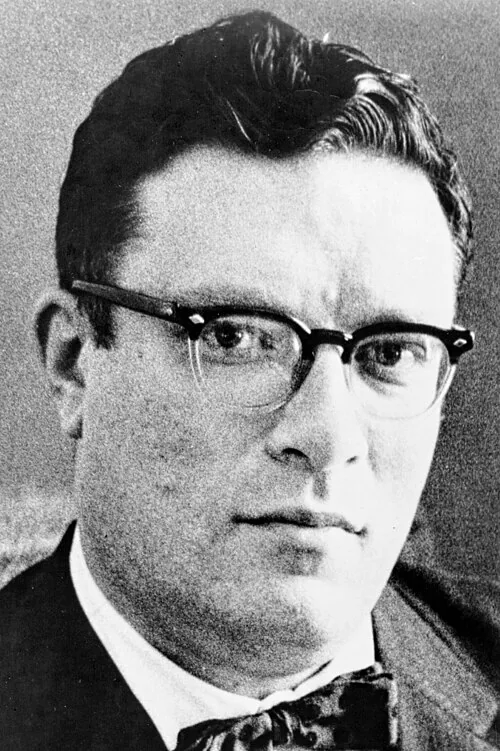
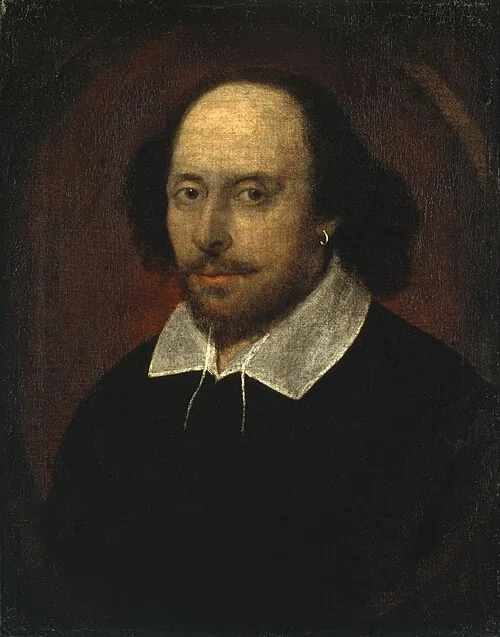
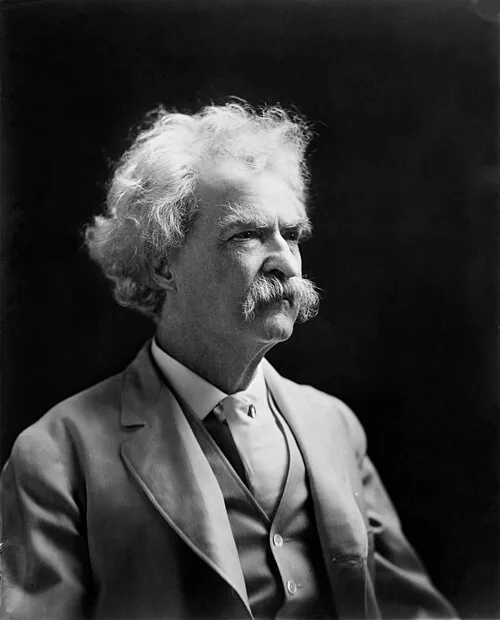
Photograph by Phillip Leonian for the New York World-Telegram & Sun (before 1959), public domain. Background removed for the portrait above. · The Chandos portrait, attributed to John Taylor (c. 1600–1610), public domain. · Photograph, 1907, via the Library of Congress (digital ID cph.3a08820), public domain. Background removed for the portrait above.
.jpg)

An estimate is an inference.
Yours can be measured.
Thirty questions, scored against general-population benchmarks. Your score, your percentile, your ability breakdown and a printable IIF certificate.
Find your IQ score now! →