



What was Franklin D. Roosevelt’s IQ?
FDR’s IQ is 147 in a hoax e-mail and 139.6 in the one peer-reviewed study — and neither is a test result.
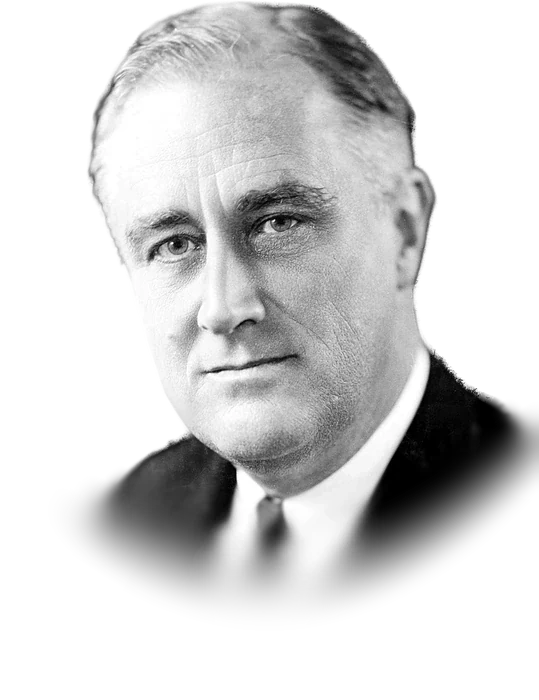
No IQ test result for Franklin D. Roosevelt has ever been published, so “FDR’s IQ” is an estimate, not a score. What is documented — a Harvard A.B. in three years on mostly average grades, the presidency of The Harvard Crimson, and a pass on the New York bar examination without a law degree — supports an estimated IQ of about 125–140, below the 147 that circulates.
Franklin D. Roosevelt’s estimated IQ
- Completed a Harvard A.B. in history in three years (1900–1903) by taking the maximum six courses a term after entrance examinations won him sophomore standing; his grades were mostly C’s, which Harvard Magazine says would be high B’s by today’s standards, and the Harvard Gazette calls him ambitious, “but not academically.”
- Won the managing editorship of The Harvard Crimson in January 1903, beating out his classmates for it, and served as the paper’s president from the fall of 1903 until February 1904 while taking graduate courses in economics and history.
- Entered Columbia Law School in 1904 and left in 1907, without a degree, after passing the New York bar examination; the Miller Center says he showed neither aptitude nor passion for the law, and History.com reports that he failed Contracts and Civil Procedure and made them up over a summer.
- Dean Keith Simonton’s 2006 study in Political Psychology lists four statistical estimates for him — 127.4, 140.9, 139.7 and 150.5, averaging 139.6 (13th of 42 presidents) — all reconstructed from expert ratings, with the two uncorrected estimates (127.4 and 139.7) setting the ends of this range.
- Held public office from 1911: New York State Senate (1911–1913), Assistant Secretary of the Navy (1913–1920), Governor of New York (1929–1932) and President from March 4, 1933 to April 12, 1945 — a documented career that is consistent with above-average ability but does not measure it.
No part of this is a test: the Harvard record is described only in words (a C average, “mostly average”), no class rank or transcript turned up, and the failed law courses come from a single secondary source. Simonton calls his IQ figures “more tentative and approximate” than his other measures and asks whether his corrected scores (140.9 and 150.5) run too high, which is why this range stops at 140.
- Born
- January 30, 1882, Hyde Park, New York
- Died
- April 12, 1945, Warm Springs, Georgia
- Education
- Tutored at home to age 14; Groton School, 1896–1900; Harvard College, A.B. in history in three years, June 24, 1903; Columbia Law School, 1904–1907 (no degree)
- Student press
- Managing editor of The Harvard Crimson from January 1903; president until February 1904
- Bar
- Passed the New York bar examination in 1907
- Public office
- New York State Senate, 1911–1913; Assistant Secretary of the Navy, 1913–1920; Governor of New York, 1929–1932; 32nd U.S. President, March 4, 1933 – April 12, 1945
- Documented IQ test
- None published; Harvard grades described only as a C average
- Circulating figures
- 147 (2001 hoax); 150.5 (top of Simonton’s four estimates); Simonton average 139.6, 13th of 42
What an IQ of 125–140 actually means
Set the claim aside for a moment. If someone genuinely scored in this range, here is what that would represent.
Average is 100 by construction, and about two-thirds of people fall between 85 and 115. Take the test to place your own score on this scale.
| Score range | Classification | Share of people | What it indicates |
|---|---|---|---|
| 85 – 114 | Average | ~68% | The range most people fall into. |
| 115 – 129 | Above average | ~13.6% | Roughly one person in seven. |
| 130 – 144 | Gifted | ~2% | The threshold most high-IQ societies use. |
| Above 144 | Highly gifted | ~0.1% | Figures above this range are extrapolated from the curve rather than measured. |
Percentages are approximate and describe a normal distribution. The same number means different things on tests with different standard deviations.
Thirty questions gives you a measured position on this exact scale — your score, your percentile and the ability breakdown behind it.
Find out in 30 minutes →Who Franklin D. Roosevelt was
Franklin Delano Roosevelt was born on January 30, 1882, in Hyde Park, New York, and was taught at home by tutors until he entered Groton School in Groton, Massachusetts, in 1896 at age 14; he graduated in 1900. In May 1900 the Rev. Sherrard Billings, who taught Latin there, recommended him to Harvard as a fellow of “exceptional ability and high character” — a reference letter, not a measurement. At Harvard College (1900–1903) he majored in history under teachers such as Edward Channing and Archibald Cary Coolidge, earned sophomore standing on his entrance examinations and took six courses a term, the maximum, to finish the A.B. in three years, a route followed by more than a third of the undergraduates of his day. The FDR Presidential Library dates the degree to June 24, 1903.
Away from the classroom he competed, at first unsuccessfully, for the Crimson news board, then rose to assistant managing editor in the fall of 1902, managing editor in January 1903 and president of The Harvard Crimson, the college daily, a post he left in February 1904; he stayed on for graduate courses in economics and history to hold it. He entered Columbia Law School in 1904 and left in 1907, without a degree, after passing the New York bar examination, then clerked at the New York firm of Carter, Ledyard, and Milburn. The Miller Center’s biographer, William E. Leuchtenburg, writes that he displayed neither an aptitude nor a passion for the law, and History.com reports that he failed Contracts and Civil Procedure and made them up over a summer.
He was elected to the New York State Senate from the 26th District (Dutchess, Columbia, and Putnam counties) in 1910, took his seat in 1911 and was re-elected in 1912. President Woodrow Wilson appointed him Assistant Secretary of the Navy; he was sworn in on March 17, 1913, and resigned on August 6, 1920. His first book, Whither Bound, appeared in 1926. Elected Governor of New York in November 1928 and again in 1930, he served from January 1, 1929 until 1932, and he was inaugurated as the 32nd President of the United States on March 4, 1933. He was elected president four times — in 1932, 1936, 1940 and 1944 — and held the office until his death on April 12, 1945, at Warm Springs, Georgia.
Harvard kept the connection. In 1929, as governor, he served as chief marshal at Commencement, gave the Phi Beta Kappa oration and received an honorary LL.D.; the Harvard Gazette lists his degrees as A.B. 1903 and LL.D. (honorary) 1929. The Gazette calls him an ambitious student, “but not academically,” and the Miller Center’s biographer says his many extracurricular activities helped his social standing but hurt his grades. None of the Harvard, Presidential Library, National Park Service or Miller Center pages gives a test score, a class rank or a numeric transcript, so the estimate here rests on descriptions of performance rather than on numbers.
 By Elora Mercer, Celebrity Research WriterFigures checked by Leon Falkner, Data & Research Analyst
Reviewed by Aarav Vardhan, Editor-in-Chief · Last reviewed August 2026
.jpg)
Franklin D. Roosevelt: the documented record
The estimate above rests on this record. Every entry here is a matter of public fact, which is more than can be said for the number itself.
- 1882Born January 30 in Hyde Park, New York.
- 1896Enters Groton School at age 14 after being tutored at home; graduates in 1900.
- 1900–03Harvard College: finishes the A.B. in history in three years (degree dated June 24, 1903), becomes managing editor of The Harvard Crimson in January 1903 and its president that fall.
- 1904–07Columbia Law School; passes the New York bar examination in 1907, leaves without a degree and clerks at Carter, Ledyard, and Milburn.
- 1911–13Takes his seat in the New York State Senate in 1911 (elected 1910); sworn in as Assistant Secretary of the Navy on March 17, 1913, and resigns August 6, 1920.
- 1929Becomes Governor of New York on January 1.
- 1933Inaugurated as President on March 4; elected again in 1936, 1940 and 1944.
- 1945Dies April 12 at Warm Springs, Georgia.
- 2001July 19: The Guardian’s Diary prints the “Lovenstein Institute” list with Roosevelt at 147; the paper later says the institute does not exist.
- 2006Simonton’s study in Political Psychology prints four statistical IQ estimates for Roosevelt, 127.4 to 150.5, averaging 139.6.
Where the 147 figure came from
Following a claim back to its first appearance is the part almost nobody does — and it is what most people are actually asking.
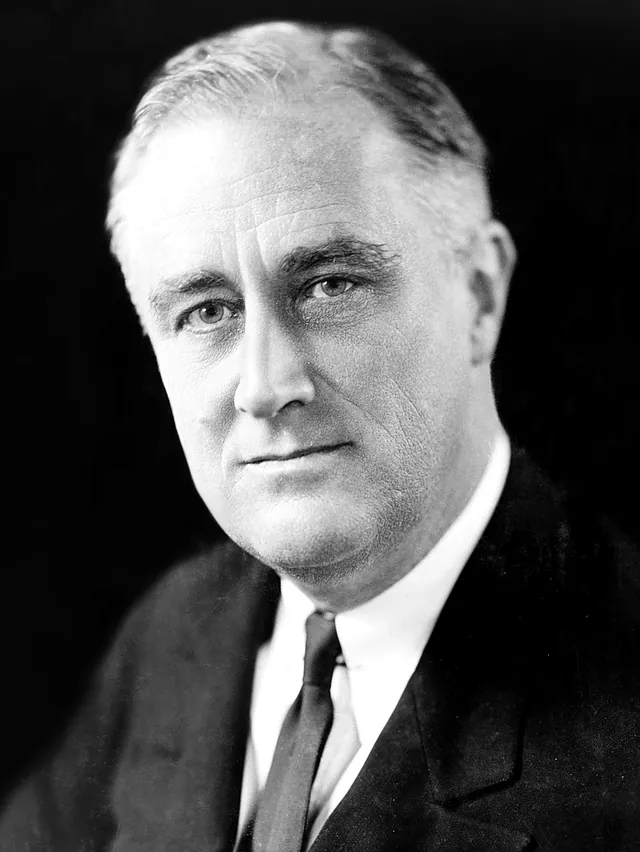
The number that answers “what was Franklin D. Roosevelt’s IQ?” most often is 147, and it is not a test result: it comes from a July 2001 e-mail credited to a “Lovenstein Institute” of Scranton, Pennsylvania, which listed twelve presidents from Roosevelt to George W. Bush and put him first in its term-by-term list. The Guardian’s Diary column gave him 147 on July 19, 2001, and the History News Network later posted the full text under an editor’s note that begins “Below is the text of a hoax.” That is how celebrity IQ numbers usually spread: a precise-looking figure, an official-sounding source and no test behind either.
The list fails on its own evidence. Within weeks the same Guardian column was telling readers that the institute does not exist and that the whole thing was a hoax, and Wikipedia’s account notes that the techniques the e-mail claims are not recognized ways to measure IQ. The text names a “Swanson/Crain” scoring system and “voice stress confidence analysis,” promises accuracy to within five percentage points and says the institute has published its research since 1973 — yet Roosevelt died in 1945. A repost on a UC San Diego faculty page even prints his number as 142 in the term-order list and 147 in the ranked list. The same e-mail gave John F. Kennedy 174, a figure that displaced a school-test score of 119 reported in biographies, and Bill Clinton 182.
A second FDR IQ number, 150.5, has a real source but loses its context in ranking lists. Reader’s Digest (updated February 13, 2026) and an AOL ranking (July 2, 2025) print it as Franklin Roosevelt’s IQ score. It is the highest of the four estimates Dean Keith Simonton lists for him in a 2006 paper in Political Psychology — 127.4, 140.9, 139.7 and 150.5 — which average 139.6 and rank him 13th of 42 presidents. That paper is the only peer-reviewed estimate, and it is an inference, not a test: only eight presidents have figures that start from Catharine Cox’s 1926 childhood ratings, while Roosevelt’s four were reconstructed statistically from expert ratings of other traits, and Simonton calls such IQ scores “more tentative and approximate” than his other measures. They also follow the old ratio definition of IQ, with no fixed standard deviation, so they are not test scores of any kind. This site’s ranking of US presidents by IQ sets out the whole table.
The estimate on this page, 125–140, sits below both circulating numbers. Its ends are Simonton’s two uncorrected estimates (127.4 and 139.7) rounded to the nearest five; it leaves out his two corrected ones, which Simonton himself says might be too high. That is a judgment about weak evidence, not a measurement: Roosevelt’s school record is a C average at Harvard, and because IQ predicts school success only partly — grades also reflect effort and the grading customs of 1903 — that is a loose guide to ability; he also left Columbia Law School without a degree. The top of the range sits at an IQ of 140. Among the profiles here that puts him higher than George W. Bush’s 110–130 and just under Abraham Lincoln’s 140–160; in Simonton’s table Lincoln and Roosevelt are neighbors (140.0 and 139.6), but Lincoln’s numbers start from Cox’s ratings and Roosevelt’s do not. Theodore Roosevelt, the other Harvard-educated Roosevelt in the table, averages 142.3. For John F. Kennedy, Simonton’s average is 150.7 while a school-test score of 119 anchors his page, a reminder that reconstructed figures can run far above a real test.
How we read a number →Fabricated. Both copies print Roosevelt at 147 in the ranked list, and HNN prints 147 in the term-order list too, under an editor’s note calling the text a hoax; the UC San Diego repost prints 142 in its term-order list. The e-mail claims research published since 1973, a “Swanson/Crain” scoring system and accuracy to within five percentage points.
The July 19 Diary printed the list, with Franklin D Roosevelt at 147; a later Diary item says the Scranton institute does not exist and the report was a hoax. Wikipedia dates the Guardian item July 19, 2001, says it was retracted after the Associated Press drew attention to the error, and says the claimed techniques are not recognized means of measuring IQ.
Table 1 prints Roosevelt’s four IQ estimates as 127.4, 140.9, 139.7 and 150.5 (mean 139.6; 13th of 42 when the table is re-ranked). Only eight presidents have Cox-based figures; the rest are statistical reconstructions that the paper calls more tentative and approximate than its other measures, on the old ratio-IQ scale with a hypothetical standard deviation of 16. Read in the PDF copy hosted at acsu.buffalo.edu.
Both print 150.5 as Franklin Roosevelt’s IQ (AOL: ranked tenth, “estimated”). Neither says that 150.5 is the highest of four estimates for him; Reader’s Digest adds that such estimates “aren’t perfect,” and AOL that no president has taken a public IQ test.
Confirm Groton (1896–1900), the Harvard A.B. in history received June 24, 1903 after three years, Columbia Law School from 1904, the New York bar in 1907 with no law degree earned, the State Senate (elected 1910), Assistant Secretary of the Navy (March 17, 1913 to August 6, 1920), the governorship (elected 1928, re-elected 1930), four presidential terms and death on April 12, 1945, at Warm Springs, Georgia.
Says he was schooled at home by tutors until a teenager, entered Groton at 14 and had Harvard grades that were “mostly average”; became editor of the Crimson, took a year of graduate work after the 1903 degree, attended Columbia Law for two years without graduating, showed neither aptitude nor passion for law, and passed the bar.
Magazine: sophomore standing from entrance exams; six courses a term to finish the A.B. in three years; “gentleman’s C’s” in almost all courses (high B’s by today’s standards); assistant managing editor in fall 1902, managing editor in January 1903, Crimson president until February 1904; honorary degree in 1929. Gazette: A.B. 1903, LL.D. (honorary) 1929; an ambitious student, “but not academically,” with a C average.
Agree that he completed the degree requirements in three years and took graduate courses in the fall of 1903 to head the paper; the paper’s own articles call his post president, reached from managing editor (the 1950 piece dates the managing editorship to January 1903). The 1957 piece says historians differ on his Harvard career, some finding him an average undergraduate and others a natural class leader.
The only source found for the detail that he failed Contracts and Civil Procedure at Columbia and made them up over a summer; also says he left in 1907 on passing the bar without taking his degree. Treat the failed-courses detail as single-sourced.
Searched the Presidential Library, National Park Service, Miller Center, Harvard Magazine, Harvard Gazette, Harvard Crimson and Wikipedia pages above plus the two ranking pages and the hoax copies; they give degrees, offices and word descriptions of grades (“a C average,” “mostly average”) but no administered intelligence test and no numeric grade or rank for Roosevelt.
The sources behind our estimate
The figures that circulate for Franklin D. Roosevelt, what we were able to confirm, and where the two diverge.
147 is the figure most often attached to Franklin D. Roosevelt: it comes from a July 2001 e-mail credited to a “Lovenstein Institute” of Scranton, Pennsylvania, which ranked twelve presidents from Roosevelt to George W. Bush, and The Guardian repeated it on July 19, 2001. A second figure, 150.5, is printed as his IQ by Reader’s Digest and AOL ranking pages.
No IQ test result for Roosevelt turned up in any source checked. The 147 traces to the fabricated Lovenstein e-mail: the History News Network posted its text on October 31, 2004 under an editor’s note calling it a hoax and prints 147 in both of its lists; a UC San Diego faculty page reposts it with 147 in the ranked list but 142 in the term-order list; and The Guardian’s Diary printed 147 on July 19, 2001, and later said that the institute does not exist. The 150.5 is the last of the four statistical estimates in Dean Keith Simonton’s 2006 table (127.4, 140.9, 139.7 and 150.5; average 139.6). Reader’s Digest (updated February 13, 2026) and AOL (July 2, 2025) print it as his IQ without saying it is the highest of four. The Presidential Library, the National Park Service, the Miller Center and Harvard’s own pages give no score.
Both circulating numbers sit above the range, the usual direction on this site: 147 has no study behind it, and 150.5 is the highest of Simonton’s four statistical estimates, the kind he himself says may run high. The range ends at 140 because that is where his uncorrected estimates end.
Want a number that does hold up? Every figure on this page is somebody’s claim. Take the 30-question test and get a percentile you can check rather than a figure you have to trust.
Franklin D. Roosevelt — frequently asked
What is Franklin D. Roosevelt’s IQ?
No IQ test result for Franklin D. Roosevelt has ever been published, so his IQ is an estimate, not a score. This site puts it at about 125–140, based on a three-year Harvard A.B. with mostly average grades, the Crimson presidency and the New York bar. The only peer-reviewed estimate, by Dean Keith Simonton (2006), averages 139.6.
Is the FDR IQ of 147 real?
No. The 147 comes from a fabricated July 2001 e-mail credited to a “Lovenstein Institute” in Scranton, Pennsylvania, which does not exist. The Guardian printed the list on July 19, 2001 and weeks later called it a hoax. No test of Roosevelt’s intelligence stands behind the number.
Was FDR smart?
The record points to well above average, but “smart” has no precise score. He finished a Harvard A.B. in three years, led The Harvard Crimson and passed the New York bar; yet his Harvard grades were a C average and he left law school without a degree, so the evidence is mixed.
Did Franklin D. Roosevelt ever take an IQ test?
No IQ test result for him has been published or reliably reported. The Presidential Library, the National Park Service, the Miller Center and Harvard’s own publications give degrees, offices and word descriptions of his grades, but no score, class rank or numeric transcript.
Where does the 150.5 Franklin Roosevelt IQ score come from?
From Dean Keith Simonton’s 2006 study, which lists four statistical estimates for him: 127.4, 140.9, 139.7 and 150.5. Reader’s Digest and AOL rankings print the highest as his IQ. Simonton calls these figures tentative and approximate, and their average is 139.6.
What were FDR’s grades at Harvard?
They are described in words, not numbers: a C average (Harvard Gazette), “gentleman’s C’s” worth high B’s today (Harvard Magazine) and “mostly average” (Miller Center). He took six courses a term to finish the A.B. in three years and received it on June 24, 1903.
How does FDR’s estimated IQ compare with Abraham Lincoln’s?
This site estimates 125–140 for Roosevelt and 140–160 for Abraham Lincoln. In Simonton’s table the two are neighbors, Lincoln at 140.0 and Roosevelt at 139.6, but Lincoln’s figures start from Catharine Cox’s 1926 childhood ratings and Roosevelt’s are statistical reconstructions.
How does my IQ compare with Franklin D. Roosevelt?
You can find out in about fifteen minutes. The IQ Metrics assessment is 30 questions, scored on the same 100-mean scale used throughout this page, so your result and the estimate above are at least expressed in the same units — one measured, one inferred. Once you have a number, the leaderboard shows where it would sit, and how we score and norm it explains the benchmarking.
Where does this estimate come from?
From the documented record rather than a test — the method is named above and set out in full under how we read a number. Compare it against the other politics profiles, starting with Thomas Jefferson.
- Take the 30-question IQ test — get a measured score and percentile of your own
- Average IQ by country — how the scale behaves across populations
- How IQ Metrics scores its assessment — the method behind our own number
- More on how IQ testing works — reliability, error and what a score can and cannot say
- More politics profiles — same field, same method
More politics
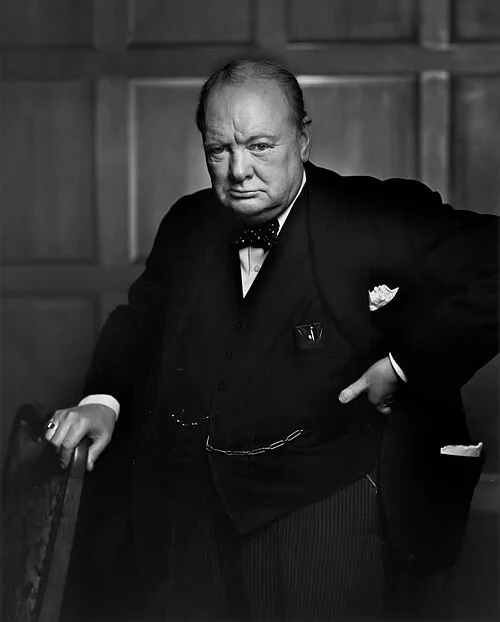
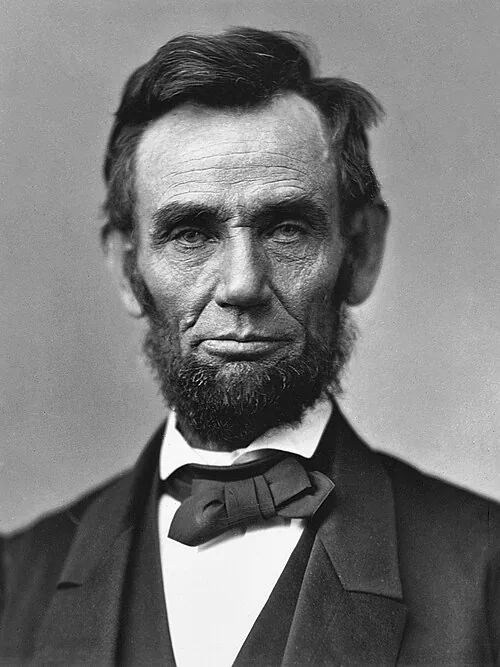
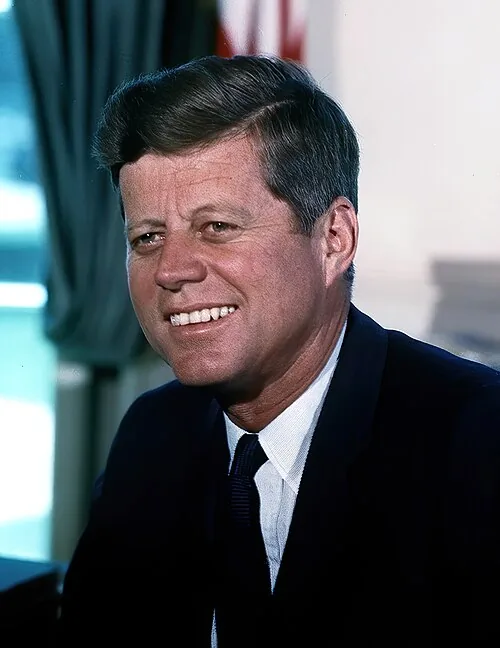
Photograph by Yousuf Karsh, Ottawa, 1941 — public domain in Canada and the United States; the Library and Archives Canada scan is CC BY 2.0. · Photograph by Alexander Gardner (8 November 1863), public domain. Background removed for the portrait above. · Photograph by Cecil W. Stoughton, White House, public domain. Background removed for the portrait above.
.jpg)
.jpg)

An estimate is an inference.
Yours can be measured.
Thirty questions, scored against general-population benchmarks. Your score, your percentile, your ability breakdown and a printable IIF certificate.
Find your IQ score now! →