



What is Forrest Gump’s IQ?
One scene reads out a 75, five points under the state minimum; the rest of the film shows what a number cannot predict.

Forrest Gump’s IQ score is 75, stated in the 1994 film’s school-principal scene against a state minimum of 80 for public school; no test is shown in that scene. This site’s estimated IQ for the character as written is 70–80, matching the film and not raised to flatter, because running, football and business success is not what an IQ number predicts.
Forrest Gump’s estimated IQ
- In the principal’s-office scene of the 1994 film, Principal Hancock tells Mrs. Gump “his I.Q. is seventy-five” and names “a minimum I.Q. of eighty” for public school, per the screenplay text on IMSDb; a Rev transcript of the scene gives the same two numbers as 75 and 80.
- Wikipedia’s film article and Riotiq (Dr. Russell T. Warne, March 16, 2026) both give the film’s figure as 75. For Winston Groom’s 1986 novel the sources differ: Kirkus Reviews (February 15, 1986) quotes the narrator as saying “My IQ is 61, which qualifies me, so they say.” Riotiq reports 70, so the book’s number sits below the film’s 75 either way.
- The American Association on Intellectual and Developmental Disabilities (AAIDD) says a score “around 70 or as high as 75” indicates a significant limitation in intellectual functioning, so 75 sits at the top edge of that band; its definition also requires limits in adaptive behavior, so the score alone settles nothing.
- The film’s record of achievement (a University of Alabama football scholarship in 1963 and All-America selection, Army service from 1967 and the Medal of Honor, ping-pong, a shrimp boat that became the Bubba Gump Shrimp Company, a three-year cross-country run) is plot, not test evidence, so it leaves the range where the canon score puts it.
Forrest Gump has no measured IQ: 75 is a number written into a scene, and the novel gives a lower one (61 in the narrator’s words per Kirkus, 70 per Riotiq), so the range follows the film, the version nearly everyone means; the film’s 75 sits inside it and the novel’s 61 below it. It is not widened upward to match his success on screen, and this page rates a written character, not any real person and not a diagnosis.
- First appearance
- Winston Groom’s novel Forrest Gump (Doubleday, 1986)
- Film
- Forrest Gump, directed by Robert Zemeckis, screenplay by Eric Roth, released by Paramount Pictures on July 6, 1994
- Played by
- Tom Hanks (1994 film)
- Stated IQ
- 75 in the film’s principal scene, against a state minimum of 80 for public school; 61 in the novel per Kirkus Reviews (1986), 70 per Riotiq
- Hometown (film)
- Greenbow, Alabama
- Record (film)
- Alabama football scholarship (1963) and All-America selection; Army service from 1967 and the Medal of Honor; ping-pong; the Bubba Gump Shrimp Company; a three-year cross-country run
- Academy Awards
- Six wins from 13 nominations at the 67th Academy Awards, March 27, 1995
- Sequel
- Gump and Co., Groom’s sequel novel (1995)
What an IQ of 70–80 actually means
Set the claim aside for a moment. If someone genuinely scored in this range, here is what that would represent.
Average is 100 by construction, and about two-thirds of people fall between 85 and 115. Take the test to place your own score on this scale.
| Score range | Classification | Share of people | What it indicates |
|---|---|---|---|
| 85 – 114 | Average | ~68% | The range most people fall into. |
| 115 – 129 | Above average | ~13.6% | Roughly one person in seven. |
| 130 – 144 | Gifted | ~2% | The threshold most high-IQ societies use. |
| Above 144 | Highly gifted | ~0.1% | Figures above this range are extrapolated from the curve rather than measured. |
Percentages are approximate and describe a normal distribution. The same number means different things on tests with different standard deviations.
Thirty questions gives you a measured position on this exact scale — your score, your percentile and the ability breakdown behind it.
Find out in 30 minutes →Who Forrest Gump is
Forrest Gump is the title character of Winston Groom’s novel Forrest Gump (Doubleday, 1986) and of Robert Zemeckis’s film Forrest Gump, released in the United States by Paramount Pictures on July 6, 1994, after a Los Angeles premiere on June 23, 1994. Eric Roth wrote the screenplay from Groom’s novel, and Tom Hanks plays Forrest. Groom (1943–2020) published a sequel novel, Gump and Co., in 1995. This page rates the fictional character as the novel and film write him, and mentions the cast only in casting lines.
Was Forrest Gump smart? The film answers with a record, not a score. In Greenbow, Alabama, in the 1950s he wears leg braces for a curved spine until they break off as he runs from bullies and reveal how fast he is. Coach Bear Bryant offers him a University of Alabama football scholarship in 1963; he is named to the All-America team and graduates in 1966. He enlists in the U.S. Army, serves with the 9th Infantry Division in the Mekong Delta from 1967, rescues wounded platoon mates including Lieutenant Dan Taylor and is awarded the Medal of Honor. While healing he becomes a ping-pong player who takes part in ping-pong diplomacy and appears on The Dick Cavett Show; he buys a shrimp boat at Bayou La Batre to keep a promise to his friend Bubba, the boat survives Hurricane Carmen, and the Bubba Gump Shrimp Company follows. Lieutenant Dan’s investment in what proves to be Apple Computer makes them millionaires, and after Jenny Curran leaves in 1976 Forrest spends three years on a cross-country run. The film closes with him sending his son, Forrest Gump Jr., off on a first day of school. These are skills, persistence and plot, not test results: intelligence is not limited to IQ, and the opening scene is about school placement, a narrower thing than IQ and school success.
At the 67th Academy Awards, held March 27, 1995, Forrest Gump won six of its 13 nominations, per oscars.org: Best Picture (Wendy Finerman, Steve Tisch and Steve Starkey), Actor in a Leading Role (Tom Hanks), Directing (Robert Zemeckis), Writing, Screenplay Based on Material Previously Produced or Published (Eric Roth), Film Editing (Arthur Schmidt) and Visual Effects (Ken Ralston, George Murphy, Stephen Rosenbaum and Allen Hall). Those awards honor the film and its makers; they say nothing about the character’s IQ, and nothing here rates any actor’s own intelligence.
Placed against this site’s other fictional profiles, 70–80 sits at the low end: Naruto Uzumaki is rated 100–125 and Sherlock Holmes 180–200. Sheldon Cooper and Homer Simpson are the other two characters here whose IQ is announced inside their own show, and as with Forrest the number comes from a script, not a test. Forrest’s range follows the canon instead of being lifted to flatter him, because an IQ number is one fact about a character, not a verdict on people.
 By Elora Mercer, Celebrity Research WriterFigures checked by Leon Falkner, Data & Research Analyst
Reviewed by Aarav Vardhan, Editor-in-Chief · Last reviewed August 2026

Forrest Gump: the documented record
The estimate above rests on this record. Every entry here is a matter of public fact, which is more than can be said for the number itself.
- 1950s (film)In Greenbow, Alabama, the principal tells Forrest’s mother his IQ is 75, five points under the state’s stated minimum of 80 for public school.
- 1963 (film)Coach Bear Bryant offers Forrest a University of Alabama football scholarship; he is later named to the All-America team and graduates in 1966.
- 1967 (film)Forrest serves with the 9th Infantry Division in the Mekong Delta, rescues wounded platoon mates and is awarded the Medal of Honor.
- 1976 (film)After Jenny Curran leaves, Forrest begins a cross-country run that lasts three years.
- 1986Winston Groom’s novel Forrest Gump is published by Doubleday (Kirkus Reviews, February 15, 1986; release March 7); Kirkus quotes the narrator’s IQ as 61, where Riotiq reports 70.
- June 23, 1994Los Angeles premiere of Robert Zemeckis’s film Forrest Gump, with Tom Hanks in the title role.
- July 6, 1994Paramount Pictures releases the film in the United States; Eric Roth wrote the screenplay.
- March 27, 1995At the 67th Academy Awards the film wins six Oscars from 13 nominations, including Best Picture, Best Actor, Best Director and Best Film Editing.
- 1995Groom publishes the sequel novel Gump and Co.
- March 16, 2026Riotiq publishes “What Is Forrest Gump’s IQ?” by Dr. Russell T. Warne, giving 75 for the film and 70 for the novel.
Where the 75 figure came from
Following a claim back to its first appearance is the part almost nobody does — and it is what most people are actually asking.

Forrest Gump’s IQ is 75 because the 1994 film says so, early, in one scene. The screenplay text on IMSDb, credited to Eric Roth from Winston Groom’s 1986 novel, sets it in an elementary school principal’s office: Principal Hancock tells Mrs. Gump that “his I.Q. is seventy-five.” He adds that the state sets “a minimum I.Q. of eighty to attend public school,” so Forrest would have to go to a special school. Mrs. Gump answers that “we’re all different.” Rev’s transcript of the scene gives the same two numbers as 75 and 80. Wikipedia’s film article lists Sam Anderson as Hancock and places the story in Greenbow, Alabama, in the 1950s, and it repeats the 75, as does Riotiq.
The Forrest Gump IQ scene is about a cut-off, not a test. No assessment is shown and no psychologist appears; the screenplay has the principal hold up a chart of IQ designations in the hallway while Forrest waits outside, and the number does one job, which is to put the boy five points under a line. On the usual scale, with a mean of 100 and a standard deviation of 15 (the figures Wikipedia’s article on IQ gives), our arithmetic puts 75 near the 5th percentile and 80 near the 9th on the IQ bell curve. Any single result also carries a margin of error, one reason a hard cut-off is a blunt tool. The 80 is the film’s own line: the movie says only “the state,” and this page makes no claim about any real state’s rules. Most famous people’s numbers have no scene behind them at all (see where celebrity IQ numbers come from); Forrest’s does.
What a score of 75 means on a real test is narrower than the film makes it look. The AAIDD says a score “around 70 or as high as 75” indicates a significant limitation in intellectual functioning, and defines intellectual disability as significant limitations in both intellectual functioning and adaptive behavior that originate before age 22. The American Psychiatric Association’s page says the same of a score “around 70 to 75,” and adds that a specific full-scale IQ score is no longer required for diagnosis. So 75 sits at the top edge of the band those bodies describe, the IQ number is one half of the picture, and this page does not diagnose a fictional character. For the plain-language reading of nearby scores see what an IQ of 70 means, and for the difference between a low score and a learning disability, low IQ versus learning disability.
Forrest Gump’s IQ in the book is a different matter, and the sources disagree. Winston Groom’s novel, published by Doubleday in 1986, is not the film. Kirkus Reviews (February 15, 1986, ahead of the March 7 release) quotes the narrator saying, “My IQ is 61, which qualifies me, so they say.” Riotiq reports 70 instead, describes him with a period label this site does not repeat, and calls the book’s treatment of his mind “much more satirical” than the film’s. Wikipedia’s article on the novel gives only a “low IQ,” with no number. It describes a Forrest whose mathematical abilities as a savant lead to adventures as an astronaut, a professional wrestler and a chess player, and says the film omits the NASA career and the wrestling; the film’s article calls its Forrest “less of a savant” and says that in the novel he fails craft and gym but earns “a perfect score in an advanced physics class.” The novel’s figure here is taken from Kirkus’s 1986 review and Riotiq, not from our own reading of the full text. This page’s 70–80 range follows the film, the figure nearly everyone means: the film’s 75 sits inside it and the novel’s 61 below it.
How we read a number →Label “Forrest Gump,” description “fictional character”; recorded as present in the novel (Q552213), the 1994 film (Q134773) and Gump and Co. (Q970822). Confirms the Q-id is the character, not the novel, the film or the sequel.
Credited to Eric Roth, based on Winston Groom’s novel; no draft date shown. In the principal’s-office scene the principal says “his I.Q. is seventy-five,” and under the following INT. HALLWAY heading says the state requires “a minimum I.Q. of eighty to attend public school” and that Forrest would need a special school; Mrs. Gump answers that “we’re all different.” Stage direction: the principal holds up a chart of IQ designations. Scope: the principal scene only; screenplay text may differ in places from the final film.
Third-party transcript of a scene from the film, dated January 1, 2026: the principal’s line gives “His IQ 75,” and another line names “a minimum IQ of 80 to attend public school.” Speaker labels are generic, so the principal’s identity comes from the screenplay and Wikipedia.
Ceremony Monday, March 27, 1995. Forrest Gump: 13 nominations, six wins: Best Picture (Wendy Finerman, Steve Tisch, Steve Starkey), Actor in a Leading Role (Tom Hanks), Directing (Robert Zemeckis), Writing, Screenplay Based on Material Previously Produced or Published (Eric Roth), Film Editing (Arthur Schmidt), Visual Effects (Ken Ralston, George Murphy, Stephen Rosenbaum, Allen Hall).
Film: Paramount release July 6, 1994, premiere June 23, 1994; Zemeckis, Roth, Hanks; Sam Anderson as Principal Hancock; Greenbow, Alabama in the 1950s; cast-list line “a below-average IQ of 75”; plot (braces, football 1963, Army 1967, Medal of Honor, ping-pong, shrimp boat, Apple, three-year run, son); six Oscars. Novel: Doubleday 1986, “low IQ” with no number, mathematical savant, astronaut, wrestler, chess, Gump and Co. 1995. Groom: March 23, 1943 – September 17, 2020. IQ article: mean 100, standard deviation 15. Production section: film’s Forrest “less of a savant”; in the novel he fails craft and gym yet earns “a perfect score in an advanced physics class”; novel also features him as an astronaut, wrestler and chess player (novel article: the film omits the NASA career and wrestling). Neither article states a novel IQ number.
States that intellectual disability involves significant limitations in both intellectual functioning and adaptive behavior originating before age 22, and “Generally, an IQ test score of around 70 or as high as 75 indicates a significant limitation in intellectual functioning.”
“A full-scale IQ score of around 70 to 75 indicates a significant limitation in intellectual functioning” and diagnosis rests on limitations in both intellectual functioning and adaptive behavior. Under “Diagnosing Intellectual Disability” the same page also says an IQ of less than 70 is recommended for a clinical diagnosis and that “a specific full-scale IQ score is no longer required for diagnosis,” which is why this page cites the band and diagnoses no one.
Release date March 7, 1986. Quotes the narrator: “My IQ is 61, which qualifies me, so they say.” The only source cited here that quotes the novel’s narrator directly; the review’s own word for him is not repeated on this page.
States the film’s IQ as 75, with the state enrollment threshold at 80; says the number was chosen to establish the story’s core tension; reports that Groom’s novel gives 70 and takes “a much more satirical and less sentimental approach.” Cites no test and gives no method for either figure. Its 70 for the novel differs from the 61 Kirkus quotes.
No test is shown in the principal scene, and no page gives a score from a test. The IQs above are numbers stated in the film and the novel, not results. Scope: the screenplay check covers the principal scene only, and the novel’s figure is taken from Kirkus’s 1986 review and Riotiq, not from our own reading of the full text.
The sources behind our estimate
The figures that circulate for Forrest Gump, what we were able to confirm, and where the two diverge.
The figure that circulates is 75, and it is real in the sense that the film states it. Wikipedia’s cast list says Forrest “is deemed to have a below-average IQ of 75,” and Riotiq (Dr. Russell T. Warne, March 16, 2026) says a school administrator tells his mother the IQ is 75. For the 1986 novel two sources give different numbers: Kirkus Reviews quotes the narrator as 61, and Riotiq reports 70. None of these pages cites a test result, because none is shown.
The film states the number and, in the scene, shows no test. The screenplay text on IMSDb (credited to Eric Roth, from Winston Groom’s novel) has the principal say “his I.Q. is seventy-five” and name “a minimum I.Q. of eighty to attend public school,” and a Rev transcript of the scene gives the lines as 75 and 80. Wikipedia’s film article and Riotiq repeat the 75. The novel is where the sources split: Kirkus Reviews (February 15, 1986, ahead of Doubleday’s March 7 release) quotes the narrator as saying “My IQ is 61, which qualifies me, so they say.” Riotiq reports 70. The two disagree, and the film’s 75 is the figure nearly everyone means. The novel’s figure here is taken from Kirkus’s 1986 review and Riotiq, not from our own reading of the full text.
75 is the film’s figure, 61 is what the novel’s narrator says in Kirkus’s 1986 review, 70 is the novel’s as Riotiq reports it, and 80 is the state minimum the principal names. This site’s 70–80 follows the film: the film’s 75 sits inside it and the novel’s 61 below it. Unlike most numbers on this site, the one that circulates is not inflated: it is already low, so there is no lower range to argue for, and the open question is what the number does and does not predict.
Want a number that does hold up? Every figure on this page is somebody’s claim. Take the 30-question test and get a percentile you can check rather than a figure you have to trust.
Forrest Gump — frequently asked
What is Forrest Gump’s IQ?
Forrest Gump’s IQ is 75 in the 1994 film: his school principal tells his mother so, and adds that the state requires a minimum of 80 for public school. No test is shown in that scene, and the novel gives a lower figure (61 per Kirkus, 70 per Riotiq). This site’s estimated IQ for the character as written is 70–80, in line with the film.
What happens in the Forrest Gump IQ scene?
Early in the 1994 film, in Greenbow, Alabama, Principal Hancock tells Mrs. Gump that Forrest’s IQ is 75 and that the state requires a minimum of 80 for public school, so he would need a special school. She answers that “we’re all different.” The screenplay shows a chart of IQ designations, not a test.
Did Forrest Gump take an IQ test?
No test is shown in the scene: the principal reports a result of 75 and holds up a chart, and the assessment itself is not depicted. A real score of 75 would sit at the top of the 70-to-75 band that the AAIDD and the American Psychiatric Association describe, and adaptive behavior counts as well.
What is Forrest Gump’s IQ in the book?
The sources disagree. Kirkus Reviews, in 1986, quotes the narrator of Winston Groom’s novel as saying “My IQ is 61, which qualifies me, so they say.” Riotiq reports 70. Both are below the film’s 75, which is the figure nearly everyone means. Wikipedia says only that the book gives him a low IQ, and the book makes him more of a mathematical savant than the film.
Was Forrest Gump smart?
The film shows him succeeding at things an IQ number does not predict: football at the University of Alabama, a Medal of Honor, ping-pong, a shrimp business and a three-year cross-country run. His stated IQ of 75 is below average. Both are true of the character, and this page’s estimate of 70–80 is not raised for his achievements.
What does an IQ score of 75 mean?
On the usual scale, with a mean of 100 and a standard deviation of 15, a score of 75 falls near the 5th percentile. The AAIDD says a score “around 70 or as high as 75” indicates a significant limitation in intellectual functioning, and a diagnosis also needs limits in adaptive behavior. This site does not diagnose fictional characters.
How does Forrest Gump’s estimated IQ compare with Sherlock Holmes’s?
Far lower, by design: this site estimates Forrest at 70–80 and Sherlock Holmes at 180–200. Holmes is rated from what he does in the stories, while Forrest’s range starts from a number his own film states. Both are character analyses, neither is a test result, and neither is a judgment of a person’s worth.
How does my IQ compare with Forrest Gump?
You can find out in about fifteen minutes. The IQ Metrics assessment is 30 questions, scored on the same 100-mean scale used throughout this page, so your result and the estimate above are at least expressed in the same units — one measured, one inferred. Once you have a number, the leaderboard shows where it would sit, and how we score and norm it explains the benchmarking.
Where does this estimate come from?
From the documented record rather than a test — the method is named above and set out in full under how we read a number. Compare it against the other fictional profiles, starting with Sherlock Holmes.
- Take the 30-question IQ test — get a measured score and percentile of your own
- Average IQ by country — how the scale behaves across populations
- How IQ Metrics scores its assessment — the method behind our own number
- More on how IQ testing works — reliability, error and what a score can and cannot say
- More fictional profiles — same field, same method
More fictional


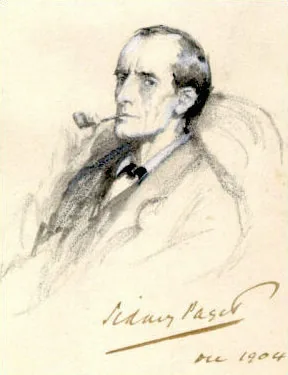
Photograph of actor Jim Parsons by Philip Romano (Broadway opening night of Good Night, and Good Luck, April 3, 2025), CC BY 4.0. Sheldon Cooper is a character created by Chuck Lorre and Bill Prady for The Big Bang Theory, played by Parsons from 2007 to 2019; this is a photograph of the actor who played the role, not of the character. Background removed for the portrait above. · Photograph of a cosplayer dressed as Homer Simpson by 玄史生 (Comic World Taiwan 41, December 12, 2015), released into the public domain under CC0. Homer Simpson is a character created by Matt Groening for The Simpsons; this is a photograph of a cosplayer, not an image of the character. Cropped and with background removed for the portrait above. · Illustration by Sidney Paget (1890s), public domain.


An estimate is an inference.
Yours can be measured.
Thirty questions, scored against general-population benchmarks. Your score, your percentile, your ability breakdown and a printable IIF certificate.
Find your IQ score now! →