


What was Charles Darwin’s IQ?
His own father called him aimless. Cambridge agreed.

By his own account, Darwin was an indifferent student who left medical school unfinished and graduated from Cambridge without academic distinction. The historiometric estimate built from that record is lower than what several aggregator sites now attach to him.
Charles Darwin’s estimated IQ
- Enrolled to study medicine at the University of Edinburgh in 1825 and withdrew after two years, reportedly finding surgery — performed without anaesthetic at the time — too distressing to continue.
- Went on to Christ’s College, Cambridge, to study theology, graduating in 1831 tenth out of a class of 178 in the ordinary (non-honours) Bachelor of Arts degree list.
- In his own autobiography, records his father telling him: “You care for nothing but shooting, dogs, and rat-catching, and you will be a disgrace to yourself and all your family.”
- Catharine Cox’s 1926 historiometric study, The Early Mental Traits of Three Hundred Geniuses, placed Darwin’s estimated childhood and youth IQ in the mid-130s, based on biographical evidence rather than any test.
Cox’s method is a documented academic study, not a test — it estimates historical figures from biographical evidence using a methodology later scholars have criticised for its subjectivity. This range follows Cox’s own published figure rather than the somewhat higher numbers some later sites attach to Darwin.
- Born
- 12 February 1809, Shrewsbury, England
- Died
- 19 April 1882, Downe, England
- Field
- Natural history, evolutionary biology
- Education
- University of Edinburgh (medicine, withdrew); Christ’s College, Cambridge (BA, ordinary degree, 1831)
- Known for
- On the Origin of Species (1859); the theory of evolution by natural selection
What an IQ of 125–140 actually means
Set the claim aside for a moment. If someone genuinely scored in this range, here is what that would represent.
Average is 100 by construction, and about two-thirds of people fall between 85 and 115. Take the test to place your own score on this scale.
| Score range | Classification | Share of people | What it indicates |
|---|---|---|---|
| 85 – 114 | Average | ~68% | The range most people fall into. |
| 115 – 129 | Above average | ~13.6% | Roughly one person in seven. |
| 130 – 144 | Gifted | ~2% | The threshold most high-IQ societies use. |
| Above 144 | Highly gifted | ~0.1% | Figures above this range are extrapolated from the curve rather than measured. |
Percentages are approximate and describe a normal distribution. The same number means different things on tests with different standard deviations.
Thirty questions gives you a measured position on this exact scale — your score, your percentile and the ability breakdown behind it.
Find out in 30 minutes →Who Charles Darwin was
Charles Darwin was born in Shrewsbury, England, in 1809. He began a medical degree at the University of Edinburgh in 1825 but withdrew after two years, then studied theology at Christ’s College, Cambridge, graduating in 1831 without particular academic distinction.
Later that year he joined HMS Beagle as the ship’s naturalist for a five-year survey voyage around South America and the Pacific. The specimens and observations he collected, particularly in the Galápagos Islands, became the evidential basis for On the Origin of Species, published in 1859, which established the theory of evolution by natural selection.
 By Elora Mercer, Celebrity Research WriterFigures checked by Leon Falkner, Data & Research Analyst
Reviewed by Aarav Vardhan, Editor-in-Chief · Last reviewed August 2026

Charles Darwin: the documented record
The estimate above rests on this record. Every entry here is a matter of public fact, which is more than can be said for the number itself.
- 1809Born in Shrewsbury, England.
- 1825Begins studying medicine at the University of Edinburgh.
- 1827Withdraws from medical study; enrols at Christ’s College, Cambridge.
- 1831Graduates from Cambridge with an ordinary degree; joins HMS Beagle as ship’s naturalist.
- 1836Returns to England after the Beagle voyage.
- 1859Publishes On the Origin of Species.
- 1882Dies at his home in Downe, England.
Where the 135 figure came from
Following a claim back to its first appearance is the part almost nobody does — and it is what most people are actually asking.
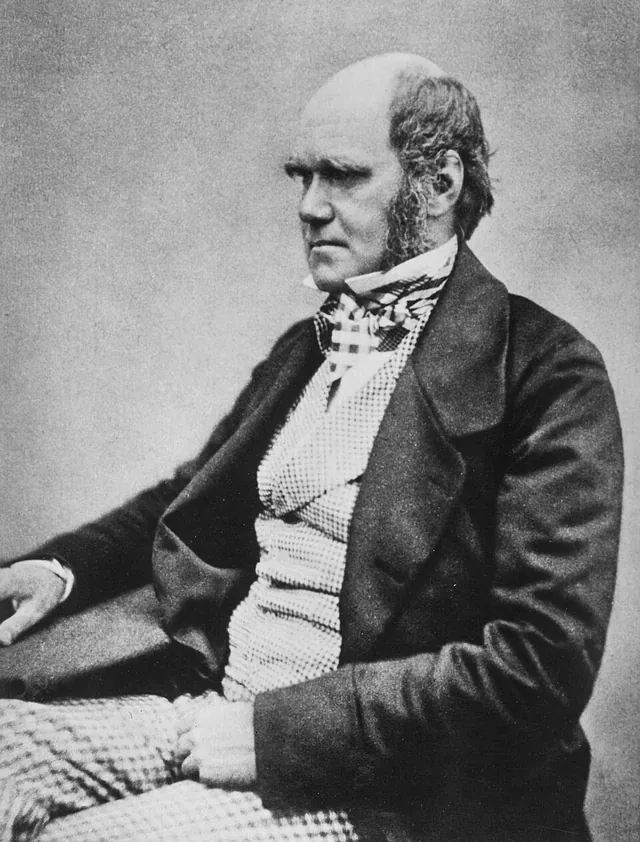
Darwin’s page is one of the few on this site built on an academic study rather than an unsourced listicle claim — and it shows a different failure mode as a result. The number itself is not invented; it is misquoted, upward, by sites that name Cox’s 1926 study as their source and then report a figure Cox did not publish.
The more interesting document is Darwin’s own. His autobiography records his father’s verdict — “you will be a disgrace to yourself and all your family” — alongside an unfinished medical degree and an ordinary, non-honours pass at Cambridge. None of that predicted the five years aboard HMS Beagle that produced the observations behind On the Origin of Species, published in 1859.
The pattern echoes John F. Kennedy elsewhere on this site: a documented, unremarkable academic record, later overshadowed in public memory by a considerably larger achievement it did not obviously predict.
How we read a number →Source of the historiometric IQ estimate for Darwin, placed in the mid-130s.
Source of Darwin’s own account of his father’s comment and his self-assessment as an indifferent student.
Institutional record of his ordinary (non-honours) BA and class rank.
Darwin died in 1882, decades before standardized IQ testing existed.
The sources behind our estimate
The figures that circulate for Charles Darwin, what we were able to confirm, and where the two diverge.
Some modern aggregator and “historical geniuses” sites list Darwin at 160 or higher, occasionally citing Cox’s 1926 study without reproducing its actual figure.
Cox’s own published estimate for Darwin sits in the mid-130s, not the 160-plus figures some later sites report. Cox’s method used documented biographical achievement to infer likely childhood ability; it was never a test, and Cox herself treated the resulting numbers as approximate. Darwin’s own account of his indifferent record at Edinburgh and Cambridge is consistent with a solid, unremarkable-for-his-class academic performance rather than a standout one.
The lower two figures track Cox’s actual published estimate. The 160 belongs to sites that cite Cox as their source while reporting a different number than the one Cox printed.
Want a number that does hold up? Every figure on this page is somebody’s claim. Take the 30-question test and get a percentile you can check rather than a figure you have to trust.
Charles Darwin — frequently asked
What was Charles Darwin’s IQ?
No test result exists — Darwin died decades before IQ testing was developed. Catharine Cox’s 1926 historiometric study estimated his childhood and youth IQ at roughly 135, based on his biographical record.
Was Charles Darwin a good student?
By his own account, no. He found medical training at Edinburgh too distressing to continue and graduated from Cambridge with an ordinary, non-honours degree, ranked tenth of 178 in that list.
What did Darwin’s father think of him?
Darwin’s autobiography records his father telling him he cared for nothing but “shooting, dogs, and rat-catching” and would be “a disgrace” to the family — said before the Beagle voyage that changed the trajectory of his life.
Why do some sites list a higher IQ for Darwin than Cox’s study found?
Several aggregator sites cite Cox’s 1926 study as their source while reporting a higher figure than Cox actually published, which sits in the mid-130s.
What did Darwin accomplish despite an unremarkable academic record?
Five years as ship’s naturalist aboard HMS Beagle produced the observational evidence behind On the Origin of Species (1859) and the theory of evolution by natural selection.
How does Darwin’s case compare to Kennedy’s on this site?
Both show a modest, documented academic record that public memory later overshadowed with a much larger achievement — Kennedy’s a presidency, Darwin’s a body of scientific work neither his school record nor his father’s assessment predicted.
How does my IQ compare with Charles Darwin?
You can find out in about fifteen minutes. The IQ Metrics assessment is 30 questions, scored on the same 100-mean scale used throughout this page, so your result and the estimate above are at least expressed in the same units — one measured, one inferred. Once you have a number, the leaderboard shows where it would sit, and how we score and norm it explains the benchmarking.
Where does this estimate come from?
From the documented record rather than a test — the method is named above and set out in full under how we read a number. Compare it against the other historical profiles, starting with Isaac Newton.
- Take the 30-question IQ test — get a measured score and percentile of your own
- Average IQ by country — how the scale behaves across populations
- How IQ Metrics scores its assessment — the method behind our own number
- More on how IQ testing works — reliability, error and what a score can and cannot say
- More historical profiles — same field, same method
More historical
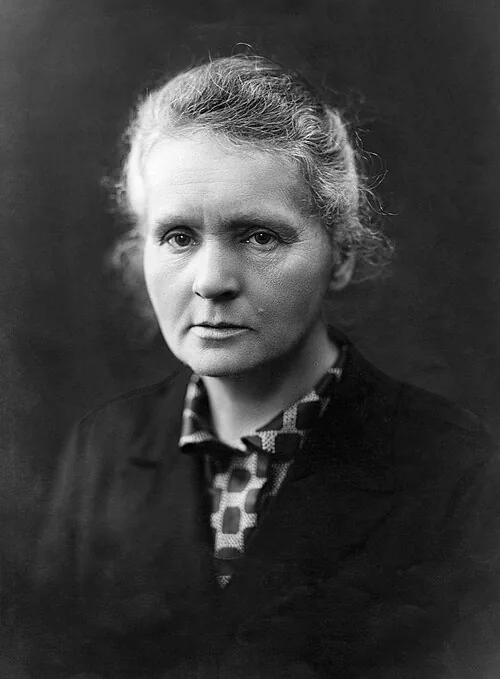
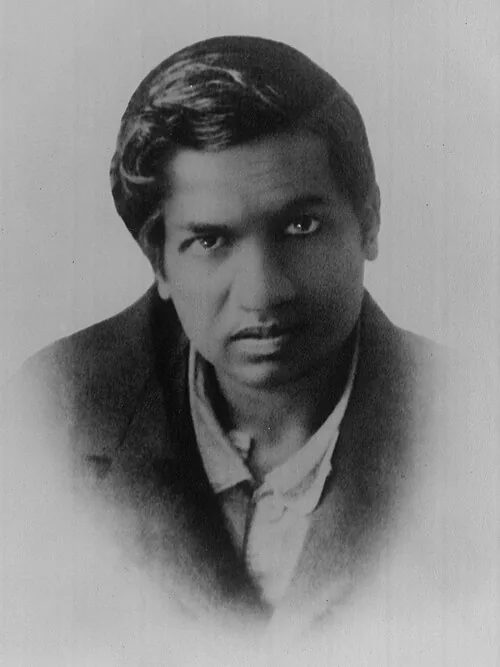
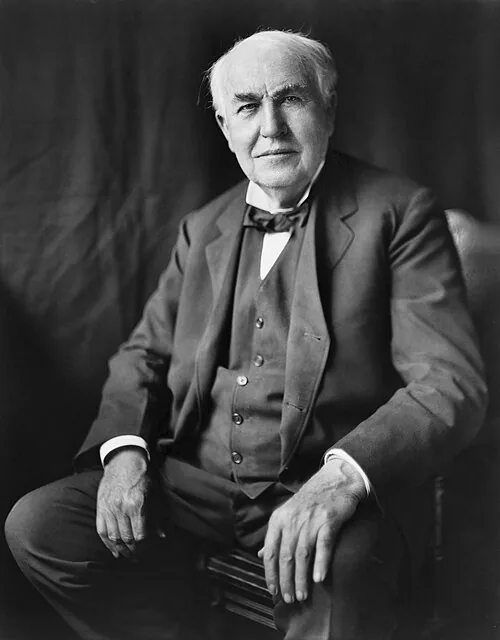
Photograph by Henri Manuel (c. 1920), public domain. Background removed for the portrait above. · Photograph (1913) held by Trinity College, Cambridge, via Wikimedia Commons, CC BY 4.0. · Photograph by Louis Bachrach, Bachrach Studios, restored by Michel Vuijlsteke, public domain. Background removed for the portrait above.

.jpg)
An estimate is an inference.
Yours can be measured.
Thirty questions, scored against general-population benchmarks. Your score, your percentile, your ability breakdown and a printable IIF certificate.
Find your IQ score now! →