



What was Marie Curie’s IQ?
Two Nobel Prizes in two sciences, and no test that could have measured her.
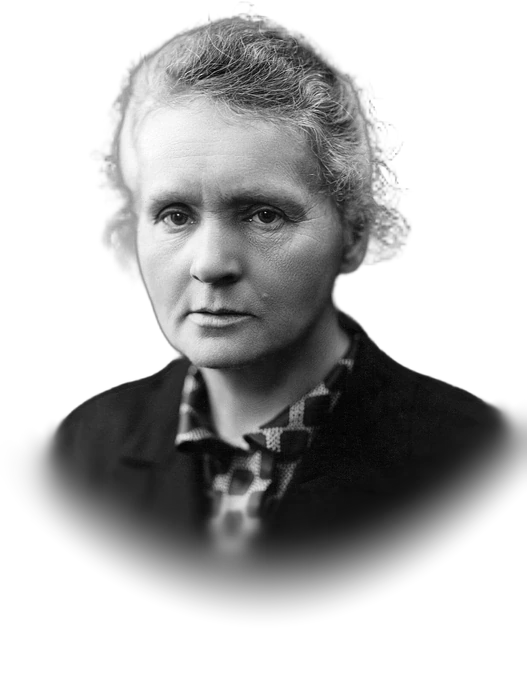
Curie is the strongest case on this site for judging a person by their record, because her record is exceptional and the alternative — a retrospective IQ estimate — was never available for her.
Marie Curie’s estimated IQ
- Graduated first in her class in physics at the Sorbonne in 1893, and second in mathematics in 1894, having arrived in Paris speaking limited French.
- Nobel Prize in Physics (1903) and Nobel Prize in Chemistry (1911) — still the only person to win in two distinct sciences.
- Isolated polonium and radium and developed the techniques for separating radioactive isotopes, work that founded a field.
- Studied at the clandestine Flying University in Warsaw because women were barred from Polish universities under Russian rule.
This range is an inference from adult achievement, and it carries the same weakness as every other historiometric estimate here: no childhood record of the kind such estimates normally read has survived, and achievement under those conditions reflects extraordinary persistence at least as much as reasoning ability. Curie was also not covered by the standard historiometric study, so there is no scholarly figure to check ours against.
- Born
- 7 November 1867, Warsaw
- Died
- 4 July 1934, Passy, France
- Field
- Physics and chemistry
- Education
- Licence in physics (1893) and mathematics (1894), Sorbonne
- Known for
- Radioactivity; polonium and radium
- Firsts
- First woman Nobel laureate; only person with Nobels in two sciences
What an IQ of 160–180 actually means
Set the claim aside for a moment. If someone genuinely scored in this range, here is what that would represent.
Average is 100 by construction, and about two-thirds of people fall between 85 and 115. Take the test to place your own score on this scale.
| Score range | Classification | Share of people | What it indicates |
|---|---|---|---|
| 85 – 114 | Average | ~68% | The range most people fall into. |
| 115 – 129 | Above average | ~13.6% | Roughly one person in seven. |
| 130 – 144 | Gifted | ~2% | The threshold most high-IQ societies use. |
| Above 144 | Highly gifted | ~0.1% | Figures above this range are extrapolated from the curve rather than measured. |
Percentages are approximate and describe a normal distribution. The same number means different things on tests with different standard deviations.
Thirty questions gives you a measured position on this exact scale — your score, your percentile and the ability breakdown behind it.
Find out in 30 minutes →Who Marie Curie was
Maria Salomea Skłodowska was born in Warsaw in 1867, under Russian rule, where women could not attend university. She studied at the underground Flying University and worked as a governess to fund her sister’s medical studies in Paris, on the agreement that the favour would be returned.
She reached the Sorbonne in 1891 and took her degrees in physics and mathematics within three years. With Pierre Curie she identified polonium and radium in 1898; the 1903 Nobel Prize in Physics followed, shared with Pierre and Henri Becquerel. After Pierre’s death in 1906 she took his chair, becoming the first woman to teach at the Sorbonne.
The 1911 Chemistry prize was hers alone. During the First World War she equipped and drove mobile radiography units to the front. She died in 1934 of aplastic anaemia, almost certainly caused by the exposure that the work required and that nobody yet understood.
 By Elora Mercer, Celebrity Research WriterFigures checked by Leon Falkner, Data & Research Analyst
Reviewed by Aarav Vardhan, Editor-in-Chief · Last reviewed August 2026

Marie Curie: the documented record
The estimate above rests on this record. Every entry here is a matter of public fact, which is more than can be said for the number itself.
- 1867Born in Warsaw, in Russian-ruled Poland.
- 1891Arrives in Paris to study at the Sorbonne.
- 1893Graduates first in her class in physics.
- 1898Identifies polonium and radium with Pierre Curie.
- 1903Shares the Nobel Prize in Physics.
- 1906Becomes the first woman to teach at the Sorbonne.
- 1911Awarded the Nobel Prize in Chemistry.
- 1934Dies of aplastic anaemia caused by radiation exposure.
Where the 180 figure came from
Following a claim back to its first appearance is the part almost nobody does — and it is what most people are actually asking.
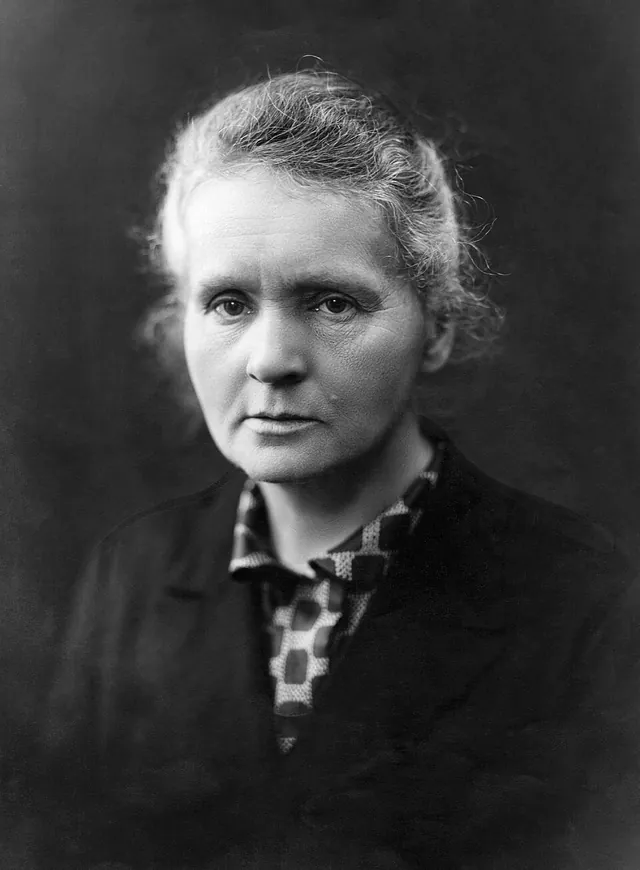
The figures attached to Curie were not derived; they were assigned. She belongs to the group of famous scientists who arrived on IQ lists after the lists already existed, and the numbers reflect her reputation rather than any procedure.
Her exclusion from Cox’s study is worth stating plainly because it is the same reason Tesla has no rating. The study’s cutoff was a birth year, not a judgement. Anyone born after 1850 simply falls outside it, which is why this category’s best-supported numbers cluster among people who died before intelligence testing was invented.
What the record does contain is unusually good. She topped the physics ranking at the Sorbonne in a language she had learned as an adult, in a system that had no particular interest in her succeeding, and then did the work twice — polonium and radium, then the isolation techniques that made the field usable. Our 160–180 rests on that, and sits below Newton and Leonardo in this category only because their childhood records survive and hers does not. That is a statement about the evidence, not about the three of them.
How we read a number →Nobel Foundation records, publicly archived. Still the only case of prizes in two distinct sciences.
Institutional record: first in her class in physics, second in mathematics.
The standard source for retrospective estimates. Curie is not in it — the study covered births between 1450 and 1850, and she was alive when it appeared.
Intelligence testing was in its infancy during her working life and no record of an administered test exists.
Source URLs and first-appearance date pending audit.
No original could be located. The figures appear on list pages without method or attribution.
The sources behind our estimate
The figures that circulate for Marie Curie, what we were able to confirm, and where the two diverge.
180 to 200 is the usual band on aggregator sites, occasionally presented as a measured figure.
Curie is absent from Cox’s 1926 study, which is the source of nearly every credible historical IQ estimate. Cox covered people born between 1450 and 1850; Curie was born in 1867 and was still alive and working when the study was published. So there is no test result and no scholarly retrospective rating — the two things that produce numbers for the other figures in this category.
Three numbers, no method behind any of them. Where a real historiometric rating exists we cite it; here there is nothing to cite.
Want a number that does hold up? Every figure on this page is somebody’s claim. Take the 30-question test and get a percentile you can check rather than a figure you have to trust.
Marie Curie — frequently asked
What was Marie Curie’s IQ?
No measured score exists — she was never tested, and no retrospective scholarly rating covers her. Our 160–180 range is inferred from her academic record and published work.
Why is Marie Curie not in the Cox study?
Cox’s 1926 study covered people born between 1450 and 1850. Curie was born in 1867 and was alive when the study was published, so she falls outside it — the same reason Tesla has no rating.
Was Marie Curie the first woman to win a Nobel Prize?
Yes, in Physics in 1903. She is also the only person to have won Nobel Prizes in two different sciences, adding Chemistry in 1911.
Where does the figure of 180 or 200 come from?
No original could be located. The numbers appear on aggregator pages without any stated method and seem to have been assigned to match her reputation.
How does Curie compare with Newton and Leonardo on this site?
Her range sits slightly below Newton and Leonardo da Vinci, because historiometric estimates for those two draw on surviving childhood records. Hers rests on adult achievement alone. That reflects the evidence available, not a ranking of the three.
Did Marie Curie face obstacles to her education?
Yes. Women were barred from universities in Russian-ruled Poland, so she studied at the clandestine Flying University in Warsaw and worked as a governess for years before reaching the Sorbonne at 23.
How does my IQ compare with Marie Curie?
You can find out in about fifteen minutes. The IQ Metrics assessment is 30 questions, scored on the same 100-mean scale used throughout this page, so your result and the estimate above are at least expressed in the same units — one measured, one inferred. Once you have a number, the leaderboard shows where it would sit, and how we score and norm it explains the benchmarking.
Where does this estimate come from?
From the documented record rather than a test — the method is named above and set out in full under how we read a number. Compare it against the other historical profiles, starting with Isaac Newton.
- Take the 30-question IQ test — get a measured score and percentile of your own
- Average IQ by country — how the scale behaves across populations
- How IQ Metrics scores its assessment — the method behind our own number
- More on how IQ testing works — reliability, error and what a score can and cannot say
- More historical profiles — same field, same method
More historical
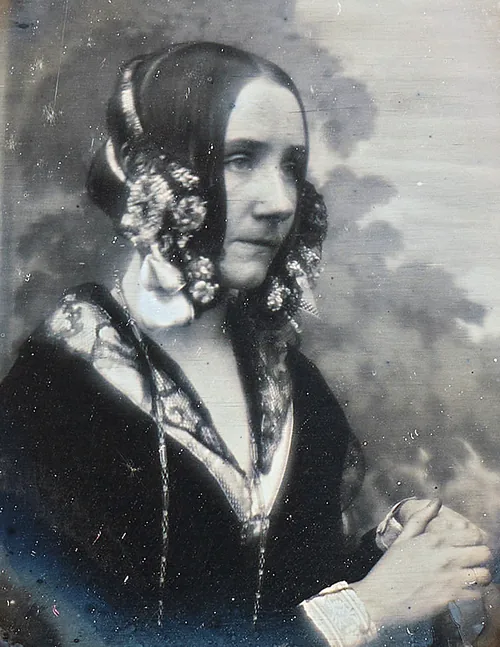
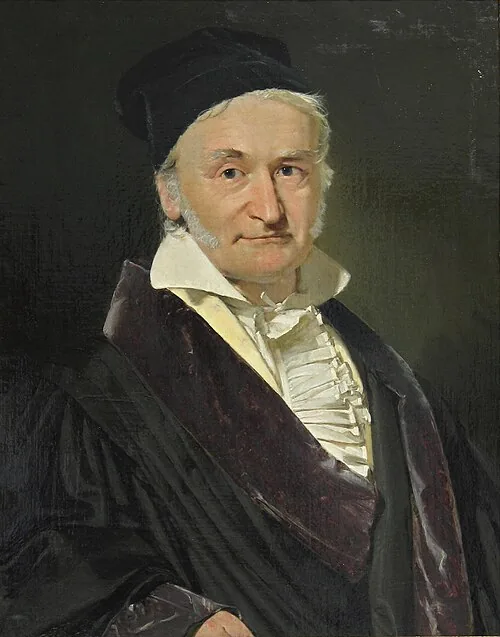
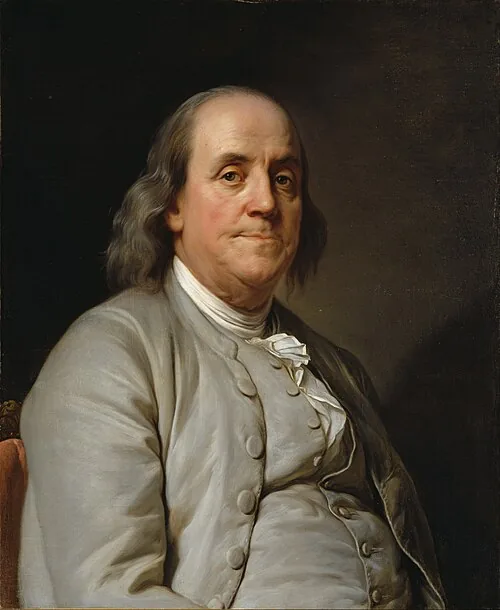
Daguerreotype by Antoine Claudet (c. 1843), public domain. · Portrait by Christian Albrecht Jensen (1840), via Wikimedia Commons, public domain. · Portrait by Joseph-Siffred Duplessis (c. 1785), public domain.


An estimate is an inference.
Yours can be measured.
Thirty questions, scored against general-population benchmarks. Your score, your percentile, your ability breakdown and a printable IIF certificate.
Find your IQ score now! →