



What was Charlie Chaplin’s IQ?
Out of school by thirteen, self-taught from Emerson and Kant, and no test score has ever been put beside his name.
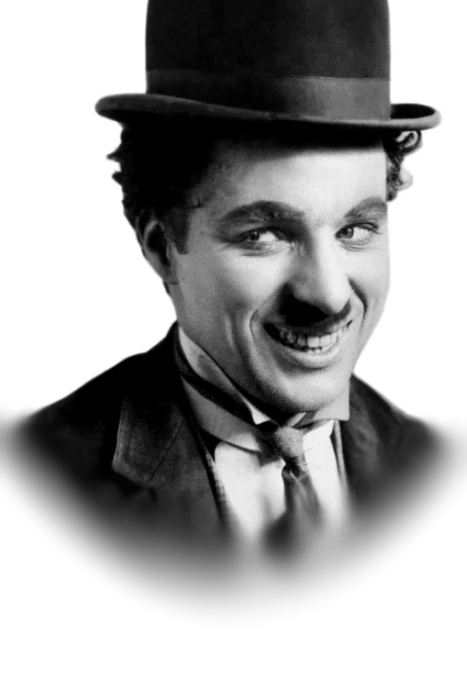
No published IQ test result exists for Charlie Chaplin, and no celebrity-IQ page we could open gives him a number. What is documented is a boy out of school by thirteen who became a self-taught writer, director, composer and United Artists co-founder, with two honorary Academy Awards and a competitive Oscar — a record that supports an estimated IQ of about 130–145.
Charlie Chaplin’s estimated IQ
- Left formal schooling by age 13 after years in London’s pauper schools (the Central London District School at Hanwell, then Norwood Schools); everything after that was self-directed.
- Documented self-education: the historian Jonathan Rose (The Intellectual Life of the British Working Classes, New Haven, 2001, p. 378) describes him as “a classic autodidact” studying a Latin-English dictionary, Emerson’s Self-Reliance, Plato and Kant; the Open University’s UK Reading Experience Database logs these as records.
- Wrote, directed, produced, edited and composed the music for most of his films, and co-founded the distribution company United Artists in 1919 with Mary Pickford, Douglas Fairbanks and D. W. Griffith.
- A special Academy Award at the first ceremony (May 16, 1929), an Honorary Academy Award (April 10, 1972) and the Oscar for Limelight’s original dramatic score (March 27, 1973, shared with Raymond Rasch and Larry Russell); five Academy Award nominations for The Great Dictator (1941 ceremony).
- City Lights (1931) ranked No. 11 on the American Film Institute’s 2007 list of the 100 greatest American films; honorary Doctor of Letters degrees from Oxford and Durham (1962); a KBE in the 1975 New Year Honours.
This is the least anchored kind of range: there is no school record, no degree and no test, and comic invention, direction, a business he co-owned and music he composed with trained arrangers (he could not read sheet music) are craft and judgment that nobody has converted into a psychometric score. The range is inferred from output, set wide on purpose, and says nothing a measured test could confirm.
- Born
- April 16, 1889, London
- Died
- December 25, 1977, Corsier-sur-Vevey, Switzerland
- Schooling
- Lambeth Workhouse and the Central London District School at Hanwell; Norwood Schools; abandoned education by age 13
- Known for
- The Tramp, first seen in Kid Auto Races at Venice (1914); The Kid, The Gold Rush, City Lights, Modern Times, The Great Dictator, Limelight
- Business
- Co-founded United Artists in 1919 with Mary Pickford, Douglas Fairbanks and D. W. Griffith
- Academy Awards
- Special award (1929, The Circus); Honorary Award (1972); original dramatic score for Limelight (1973, shared)
- Honors
- Honorary Doctor of Letters, Oxford and Durham (1962); KBE, 1975 New Year Honours
- Documented IQ test
- None published; no figure found on the pages we opened
What an IQ of 130–145 actually means
Set the claim aside for a moment. If someone genuinely scored in this range, here is what that would represent.
| Score range | Classification | Share of people | What it indicates |
|---|---|---|---|
| 85 – 114 | Average | ~68% | The range most people fall into. |
| 115 – 129 | Above average | ~13.6% | Roughly one person in seven. |
| 130 – 144 | Gifted | ~2% | The threshold most high-IQ societies use. |
| Above 144 | Highly gifted | ~0.1% | Figures above this range are extrapolated from the curve rather than measured. |
Percentages are approximate and describe a normal distribution. The same number means different things on tests with different standard deviations.
Thirty questions gives you a measured position on this exact scale — your score, your percentile and the ability breakdown behind it.
Find out in 30 minutes →Who Charlie Chaplin was
Charles Spencer Chaplin was born on April 16, 1889, in London, and his formal schooling was brief and institutional. At seven he was sent to Lambeth Workhouse and housed at the Central London District School for paupers, a poor-law school at Hanwell that he later remembered as “a forlorn existence”; in July 1898 he was moved on to Norwood Schools, another institution for destitute children. By the age of 13 he had abandoned education. He toured English music halls with the Eight Lancashire Lads clog-dancing troupe in 1899 and 1900, played his first acting role, a newsboy in Jim, a Romance of Cockayne, in July 1903, and went on to play Billy the pageboy in Charles Frohman’s production of Sherlock Holmes, including a London run alongside William Gillette.
What the schoolroom did not give him, he looked for in books. In The Intellectual Life of the British Working Classes (New Haven, 2001, p. 378), the historian Jonathan Rose calls Chaplin “a classic autodidact” who could be found in his dressing room studying a Latin-English dictionary, Emerson’s Self-Reliance, Poe, Whitman, Twain, Plato, Locke, Kant and Henri Bergson; the Open University’s UK Reading Experience Database records these as undated reading by Chaplin. He also taught himself to play the piano, violin and cello, though he was not a trained musician and could not read sheet music. In 1964 he published My Autobiography, a 500-page memoir that became a worldwide best-seller.
He joined Fred Karno’s comedy company in 1908 after a two-week trial and toured North America with its vaudeville section on a tour that lasted 21 months, returning to England in June 1912. He began at Keystone Studios on January 5, 1914, and the Tramp debuted in Kid Auto Races at Venice, released February 7, 1914. In 1919 he co-founded United Artists with Mary Pickford, Douglas Fairbanks and D. W. Griffith, a distribution company that gave him complete control over his films. His first feature-length film was The Kid (1921), followed by A Woman of Paris (1923), The Gold Rush (1925), whose last scene was shot in May 1925 after 15 months of filming, and The Circus (1928). He then produced City Lights (1931) and Modern Times (1936) without dialogue; The Great Dictator (1940) was his first sound film, and Limelight (1952) followed it.
He wrote, directed, produced, edited and composed the music for most of his films, and from City Lights onward he composed the score for every film; as he could not read sheet music, he worked with professionals such as David Raksin, Raymond Rasch and Eric James. “Smile”, written for Modern Times, became a hit for Nat King Cole in 1954. The Academy of Motion Picture Arts and Sciences gave him a special award at its first ceremony on May 16, 1929, for The Circus; an Honorary Award on April 10, 1972; and the Oscar for original dramatic score for Limelight on March 27, 1973, shared with Raymond Rasch and Larry Russell, after the film’s 1972 American re-release. The Great Dictator drew five nominations at the 13th ceremony, on February 27, 1941, with Chaplin nominated for actor and for original screenplay. Oxford and Durham conferred honorary Doctor of Letters degrees in July 1962, and he was appointed a Knight Commander of the Order of the British Empire in the 1975 New Year Honours. He died on December 25, 1977, at Corsier-sur-Vevey, Switzerland, aged 88.
 By Elora Mercer, Celebrity Research WriterFigures checked by Leon Falkner, Data & Research Analyst
Reviewed by Aarav Vardhan, Editor-in-Chief · Last reviewed August 2026
.jpg)
Charlie Chaplin: the documented record
The estimate above rests on this record. Every entry here is a matter of public fact, which is more than can be said for the number itself.
- 1889Born April 16 in London.
- 1896–c. 1902Sent at seven to Lambeth Workhouse and the Central London District School at Hanwell, then Norwood Schools; has abandoned education by 13.
- 1908Joins Fred Karno’s comedy company after a two-week trial; later tours North America for 21 months, returning in June 1912.
- 1914Starts at Keystone Studios on January 5; the Tramp debuts in Kid Auto Races at Venice, released February 7.
- 1919Co-founds United Artists with Mary Pickford, Douglas Fairbanks and D. W. Griffith.
- 1931City Lights opens, with an orchestral score composed by Chaplin.
- 1940The Great Dictator, his first sound film, is released; it earns five Academy Award nominations at the February 27, 1941 ceremony.
- 1972–1973Honorary Academy Award (April 10, 1972); Oscar for Limelight’s original dramatic score (March 27, 1973).
- 1975Appointed a Knight Commander of the Order of the British Empire (KBE) in the New Year Honours.
- 1977Dies December 25 at Corsier-sur-Vevey, Switzerland, aged 88.
Why no figure circulates
Following a claim back to its first appearance is the part almost nobody does — and it is what most people are actually asking.
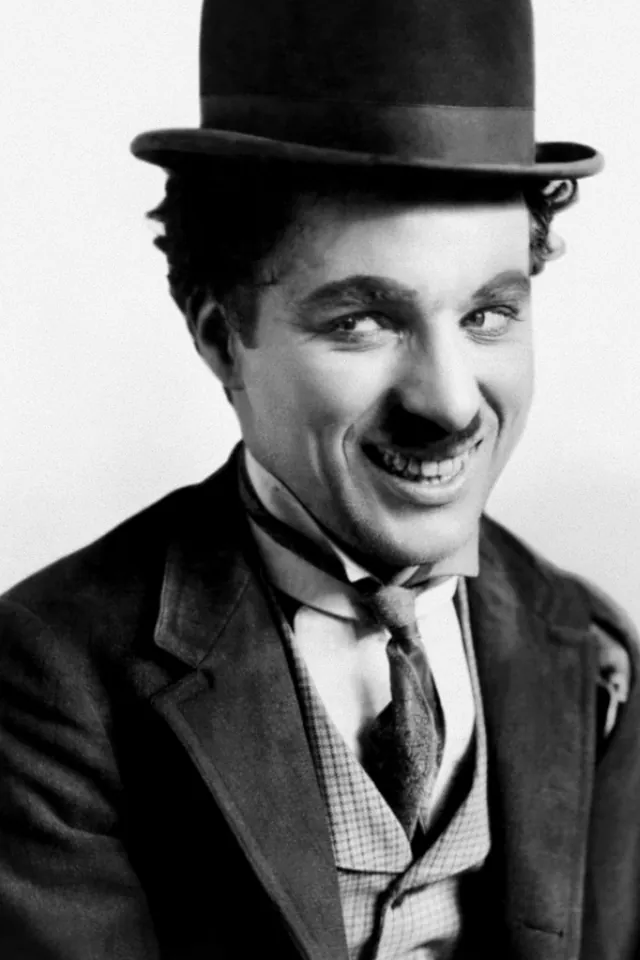
There is no Charlie Chaplin IQ figure to trace, because no published IQ test result exists for him and no page we could open attaches a number to his name. We read celebrity-IQ lists at tvovermind.com, famouspeopletoday.com, check-iq.org, iqcertificate.org, sociosite.net, iqtestprep.com, geniuses.club and thearchaeologist.org; none mentions Chaplin. On this site’s other actor profiles a circulating number at least leads back to an unsourced list (see where celebrity IQ numbers come from); for Chaplin there is no list to follow, which is itself the finding.
A childhood Charlie Chaplin IQ test is ruled out by the calendar. Chaplin had abandoned school by the age of 13, around 1902. Alfred Binet and Théodore Simon published the first intelligence scale in 1905, when he was 16; William Stern coined the abbreviation “IQ” in a 1912 book; and Lewis Terman’s Stanford revision of the Binet–Simon scale appeared in 1916, when Chaplin was already an international film star (the story is told in the history of intelligence testing). No adult test appears in any source we opened. The usual substitute, a historiometric estimate from biography such as Cox’s 1926 study of 301 geniuses, does not cover him either: that sample was born between 1450 and 1850, and Chaplin was born in 1889.
Was Charlie Chaplin a genius? The word comes from judgments of his work, not from testing. The Academy’s special award at its first ceremony, on May 16, 1929, honored “versatility and genius in acting, writing, directing, and producing The Circus.” That is a verdict on creative craft, and what a genius IQ level actually means is a different, statistical question. Attaching an invented Charlie Chaplin IQ score to a man whose record is this well documented would replace something checkable with something fictional.
A Charlie Chaplin IQ level therefore has to be inferred from output: out of school by 13, self-directed reading logged in the Open University’s UK Reading Experience Database, a company he co-founded, films he wrote, directed, produced, edited and scored, and Academy recognition spanning 1929 to 1973. On this site that supports 130–145, level with Quentin Tarantino’s range (another writer-director who left school young and trained himself) and overlapping Rowan Atkinson’s 125–140; Atkinson has named Chaplin, Buster Keaton and Harold Lloyd as influences on his visual comedy. In plain terms, an IQ around 135 is a high but not exotic result: the range brackets that kind of accomplishment and is not a measurement.
How we read a number →Lists Limelight (Charles Chaplin, Raymond Rasch, Larry Russell) as the winner for Music (Original Dramatic Score).
Lists five nominations for The Great Dictator, including Charles Chaplin as an actor nominee and for original screenplay, and Charles Chaplin Productions for best picture.
The 1929 page lists a Special Award for The Circus; the 1972 page lists an Honorary Award for Charlie Chaplin. Citation wording and the April 10, 1972 date come from Wikipedia’s 44th Academy Awards article, not from Oscars.org.
Lists City Lights (1931), directed by Charles Chaplin, at No. 11.
Quote “a classic autodidact, always struggling to make up for a dismally inadequate education” and the list of reading (Latin-English dictionary, Emerson, Poe, Whitman, Twain, Plato, Locke, Kant, Bergson); the records give no date for the reading.
Orientation and cross-checks: birth date, Lambeth Workhouse and Hanwell/Norwood schooling, abandoned education by 13, Karno and Keystone dates, the 1919 founding of United Artists, self-taught music and the composing credits, Oscars and honors, Atkinson’s naming of Chaplin as an influence, and the 1905, 1912 and 1916 dates in intelligence testing. Wikidata confirms Q882 is the English actor and filmmaker (1889–1977), not a namesake.
Confirms the sample’s birth-year range and the 1926 date of the study; Chaplin (born 1889) is outside it and does not appear on the page.
Celebrity-IQ and genius lists and a dedicated Chaplin page. None gives Chaplin an IQ number, a test, an examiner or a date. iqcertificate.org says its own list is “based on rumors and hearsay.”
None from Chaplin, a school or a psychologist. Looked for on the pages above, the Wikipedia/Wikidata cluster and the Open University reading database; none contains a score, an examiner or a date.
The sources behind our estimate
The figures that circulate for Charlie Chaplin, what we were able to confirm, and where the two diverge.
People search for “Charlie Chaplin IQ”, “what was Charlie Chaplin’s IQ” and “Charlie Chaplin IQ score”, and whether a number is attached to his name is exactly what we checked. We looked on celebrity-IQ lists, genius rankings and a dedicated Chaplin page and found no page that prints a figure for him.
No Charlie Chaplin IQ test result has been published, and none of the celebrity-IQ pages we opened gives him a number. tvovermind.com’s “20 Celebrities with Ridiculously High IQs”, famouspeopletoday.com’s “34 Celebrities With High IQ”, the celebrity page at check-iq.org, iqcertificate.org’s famous-people list, sociosite.net’s “Famous people’s IQ” and iqtestprep.com’s celebrity list do not mention him; neither do geniuses.club’s genius ranking or thearchaeologist.org’s “100 Historical Geniuses Ranked by IQ”. The Chaplin page at thumbscore.net lists films and ratings but no IQ. What can be checked is the record: three Academy Awards, a distribution company he co-founded and a self-taught education.
With no circulating figure there is no spread to audit; 130 and 145 are the two ends of our own estimate. A figure far above that would have to come from a test result, and none has been published, so there is no number here for the record to undercut.
Want a number that does hold up? Every figure on this page is somebody’s claim. Take the 30-question test and get a percentile you can check rather than a figure you have to trust.
Charlie Chaplin — frequently asked
What is Charlie Chaplin’s IQ?
No published IQ test result exists for Charlie Chaplin, and no celebrity-IQ page we opened gives him a number, so there is no measured score to report. An estimated IQ of 130–145 is inferred from his documented record: out of school by 13, self-taught, a composer, a United Artists co-founder and an Oscar winner.
What was Charlie Chaplin’s IQ score?
Nobody recorded one. Chaplin had left school by about 1902, three years before the first intelligence scale (Binet–Simon, 1905) and ten years before the term “IQ” was coined (1912), and no later test has surfaced. Any Charlie Chaplin IQ score you see quoted is an estimate or an invention, not a result.
Did Charlie Chaplin take an IQ test?
There is no public record that he did. No source we opened mentions a Charlie Chaplin IQ test. What is documented instead is a boy schooled in London’s pauper schools until about age 13, who then taught himself from books and learned his craft on the stage.
Was Charlie Chaplin a genius?
“Genius” is a judgment of creative work, not an IQ band. The Academy’s 1929 special award for The Circus cited “versatility and genius in acting, writing, directing, and producing,” and Oxford and Durham gave him honorary doctorates in 1962. Those are verdicts on craft, not an IQ score.
How was Charlie Chaplin educated?
Formally, barely: he was placed in the Central London District School at Hanwell and later Norwood Schools, both for destitute children, and had abandoned education by 13. After that he was self-taught; the historian Jonathan Rose calls him “a classic autodidact” who studied a Latin-English dictionary, Emerson and Kant.
Did Charlie Chaplin compose his own music?
Yes, with help. He taught himself piano, violin and cello and composed the scores for his films from City Lights (1931) on, but because he could not read sheet music he worked with arrangers such as Raymond Rasch, with whom he shared the 1973 Oscar for Limelight’s score.
How does Charlie Chaplin’s estimated IQ compare with Quentin Tarantino’s?
IQ Metrics puts Charlie Chaplin’s estimated IQ of 130–145 level with Quentin Tarantino’s 130–145 and overlapping Rowan Atkinson’s 125–140. All three ranges rest on documented work, not tests. Chaplin and Tarantino also left school young and trained themselves, though Chaplin additionally composed, produced and co-founded a distribution company.
How does my IQ compare with Charlie Chaplin?
You can find out in about fifteen minutes. The IQ Metrics assessment is 30 questions, scored on the same 100-mean scale used throughout this page, so your result and the estimate above are at least expressed in the same units — one measured, one inferred. Once you have a number, the leaderboard shows where it would sit, and how we score and norm it explains the benchmarking.
Where does this estimate come from?
From the documented record rather than a test — the method is named above and set out in full under how we read a number. Compare it against the other actors profiles, starting with Natalie Portman.
- Take the 30-question IQ test — get a measured score and percentile of your own
- Average IQ by country — how the scale behaves across populations
- How IQ Metrics scores its assessment — the method behind our own number
- More on how IQ testing works — reliability, error and what a score can and cannot say
- More actors profiles — same field, same method
More actors

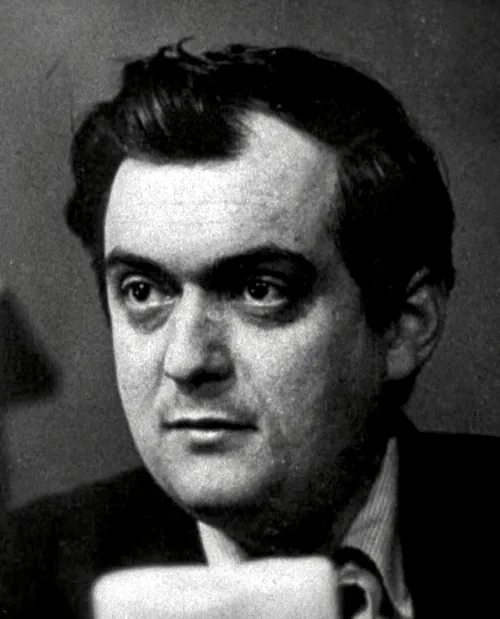
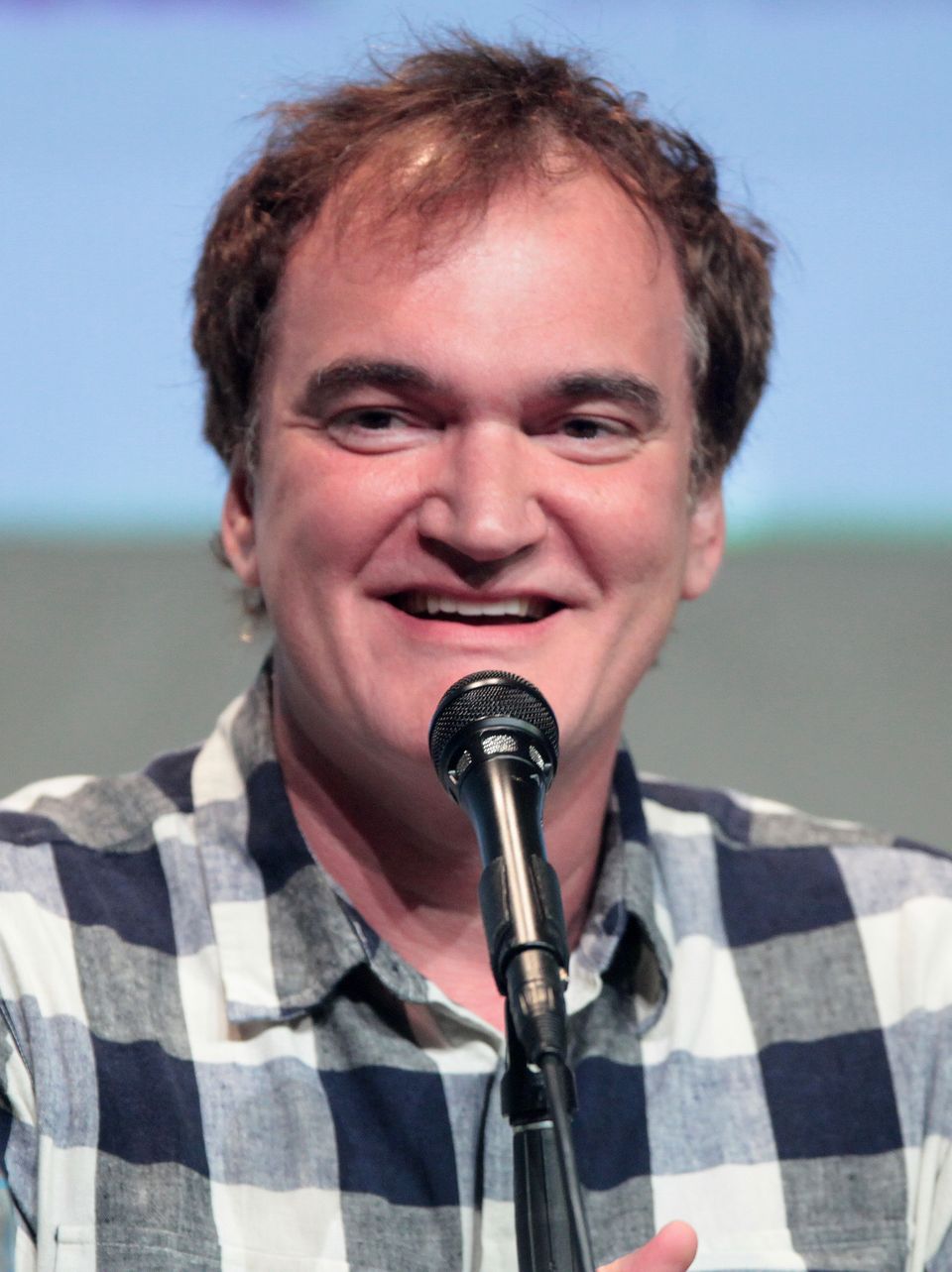
Photograph by Eva Rinaldi, CC BY-SA 2.0. Background removed for the portrait above. · Screenshot from the trailer for Dr. Strangelove (Columbia Pictures, 1963; Commons file), cropped; public domain in the United States (published without a copyright notice). · Photograph by Gage Skidmore (San Diego Comic-Con International, July 2015), CC BY-SA 3.0. Background removed for the portrait above.

_Cropped.jpg)

An estimate is an inference.
Yours can be measured.
Thirty questions, scored against general-population benchmarks. Your score, your percentile, your ability breakdown and a printable IIF certificate.
Find your IQ score now! →