



What is Doctor Faustus’ IQ?
A scholar written to know everything, and still make the worst trade in literature.
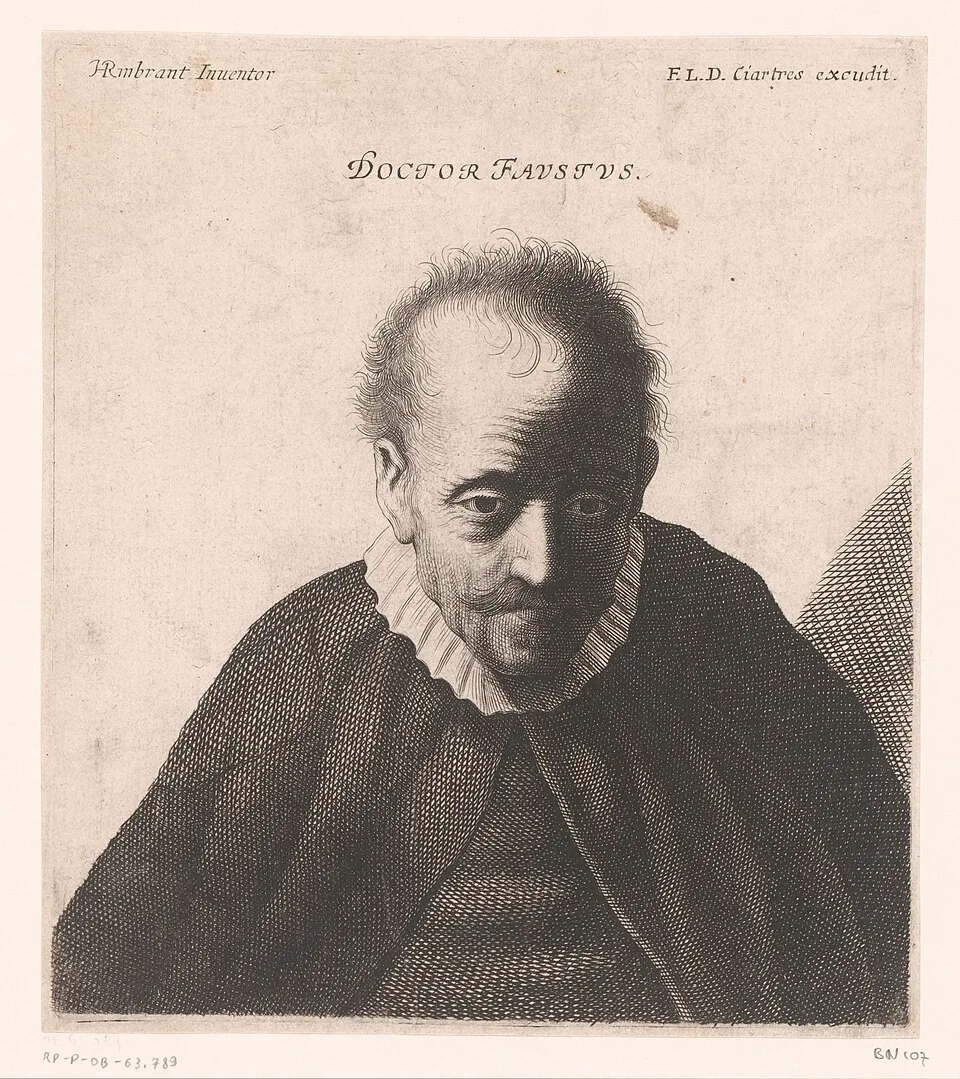
No aggregator assigns Doctor Faustus a number — this is not the usual case of an inflated figure to correct. He is here because he is literature’s most direct dramatisation of a mind that exhausts every field of knowledge and still makes a catastrophic choice.
Doctor Faustus’ estimated IQ
- Marlowe opens the play with Faustus reviewing and dismissing, one by one, the entire university curriculum of his time — logic, medicine, law and divinity — as insufficient, before turning to magic.
- He is written as fluent in the standard Latin scholarship of a Wittenberg-trained Renaissance doctor, conversant with Aristotle, Galen and Justinian.
- The bargain is written as the counter-evidence, not the proof: a scholar who has mastered every conventional field still trades eternity for twenty-four years of tricks, which the play stages as catastrophic misjudgement.
A character can be written to know everything and still be a fool about the one decision that matters — the whole play turns on that gap. A fictional estimate describes the writing, not a mind, which is why we can publish one freely.
- First appeared
- Historia von D. Johann Fausten, 1587 (German chapbook)
- Created by
- Anonymous (1587); dramatised by Christopher Marlowe (c. 1592) and Johann Wolfgang von Goethe (1808)
- Field
- Theology, law, medicine, philosophy — then necromancy
- Known for
- Trading his soul to Mephistopheles for knowledge and power
- Status
- Fictional, based on the historical Johann Georg Faust (c. 1480 – c. 1541)
What an IQ of 170–190 actually means
Set the claim aside for a moment. If someone genuinely scored in this range, here is what that would represent.
Average is 100 by construction, and about two-thirds of people fall between 85 and 115. Take the test to place your own score on this scale.
| Score range | Classification | Share of people | What it indicates |
|---|---|---|---|
| 85 – 114 | Average | ~68% | The range most people fall into. |
| 115 – 129 | Above average | ~13.6% | Roughly one person in seven. |
| 130 – 144 | Gifted | ~2% | The threshold most high-IQ societies use. |
| Above 144 | Highly gifted | ~0.1% | Figures above this range are extrapolated from the curve rather than measured. |
Percentages are approximate and describe a normal distribution. The same number means different things on tests with different standard deviations.
Thirty questions gives you a measured position on this exact scale — your score, your percentile and the ability breakdown behind it.
Find out in 30 minutes →Who Doctor Faustus is
The historical Johann Georg Faust was educated at Heidelberg and spent his career moving between German towns as an itinerant astrologer and alchemist, acquiring a reputation for fraud that outlived him. His death, around 1540–41, was reinterpreted within a generation as a bargain with the devil come due.
Christopher Marlowe’s The Tragical History of Doctor Faustus, first performed around 1592 and published in 1604, is the version that fixed the character in English literature: a Wittenberg scholar who has exhausted logic, medicine, law and divinity, and turns to necromancy for what conventional learning could not give him.
Goethe’s Faust, published in two parts in 1808 and 1832, retold the legend for a different age, and gave the language the phrase “Faustian bargain” — a trade of long-term ruin for immediate power or knowledge, still in everyday use as a byword for exactly the gap this page describes.
 By Elora Mercer, Celebrity Research WriterFigures checked by Leon Falkner, Data & Research Analyst
Reviewed by Aarav Vardhan, Editor-in-Chief · Last reviewed August 2026

Doctor Faustus: the documented record
The estimate above rests on this record. Every entry here is a matter of public fact, which is more than can be said for the number itself.
- c. 1480Johann Georg Faust, the historical figure behind the legend, is born in Germany.
- c. 1541Faust dies, reportedly in an alchemical accident; his enemies mythologise the death as the devil collecting him.
- 1587The anonymous chapbook Historia von D. Johann Fausten fixes the legend in print.
- c. 1592Christopher Marlowe’s The Tragical History of Doctor Faustus is first performed.
- 1604Marlowe’s play is first published (the shorter “A” text).
- 1616The expanded “B” text of Marlowe’s play is published.
- 1808Goethe publishes Faust, Part One.
- 1832Goethe’s Faust, Part Two is published posthumously.
Where the 170–190 figure came from
Following a claim back to its first appearance is the part almost nobody does — and it is what most people are actually asking.
Faustus is the one profile on this site built on a real historical person who then became a legend rather than staying a biography. Johann Georg Faust was a real German alchemist and astrologer, c. 1480 – c. 1541, with a documented reputation as a conman as much as a scholar; he reportedly died in an alchemical accident, a death his clerical enemies mythologised as the devil collecting him in person.
The legend was fixed in print within a generation — the anonymous 1587 chapbook Historia von D. Johann Fausten — and dramatised by Marlowe around 1592 and by Goethe in 1808. Every later version keeps the same shape: a scholar of real, encyclopaedic learning who finds it insufficient.
He is included here for the same reason Sherlock Holmes is: fictional “genius” characters attract genuine cultural interest, and estimating one misrepresents nobody, since nobody real is being described. Faustus is the clearest case in this section of the site’s wider argument in miniature — vast documented learning is not the same thing as good judgement, and the play’s tragedy is built entirely on that gap.
How we read a number →The opening monologue, in which Faustus reviews and rejects logic, medicine, law and divinity in turn, is the direct textual basis for the estimate above.
The chapbook that first fixed the legend in print, drawing on the reputation of the historical Johann Georg Faust.
A German alchemist and astrologer with a documented reputation for fraud; the primary record is thin and mostly hostile, which is itself part of how the legend formed.
Checked directly; unlike Sherlock Holmes, no aggregator or “smartest fictional characters” list assigns this character a specific number.
The sources behind our estimate
The figures that circulate for Doctor Faustus, what we were able to confirm, and where the two diverge.
No listicle or aggregator assigns this character a specific figure, unlike Sherlock Holmes. Worth separating clearly from Johann Fennhoff, a 1960s Marvel Comics supervillain who also uses the name “Doctor Faustus” — an unrelated, copyrighted, and much more recent character with no connection to the Renaissance legend profiled here.
We searched specifically for a circulating IQ figure attached to this character and found none. Every version of the legend — the 1587 German chapbook, Marlowe’s c.1592 play and Goethe’s 1808 telling — predates the concept of intelligence testing by more than three centuries.
There is nothing to report here. Unlike the site’s other fictional profiles, nobody has attached a specific number to this character at all — which is itself worth stating rather than manufacturing a claim to audit.
Want a number that does hold up? Every figure on this page is somebody’s claim. Take the 30-question test and get a percentile you can check rather than a figure you have to trust.
Doctor Faustus — frequently asked
What is Doctor Faustus’s IQ?
No figure circulates for this character. He is fictional and, in every version of the legend, predates the concept of intelligence testing by centuries.
Is Doctor Faustus based on a real person?
Yes — Johann Georg Faust, a German alchemist and astrologer who lived roughly 1480 to 1541 and had a contemporary reputation as a fraud.
Why include a character with no circulating IQ claim to audit?
Because the site’s wider argument — that documented achievement and raw cognitive claims are not the same thing — has no clearer fictional example. Faustus is written to have mastered every field of scholarship, and it does not save him.
Is this the same Doctor Faustus as the Marvel Comics villain?
No. Marvel’s Johann Fennhoff, introduced decades later, borrows the name only. This page covers the Renaissance legend and its literary versions by Marlowe and Goethe.
Which version of the story does this page draw on?
Mainly Christopher Marlowe’s c.1592 play, the first major English dramatisation, with background from the 1587 German chapbook that originated the legend and Goethe’s 1808 retelling.
What does “Faustian bargain” mean?
A trade of long-term ruin for immediate power or knowledge — the phrase comes directly from Goethe’s version of this story and is still in everyday use.
How does my IQ compare with Doctor Faustus?
You can find out in about fifteen minutes. The IQ Metrics assessment is 30 questions, scored on the same 100-mean scale used throughout this page, so your result and the estimate above are at least expressed in the same units — one measured, one inferred. Once you have a number, the leaderboard shows where it would sit, and how we score and norm it explains the benchmarking.
Where does this estimate come from?
From the documented record rather than a test — the method is named above and set out in full under how we read a number. Compare it against the other fictional profiles, starting with Sherlock Holmes.
- Take the 30-question IQ test — get a measured score and percentile of your own
- Average IQ by country — how the scale behaves across populations
- How IQ Metrics scores its assessment — the method behind our own number
- More on how IQ testing works — reliability, error and what a score can and cannot say
- More fictional profiles — same field, same method
More fictional
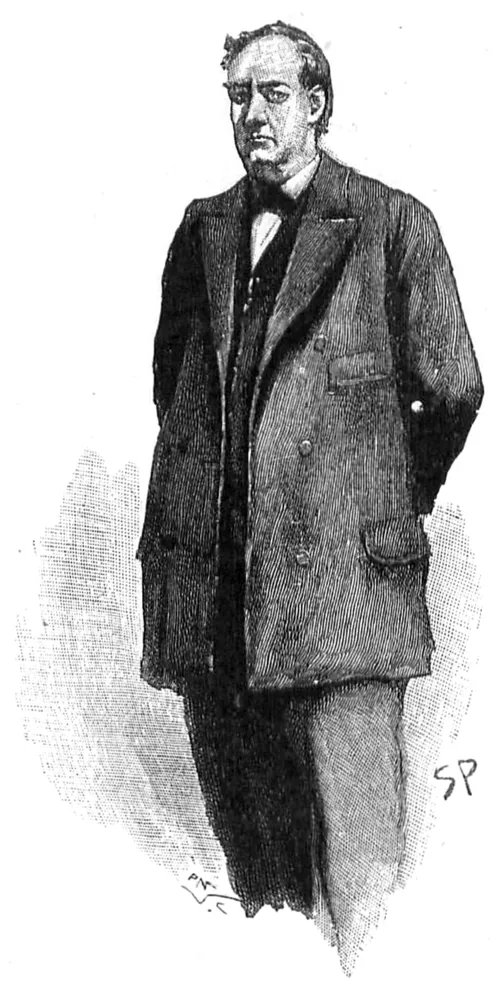
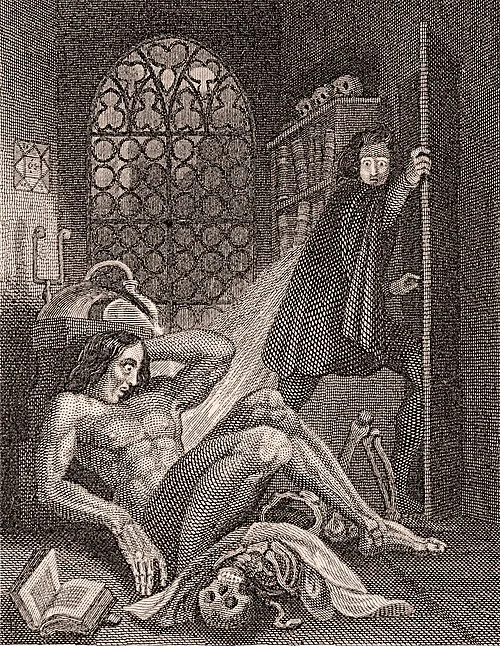

Illustration by Sidney Paget for The Strand Magazine (1893), public domain. Background removed for the portrait above. · Frontispiece by Theodor von Holst for the 1831 edition, public domain. · Photograph of a cosplayer as Light Yagami by Farhan Ahmad Tajuddin (2017), CC BY 2.0. Cropped; background removed for the portrait above. The character is the creation of Tsugumi Ohba and Takeshi Obata.


An estimate is an inference.
Yours can be measured.
Thirty questions, scored against general-population benchmarks. Your score, your percentile, your ability breakdown and a printable IIF certificate.
Find your IQ score now! →