



What is Mycroft Holmes’ IQ?
The canon says he is cleverer than Sherlock. It also says he cannot be bothered.

Sherlock Holmes says plainly that his brother is the better observer. Mycroft is the only character in this section whose limitation is stated by the text rather than inferred from it.
Mycroft Holmes’ estimated IQ
- Sherlock states in “The Greek Interpreter” (1893) that Mycroft has better powers of observation than his own, and that if detection were purely armchair reasoning Mycroft would be the greatest agent alive.
- In “The Bruce-Partington Plans” (1908) he is described as holding the conclusions of every government department in one mind and auditing them — a role Conan Doyle gives to no one else.
- Founded the Diogenes Club, and is shown solving cases from a chair without leaving the room.
- His stated failing is temperamental, not cognitive: he will not take the trouble to verify or pursue his own solutions.
This is a fictional character, so the estimate reads an author’s intent rather than a person’s ability. Conan Doyle wrote Mycroft specifically to be Sherlock’s superior in analysis and his inferior in application, and the range reflects that design. It is not a claim about anything measurable.
- Created by
- Arthur Conan Doyle
- First appeared
- “The Greek Interpreter”, The Strand Magazine, 1893
- Relation
- Elder brother of Sherlock Holmes, by seven years
- Occupation
- Auditor of government departments; co-founder of the Diogenes Club
- Stated failing
- Will not take the trouble to verify his own conclusions
What an IQ of 185–205 actually means
Set the claim aside for a moment. If someone genuinely scored in this range, here is what that would represent.
Average is 100 by construction, and about two-thirds of people fall between 85 and 115. Take the test to place your own score on this scale.
| Score range | Classification | Share of people | What it indicates |
|---|---|---|---|
| 85 – 114 | Average | ~68% | The range most people fall into. |
| 115 – 129 | Above average | ~13.6% | Roughly one person in seven. |
| 130 – 144 | Gifted | ~2% | The threshold most high-IQ societies use. |
| Above 144 | Highly gifted | ~0.1% | Figures above this range are extrapolated from the curve rather than measured. |
Percentages are approximate and describe a normal distribution. The same number means different things on tests with different standard deviations.
Thirty questions gives you a measured position on this exact scale — your score, your percentile and the ability breakdown behind it.
Find out in 30 minutes →Who Mycroft Holmes is
Mycroft Holmes is Sherlock’s elder brother by seven years, introduced in “The Greek Interpreter” in 1893. He is described as large, indolent and precise, moving between his lodgings in Pall Mall, his office in Whitehall and the Diogenes Club, which he co-founded for men who dislike company.
His work for the government is deliberately vague and enormous in scope. Sherlock describes him at one point as occasionally being the British government itself — a central clearing house holding every department’s conclusions in one mind and finding the errors between them.
He appears in only a handful of stories and solves problems without leaving his chair. The character has since been expanded well beyond the canon in adaptations, but the original is a compact and pointed idea: enormous ability, entirely unexercised.
 By Elora Mercer, Celebrity Research WriterFigures checked by Leon Falkner, Data & Research Analyst
Reviewed by Aarav Vardhan, Editor-in-Chief · Last reviewed August 2026

Mycroft Holmes: the documented record
The estimate above rests on this record. Every entry here is a matter of public fact, which is more than can be said for the number itself.
- 1893Introduced in “The Adventure of the Greek Interpreter”.
- 1903Revealed in “The Empty House” to have supported Sherlock during his absence.
- 1908“The Bruce-Partington Plans” establishes the scope of his government role.
Where the 190 figure came from
Following a claim back to its first appearance is the part almost nobody does — and it is what most people are actually asking.
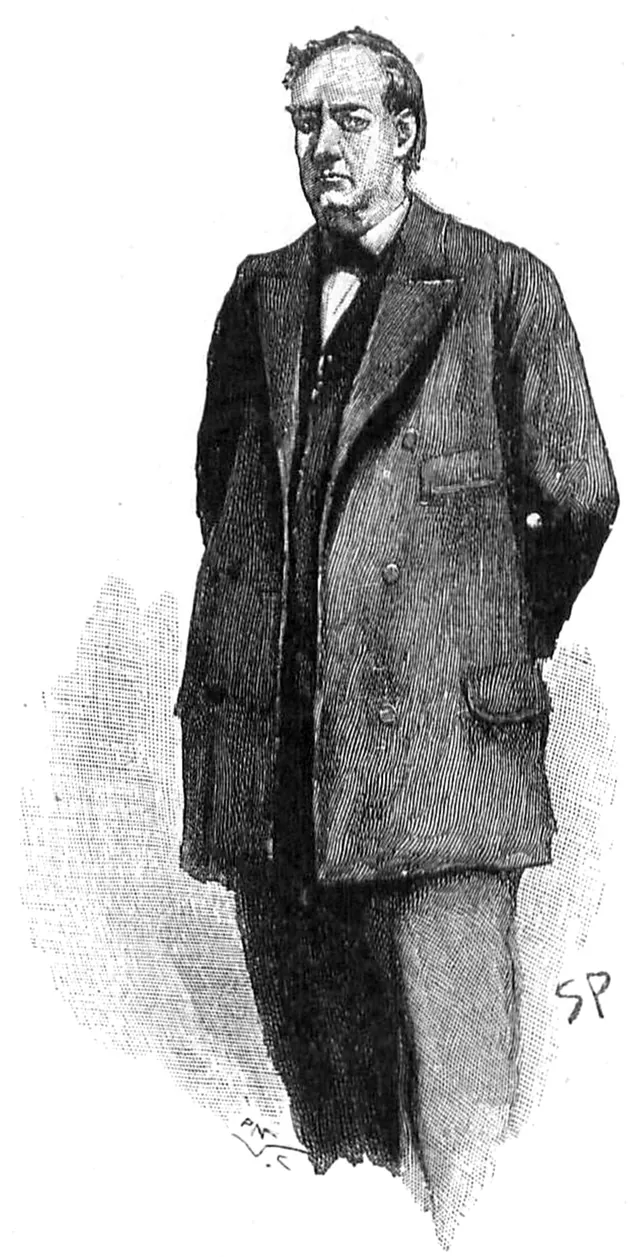
Mycroft exists to make a point about his brother. Conan Doyle introduces him in 1893 as a corrective: Sherlock’s gift is not unique, it runs in the family, and a version of it exists that is stronger still and produces nothing. The difference between the brothers is effort, not capacity, and the stories say so out loud.
That is why we place him at 185–205, above Sherlock at 180–200 and Moriarty at 175–195. It is the only ranking on this site derived from an explicit authorial statement rather than an inference from described feats. Sherlock, who has every reason to rate himself first, does not.
There is a reason this belongs on a site about IQ figures. Mycroft is a portrait of raw analytical power detached from application, and the stories treat that as a failure rather than a distinction. A number that measures only the capacity would rank him first and tell you nothing useful about what he did with it — which is close to the objection that Feynman’s documented 125 raises from the other direction.
How we read a number →Mycroft’s first appearance, and the source of Sherlock’s statement that his brother is the better observer.
Establishes Mycroft’s government role and his capacity to hold and cross-check every department’s conclusions.
Mycroft is revealed to have maintained Baker Street and assisted during Sherlock’s absence.
Our fictional rankings follow explicit textual statements where they exist. This is the only case where one is available.
The sources behind our estimate
The figures that circulate for Mycroft Holmes, what we were able to confirm, and where the two diverge.
Figures between 180 and 200 circulate, usually derived from Sherlock’s and pushed a little higher on the strength of the “better observer” line.
Unusually for this section, the circulating figures are roughly right — because the text supports them. Conan Doyle did not leave Mycroft’s standing to inference. He had Sherlock say it directly, twice, and built the Diogenes Club around a man who solves problems without moving. Where the figures go wrong is in treating a novelist’s deliberate construction as though it were a score.
For once the spread is narrow because the source is a text everyone has read, not a list everyone has copied.
Want a number that does hold up? Every figure on this page is somebody’s claim. Take the 30-question test and get a percentile you can check rather than a figure you have to trust.
Mycroft Holmes — frequently asked
What is Mycroft Holmes’s IQ?
He is fictional, so there is no measurable figure. On our reading of the canon he sits at 185–205 — above Sherlock — because Conan Doyle has Sherlock state directly that Mycroft is the better observer.
Is Mycroft smarter than Sherlock?
By the text, yes, in observation and deduction. Sherlock says so himself in “The Greek Interpreter”. What Mycroft lacks is energy: he will not take the trouble to verify or act on his own conclusions.
Why does Mycroft rank first among the fictional characters here?
Because his standing is stated by the author rather than inferred from described feats. That makes it the firmest basis available in fiction. Sherlock and Moriarty follow.
Which stories does Mycroft appear in?
Chiefly “The Greek Interpreter” (1893), “The Empty House” (1903) and “The Bruce-Partington Plans” (1908). He is mentioned in “The Final Problem”.
What is the Diogenes Club?
A London club Mycroft co-founded for men who wish to avoid conversation; talking is forbidden outside the Stranger’s Room. It is characteristic of how Conan Doyle draws him.
Do IQ figures for fictional characters mean anything?
Not as measurements. They describe how an author built a character. That is a legitimate thing to discuss, provided nobody mistakes it for data — and unlike real people, no one is misrepresented by the guess.
How does my IQ compare with Mycroft Holmes?
You can find out in about fifteen minutes. The IQ Metrics assessment is 30 questions, scored on the same 100-mean scale used throughout this page, so your result and the estimate above are at least expressed in the same units — one measured, one inferred. Once you have a number, the leaderboard shows where it would sit, and how we score and norm it explains the benchmarking.
Where does this estimate come from?
From the documented record rather than a test — the method is named above and set out in full under how we read a number. Compare it against the other fictional profiles, starting with Sherlock Holmes.
- Take the 30-question IQ test — get a measured score and percentile of your own
- Average IQ by country — how the scale behaves across populations
- How IQ Metrics scores its assessment — the method behind our own number
- More on how IQ testing works — reliability, error and what a score can and cannot say
- More fictional profiles — same field, same method
More fictional

Frontispiece by Theodor von Holst for the 1831 edition, public domain. · Print attributed to Jérôme David, after Rembrandt van Rijn, published by François Langlois. Rijksmuseum (object RP-P-OB-63.789), CC0. · Photograph of a cosplayer as Light Yagami by Farhan Ahmad Tajuddin (2017), CC BY 2.0. Cropped; background removed for the portrait above. The character is the creation of Tsugumi Ohba and Takeshi Obata.


An estimate is an inference.
Yours can be measured.
Thirty questions, scored against general-population benchmarks. Your score, your percentile, your ability breakdown and a printable IIF certificate.
Find your IQ score now! →