


What is Donald Trump’s IQ?
No published IQ score; the best-known figure, 156, was calculated rather than tested.
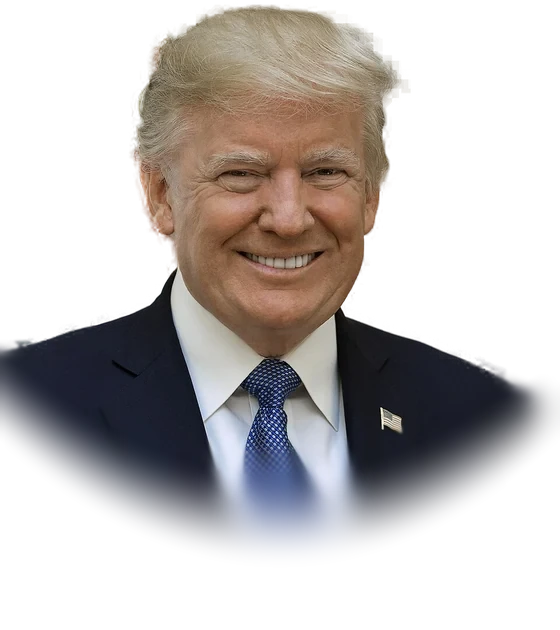
There is no published IQ score for Donald Trump, and the 156 that circulates was calculated from admission standards rather than measured. The documented record is a 1968 Wharton degree and a 30 out of 30 on the Montreal Cognitive Assessment, a screen for cognitive impairment and not an IQ test, reported by White House physicians in January 2018, April 2025 and May 2026.
Donald Trump’s estimated IQ
- A Bachelor of Science in economics from the Wharton School of the University of Pennsylvania in May 1968, entered as a transfer from Fordham after two years. This is an undergraduate degree, not the Wharton MBA.
- A long career in property development, licensing and television production, including hosting The Apprentice from 2004 to 2015.
- Election to the presidency of the United States in 2016 and again in 2024.
- Scores of 30 out of 30 on the Montreal Cognitive Assessment, reported by White House physicians in January 2018, April 2025 and May 2026. It is a screening test for cognitive impairment, not an intelligence test, and is included only as context: it is the only cognitive test named in those physician statements.
The Wharton degree is the strongest data point, but the evidence behind it, his grades and admission test scores, has not been made public. An estimate built on achievements rather than measured scores deserves the wide band given above.
- Born
- June 14, 1946, Queens, New York
- Field
- Property development, television, politics
- Education
- Fordham University, 1964–66; Wharton School, University of Pennsylvania, BS in economics, May 1968
- Published IQ score
- None
- Records
- Grades and SAT scores have never been made public
- Cognitive test on record
- Montreal Cognitive Assessment, 30/30, reported January 2018, April 2025 and May 2026; a screen for impairment, not an IQ test
- Known for
- The Trump Organization, The Apprentice, two non-consecutive presidencies
What an IQ of 115–130 actually means
Set the claim aside for a moment. If someone genuinely scored in this range, here is what that would represent.
Average is 100 by construction, and about two-thirds of people fall between 85 and 115. Take the test to place your own score on this scale.
| Score range | Classification | Share of people | What it indicates |
|---|---|---|---|
| 85 – 114 | Average | ~68% | The range most people fall into. |
| 115 – 129 | Above average | ~13.6% | Roughly one person in seven. |
| 130 – 144 | Gifted | ~2% | The threshold most high-IQ societies use. |
| Above 144 | Highly gifted | ~0.1% | Figures above this range are extrapolated from the curve rather than measured. |
Percentages are approximate and describe a normal distribution. The same number means different things on tests with different standard deviations.
Thirty questions gives you a measured position on this exact scale — your score, your percentile and the ability breakdown behind it.
Find out in 30 minutes →Who Donald Trump is
Donald Trump was born on June 14, 1946 in Queens, New York. He attended the New York Military Academy, then Fordham University for two years before transferring to the Wharton School at the University of Pennsylvania, graduating in May 1968 with a bachelor’s degree in economics.
He took over his family’s property business and expanded it into Manhattan development, hotels, casinos and brand licensing. From 2004 to 2015 he hosted The Apprentice, which substantially raised his public profile.
He was elected the 45th President of the United States in 2016, left office in January 2021, and was elected again in 2024. His annual physicals as president, at Walter Reed National Military Medical Center in April 2025 and May 2026, were each reported in a memo from the Physician to the President that included a Montreal Cognitive Assessment score of 30 out of 30.
 By Elora Mercer, Celebrity Research WriterFigures checked by Leon Falkner, Data & Research Analyst
Reviewed by Aarav Vardhan, Editor-in-Chief · Last reviewed October 2026

Donald Trump: the documented record
The estimate above rests on this record. Every entry here is a matter of public fact, which is more than can be said for the number itself.
- 1946Born June 14 in Queens, New York.
- 1964Enters Fordham University.
- 1966Transfers to the Wharton School, University of Pennsylvania.
- 1968Graduates in May with a BS in economics.
- 2004Begins hosting The Apprentice, which runs through 2015.
- 2013Posts in May that his IQ is “one of the highest”.
- 2015Michael Cohen sends a letter to Fordham’s president citing federal student-records law (May); a BeforeItsNews.com article estimates “a 156 IQ at the minimum” (August).
- 2016Elected the 45th president in November; Snopes rates the 156 claim False on December 6.
- 2017Tells Forbes “we’ll have to compare IQ tests” with Secretary of State Rex Tillerson; the interview is published October 10.
- 2018Calls himself “a very stable genius” on January 6; on January 16 the White House physician reports a Montreal Cognitive Assessment score of 30/30, taken at the president’s request.
- 2019Michael Cohen testifies to the House Oversight Committee on February 27 and supplies a copy of the Fordham letter; Snopes rates a “73” claim False on May 6.
- 2025Annual physical on April 11; the memo dated April 13 reports 30/30 on the Montreal Cognitive Assessment.
- 2026Annual physical on May 26; the memo dated May 29 reports 30/30 again, and on May 31 Trump calls it his “fourth such test”.
Where the 156 figure came from
Following a claim back to its first appearance is the part almost nobody does — and it is what most people are actually asking.
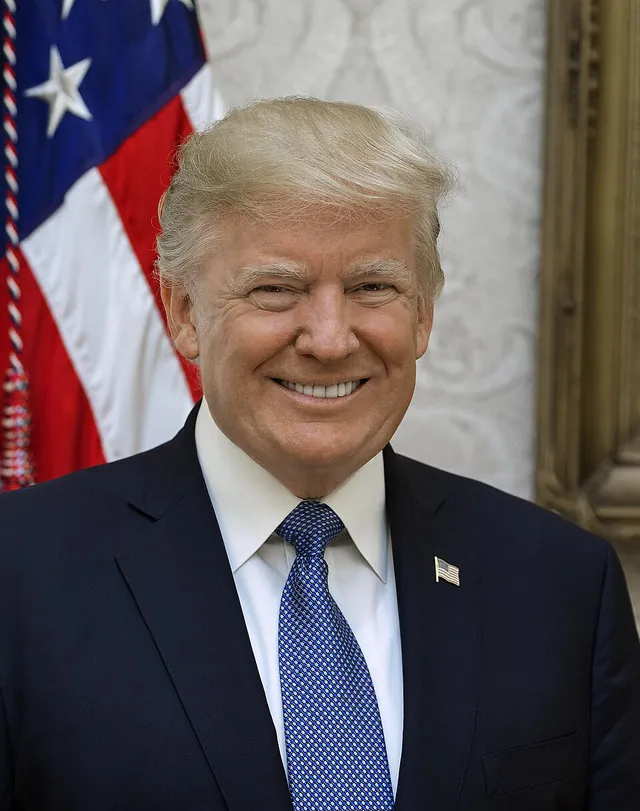
The 156 is not a test result, and no other IQ figure for Trump is either. The records that could show how he performed on standardized tests, his grades and SAT scores, have never been made public; the Associated Press noted in February 2019 that they are protected under federal student-privacy law. In testimony to the House Oversight Committee on February 27, 2019, Michael Cohen said he had written letters at Trump’s direction to Trump’s high school, colleges and the College Board threatening civil and criminal action if the grades or scores were disclosed without his permission, and he gave the committee a copy of a May 2015 letter to the president of Fordham University.
The cognitive test in the physician statements from January 2018, April 2025 and May 2026 is the Montreal Cognitive Assessment, and it is not an IQ test. White House physician Ronny Jackson told reporters on January 16, 2018 that Trump had scored 30 out of 30, and that he gave the test “because the president asked me to do it.” Sean Barbabella, the Physician to the President, reported 30 out of 30 again in a memo dated April 13, 2025, covering an April 11 exam at Walter Reed National Military Medical Center, and in a memo dated May 29, 2026, covering a May 26 exam. A 30 out of 30 means no impairment was detected. It is not an IQ.
The MoCA takes about ten minutes and checks short-term memory, visuospatial and executive function, attention, language and orientation. In its 2005 validation study a cutoff of 26 out of 30 identified 90% of people with mild cognitive impairment and classed 87% of healthy older adults as normal. The test is built to flag impairment, so a perfect score says a person falls within the normal range, not where in that range. Our MoCA score guide covers how it is scored.
Trump has referred to his own intelligence in public many times. In May 2013 he wrote that his IQ was “one of the highest”. At a campaign rally in Columbus, Ohio, in November 2015 he said of conservative pundits, “I think I have a much higher IQ.” In October 2017, responding to a news report about Secretary of State Rex Tillerson, he told Forbes, “we’ll have to compare IQ tests.” On January 6, 2018 he wrote that “my two greatest assets have been mental stability and being, like, really smart” and called himself “a very stable genius.” After the May 2026 physical he described the result as his “fourth such test.” No IQ score or test report accompanied any of these statements.
Estimates of presidents’ IQs disagree because almost none rests on a test. The best-known academic set, Dean Keith Simonton’s 2006 study in Political Psychology, inferred IQ-style figures for 42 presidents, Washington through George W. Bush, from published ratings of each president and from Catharine Cox’s 1926 study of historical figures, so it has no figure for Trump. Other lists are not estimates at all: the 2001 “Lovenstein Institute” email credited a nonexistent institute with figures for twelve presidents, among them Bill Clinton and George W. Bush, and was printed by The Guardian, which later retracted it. Our analysis of the presidential IQ rankings sets out each method.
How we read a number →Capt. Sean P. Barbabella reports an April 11, 2025 exam at Walter Reed and a Montreal Cognitive Assessment score of 30 out of 30, with a normal neurological examination.
Reports a May 26, 2026 exam and a Montreal Cognitive Assessment score of 30 out of 30, described as within normal limits.
Cohen says he wrote letters at Trump’s direction threatening his high school, colleges and the College Board over his grades and SAT scores, and supplied a copy of one. This is Cohen’s account.
Describes a May 2015 letter from Cohen to Fordham’s president citing federal law, and reports that Trump’s grades and test scores have never been made public.
Reports a 30 out of 30 on the Montreal Cognitive Assessment, which Jackson said he gave because the president asked, though it is not part of a standard physical for a 71-year-old.
Rates the 156 claim False. Traces it to an August 2015 BeforeItsNews.com article and notes that Trump’s transcripts are unavailable and that he entered Wharton as a transfer.
Snopes rated it False on May 6, 2019, found the story published nowhere but in the image, and noted that Trump has provided no documentation of his own IQ score.
Estimates a 156 from the usual admission requirements of a top school like Wharton. It cites no test, score or examiner.
Describes a 10-minute screening tool for mild cognitive impairment; at a cutoff of 26 it detected 90% of cases, with 87% specificity.
Quotes Trump on Tillerson: “we’ll have to compare IQ tests. And I can tell you who is going to win.”
Quotes the posts on “mental stability” and being “really smart” and “a very stable genius”, written in response to a book about his White House.
Lists Trump’s public statements about his own intelligence, including the May 2013 post that his IQ is “one of the highest”.
Reports Trump saying at a Columbus, Ohio rally, of conservative pundits, “I think I have a much higher IQ.”
Quotes Trump calling the result “my fourth such test” and saying all candidates for President and Vice President should take such tests.
The degree is a matter of record. The grades and test scores behind it have not been made public.
Despite repeated public references to his own IQ across more than a decade, no test, examiner, date or score report has been produced.
The sources behind our estimate
The figures that circulate for Donald Trump, what we were able to confirm, and where the two diverge.
156 is the figure that circulates, alongside Trump’s own public statements that his IQ is “one of the highest”.
The 156 was calculated, not tested. It traces to an August 2015 article on BeforeItsNews.com that reasoned from Wharton’s usual admission requirements to “a 156 IQ at the minimum”. Snopes rated the claim False on December 6, 2016, noting that Trump’s school transcripts and test scores are not available, that he entered Wharton as a junior transfer, and that Wharton does not list SAT scores among its transfer requirements.
The figures in circulation run from 73 to 200, and none is backed by a published test. Snopes rated the 156 False in December 2016, and in May 2019 it rated the 73 False after finding it only in a fabricated newspaper-clipping image.
Want a number that does hold up? Every figure on this page is somebody’s claim. Take the 30-question test and get a percentile you can check rather than a figure you have to trust.
Donald Trump — frequently asked
What is Donald Trump’s IQ?
There is no published IQ score for Donald Trump: no test, examiner, date or score report has been made public. The figures that circulate have no test behind them, and this site’s achievement-based estimate is 115 to 130.
What is Trump’s estimated IQ?
Any estimate is an inference from his record, not a measurement. The 115 to 130 band used here draws on a 1968 Wharton bachelor’s degree in economics, a career in real estate, licensing and television, and two presidential elections. It is wide because the grades and SAT scores that could narrow it have not been made public, and an SAT-to-IQ conversion needs an actual score.
What are Trump’s IQ test results?
None has been published: no IQ test, examiner, date or score report exists in the public record. The cognitive test that does appear in physician statements is the Montreal Cognitive Assessment, reported as 30 out of 30 in January 2018, April 2025 and May 2026, and it screens for cognitive impairment rather than measuring intelligence. After the May 2026 physical, Trump called the result his “fourth such test” in a May 31 post.
Where does the 156 figure come from?
It traces to an August 2015 article on BeforeItsNews.com that estimated “a 156 IQ at the minimum” from the usual admission requirements of Wharton, where Trump studied as a transfer student. In December 2016 the number spread on social media beside a chart of presidents’ estimated IQs, and Snopes rated it False on December 6 because no test or score stood behind it. Snopes also noted that Wharton does not list SAT scores among its transfer requirements.
What does a perfect MoCA score mean?
It means no cognitive impairment was detected. The 2005 validation study used a cutoff of 26 out of 30 and built the test to separate impaired from unimpaired adults, so a 30 does not rank one healthy person above another. Our MoCA score guide explains the scoring.
How high is Trump’s IQ?
No source can give a measured figure, so “how high” can only be answered as a range. The 115 to 130 band used here is roughly the 84th to 98th percentile on the standard scale (average 100, standard deviation 15), which you can check with our percentile calculator. The 73 that circulates came from a fabricated newspaper-clipping image, which Snopes rated False in May 2019.
Does Trump have a high IQ?
He has said so himself: “one of the highest” in a May 2013 post, “I think I have a much higher IQ” of conservative pundits at a November 2015 Ohio rally, and “a very stable genius” on January 6, 2018. None of those statements came with a score. His record is consistent with an above-average result, but only a standardized test could show how far above.
Are Trump’s grades and SAT scores public?
No. The Associated Press reported in February 2019 that his grades and test scores have never been made public and are protected under federal student-privacy law. On February 27, 2019 Michael Cohen told the House Oversight Committee that he had written letters at Trump’s direction to Trump’s high school, colleges and the College Board threatening legal action if the records were released, and he gave the committee a May 2015 letter sent to Fordham University.
Did Trump get an MBA from Wharton?
No. He earned an undergraduate Bachelor of Science in economics from the Wharton School of the University of Pennsylvania in May 1968, after two years at Fordham University. The Wharton MBA is a separate graduate degree.
Why do estimates of presidents’ IQs differ so much?
Few presidents have a documented test result, so each list substitutes something different. Thomas Jefferson’s figures come from retrospective methods that work from a documented life, John F. Kennedy has a school test reported in biographies as 119, and Barack Obama has no score of any kind. Simonton’s 2006 study ends with George W. Bush, so it has no figure for Trump, Obama or Joe Biden. See US presidents ranked by IQ for each method.
How does my IQ compare with Donald Trump?
You can find out in about fifteen minutes. The IQ Metrics assessment is 30 questions, scored on the same 100-mean scale used throughout this page, so your result and the estimate above are at least expressed in the same units — one measured, one inferred. Once you have a number, the leaderboard shows where it would sit, and how we score and norm it explains the benchmarking.
Where does this estimate come from?
From the documented record rather than a test — the method is named above and set out in full under how we read a number. Compare it against the other politics profiles, starting with Thomas Jefferson.
- Take the 30-question IQ test — get a measured score and percentile of your own
- Average IQ by country — how the scale behaves across populations
- How IQ Metrics scores its assessment — the method behind our own number
- More on how IQ testing works — reliability, error and what a score can and cannot say
- More politics profiles — same field, same method
More politics
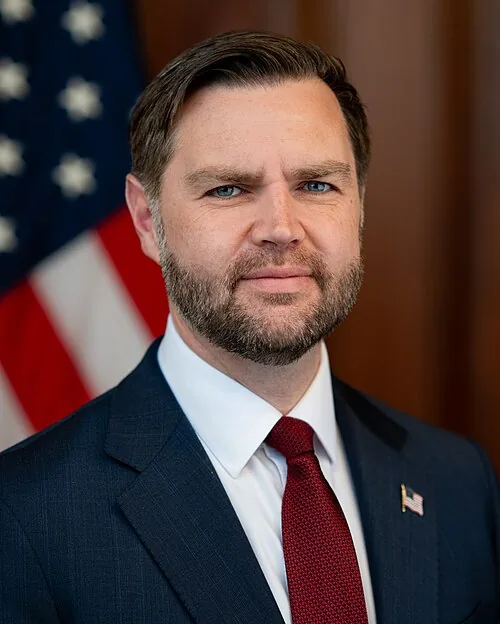
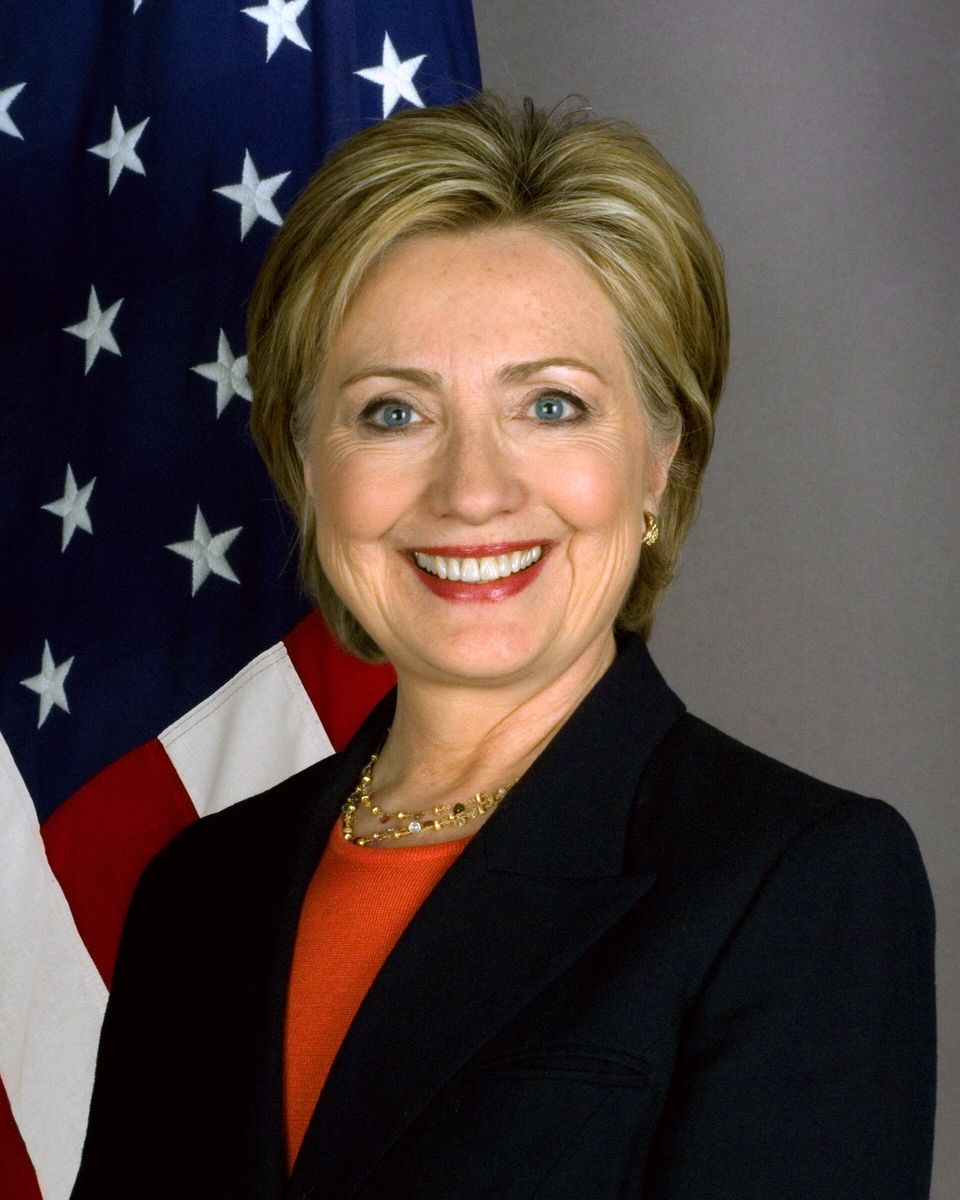
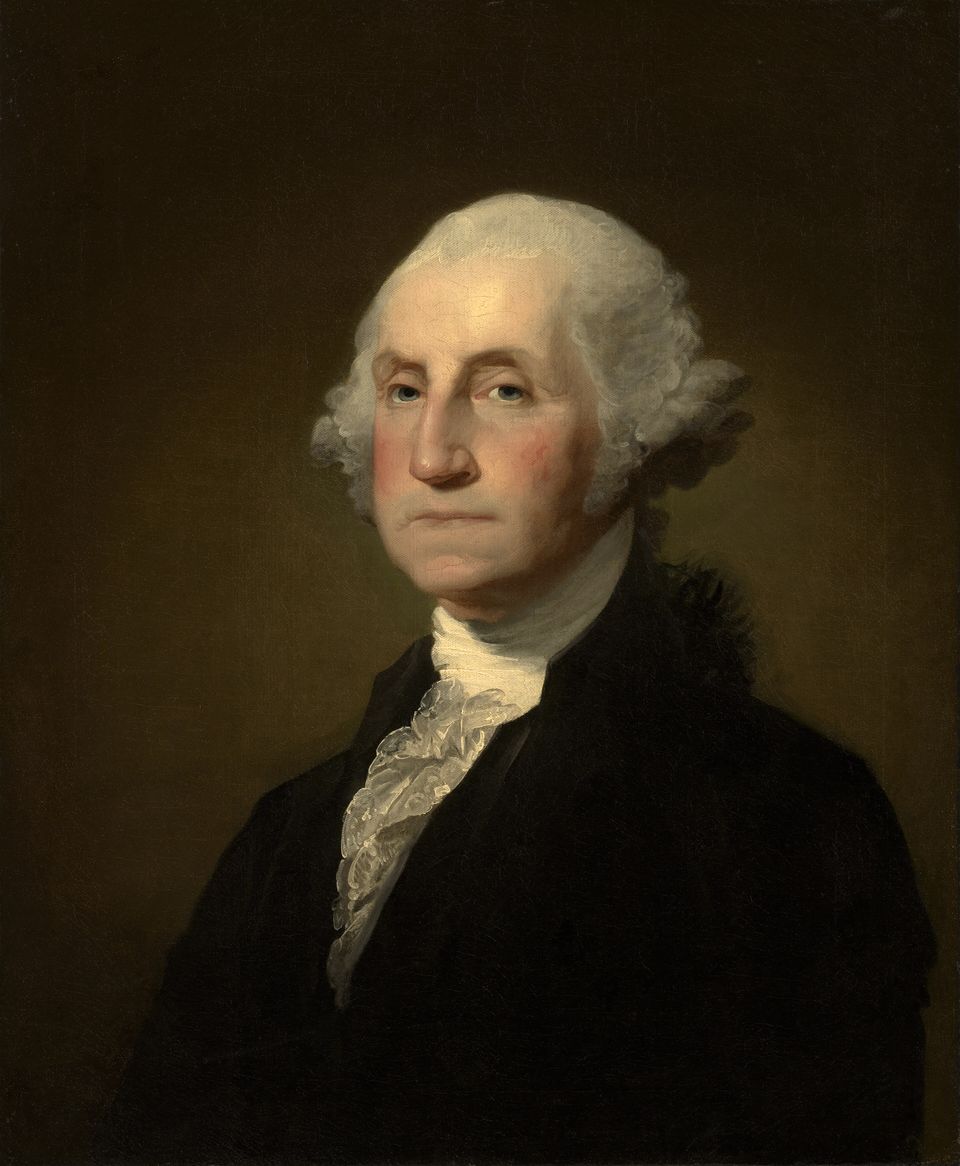
Official White House photograph by Emily J. Higgins (2026), public domain. Background removed for the portrait above. · Official portrait by the U.S. Department of State (January 2009), public domain. Background removed for the portrait above. · Portrait by Gilbert Stuart (the Williamstown portrait, his copy of the Athenaeum portrait, in the Clark Art Institute), public domain.


An estimate is an inference.
Yours can be measured.
Thirty questions, scored against general-population benchmarks. Your score, your percentile, your ability breakdown and a printable IIF certificate.
Find your IQ score now! →