



What was Galileo Galilei’s IQ?
Cox published 185 for him. Almost nothing online quotes it.
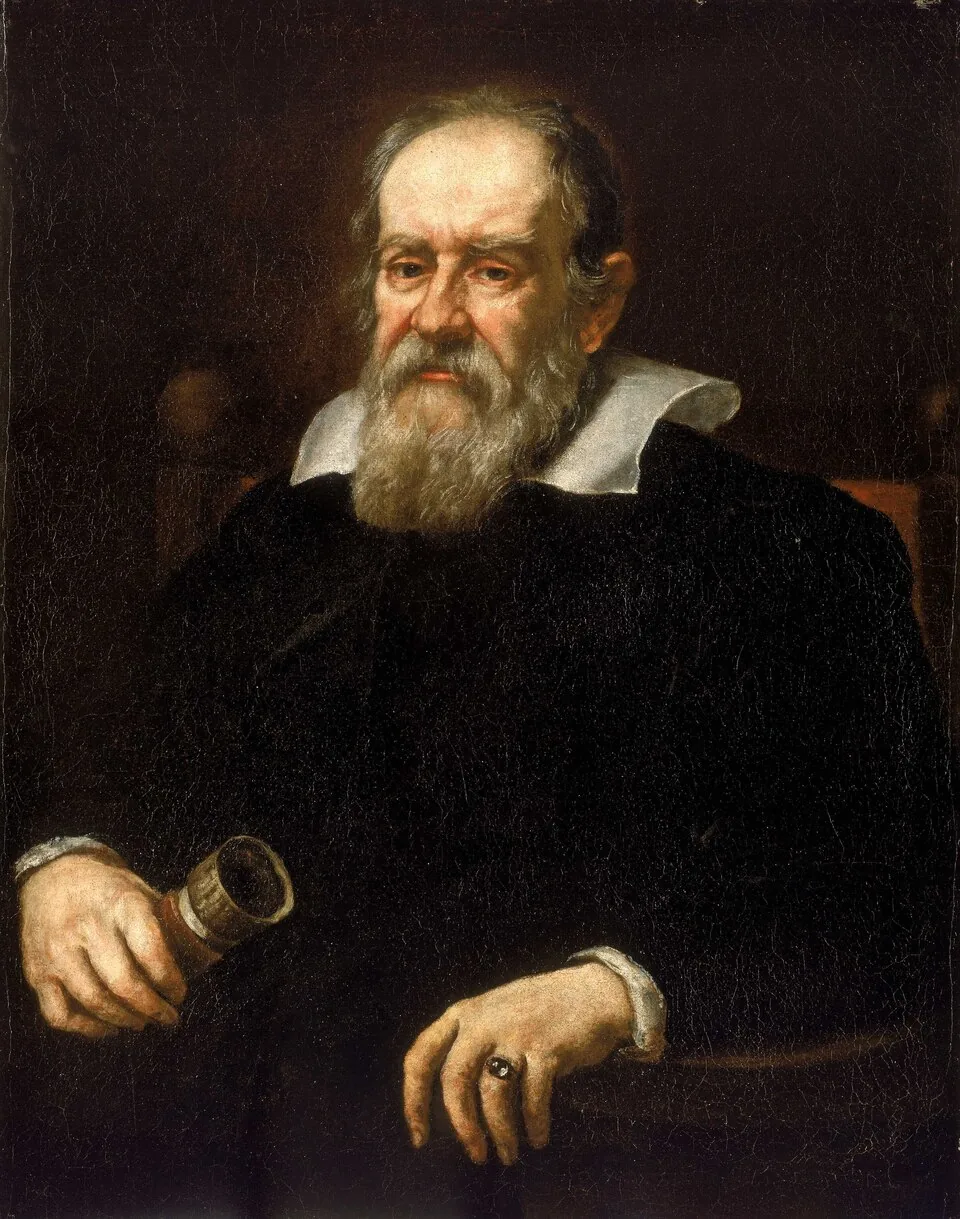
Galileo Galilei genuinely is a subject of Catharine Cox’s 1926 historiometric study, and her corrected estimate for him is 185 — a real, published number, not an invention. Almost nothing citing an IQ for him online actually uses it: one widely repeated “175” is a single ranking site’s own average of a rough Cox reading and three uncredited copies of a number that belongs to Isaac Newton.
Galileo Galilei’s estimated IQ
- Chair of mathematics at the University of Pisa from 1589, then at the University of Padua from 1592 to 1610 — appointments made on demonstrated mathematical ability alone, after he had left Pisa in 1585 without completing the medical degree he originally enrolled for.
- Built and progressively improved the telescope from 1609, reaching roughly twenty-power magnification within the year, then used it to discover four moons of Jupiter between 7 and 13 January 1610 — a find no instrument before his had been capable of resolving.
- Cox’s 1926 study placed his case in the chapter for subjects with an initial (“AI”) rating of 140 to 150 (p. 526), then corrected that to a final published estimate of 185 — an upward adjustment of similar size to those she applied to Newton (170 to 190) and Pascal (180 to 195).
- Appointed Chief Mathematician and Philosopher to the Grand Duke of Tuscany in 1610, a court position secured within months of the Jupiter discovery becoming public.
Galileo died in 1642 — 263 years before the first practical intelligence test (the 1905 Binet-Simon scale) — so nothing here is a measured score. His is one of the more thinly documented cases in Cox’s own study: she placed him in her chapter for subjects with an initial rating of 140 to 150, before her regression correction lifted that to the 185 she ultimately published. Treat this range as a historiometric rating built on a sparse seventeenth-century childhood record, not a recovered score.
- Born
- 15 February 1564, Pisa
- Died
- 8 January 1642, Arcetri, aged 77
- Academic posts
- Chair of mathematics, Pisa (1589–1592) and Padua (1592–1610)
- Key discovery
- Four moons of Jupiter, observed 7–13 January 1610
- Cox 1926 rating
- 140–150 initial (AI) / 185 corrected
- 1633 Inquisition trial
- Found “vehemently suspected of heresy”; recanted; sentence commuted to house arrest
What an IQ of 150–185 actually means
Set the claim aside for a moment. If someone genuinely scored in this range, here is what that would represent.
Average is 100 by construction, and about two-thirds of people fall between 85 and 115. Take the test to place your own score on this scale.
| Score range | Classification | Share of people | What it indicates |
|---|---|---|---|
| 85 – 114 | Average | ~68% | The range most people fall into. |
| 115 – 129 | Above average | ~13.6% | Roughly one person in seven. |
| 130 – 144 | Gifted | ~2% | The threshold most high-IQ societies use. |
| Above 144 | Highly gifted | ~0.1% | Figures above this range are extrapolated from the curve rather than measured. |
Percentages are approximate and describe a normal distribution. The same number means different things on tests with different standard deviations.
Thirty questions gives you a measured position on this exact scale — your score, your percentile and the ability breakdown behind it.
Find out in 30 minutes →Who Galileo Galilei was
Galileo Galilei was born in Pisa on 15 February 1564, the eldest son of the musician and music theorist Vincenzo Galilei. He enrolled at the University of Pisa in 1581 to study medicine, but turned to mathematics after attending lessons given by Ostilio Ricci, leaving in 1585 without completing a degree. After several years teaching privately in Florence and briefly at Siena, he returned to Pisa in 1589 to fill its vacant chair of mathematics, then moved to the University of Padua in 1592 — at triple the salary — where he remained until 1610, later calling it the happiest period of his life.
He learned of the Dutch spyglass in 1609 and built his own within weeks, rapidly improving its magnification to roughly twenty-power by the year’s end — becoming the first person to turn one on the sky in a systematic way. Observing Jupiter between 7 and 13 January 1610, he found four points of light moving alongside the planet and correctly identified them as its moons. He published the discovery two months later in Sidereus Nuncius, which made him a European celebrity and won him an appointment that year as Chief Mathematician and Philosopher to the Grand Duke of Tuscany, Cosimo II de’ Medici.
Galileo’s advocacy of a sun-centred solar system brought him before the Roman Inquisition in 1633. Tried across three sessions that April and May, he was found on 22 June 1633 to be “vehemently suspected of heresy,” forced to recant Copernicanism in a public statement, and had a sentence of imprisonment immediately commuted to house arrest. By December 1633 he had settled at his villa in Arcetri, near Florence, where he finished Two New Sciences — a summary of his life’s work in mechanics, its manuscript smuggled out of Italy and published in Holland in 1638 — and remained until his death on 8 January 1642, aged seventy-seven.
 By Elora Mercer, Celebrity Research WriterFigures checked by Leon Falkner, Data & Research Analyst
Reviewed by Aarav Vardhan, Editor-in-Chief · Last reviewed August 2026
Where the 185 figure came from
Following a claim back to its first appearance is the part almost nobody does — and it is what most people are actually asking.
Galileo is a genuine test of this site’s rule about Cox’s 1926 study, because — unlike several other pre-modern figures profiled here — he really is one of her subjects. His case appears on page 526 of The Early Mental Traits of Three Hundred Geniuses, in the chapter for subjects with an initial rating of 140 to 150. Cox’s own regression correction then lifted that to a final published estimate of 185, the same kind of upward adjustment she made to Newton (170 to 190) and Pascal (180 to 195) to account for how little survives of any seventeenth-century childhood.
Almost nothing citing a number for Galileo online cites that 185. The most repeated figure, 175, is check-iq.org’s own average of four numbers borrowed from three other sites: a 145 it credits to “Genetic Studies of Genius” — plausible, since it sits inside Cox’s own uncorrected 140–150 band, but not the figure she actually published — averaged against three separate 190s it credits to Business Insider, Big Think and Parade-style roundups, none showing their sourcing. 190 is also, notably, the exact corrected figure Cox published for Isaac Newton — a coincidence none of the three sites explain.
One further irony: celebrityiqs.com lists Galileo at 185 — the actual figure — while citing no source at all, beyond a disclaimer that its scores are “for entertainment purposes only.” The one number in circulation that matches Cox’s real table is the one nobody seems to have checked.
How we read a number →Confirms Galileo as a genuine subject of the study — his case sits in the chapter for an initial, uncorrected rating of 140–150; Cox’s own regression correction raised that to the final published 185.
Modern reassessment of Cox’s method and its regression-to-the-mean correction — the same source cited on Newton’s profile on this site.
Source for the Pisa (1589) and Padua (1592–1610) professorships, the 1609–10 telescope timeline, and the outcome of the 1633 trial.
Source of the widely repeated 175 figure — by its own account, an average of a 145 credited to “Genetic Studies of Genius” and three separate 190s credited to Business Insider, Big Think and Parade-style roundups.
He died in 1642; the first practical IQ test (Binet-Simon) dates to 1905 — 263 years later.
The sources behind our estimate
The figures that circulate for Galileo Galilei, what we were able to confirm, and where the two diverge.
Numbers from 145 to 190 circulate for Galileo Galilei’s IQ — including a widely published “175” that check-iq.org calculates itself, by its own stated method, as an average of four other numbers.
Cox’s 1926 study gives Galileo a corrected estimate of 185 — his case sits on page 526 of The Early Mental Traits of Three Hundred Geniuses, in the chapter for an initial rating of 140 to 150, before her regression correction. celebrityiqs.com separately lists Galileo at that same 185, correctly, though it cites no source at all. Almost everyone else arrives somewhere else: check-iq.org’s “175” comes from averaging a 145 it credits to “Genetic Studies of Genius” — close to Cox’s own uncorrected reading, but not the number she actually published — against three separate 190s it credits to Business Insider, Big Think and Parade-style roundups. 190 is also, notably, the exact corrected figure Cox published for Isaac Newton — a detail none of those three explain.
A forty-five-point scatter among the wrong numbers — while the real one, 185, sits quietly in the middle of it, correctly published on at least one site and cited by none.
Want a number that does hold up? Every figure on this page is somebody’s claim. Take the 30-question test and get a percentile you can check rather than a figure you have to trust.
Galileo Galilei — frequently asked
What was Galileo Galilei’s IQ?
No real score exists, since intelligence testing wasn’t invented until 1905 — 263 years after Galileo died in 1642. The number Catharine Cox’s 1926 study actually assigned him, after correction, is 185. Most sites citing a figure for him don’t use that number: one widely repeated “175” is a single site’s own average of four other numbers.
Is Galileo really one of the subjects in Cox’s 1926 genius study?
Yes — unlike several other historical figures with IQ numbers attached to them online, Galileo is a genuine subject. His case appears on page 526 of Cox’s The Early Mental Traits of Three Hundred Geniuses, in the chapter for subjects with an initial rating of 140 to 150; her own regression correction raised that to a final published estimate of 185.
Did Galileo invent the telescope?
No. A telescope was first developed in the Netherlands, where spectacle-maker Hans Lippershey applied for a patent on one in 1608. Galileo built his own within months of hearing about it in 1609 and rapidly improved its magnification, becoming the first person to use one systematically to study the sky.
What did Galileo discover with his telescope?
Observing Jupiter between 7 and 13 January 1610, he found four points of light moving alongside the planet and correctly identified them as moons orbiting it. He published the discovery two months later in Sidereus Nuncius, which made him a European celebrity almost overnight.
Why was Galileo put on trial in 1633?
The Roman Inquisition tried him for advocating the Copernican, sun-centred model of the solar system. On 22 June 1633 he was found “vehemently suspected of heresy,” forced to publicly recant, and sentenced to what was recorded as imprisonment but immediately commuted to house arrest.
Did Galileo spend the rest of his life in prison?
No — his sentence was commuted to house arrest. He lived out his years confined to his villa at Arcetri, near Florence, where he finished Two New Sciences, a summary of his work in mechanics smuggled out of Italy and published in Holland in 1638. He died at Arcetri on 8 January 1642.
How does my IQ compare with Galileo Galilei?
You can find out in about fifteen minutes. The IQ Metrics assessment is 30 questions, scored on the same 100-mean scale used throughout this page, so your result and the estimate above are at least expressed in the same units — one measured, one inferred. Once you have a number, the leaderboard shows where it would sit, and how we score and norm it explains the benchmarking.
Where does this estimate come from?
From the documented record rather than a test — the method is named above and set out in full under how we read a number. Compare it against the other historical profiles, starting with Isaac Newton.
- Take the 30-question IQ test — get a measured score and percentile of your own
- Average IQ by country — how the scale behaves across populations
- How IQ Metrics scores its assessment — the method behind our own number
- More on how IQ testing works — reliability, error and what a score can and cannot say
- More historical profiles — same field, same method
More historical

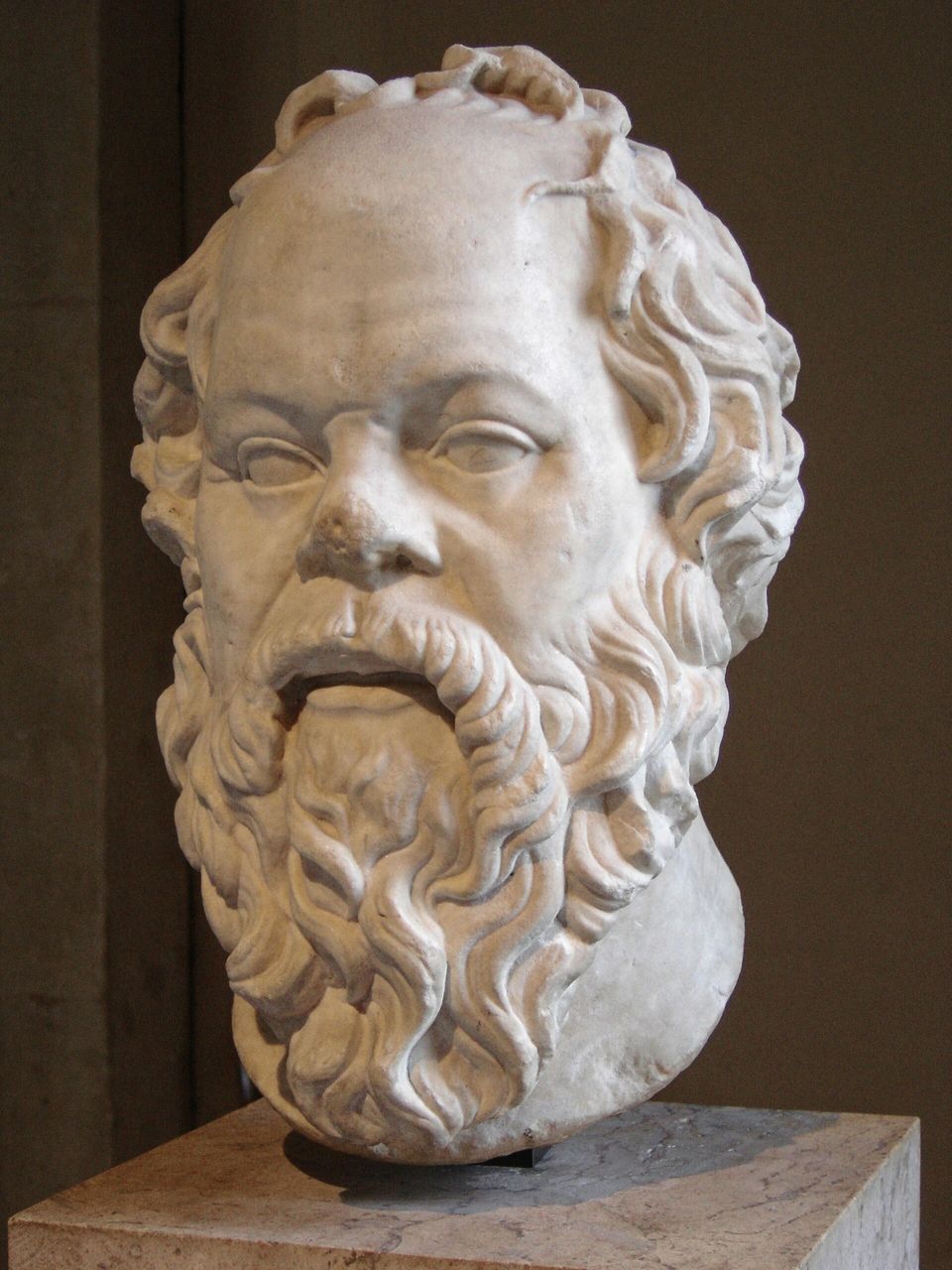
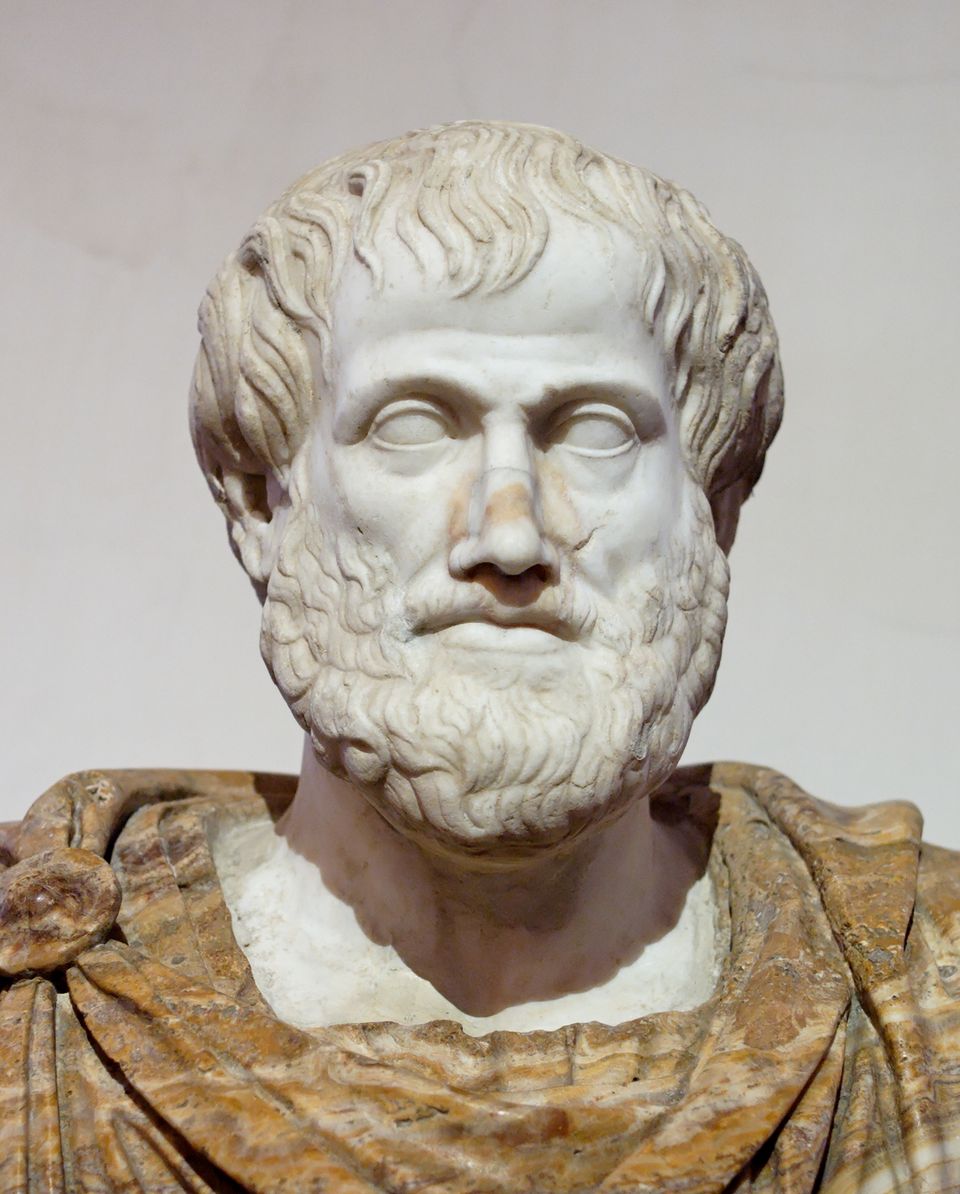
Photograph by John Jabez Edwin Mayall (1875), public domain. Background removed for the portrait above. · Photograph by Eric Gaba (Wikimedia Commons user: Sting) (July 2005), CC BY-SA 2.5. Roman marble portrait of Socrates, 1st century AD, Louvre Museum. Background removed for the portrait above. · Photograph by Jastrow (2006), public domain. Roman marble copy after a Greek bronze by Lysippos (c. 330 BCE); the alabaster mantle is a modern addition. Background removed for the portrait above.


An estimate is an inference.
Yours can be measured.
Thirty questions, scored against general-population benchmarks. Your score, your percentile, your ability breakdown and a printable IIF certificate.
Find your IQ score now! →