



What was Karl Marx’s IQ?
He died twenty-two years before the first practical IQ test existed. Every number attached to him is somebody’s retrospective guess.
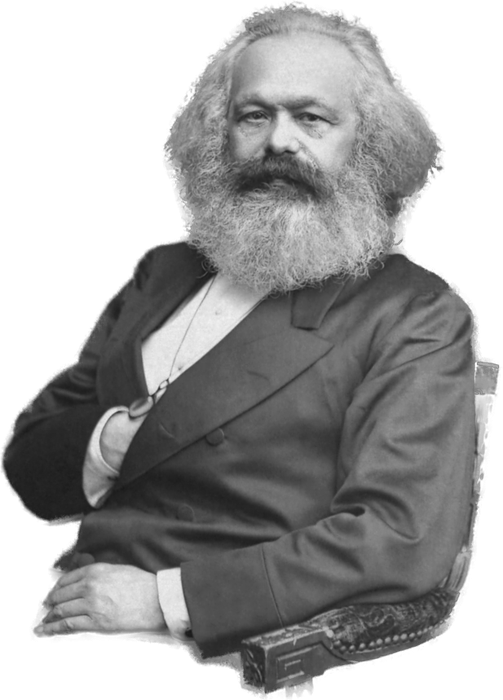
Marx completed a doctorate at twenty-three and spent decades on a body of scholarship still read today. No IQ test existed in his lifetime — every number attached to him now is a modern guess, and none of the guesses agree.
Karl Marx’s estimated IQ
- Ph.D. in philosophy, University of Jena, 1841, on the difference between the Democritean and Epicurean philosophy of nature.
- Fluent in German, French and English, with reading knowledge of at least four more languages, per contemporaries’ own testimony.
- Author of the Grundrisse and Das Kapital, a multi-decade, multi-volume body of research biographers still describe as unusually dense and systematic.
- Elected a Fellow of the Royal Society of Arts in 1862 — a documented lifetime honor, independent of his posthumous influence.
Marx is not a subject in Catharine Cox’s 1926 historiometric study, which covered figures born 1450–1850 with a substantial biographical record to score — Marx’s dissertation was earned via Jena’s lenient external track, with no residency or oral defense, which is real but weaker evidence than a conventional doctorate. This range is an editorial estimate, not a recovered score.
- Born
- May 5, 1818, Trier, Kingdom of Prussia
- Died
- March 14, 1883 (age 64), London
- Doctorate
- Ph.D. in philosophy, University of Jena, 1841
- Field
- Philosophy, political economy
- Best-known work
- Das Kapital, Volume 1 (1867)
What an IQ of 140–160 actually means
Set the claim aside for a moment. If someone genuinely scored in this range, here is what that would represent.
Average is 100 by construction, and about two-thirds of people fall between 85 and 115. Take the test to place your own score on this scale.
| Score range | Classification | Share of people | What it indicates |
|---|---|---|---|
| 85 – 114 | Average | ~68% | The range most people fall into. |
| 115 – 129 | Above average | ~13.6% | Roughly one person in seven. |
| 130 – 144 | Gifted | ~2% | The threshold most high-IQ societies use. |
| Above 144 | Highly gifted | ~0.1% | Figures above this range are extrapolated from the curve rather than measured. |
Percentages are approximate and describe a normal distribution. The same number means different things on tests with different standard deviations.
Thirty questions gives you a measured position on this exact scale — your score, your percentile and the ability breakdown behind it.
Find out in 30 minutes →Who Karl Marx was
Karl Marx was born May 5, 1818, in Trier, and studied at the University of Bonn from 1835 before transferring to Berlin in 1836, where he fell in with the Young Hegelians. In 1841 he was awarded a doctorate in philosophy by the University of Jena — via its external track, with no residency requirement — for a dissertation comparing the atomism of Democritus and Epicurus, which biographer Francis Wheen called “a daring and original piece of work.”
He worked as a journalist and editor in Cologne before the 1848 revolutions led to his expulsion from Germany; he settled permanently in London in 1849, sustained for years by Friedrich Engels, whom he had met in Paris in 1844. Contemporaries described him as a polyglot — fluent in German, French and English, with reading knowledge of Russian, Italian, Spanish and Romanian — and biographer Wilhelm Liebknecht recalled his “extraordinary” memory for language.
His major scholarship — the Grundrisse notebooks of 1857–58 and Das Kapital, published in 1867 — took shape over decades of research. He was elected a Fellow of the Royal Society of Arts in 1862, a documented honor from his own lifetime rather than posthumous reputation. He died in London on March 14, 1883.
 By Elora Mercer, Celebrity Research WriterFigures checked by Leon Falkner, Data & Research Analyst
Reviewed by Aarav Vardhan, Editor-in-Chief · Last reviewed August 2026
Karl Marx: the documented record
The estimate above rests on this record. Every entry here is a matter of public fact, which is more than can be said for the number itself.
- 1818Born, Trier.
- 1835Enrolls at the University of Bonn.
- 1836Transfers to the University of Berlin.
- 1841Awarded a Ph.D. in philosophy by the University of Jena.
- 1848Publishes The Communist Manifesto.
- 1849Settles permanently in London.
- 1862Elected a Fellow of the Royal Society of Arts.
- 1867Publishes Das Kapital, Volume 1.
- 1883Dies in London, aged 64.
Where the 116–180 figure came from
Following a claim back to its first appearance is the part almost nobody does — and it is what most people are actually asking.
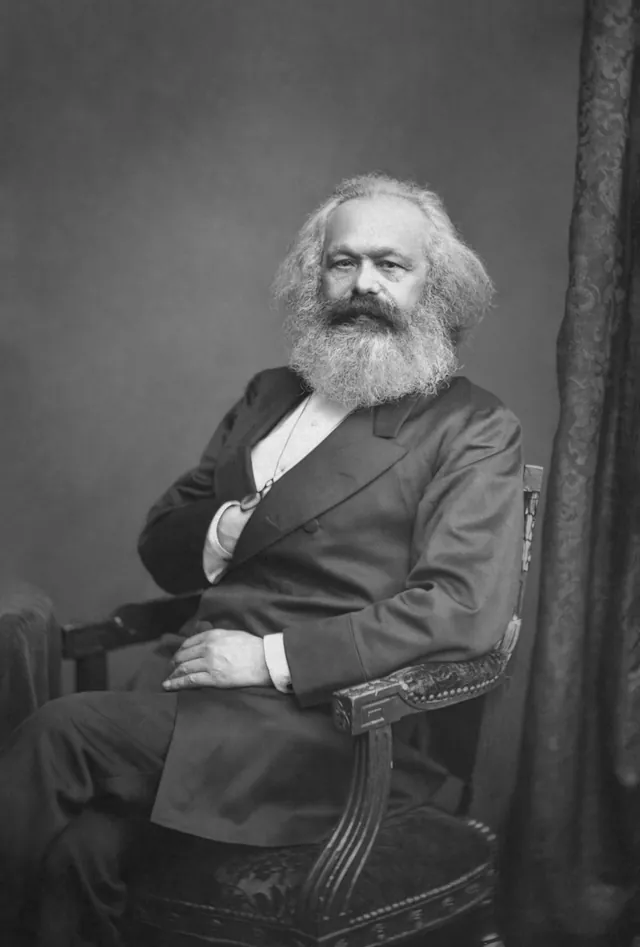
No IQ test could have measured Karl Marx. He died in 1883, twenty-two years before Alfred Binet published the first practical intelligence test in 1905. Every number now attached to his name — and several very different ones do circulate, from 116 to 180 — is by definition a retrospective guess, not a recovered score, and the guesses don’t agree with each other.
116 traces to an online IQ-quiz site that uses Marx purely as a comparison gimmick for the visitor’s own score. 160 comes from a blog that runs a statistical conversion on his ranking in a list of history’s most influential people. 180 appears on a genius-listing site with no stated methodology at all. None of these is a psychological assessment of Marx; all three are different writers doing different arithmetic on different inputs.
What is real is the documented scholarly record: a doctorate earned in 1841, fluency in three languages and working knowledge of several more, and a body of work — the Grundrisse and Das Kapital chief among it — that took shape over decades of research, largely in the British Museum reading room, and that specialists still treat as dense and demanding more than a century later.
How we read a number →Primary text of the Jena thesis.
Confirms his 1862 Fellowship.
Contemporary testimony on his language ability.
Biographical timeline.
Sources of the uncited 116–180 spread.
The Binet-Simon scale postdates his death by 22 years.
The sources behind our estimate
The figures that circulate for Karl Marx, what we were able to confirm, and where the two diverge.
Figures from 116 to 180 circulate, with no two sources agreeing or citing a shared method.
Marx died in 1883; the first practical intelligence test, the Binet-Simon scale, was not published until 1905. Every number attached to him — from a 20-question quiz site’s comparison gimmick (116) to a blog’s statistical conversion from a fame ranking (160) to an uncited genius-database entry (180) — is a retrospective estimate by definition, not a recovered score.
A 64-point spread with no convergence is what it looks like when a number has no real source behind it at all.
Want a number that does hold up? Every figure on this page is somebody’s claim. Take the 30-question test and get a percentile you can check rather than a figure you have to trust.
Karl Marx — frequently asked
What was Karl Marx’s IQ?
No test could have measured him — he died in 1883, before intelligence testing existed. Figures from 116 to 180 circulate online, none from a real assessment.
Why can’t Karl Marx have a real IQ score?
The first practical intelligence test, the Binet-Simon scale, wasn’t published until 1905 — twenty-two years after his death.
What numbers do people cite for Marx’s IQ, and where do they come from?
116 comes from a quiz site’s comparison gimmick, 160 from a blog’s statistical conversion of a fame ranking, and 180 from an uncited genius-listing site — three different methods with three different results.
What did Marx actually achieve academically?
A doctorate in philosophy from the University of Jena in 1841, fluency in three languages with working knowledge of several more, and decades of research culminating in Das Kapital.
Was Karl Marx part of any formal genius study?
No — he is not among the subjects in Catharine Cox’s 1926 historiometric study of historical geniuses.
How intelligent do contemporaries say Marx was, in their own words?
Biographer Wilhelm Liebknecht described his memory for language as “extraordinary,” and Francis Wheen called his doctoral dissertation “a daring and original piece of work.”
How does my IQ compare with Karl Marx?
You can find out in about fifteen minutes. The IQ Metrics assessment is 30 questions, scored on the same 100-mean scale used throughout this page, so your result and the estimate above are at least expressed in the same units — one measured, one inferred. Once you have a number, the leaderboard shows where it would sit, and how we score and norm it explains the benchmarking.
Where does this estimate come from?
From the documented record rather than a test — the method is named above and set out in full under how we read a number. Compare it against the other historical profiles, starting with Isaac Newton.
- Take the 30-question IQ test — get a measured score and percentile of your own
- Average IQ by country — how the scale behaves across populations
- How IQ Metrics scores its assessment — the method behind our own number
- More on how IQ testing works — reliability, error and what a score can and cannot say
- More historical profiles — same field, same method
More historical
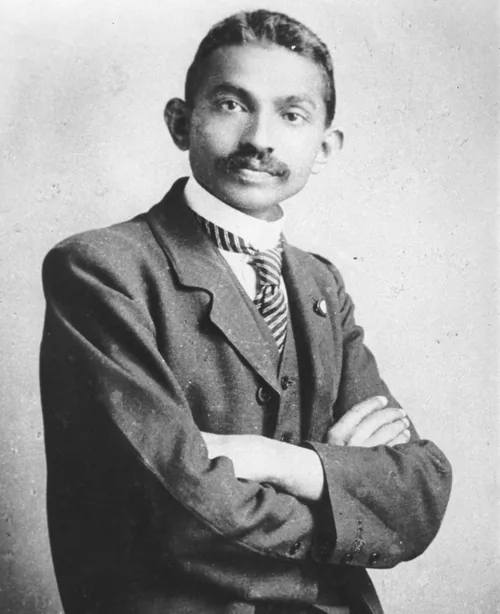
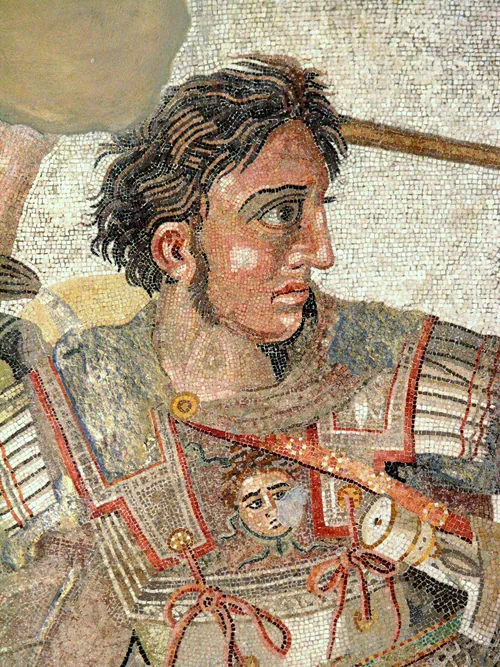
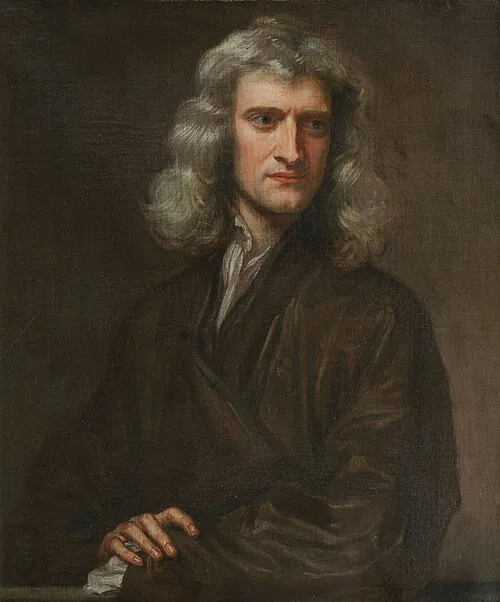
Photograph by an unknown photographer (1906), via Wikimedia Commons, public domain. Background removed for the portrait above. · Detail of the Alexander Mosaic from the House of the Faun, Pompeii (c. 100 BCE; now in the National Archaeological Museum of Naples), via Wikimedia Commons, public domain. · Portrait by Godfrey Kneller (1689), public domain.

.jpg)

An estimate is an inference.
Yours can be measured.
Thirty questions, scored against general-population benchmarks. Your score, your percentile, your ability breakdown and a printable IIF certificate.
Find your IQ score now! →