


What was J. Robert Oppenheimer’s IQ?
No IQ test stands behind the 165: a Harvard degree in three years and a doctorate at 23 are what is documented.
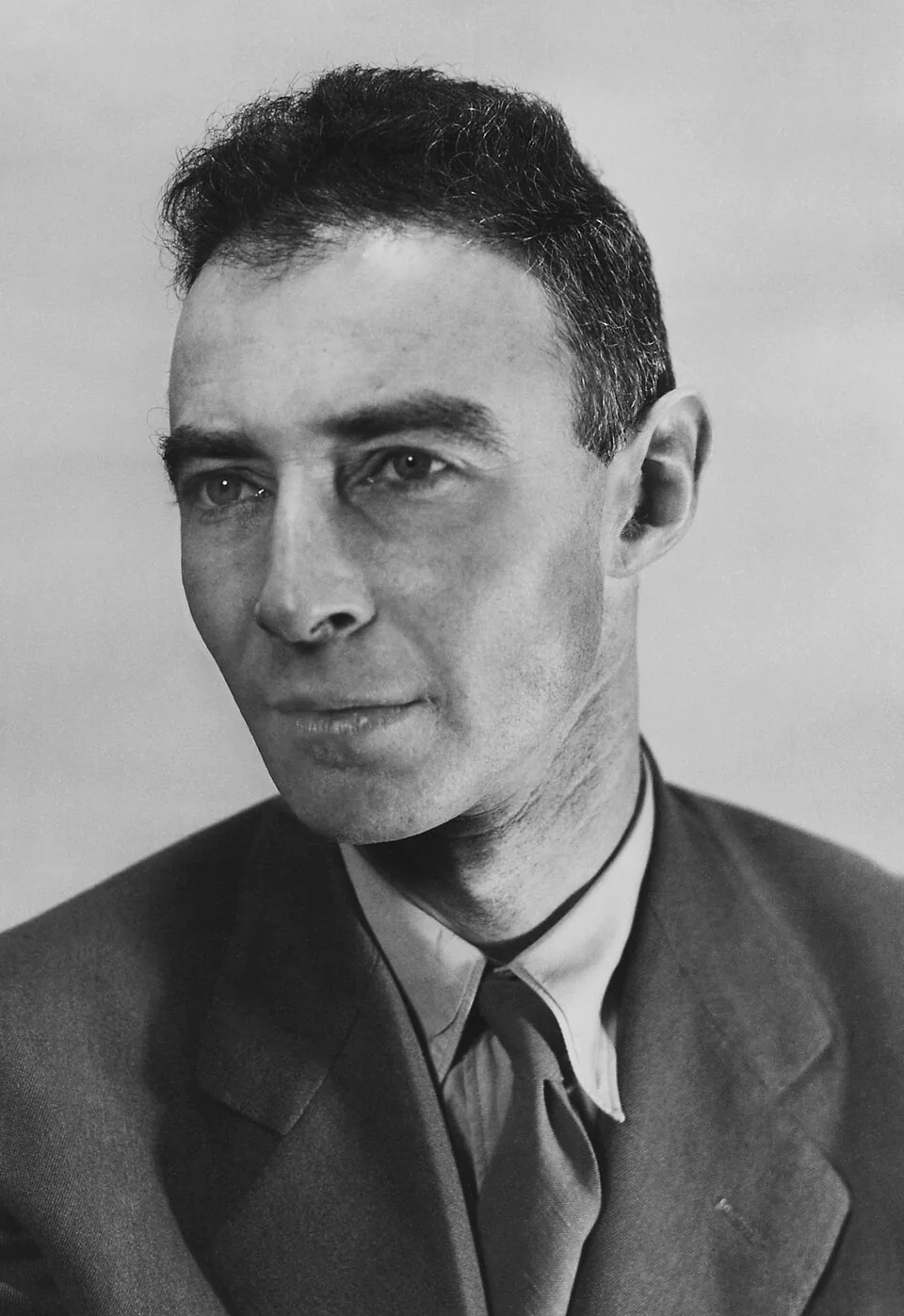
J. Robert Oppenheimer has no published IQ test result: the numbers that circulate for his IQ (135, 165, 190 and others) name no test, date or examiner. What is documented is a Harvard degree in chemistry earned in three years, summa cum laude (1925), and a Göttingen doctorate at 23 (1927) under Max Born, which supports an estimated IQ of about 155–175.
J. Robert Oppenheimer’s estimated IQ
- Harvard bachelor’s degree in chemistry, summa cum laude, completed in three years (1922–1925), taking six courses a term instead of the usual four; Wikipedia adds membership of Phi Beta Kappa and graduate standing in physics granted on the strength of independent study.
- Doctorate in physics at Göttingen: he enrolled in November 1926, at first only as a guest auditor, and sat the oral examination on May 11, 1927, at 23. The University of Göttingen says Max Born graded the dissertation “ausgezeichnet” (excellent) and that the doctoral certificate followed two weeks later.
- The Born–Oppenheimer approximation, published in Annalen der Physik in 1927, separates nuclear from electronic motion in molecules, is widely used in quantum chemistry and remains, Wikipedia says, his most cited work.
- The Oppenheimer–Snyder paper “On Continued Gravitational Contraction”, published in Physical Review on September 1, 1939, described the collapse of a sufficiently heavy star, now read as an early account of black holes, decades before observations could test the idea.
- Recognition from the field: four nominations for the Nobel Prize in Physics (1946, 1951, 1955 and 1967; he never won it), election as a Foreign Member of the Royal Society in 1962 and the Enrico Fermi Award in 1963.
An academic record shows that someone performed at a level, not that they would score at one. Much of what made Oppenheimer effective, teaching a school of theorists at Berkeley and directing a large laboratory at Los Alamos, is leadership that an IQ test does not sample, and his Harvard teacher Percy Bridgman judged him better suited to theory than to laboratory work, so the range is wide and rests on the record alone.
- Born
- April 22, 1904, New York City
- Died
- February 18, 1967, Princeton, New Jersey
- Field
- Theoretical physics
- Education
- Harvard, chemistry, summa cum laude (1925); Christ’s College, Cambridge (1925–26); doctorate in physics, Göttingen (1927)
- Known for
- Director of the Los Alamos Laboratory (1943–1945); the Born–Oppenheimer approximation (1927); director of the Institute for Advanced Study (1947–1966)
- Honors
- Enrico Fermi Award (1963); Foreign Member of the Royal Society (1962); four Nobel Prize in Physics nominations (1946, 1951, 1955, 1967), no award
- On screen
- Played by Cillian Murphy in Christopher Nolan’s Oppenheimer (2023)
- Circulating figures
- 135, 150, 165, 190, 200 — none from a test
- Documented IQ test
- None published
What an IQ of 155–175 actually means
Set the claim aside for a moment. If someone genuinely scored in this range, here is what that would represent.
Average is 100 by construction, and about two-thirds of people fall between 85 and 115. Take the test to place your own score on this scale.
| Score range | Classification | Share of people | What it indicates |
|---|---|---|---|
| 85 – 114 | Average | ~68% | The range most people fall into. |
| 115 – 129 | Above average | ~13.6% | Roughly one person in seven. |
| 130 – 144 | Gifted | ~2% | The threshold most high-IQ societies use. |
| Above 144 | Highly gifted | ~0.1% | Figures above this range are extrapolated from the curve rather than measured. |
Percentages are approximate and describe a normal distribution. The same number means different things on tests with different standard deviations.
Thirty questions gives you a measured position on this exact scale — your score, your percentile and the ability breakdown behind it.
Find out in 30 minutes →Who J. Robert Oppenheimer was
Julius Robert Oppenheimer was born in New York City on April 22, 1904. He entered Harvard in 1922, majored in chemistry and graduated summa cum laude in 1925. He then went to Christ’s College, Cambridge, and worked at the Cavendish Laboratory, before moving to Göttingen in 1926, where he took his doctorate under Max Born in 1927.
After a 1927–28 National Research Council fellowship divided between Harvard and Caltech and a 1928 visit to Paul Ehrenfest’s institute in Leiden, he arrived at Berkeley in 1929 and spent his spring terms at Caltech. Berkeley promoted him to full professor in 1936. A Berkeley dean said in 2023 that Robert Serber, Willis Lamb, David Bohm, Melba Phillips and Philip Morrison were part of his circle or trained by him. In 1943 he became the first director of the Los Alamos Laboratory in New Mexico, where Hans Bethe headed the Theoretical Division and Richard Feynman led its T-4 group; he left in November 1945.
From 1947 to 1966 Oppenheimer directed the Institute for Advanced Study in Princeton, and from the creation of the Atomic Energy Commission in 1947 he chaired its General Advisory Committee. He was elected a Foreign Member of the Royal Society on May 3, 1962 and received the Enrico Fermi Award in 1963. He died in Princeton on February 18, 1967. On December 16, 2022, Energy Secretary Jennifer Granholm vacated the Atomic Energy Commission’s 1954 decision to revoke his security clearance.
Christopher Nolan’s Oppenheimer, released on July 21, 2023 and based on the 2005 biography American Prometheus by Kai Bird and Martin J. Sherwin, starred Cillian Murphy in the title role. It won seven Academy Awards at the 96th ceremony on March 10, 2024, including Best Picture, Best Director for Christopher Nolan and Best Actor for Murphy. On April 9, 2026, the American Institute of Physics released three recorded interviews with Oppenheimer, made in 1960, 1963 and 1966, for nonprofit, noncommercial use.
 By Elora Mercer, Celebrity Research WriterFigures checked by Leon Falkner, Data & Research Analyst
Reviewed by Aarav Vardhan, Editor-in-Chief · Last reviewed October 2026
.jpg)
J. Robert Oppenheimer: the documented record
The estimate above rests on this record. Every entry here is a matter of public fact, which is more than can be said for the number itself.
- 1904Born in New York City on April 22.
- 1925Graduates from Harvard summa cum laude in chemistry, in three years, and goes to Christ’s College, Cambridge.
- 1926Leaves Cambridge for Göttingen and enrolls there in November, at first as a guest auditor.
- 1927Passes the Göttingen oral examination on May 11, at 23; the Born–Oppenheimer paper appears in Annalen der Physik.
- 1929Arrives at Berkeley, with spring terms at Caltech.
- 1939The Oppenheimer–Snyder paper on gravitational collapse is published in Physical Review on September 1.
- 1943Becomes the first director of the Los Alamos Laboratory; he leaves in November 1945.
- 1947Becomes director of the Institute for Advanced Study, Princeton, a post he holds until 1966.
- 1967Dies in Princeton on February 18.
- 2022On December 16 the Department of Energy vacates the Atomic Energy Commission’s 1954 decision on his security clearance.
- 2023Christopher Nolan’s Oppenheimer opens on July 21; it wins Best Picture at the 96th Academy Awards on March 10, 2024.
- 2026On April 9 the American Institute of Physics releases three recorded Oppenheimer interviews from 1960, 1963 and 1966.
Where the 165 figure came from
Following a claim back to its first appearance is the part almost nobody does — and it is what most people are actually asking.
Oppenheimer’s IQ was never measured, and the trail behind the numbers that circulate is short. ScreenRant (May 7, 2024) gives 135 “via CogniDNA” and sets it against an estimated 160 for Einstein, saying neither man was ever officially tested. Looper (September 15, 2023), in a piece asking how much smarter Sheldon Cooper is than Oppenheimer, says the genealogy site Geni estimates his score at somewhere around 165. Riot IQ (August 16, 2026) lists 135, 150, 165, 190 and 200, calls them modern guesses and says interest in the question spiked after Christopher Nolan’s 2023 film. None of the three cites a test; where celebrity IQ numbers come from explains how an unsourced figure spreads this way.
The higher numbers also sit beyond what a test can report. On a scale with a mean of 100 and a standard deviation of 15, 135 is about one person in 100, 165 about one in 136,000 and 190, six standard deviations above the mean, about one in a billion; Riot IQ notes that numbers like 190 are beyond what instruments report (see the highest IQ score a test can report). Retrospective rating is not an option either. Catharine Cox’s 1926 study estimated IQs from the recorded facts of childhood and youth, but its 301 subjects lived between 1450 and 1850, so Oppenheimer, born in 1904, has no Cox rating and no figure for him can claim that method (see the history of intelligence testing).
What the record shows is more specific than any of those numbers. Oppenheimer entered Harvard in September 1922 and graduated summa cum laude in 1925, completing the four-year course in three years. At Göttingen he enrolled in November 1926, at first only as a guest auditor, and after the faculty intervened with the Prussian ministry of culture he took the oral examination on May 11, 1927, at 23. According to the University of Göttingen, Max Born graded his dissertation “ausgezeichnet”, and the doctoral certificate followed two weeks later. The same year the Born–Oppenheimer paper appeared in Annalen der Physik; the Oppenheimer–Snyder paper followed on September 1, 1939.
The record also shows what a list of degrees leaves out. Wikipedia reports that his Harvard teacher Percy Bridgman wrote that Oppenheimer’s clumsiness in the laboratory suggested theory would be his forte, and that while at Cambridge Oppenheimer wrote to a friend that he was so bad at laboratory work that it was impossible to feel he was learning anything. He moved to theory at Göttingen in 1926. Later General Leslie Groves chose him to direct Los Alamos although, Wikipedia notes, he had no record as a leader of large projects. Directing a laboratory is not what an IQ test samples, which is why the range on this page is wide and rests on the record alone.
Born’s institute gives the closest like-for-like comparisons on this site. Wikipedia lists Werner Heisenberg, who formulated matrix mechanics with Born in 1925, and Enrico Fermi among Born’s assistants, and Oppenheimer took his doctorate under Born in 1927. The ranges here overlap (Heisenberg 165–185, Fermi 160–180, Oppenheimer 155–175), so none of the three can be ranked above the others on these figures. Albert Einstein (160–180) is the other usual comparison: Einstein worked at the Institute for Advanced Study from 1933 until his death in 1955, and Oppenheimer directed it from 1947.
How we read a number →Dates his oral examination (Rigorosum) to May 11, 1927 and the doctoral certificate to two weeks later. Says he enrolled in November 1926 as a guest auditor, that the faculty intervened with the Prussian ministry of culture, and that Max Born graded the dissertation “Zur Quantentheorie kontinuierlicher Spektren” ausgezeichnet (excellent).
Transcript of a discussion held on July 28. Jon Else says Oppenheimer arrived in Berkeley in 1929; dean Steve Kahn says he spent fall and winter at Berkeley and spring terms at Caltech, and that Robert Serber, Willis Lamb, David Bohm, Melba Phillips and Philip Morrison were part of his circle or trained by him.
The statement is dated December 16, 2022 and says the Department has vacated the Commission’s 1954 decision in the matter of J. Robert Oppenheimer. The Fermi Award page lists “J.R. Oppenheimer, 1963”.
Ceremony held Sunday, March 10, 2024; Oppenheimer is the Best Picture winner, Christopher Nolan is listed for Directing and Cillian Murphy for Actor in a Leading Role.
Interviews recorded in February 1960 (Robert Cahn, for the Saturday Evening Post), November 1963 (Thomas S. Kuhn) and November 1966 (Charles Weiner), now available for nonprofit, noncommercial use.
The American Physical Society page gives the publication date as September 1, 1939; the abstract opens by saying a sufficiently heavy star will collapse once its thermonuclear sources of energy are exhausted.
The Born–Oppenheimer approximation. Wikipedia’s article on the approximation gives this citation (DOI 10.1002/andp.19273892002), says it was proposed in 1927 and says it is widely used in quantum chemistry.
The subjects are “301 of the most eminent men and women of history” who “lived between the years 1450 and 1850”. Oppenheimer, born in 1904, is outside the sample, so no Cox rating exists for him.
Orientation and cross-checks: birth and death dates, the Harvard course load, Phi Beta Kappa, Bridgman’s recommendation, the Cambridge letter, the 1928 Leiden visit and 1933 Sanskrit study, Groves’s choice of a director, the four Nobel nominations, the 1962 Royal Society election, the Los Alamos divisions, Born’s assistants, Einstein’s years at the Institute (1933–1955) and the film’s release and awards. Its March 1927 date for the doctorate conflicts with the university’s May 11, 1927, which this page uses.
Encyclopedia.com says he entered Harvard in September 1922, graduated summa cum laude in June 1925, completed the four-year course in three years and passed his oral examinations on May 11, 1927. Atomic Archive gives the Harvard dates and the Institute directorship (1947 to 1966) but says he obtained his doctorate “at the age of 22”, which the Göttingen date contradicts.
Says the film “hews close to the historic record, but takes a few liberties” and that two of its scenes with Albert Einstein are invented.
Says he never took a documented IQ test, lists 135, 150, 165, 190 and 200 as numbers going around, calls them modern guesses, says numbers like 190 are beyond what instruments report and says search interest spiked after the 2023 film.
ScreenRant gives 135 for Oppenheimer “via CogniDNA” and an estimated 160 for Einstein, and says neither was officially tested. Looper says Geni estimates his score at around 165 and that his exact IQ is lost to history, assuming he was ever tested. Neither names a test, date or examiner.
No score appears anywhere in Wikipedia’s biography of him (searched in full). ScreenRant and Riot IQ say he was never officially tested or never took a documented test, and Looper says his exact IQ is lost to history.
The sources behind our estimate
The figures that circulate for J. Robert Oppenheimer, what we were able to confirm, and where the two diverge.
Figures from 135 to 200 circulate for Oppenheimer’s IQ. ScreenRant (May 7, 2024) gives 135 “via CogniDNA”; Looper (September 15, 2023) says Geni estimates around 165; Riot IQ (August 16, 2026) lists 135, 150, 165, 190 and 200 as the numbers going around.
No IQ test result for Oppenheimer has been published, and none of the pages that carry a number names a test, a date or an examiner. ScreenRant says Oppenheimer and Einstein were never officially tested and that the estimates rest on biographical studies and historical analyses. Looper writes that his exact IQ is lost to history, assuming he was ever tested at all. Riot IQ says he never took a documented IQ test and that numbers like 190 are beyond what instruments report. What can be checked is the record: the University of Göttingen dates his oral examination to May 11, 1927, and Berkeley dates his arrival there to 1929.
A spread this wide is not measurement error. It is what you get when each page supplies its own number to match the same reputation.
Want a number that does hold up? Every figure on this page is somebody’s claim. Take the 30-question test and get a percentile you can check rather than a figure you have to trust.
J. Robert Oppenheimer — frequently asked
What was Oppenheimer’s IQ?
J. Robert Oppenheimer has no published IQ test result, so his measured IQ is unknown. Figures from 135 to 200 circulate (ScreenRant gives 135, Looper about 165), but none comes from a test. His record, a Harvard chemistry degree in three years and a Göttingen doctorate at 23, supports an estimated IQ of about 155–175.
Is Oppenheimer’s IQ 135, 165 or 190?
None of them is a measured score. ScreenRant (May 7, 2024) gives 135 via CogniDNA, Looper (September 15, 2023) reports about 165 from Geni, and Riot IQ (August 16, 2026) lists 190 among numbers it calls modern guesses. On a scale with a standard deviation of 15, 165 is about one person in 136,000 and 190 about one in a billion; see how rare a high IQ score is.
Did Oppenheimer ever take an IQ test?
No test result has been published, and none of the pages that discuss his IQ cites one. Riot IQ says he never took a documented IQ test, and ScreenRant says he and Einstein were never officially tested. Catharine Cox’s 1926 retrospective ratings cover only people who lived between 1450 and 1850, so they do not include him.
Was Oppenheimer a genius?
Genius is a reputation, not a test category, and his is documented. Oppenheimer graduated from Harvard summa cum laude in three years (1925), took his Göttingen doctorate at 23 (1927), was nominated for the Nobel Prize in Physics four times without winning, and received the Enrico Fermi Award in 1963. For what IQ labels such as genius mean, see what a genius IQ level is.
Was Oppenheimer smarter than Einstein?
Nobody can say, because neither man has a test score. ScreenRant (May 7, 2024) sets 135 for Oppenheimer against 160 for Einstein, both estimates. Ranges inferred from their records overlap here: Albert Einstein 160–180, Oppenheimer 155–175. Einstein won the 1921 Nobel Prize in Physics; Oppenheimer, who later directed the Institute where Einstein worked, was nominated four times and never won.
Is the film Oppenheimer accurate about his intelligence?
A film is not a measurement, and this one is a dramatization. Christopher Nolan’s Oppenheimer (July 21, 2023) won Best Picture at the 96th Academy Awards on March 10, 2024; PolitiFact found it “hews close to the historic record, but takes a few liberties”, including two invented scenes with Einstein. Its check covered events, not an IQ figure; the evidence of his ability is the degrees, papers and positions listed here.
How old was Oppenheimer when he got his PhD?
Twenty-three. He took the oral examination at Göttingen on May 11, 1927, 19 days after his 23rd birthday, and the University of Göttingen says the doctoral certificate followed two weeks later. Max Born graded the dissertation “ausgezeichnet”, German for excellent. Some biographies give 22 or March 1927; the university’s own account gives the May date.
How many languages did Oppenheimer speak?
Wikipedia lists Dutch, German, French and some Chinese, and says he learned Sanskrit under Arthur W. Ryder at Berkeley in 1933. During a 1928 visit to Paul Ehrenfest’s institute in Leiden he impressed colleagues by lecturing in Dutch despite little experience with the language.
How does Oppenheimer’s estimated IQ compare with Feynman’s and Fermi’s?
IQ Metrics places Oppenheimer’s estimated IQ range of 155–175 alongside Enrico Fermi (160–180) and above Richard Feynman (125–150). Feynman led the T-4 group in the Los Alamos Theoretical Division while Oppenheimer directed the laboratory, and the Enrico Fermi Award went to Oppenheimer in 1963. His range rests on his academic record, not on a test.
How does my IQ compare with J. Robert Oppenheimer?
You can find out in about fifteen minutes. The IQ Metrics assessment is 30 questions, scored on the same 100-mean scale used throughout this page, so your result and the estimate above are at least expressed in the same units — one measured, one inferred. Once you have a number, the leaderboard shows where it would sit, and how we score and norm it explains the benchmarking.
Where does this estimate come from?
From the documented record rather than a test — the method is named above and set out in full under how we read a number. Compare it against the other scientists profiles, starting with Albert Einstein.
- Take the 30-question IQ test — get a measured score and percentile of your own
- Average IQ by country — how the scale behaves across populations
- How IQ Metrics scores its assessment — the method behind our own number
- More on how IQ testing works — reliability, error and what a score can and cannot say
- More scientists profiles — same field, same method
More scientists
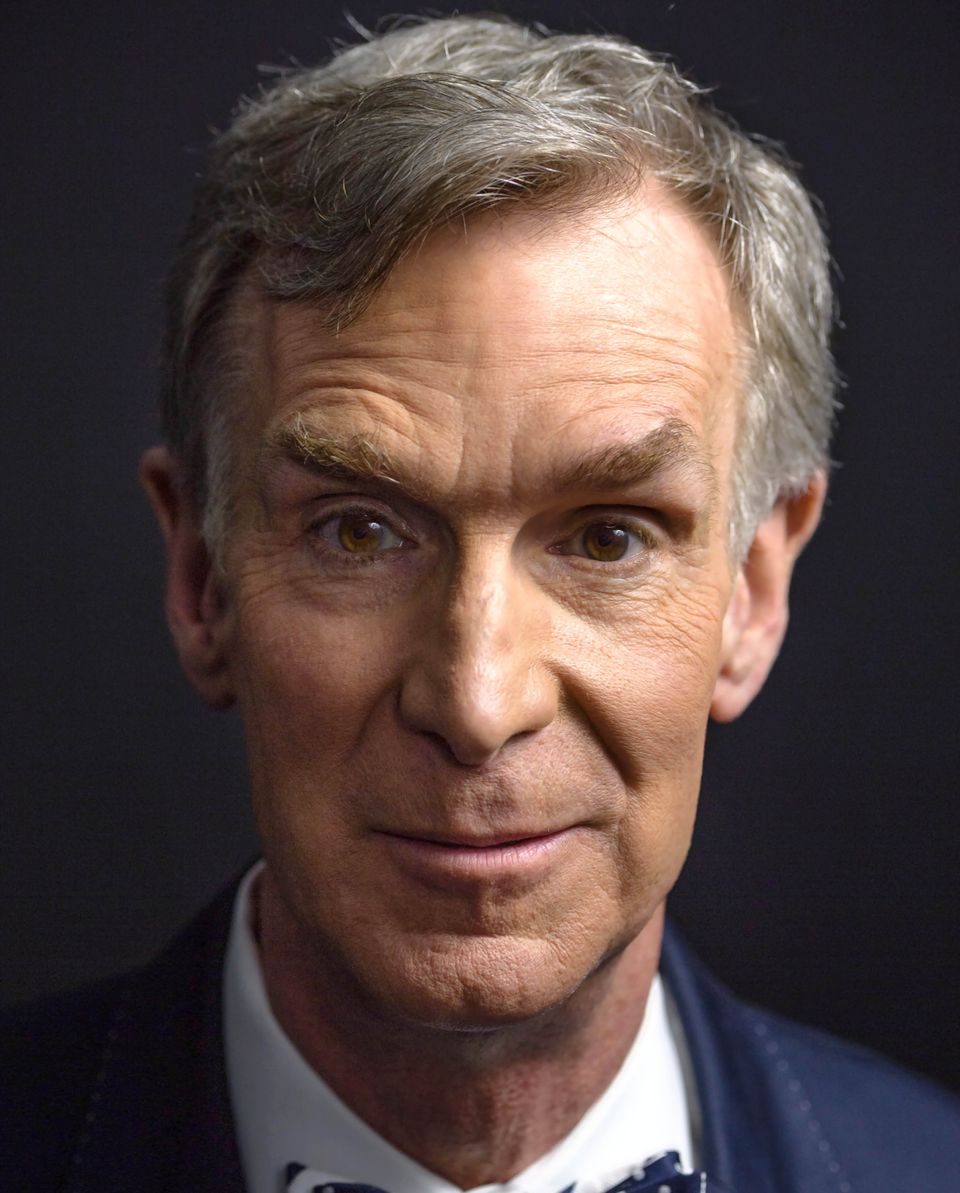

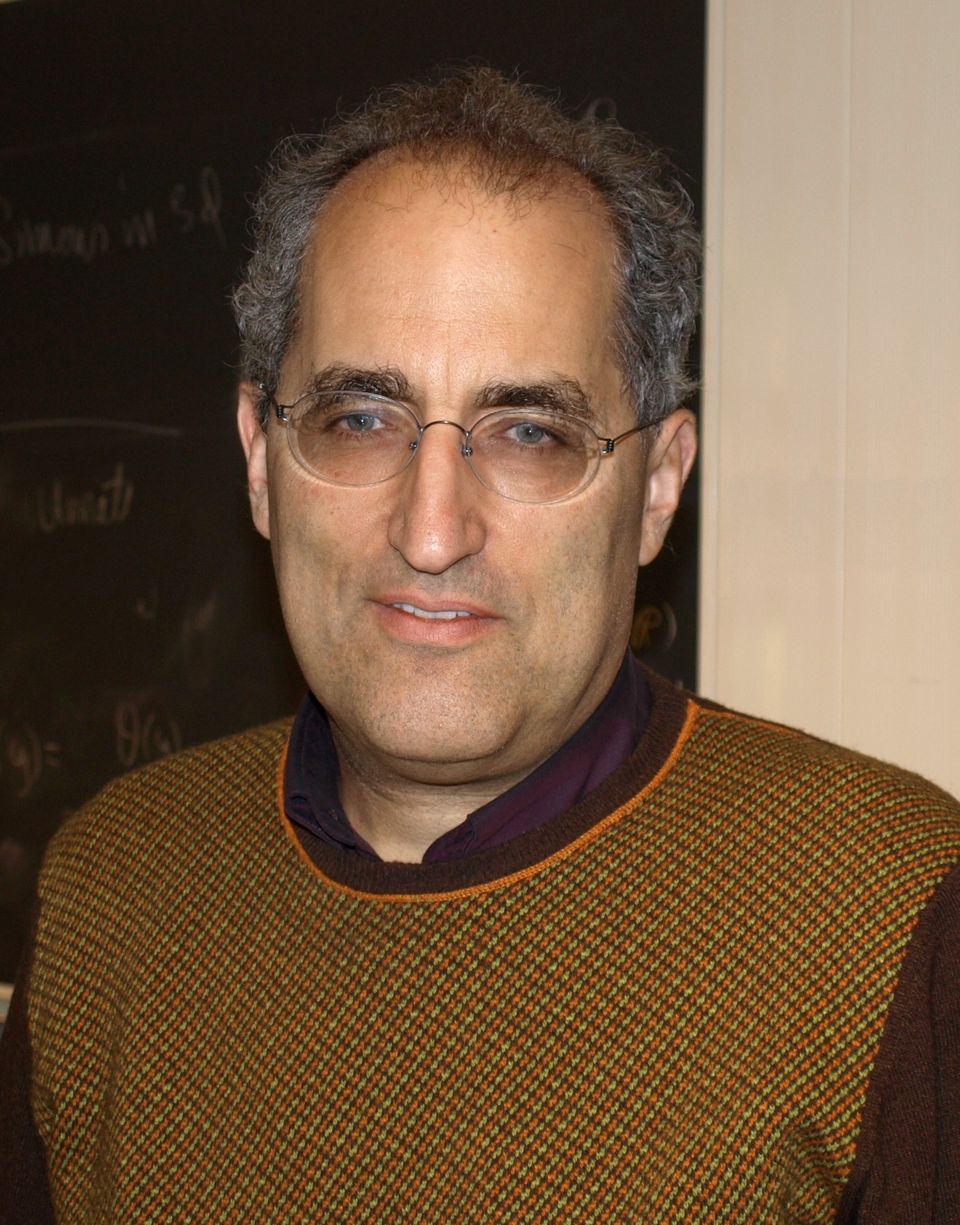
Photograph by Montclair Film Festival (photo by Neil Grabowsky, May 2017), CC BY 2.0. Background removed for the portrait above. · Photograph by Newhcrossaint (2025), CC BY-SA 4.0. Background removed for the portrait above. · Photograph by Ojan (Chalmers University of Technology, April 2008), public domain. Background removed for the portrait above.


An estimate is an inference.
Yours can be measured.
Thirty questions, scored against general-population benchmarks. Your score, your percentile, your ability breakdown and a printable IIF certificate.
Find your IQ score now! →