



What was Richard Feynman’s IQ?
The 125 is reported, not verified; the Putnam and Nobel records are documented.

Richard Feynman’s IQ is reported as 125, from a school test he took as a teenager, but as of November 2026 no score report, test name or date has been published. His documented record is stronger: he was a Putnam Fellow in 1939 and shared the 1965 Nobel Prize in Physics with Julian Schwinger and Shin’ichirō Tomonaga.
Richard Feynman’s estimated IQ
- A school IQ of 125 is reported in James Gleick’s 1992 biography Genius, and a Wikipedia footnote records that another book gives 123. The test’s name, content and original record have never surfaced, so the figure is reported, not verified.
- Named a Putnam Fellow in 1939, one of the five highest-ranking individuals in a field of 200 participants. Gleick writes that the scorers were astounded by the gap between Feynman’s result and the next four; no point total appears in the sources cited on this page.
- On Princeton’s graduate entrance examinations he is reported to have scored perfectly in physics and outstandingly in mathematics, and poorly in history and English.
- In a 1996 chapter, the psychologist John B. Carroll wrote that psychologists’ general experience would lead them to expect a much higher IQ had Feynman been properly tested.
- Nobel Prize in Physics, 1965, shared with Julian Schwinger and Shin’ichirō Tomonaga, for work on quantum electrodynamics.
The 125 is a reported result with no score report, no test name and no date, and the two books cited by Wikipedia differ by two points (125 and 123). It anchors the low end of the range but does not measure anything. The upper end rests on Putnam, Princeton and Nobel records, which are evidence of achievement in mathematics and physics, not IQ scores. A reader who concludes “about 125, and the test measured something narrower” is not obviously wrong.
- Born
- May 11, 1918, New York City
- Died
- February 15, 1988, Los Angeles
- Field
- Theoretical physics
- Education
- BS, MIT (1939); PhD, Princeton (1942)
- Known for
- Quantum electrodynamics; Feynman diagrams
- Putnam
- Putnam Fellow, 1939
- Nobel Prize
- Physics, 1965 (shared)
- School IQ
- 125, reported; no score report
What an IQ of 125–150 actually means
Set the claim aside for a moment. If someone genuinely scored in this range, here is what that would represent.
Average is 100 by construction, and about two-thirds of people fall between 85 and 115. Take the test to place your own score on this scale.
| Score range | Classification | Share of people | What it indicates |
|---|---|---|---|
| 85 – 114 | Average | ~68% | The range most people fall into. |
| 115 – 129 | Above average | ~13.6% | Roughly one person in seven. |
| 130 – 144 | Gifted | ~2% | The threshold most high-IQ societies use. |
| Above 144 | Highly gifted | ~0.1% | Figures above this range are extrapolated from the curve rather than measured. |
Percentages are approximate and describe a normal distribution. The same number means different things on tests with different standard deviations.
Thirty questions gives you a measured position on this exact scale — your score, your percentile and the ability breakdown behind it.
Find out in 30 minutes →Who Richard Feynman was
Richard Feynman was born in New York City in 1918 and grew up in Far Rockaway. He took his bachelor’s degree at MIT in 1939 and his doctorate at Princeton in 1942; his thesis adviser was John Archibald Wheeler.
Wikipedia reports that on Princeton’s graduate entrance examinations he attained a perfect score in physics and an outstanding score in mathematics, but did poorly on the history and English portions. Wheeler’s 1989 Physics Today memoir opens with an admissions remark about Feynman’s “aptitude test ratings in mathematics and physics.”
He worked at Los Alamos on the Manhattan Project in his twenties — the badge photograph above is from that period — and afterwards held chairs at Cornell and Caltech. His reformulation of quantum electrodynamics, and the diagrams that carry his name, are now standard equipment in particle physics. In 1986 he served on the Rogers Commission on the Challenger disaster.
 By Elora Mercer, Celebrity Research WriterFigures checked by Leon Falkner, Data & Research Analyst
Reviewed by Aarav Vardhan, Editor-in-Chief · Last reviewed November 2026

Richard Feynman: the documented record
The estimate above rests on this record. Every entry here is a matter of public fact, which is more than can be said for the number itself.
- 1918Born in New York City.
- 1930sTakes a school IQ test in Far Rockaway; the result is later reported as 125.
- 1939Receives his bachelor’s degree from MIT and is named a Putnam Fellow.
- 1942Completes his doctorate at Princeton.
- 1943Joins the Manhattan Project at Los Alamos.
- 1965Shares the Nobel Prize in Physics with Julian Schwinger and Shin’ichirō Tomonaga.
- 1986Serves on the Rogers Commission into the Challenger disaster.
- 1988Dies in Los Angeles.
Where the 125 figure came from
Following a claim back to its first appearance is the part almost nobody does — and it is what most people are actually asking.

Richard Feynman’s IQ is reported as 125, from a school test taken as a teenager in Far Rockaway, New York. The figure reached general circulation through James Gleick’s 1992 biography Genius, which Wikipedia cites for the description “merely respectable.” The test’s name, content and original record have never surfaced, so as of November 2026 the 125 is a reported score, not a verified one.
Accounts differ on the exact number and on who first said it. Wikipedia’s Feynman article cites Gleick for 125 and notes that No Ordinary Genius gives 123. A December 2011 Psychology Today interview with physicist Stephen Hsu says the score was reported, including by Feynman himself, but names no original document. No other administered result is documented for him, so any Feynman IQ figure above 125 is an estimate.
The Mensa story is told the same way. Wikipedia says he later declined to join Mensa International, saying his IQ was too low. Riot IQ reports that he liked to joke about it and that no letter or document of the exchange has been published. This page treats the anecdote as unverified; for what Mensa itself asks, see Mensa IQ score requirements.
The documented record is of a different kind. Joseph Gallian’s history of the Putnam Competition lists Feynman as a Putnam Fellow in 1939, one of the five highest-ranking individuals. Before 1992 the Fellows were announced alphabetically, so the announcement gave no ranking within the five, but Gleick reports that the scorers were astounded by the gap between Feynman’s result and the next four. He earned his bachelor’s degree in 1939, a Princeton PhD in 1942 and, with Schwinger and Tomonaga, the 1965 Nobel Prize in Physics.
Read the 125 as one result from an unidentified test. Hsu suspects it emphasized verbal over mathematical ability, and the psychologist John B. Carroll wrote in 1996 that psychologists would expect a much higher IQ had Feynman been properly tested. Neither remark is a measurement, which is why this page gives a range, 125–150, and not one number. For how achievement-based estimates are built, see IQ of historical geniuses and IQ of Nobel Prize winners.
How we read a number →Source of the 125 (p. 30) and of the account that the Putnam scorers were astounded by the gap between Feynman’s result and the next four (p. 83). Both passages are quoted here as cited by Wikipedia and a Sotheby’s catalogue.
Gives the 125 and the “merely respectable” description, a footnote that another book gives 123, the Putnam Fellow naming, the Princeton entrance results, the Mensa anecdote, the 1942 doctorate and the 1965 Nobel Prize. Cited for orientation; no score report is cited for the 125.
Lists Feynman as a Putnam Fellow in 1939, describes Fellows as the five highest-ranking individuals, states that announcements before 1992 listed winners alphabetically, and gives 200 participants for 1939.
Says Feynman placed among the top five individuals in the 1939 Putnam Competition and quotes Gleick, Genius, p. 83, on the gap between his result and the next four.
Memoir by Feynman’s Princeton thesis adviser; opens with an admissions remark about Feynman’s aptitude test ratings in mathematics and physics.
Interview with physicist Stephen Hsu. States the 125 has been reported, including by Feynman himself, and gives Hsu’s suspicion that the test emphasized verbal over mathematical ability. Names no original document.
Remark that psychologists would expect Feynman to have made a much higher IQ if properly tested. Quoted here from a footnote in Wikipedia’s Feynman article, not from the book.
Gives the B.Sc. in 1939, the Princeton doctorate in 1942 and the 1965 Nobel Prize awarded jointly with Schwinger and Tomonaga.
Nobel Foundation record, publicly archived.
Says 125 is the only IQ score ever reported for Feynman, that the test’s name, content and original record have never surfaced, and that no letter or document of the Mensa exchange has been published.
No score report, test name or date has been published.
The 125 is traceable to biographies and interviews, not to a test record. Until a record appears, it stays a reported figure.
No original document has been published.
Widely repeated in the form that he declined membership because his IQ was too low. No letter or document of the exchange has been published, so it is not treated as established.
The sources behind our estimate
The figures that circulate for Richard Feynman, what we were able to confirm, and where the two diverge.
The 125 is repeated as a curiosity: a Nobel laureate with a “merely respectable” school score. No other administered result is documented for him, so any higher figure attached to Feynman is an estimate from his achievements, not a score.
The 125 is the only IQ figure attached to Feynman, and it is reported, not verified. Gleick’s 1992 biography gives 125, another book cited by Wikipedia gives 123, and the test’s name, content and original record have never surfaced. What is documented is his record: Putnam Fellow in 1939, a Princeton PhD in 1942 and the 1965 Nobel Prize in Physics. On most profiles in this section the documented record sits below the claim; here it sits above the one reported test score.
The spread is wide because only one number comes from a test, and that number rests on a single report. Anything above 125 is an estimate drawn from his achievements.
Want a number that does hold up? Every figure on this page is somebody’s claim. Take the 30-question test and get a percentile you can check rather than a figure you have to trust.
Richard Feynman — frequently asked
What was Richard Feynman’s IQ?
Richard Feynman’s IQ is reported as 125, from a school test he took as a teenager in Far Rockaway, New York. The figure comes from James Gleick’s 1992 biography Genius, and as of November 2026 no score report has been published. His documented record is stronger: a 1939 Putnam Fellowship, a Princeton PhD in 1942 and the 1965 Nobel Prize in Physics.
Was Feynman’s IQ really 125?
The 125 is reported, not verified. Gleick’s biography gives 125, another book cited in Wikipedia’s Feynman article gives 123, and no test record has surfaced. A December 2011 Psychology Today interview with physicist Stephen Hsu says Feynman himself reported the score, but it names no original document.
What is Richard Feynman’s IQ score?
The only IQ score reported for Feynman is the school result of 125; no later or adult result is documented. The 125–150 range on this page is an inference from his Putnam, Princeton and Nobel record, not a score. The range starts at the reported 125 and extends upward because the record shows exceptional achievement in mathematics and physics.
Did Feynman take an IQ test?
Yes, at school, but the test cannot be identified. Its name, content and original record have never surfaced, and Hsu suspects it emphasized verbal over mathematical ability. For how such tests are built and scored, see how IQ tests work.
Was Feynman a Putnam Fellow, and what was his Putnam score?
Yes. Feynman was named a Putnam Fellow in 1939, one of the five highest-ranking individuals in that year’s competition, according to Joseph Gallian’s history of the Putnam. His score is not documented in the sources cited here, and announcements before 1992 listed the Fellows alphabetically rather than by rank. Gleick reports that the scorers were astounded by the gap between Feynman’s result and the next four.
What did Feynman score on the Princeton entrance exam?
Wikipedia reports a perfect score in physics, an outstanding score in mathematics and poor results in history and English on Princeton’s graduate entrance exams, and it cites no score report. John Wheeler, who became his thesis adviser, opens a 1989 Physics Today memoir with an admissions remark about Feynman’s aptitude test ratings in mathematics and physics. These are subject-specific results, not an IQ test.
How can a Nobel laureate have an IQ of 125?
A reported 125 is not low: it is well above the average of 100, as what an IQ of 125 means explains. It is also one reading from an unidentified school test, and a single score samples a narrow band of ability. Feynman’s Putnam, Princeton and Nobel results measure achievement in his own field, which is the evidence this page uses to place the upper end of the range.
Did Feynman refuse to join Mensa?
Wikipedia says he declined to join Mensa International because his IQ was too low. Riot IQ reports that he liked to joke about it and that no letter or document of the exchange has been published, so it remains unverified. For what Mensa asks of members, see Mensa IQ score requirements.
How does Feynman compare with Einstein and other physicists on this site?
Einstein has no test on record, so his range of 160–180 is inferred from his published work. Stephen Hawking (150–170) and J. Robert Oppenheimer (155–175) are estimated from their academic records. Feynman’s range of 125–150 starts lower because it is anchored on the one reported school score.
How does my IQ compare with Richard Feynman?
You can find out in about fifteen minutes. The IQ Metrics assessment is 30 questions, scored on the same 100-mean scale used throughout this page, so your result and the estimate above are at least expressed in the same units — one measured, one inferred. Once you have a number, the leaderboard shows where it would sit, and how we score and norm it explains the benchmarking.
Where does this estimate come from?
From the documented record rather than a test — the method is named above and set out in full under how we read a number. Compare it against the other scientists profiles, starting with Albert Einstein.
- Take the 30-question IQ test — get a measured score and percentile of your own
- Average IQ by country — how the scale behaves across populations
- How IQ Metrics scores its assessment — the method behind our own number
- More on how IQ testing works — reliability, error and what a score can and cannot say
- More scientists profiles — same field, same method
More scientists


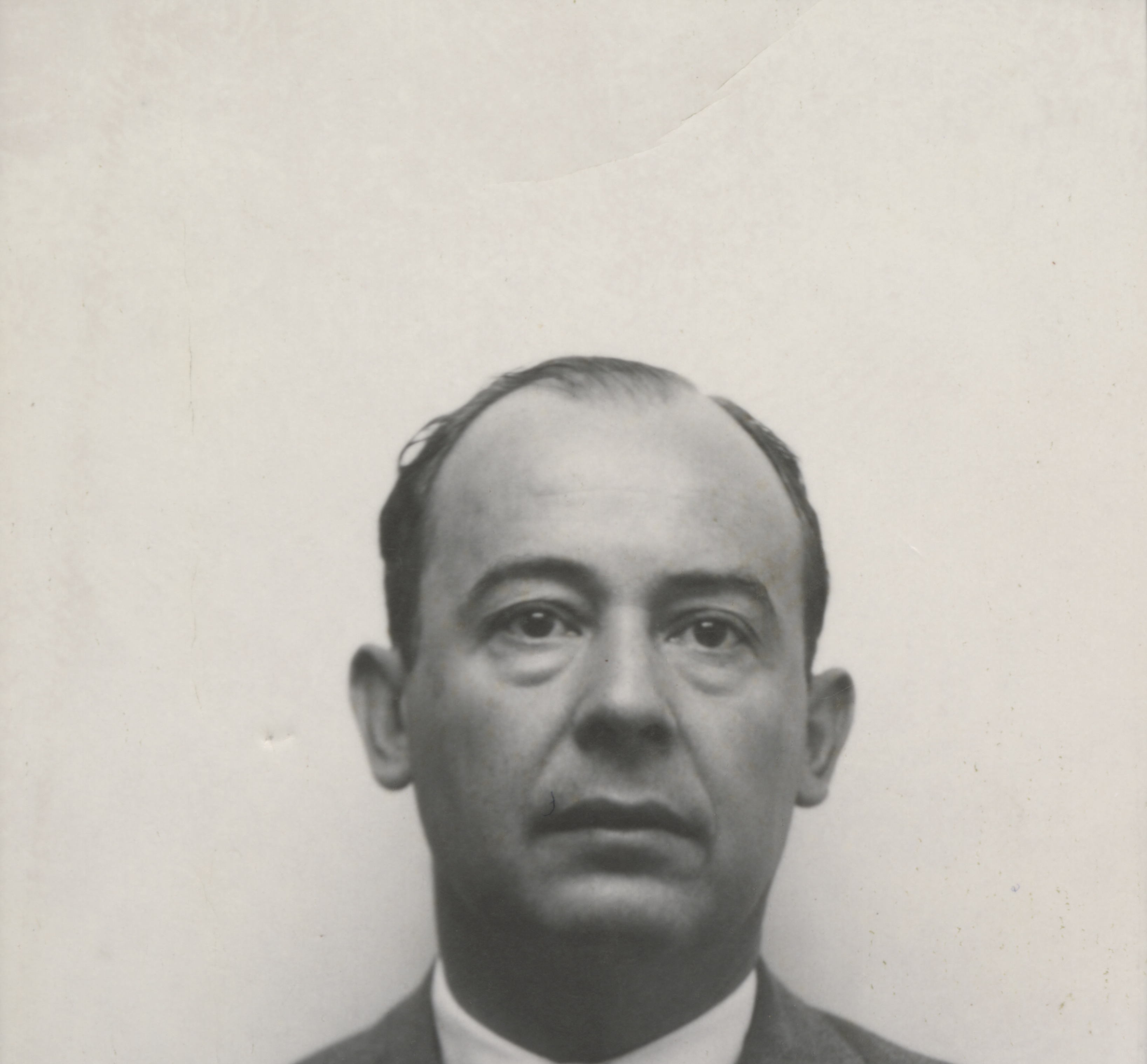
Photograph by Duncan.Hull, CC BY-SA 4.0. Background removed for the portrait above. · Photograph by Gage Skidmore, CC BY-SA 2.0. Background removed for the portrait above. · Los Alamos National Laboratory badge photograph, c. 1940s, public domain (PD-LosAlamos). Background removed for the portrait above.


An estimate is an inference.
Yours can be measured.
Thirty questions, scored against general-population benchmarks. Your score, your percentile, your ability breakdown and a printable IIF certificate.
Find your IQ score now! →